On making amends for slavery – and being born elsewhere.

This was my letter to Labour List this week. Not published this time.

Is it fanciful to think that the people who are so viscerally opposed to apologising for Britain’s role in industrialising the slave trade – during which the life expectancy for anyone who survived the Atlantic passage and ended up working on a plantation was six years – are the same sort of people as those who opposed abolition in the first place?

Words, however, are cheap. Free in fact. If Andy Burnham is serious about making amends – and giving parity to the descendants of the slaves whose 150 years of unpaid labour made British slave owners so fabulously wealthy, then set them up for compensation payments for losing their “property” when slavery was abolished – he’d reinstate the Overseas Development Aid budget as a first step to future proofing developing countries (and us) from climate impacts; instead of cutting it to pay for “hard power” that won’t defend us – here or there – from the floods and fires that are already with us. The funds for this could come from a wealth tax – as most of the descendants of the slave owners are still the richest people in Britain. Time they paid back.

On a related theme, Shabana Mahmud’s assertion that people who have migrated to the UK and want to stay should have to prove themselves worthy of citizenship by being continuously employed, among other things, gives a green light to their employers to abuse them; as they will be so frightened of losing their jobs that they will put up with a lot of bad treatment to keep them. That will have a bad effect on the terms and conditions of all workers.

I’d add that any edict that people who come here to make a life for themselves – a positive choice – should be considered unworthy until they prove otherwise over a ridiculously prolonged period, makes them considered guilty until proven innocent. Whereas national virtue is taken for granted in those of us who are here through an accident of birth, whether we have it or not.

I hesitate to point that out, as the notion that citizenship is a privilege to be conferred by the state could begin to be much more widely applied; and invert the relationship we should have – that the state is a tool for and an expression of the people who live in it – all of us – not a body that sits in judgement on whether we have stood in line, tugged our forelock and saluted enough to be conferred rights.

Why the US military is the World’s Greatest Enemy

This is the talk I gave at the No Non Radical Futures Conference organised by the Campaign Against Climate Change Trade Union group last weekend. This can be viewed here, but the subtitles are as inventive as those on BBC 24 hour news, so the actual text is clarifying.

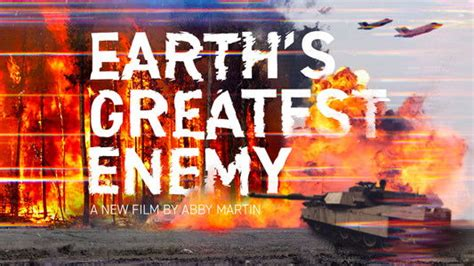
That was the trailer for Abby Martin’s latest documentary on the US military – Earth’s Greatest Enemy.

I’d urge everyone to go onto her site, buy the film (because she’s got to make a living) and don’t just watch it but show it. Bottom line, invite some friends round. if you’re in an anti war or climate group, organise a showing and discussion. Parts of it are gobsmacking. No spoilers. Please watch it and share it.

I edit the Greener Jobs Alliance Newsletter and convene the NEU Climate Change Network, but what I’m going to say is my view, as there’s a range of opinions in both organisations and neither should be held accountable for my political idiosyncrasies.

Abby Martin’s film is called Earth’s Greatest Enemy not simply because the US military is so big – with over 800 bases on every continent and 12 nuclear powered Aircraft Carrier Task Forces capable of projecting devastating violence anywhere in the world – but also because of what its for; which is to defend the global US Empire.

I think its important to have a grip on the structure of global imperialism;m as the United States runs a system of military alliances – NATO, ANZUS, AUKUS etc, which between them account for two thirds of global military spending – that incorporates the smaller imperialist states – in Europe, Japan, Israel, the former British settler colonies in Canada, Australia and New Zeeland – in a subordinate role – and dominates the rest of the world through the dollar’s reserve currency role, the trade rules of the Washington consensus, policed by the World Bank, IMF etc, and also a worldwide web of NGOs financed through the National Endowment for Democracy, particularly in countries they want to target.*

All of this is designed to facilitate the extraction of additional profits from the Global South that amount to around $10 Trillion a year. **

No other state does that.

Euphemisms for this bloc of imperial states include “the Global North”, “the West” and, on the BBC, “the Global Community”, because no one else counts.

Its relationship to the rest of the world was put rather well by Anthony Blinken when he said “if you’re not at the table with us, you’re on the menu”.

Earth’s Greatest Enemy in a very immediate sense too – in that humanity faces two existential crises.

  1. The breakdown of the conditions for human civilisation driven by climate change.
  2. The threat of nuclear war.

And the United States is actively undermining the struggle to deal with the first and, in seeking to deal with its slipping global hegemony by increasingly reckless military interventions, is very much risking the latter.

This is structural not personal. Trump is often posed as a loose cannon – which implies that he is an aberration. But that begs the question why the dominant fractions of the US ruling class brought him back from the political dead – as it looked like he was on his way to prison in 2022 – and decided that a disruptive loose cannon was exactly what they needed.

I’d argue that this is for two reasons. Not Gaza. I think there’s a complete consensus in the US ruling class on Gaza – which they see as a salutary sacrifice zone to warn the Global South of what could be in store for it if it rebels – but Biden came unstuck on two issues.

  1. His attempt at a truncated America First version of a Green New Deal – designed to suck green investment into the United States – was unable to compete with the state led strategic investment made by China over decades – so that, for example, last year China installed twice as much renewable energy as the rest of the world put together and currently holds half of the world’s total renewable capacity – and has a massive lead in EVs, batteries, and the tech that goes with them; and the mining and refining capacity needed. So, for the US, and elsewhere, to progress in the energy transition they’d need to cooperate in it. And China is up for that. They talk about “win, win cooperation” and Earth as “a common home for humanity”. But the US isn’t interested. Instead it is pushing for “global energy dominance” based on doubling down on fossil fuels. The US is the world’s largest Petro-state, by production and by export. So they are seeking at Federal level not only to sabotage the domestic energy transition in the United States – and avert any social transition that would go with it – but also globally to reinforce fossil fuel dependence. That includes support for political formations that back their agenda, like Reform or the Conservatives here. This is leading to a rise in US emissions and the US falling behind global trends in electrification. We’re also seeing a paradox in that Trump’s war on Iran, part of the global energy dominance agenda – is actually accelerating attempts by countries and individuals to get off dependence on highly expensive fossil fuels. The longer it goes on, the more that will be the case.
  2. The second is Biden’s adventurist hubris in picking a fight with the Russian Federation through provoking the war in Ukraine. This came to grief because it was premised on the assumption that the Russian economy could be brought to its knees with sanction. But the Global South didn’t go along with them – so these have primarily blown back on the European economies that have; leading to economic stagnation and political crises. Trump’s recent attempts to cut losses and do deals are an attempt to break the Russian Federation from its bloc with China – to enable the US to apply nuclear blackmail to the latter. These have also not been successful, leaving the Ukrainian working class to suffer the consequences of the Oligarch’s ambition “to create a big Israel in Eastern Europe”, as President Zelensky put it. A further plank of Trump’s approach has been to lock the subordinate European allies into a faster increase in war spending than the European powers were making in the run up to World War 1 – up to 5% of GDP by 2035 – (3.5% directly on the military and munitions and a further 1.5% on related infrastructure – like hospital capacity to deal with “mass casualty events”, strengthened bridges so that tanks may safely pass etc. All this is premised on a war with the Russian Federation – sometimes as imminent as 1000 days, if you rely on Wes Streeting – sometimes longer. Germany, for example, projects having the strongest armed forces in Europe by 2039. There’s something about that date…This war psychosis (everyone got you baked beans in?) paradoxically uses Trump’s unpopularity to deliver exactly what he wants.

The push back against all this involves overlapping resistances to their dystopian future. The French students are an inspiring example. They show what happens when a generation is served up a future that is more of a threat than a promise – coming at them like a pyro cumulonimbus cloud – as France was the European country hardest hit by the wildfires this summer and is projected to take E230 billion in climate damage by 2030 – and also the country where the army chief of staff was reported as saying that France must “prepare for a war in which it would lose its children” at a conference for Mayors in May. Well, those children were listening.

They also face neglect in the here and now, with their schools crumbling, sometimes rat infested, and without enough tecahers to cover classes – because cuts have been made to pay for an expanding army.

Resistance is growing here too and to try to pull these responses together into a hegemonic stance across the movement the GJA has produced a model motion and statement – for a transformative response to the fossil fuel energy crisis – for debate in union branches, Party structures and student unions too. Apart from the three principles at the beginning, that:

  • to end the crisis we have to end the war, so no complicity in it, 100% taxation on war profiteering and transfer of funds allocated to increasing military expenditure to be redirected to green transition
  • the green transition is the solution
  • all emergency measures must be social justice measures

the motion is not set in stone, so people can adapt it to their specific situation – CACCTU supporters might want to add an affiliation to CACCTU into the action points for example, and we welcome feedback.

This is the motion.

This is the statement that expands on it.

Footnotes after the event

*The specifics of this were spelt out just for journalism by ”a USAID fact sheet which has since been taken offline, in 2023, the agency funded training and support for 6,200 journalists, assisted 707 non-state news outlets, and supported 279 media-sector civil society organizations dedicated to strengthening independent media. The 2025 foreign aid budget included $268,376,000 allocated by Congress to support ’independent media and the free flow of information’ Ref here So, when you think about what you’re reading in the papers…

**This figure, which is from memory is almost certainly an underestimate; as in 2023, the poorer nations paid $25 billion more to their external creditors in debt servicing than they received in fresh disbursements, resulting in a negative net resource transfer. Ref here.

Coming up: the most dangerous two months in world history?

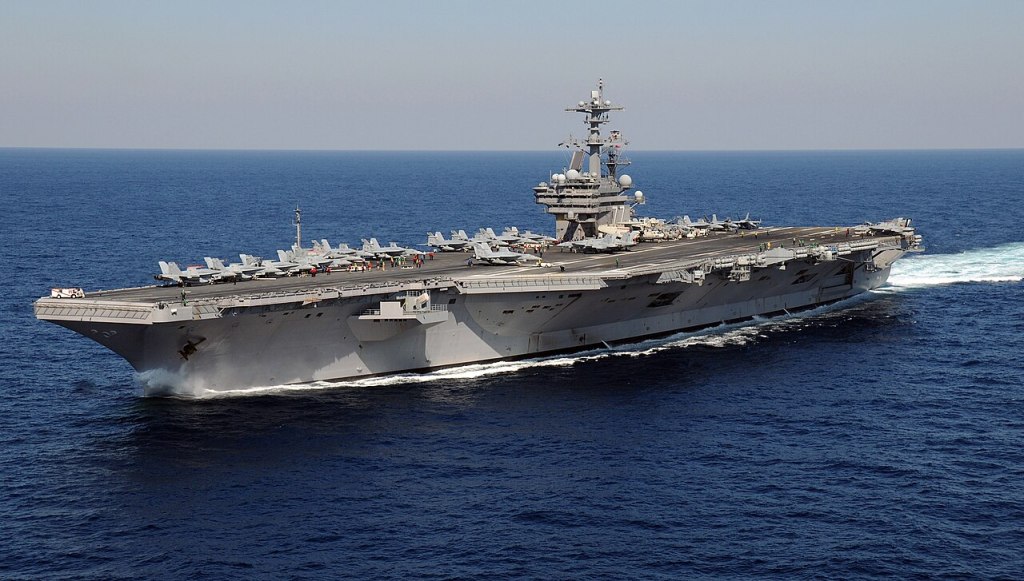
The USS George H W Bush, one of the three US aircraft carrier Task forces now deployed around Iran. Photo: U.S. Navy photo by Mass Communication Specialist 3rd Class Nicholas Hall, Public domain, via Wikimedia Commons

“Alhamdulillah” Its tempting to look at the result of the US mid terms and, like victorious Democrat Senate candidate Abdul El-Sayed, breathe a sigh of relief and give thanks, if not to God, at least to the electorate who, in sweeping Trump’s Republicans out of the House and Senate in numbers large enough to make a post election stitch up too risky to get away with, have made him a lame duck President. There’s a French expression for something that’s not very impressive; Ca casse pas quatre pattes d’un canard” (that doesn’t break four legs on a duck). These elections have broken both Trump’s legs, and then some.

But with the new Congress not taking its place until January, this gives Trump two months to do his worst with the existing Congress waving him on. And he has nothing to lose now. Intimations of a further attack on Iran, with three aircraft carrier task forces now in the region for the first time in 20 years, include hints of an attack on Pickax mountain with a tactical nuclear weapon – which would inaugurate a period of thinkable nuclear wars – are an immediate risk. Possibly by the end of this week.

There is an emergency demonstration called for Downing Street at noon on Saturday if this takes place.

An element in how far Trump will go is the extent to which the Democrat leadership, who have often been more concerned about blocking their own left, especially DSA supporters, in the last few months, give Trump public or private endorsement for this. If the former, its a sign of more continuity than people voted for. If the latter, they will be hoping for quick results from the “madman in the corner of the bar with a broken bottle” strategy that they can then try to consolidate sotto voce. With both US Parties committed to the New American Century and the Democrats more hawkish on Russia and just as committed (at the top) on Israel the wave of voters looking for peace, cheaper petrol and Medicare for all, will be crashing into a joint political sea wall built by the billionaire donors who finance both of them to defend their interests.

So, the next two months will be very dangerous, and it won’t get too restful after that either…

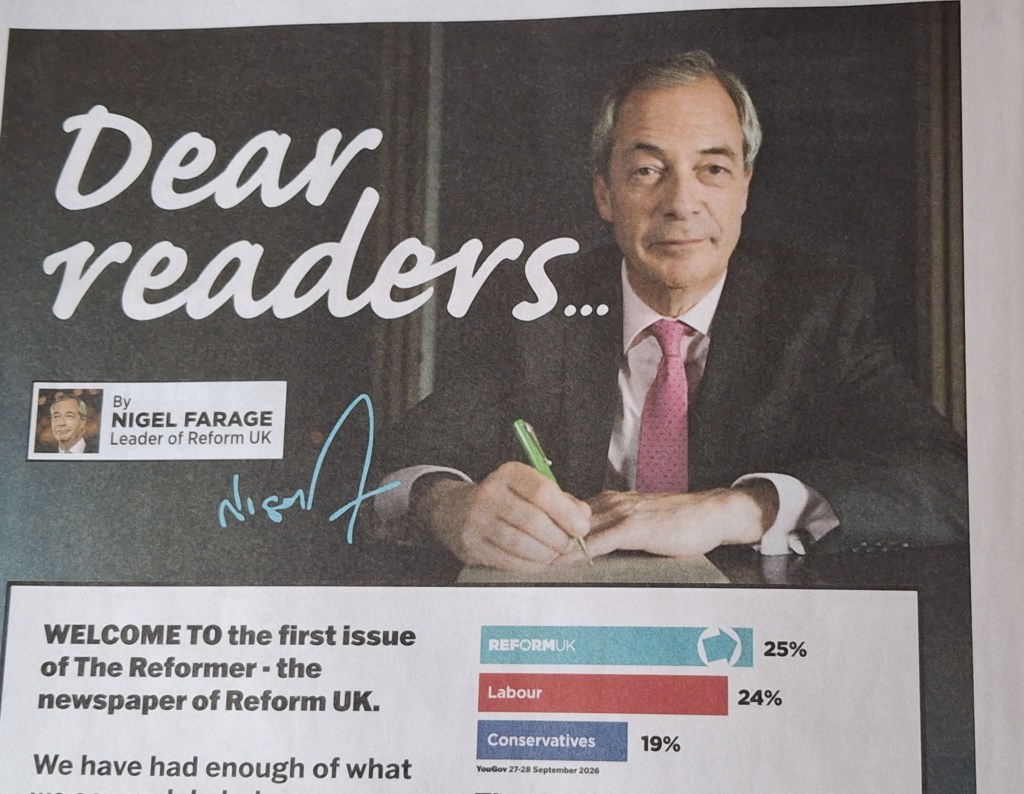
Dear Readers…

This is a redraft of Nigel Farage’s letter to readers to make it a bit more honest.

Welcome to the first edition of the Dystopian – the newspaper of Dystopia UK.

We’ve had enough of just being given an outsize platform by the mainstream media, and having that amplified on steroids by GB News and Talk TV; so instead we want to send our distorted version of reality to you directly, so you can get our twisted message straight from us.

Here’s an undated graph showing Deform UK ahead in the polls, when we have actually been third, even behind the failed Conservative Party that we get so many of our MPs from, for over a month, and behind the failed Labour Party since the Summer, and have been dropping for over a year. 12% down in fact,and most people don’t see us as a viable Party of government any more. That shows you how successful we are being. We give it to you straight.

The choice at the next general election is clear.

Do you want to live in a country that allows at least some people to come here to make a contribution, taxes the rich more than we would, has declining crime (as it does at the moment) has cheaper, cleaner energy instead of expensive, dirty fossil fuels, and where people who need support, from pensioners to people with disabilities, get some, instead of being told to pull themselves up by their own bootstraps; whether they have got boots or not?

Or would you rather have us in power, letting people drown in the channel, enforcing hard work because we don’t want you to have rights that affect the profits of the people who fund us, with the streets crawling with UK ICE agents, making them as frightening and dangerous as they are in Trump’s USA (which we are very keen to copy when it comes to the Health Service too by the way)? We will put the British people first by making you pay for your treatment when you get ill, and the more you pay, the closer you will be to the front of the queue. Fair’s, fair. Where there is no one to look after you when you need elderly care because we’ve blocked them coming. Where we enjoy wildfires and floods, instead of whinging about them like losers. Because we’re British dammit and we know how to go down with the ship!

Britain is breaking, and nothing seems to be working any more. I still believe in Britain – which is good of me really, as I’d rather hang out in Mar-a-Lago than Clacton. Who wouldn’t? Our crypto billionaire donors and supporters who have financed this paper also believe in Britain, and many of them show how patriotic they are by living in Thailand or Dubai.

We can be sure that Britain won’t be fixed by the old failed politicians; except the many, many, many Tory retreads we have been so keen to recruit in recent months who, now they are with us, will fix the country by doing exactly the same things as they did to break it in the first place.

We pledge to you that we will turn the country around and send it steaming firmly backwards into the past. Whatever you imagine that was. We will not look to the future, because with us in power there isn’t one. And we will measure our decline in good old feet and inches! We won’t let you down. But when the floods come, we might let you drown.

And remember, when you make your choice, nothing says “anti establishment” more than being funded by £72 million worth of donations from just two billionaires.

Yours, until I get a better paying gig...Niglet

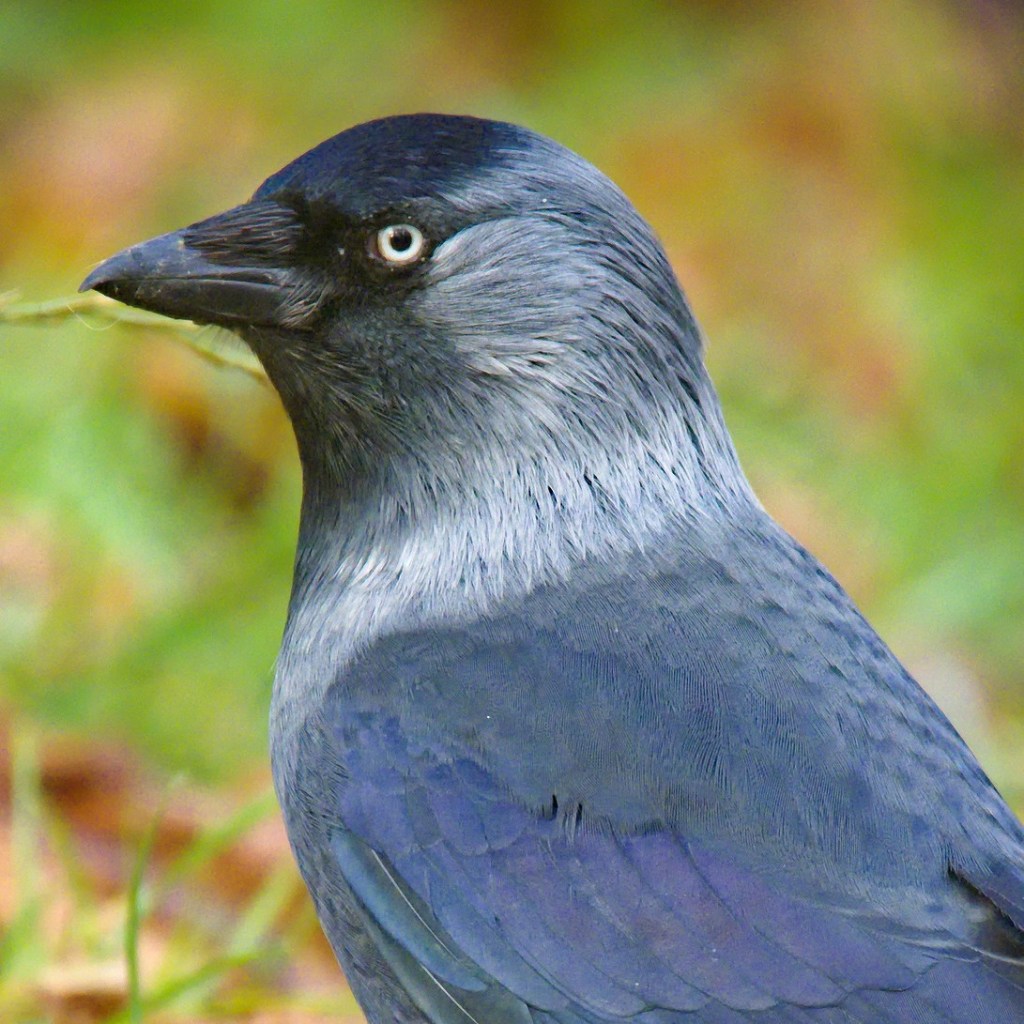
North Sea Smoke and Mirrors, through the eyes of a Jackdaw

hedera.baltica from Wrocław, Poland, CC BY-SA 2.0 https://creativecommons.org/licenses/by-sa/2.0, via Wikimedia Commons

This was my unpublished letter to Labour List this week.

When James Tibbits says, in suggesting that approving the Jackdaw gas field will relieve pressure on the cost of living: “while arguments are made that it is just not that simple, when dealing with the politics of perception,(my emphasis) this choice may help to relieve some of pressure the Labour government has been facing” he gives the game away that this capitulation to, as he puts it “sustained pressure from right wing parties in the UK, alongside US President Donald Trump, to approve Jackdaw, as well as the oilfield Rosebank” isn’t about reality, its about optics.

Its not about relieving pressure on the actual cost of living, but about relieving pressure on the government by making a gesture that doesn’t actually cut costs or reduce anyone’s bills, and will cost 17 times more in climate impacts than any economic benefits it generates, but simply attempt to appease a fake right wing narrative.

In doing so, it only throws more fuel on the fire, in more ways than one, as playing along with right wing smoke and mirrors will generate more smoke, probably in the form of pyro cumulonimbus clouds. We should all redouble our efforts to make sure that this dreadful decision is not repeated for the Rosebank oilfield.

And when Antonia Bance argues that putting tariffs on Chinese EVs will help the UK reindustrialise she misses the point that reindustrialisation here requires exactly what China has done there: putting state resources into the development of the technologies that we need to make the green transition. This is not “unfair competition”, it produces the EVs and Solar Panels the world needs in a way that “the West” has failed to do.

The UK, and the EU and US, have left this to the market; with the result that we have a fossil fuel legacy vehicle sector that is now outmoded and outcompeted and likely, without either state investment and/or joint arrangements with Chinese companies, like the one Chery is proposing with Nissan in Sunderland, to go the way of British Leyland all too soon, tariffs or no tariffs, delayed EV mandate or no delayed EV mandate.

Averting this needs pre-emptive planning for all the threatened sectors, as well as nurturing the “green economy” that is currently growing at 9% a year while the rest of the economy flatlines. It is long past time that England and Wales had Just Transition Commissions on the Scottish model, but with more teeth, and switching the proposed £35 billion a year expansion in war spending to retooling the whole of our economy and society so we have good, solid jobs making it sustainable; rather than preparing to blow ourselves up.

Another note to Wes Streeting – The Russians aren’t coming! The Russians aren’t coming!

Wes Streeting is back on the front page of the Sunday Telegraph this morning claiming that “we” have to be ready for war with Russia in “1000 days”. A 1000 has an epochal ring to it. As in “1000 year Reich”. Or “1001 cleans a big, big carpet”. But, doing the sums, that means that he is envisaging a war with the Russian Federation by roughly this time in 2029.

This is despite acknowledgement, on the quiet, by senior NATO figures that there is no actual threat of a Russian invasion of the rest of Europe. Russia has neither the intention nor the capacity to do so.

An attack on the rest of Europe would mean that they would have to fight through existing militaries that are more than twice their size. And occupy countries, with hostile populations more than five times the size of their own, and sustain that with an economy that is about the same size as Italy’s.

How credible does that look?

The retired Rear Admirals and the like who pop up on Radio 4 with lurid warnings of Russian troops marching down the street, with or without snow on their boots, are bullshitting – and they know it. So do the journalists who interview them. But none of them pops the bubble of this fantasy; because fake nightmares don’t have to be true to be motivating.

The argument from the same people that hybrid warfare is already going on tends to play up common or garden routine cyber attacks and political influence interventions from the Russian end while ignoring the fact that UK made missiles are actually hitting Russian territory. Imagine if that were the other way round.

Even if you buy the line- from NATO countries that have been responsible for launching or sustaining devastating wars to maintain their global dominance, the attack on Iran just the latest – that Russia is irrationally aggressive, unlike them, or that President Putin, as cautious and calculated a leader as any and more than most, is a reckless gambler, like Hitler, or perhaps Donald Trump, consider one other thing.

It has taken the Russian armed forces 56 months to occupy 20% of Ukraine on its 1991 borders. And that is mostly the 20% of Ukraine that rebelled against the overthrow of a President they had voted for in 2014 and sought incorporation into the Russian Federation. In the case of Crimea, UN polls from 2008-10 indicated substantial majority support for this course even before the Maidan movement redefined Ukraine as Ukrainian nationalist, downgrading the status of the third of then citizens who were/are primarily Russian speaking. During 2014 50 -55,000 people joined the Donbass militia to resist the attempts of the new regime in Kyiv to retake control of them by military force. So, its fair to say that, in these areas, Russia has substantial support.

This is not the case in Western Ukraine, so occupying it would not be viable. Even the most sophisticated and powerful military cannot hold a land where the population is hostile. As the US and UK found out in Iraq. And the IDF can only control the parts of Gaza that it has occupied by expelling the Palestinian population into a tiny rump of an already tiny enclave. That sort of thing is only possible with relatively small populations in small areas.

But, even ignoring all that, and imagine that Russia goes on the offensive and, even though outnumbered 2 to 1 and outgunned 3 to 1, made the same sort of progress they have made in eastern Ukraine since February 2022; now holding about 44,000 square miles. At that rate it would take them another 22 and a half years to make it to the Western Ukrainian border; and to keep going across the full million square mile area of the European NATO countries up to the French border and the English Channel, would take another 112 years. So, they’d arrive at some time in Summer 2160.

When you consider that most of the territory now occupied by Russia was taken in the first few weeks, while other large swathes also taken early, particularly around Kyiv, were abandoned almost as quickly, it underlines the point that consolidated occupation has had to rest on significant enough local support to sustain it. Viable in Donbass. Not around Kyiv. So, advancing at the average rate since those first few weeks would be even slower, possibly taking as long as 500 years to make it to the channel!

This is, of course, absurd.

More plausible, and more dangerous, is the threat of European NATO countries, having doubled their military expenditure in the next decade, preparing to launch a war themselves – which would be “defensive” in the same way that supporting US air strikes on Iran, or Saudi air strikes on Yemen, is “defensive”. We should note that Germany aims to make the Bundeswehr the strongest army in Europe by 2039. There’s something about that date…

Streeting, trivial figure though he is, is contributing to psyching us up for a possible apocalypse.

War and Peace in Ukraine and beyond

This was my letter to Labour List last week, which they were kind enough to publish as their lead letter.

In your note on the pressures to suspend the whip from Diane Abbott you quite rightly said that contentious issues should be dealt with as debates, not disciplinary matters; particularly matters of enormous importance, like the war in Ukraine. That is particularly urgent now, as the war shows signs of escalating into a wider European conflict which, if it escalates far enough, will lead to a nuclear war; which poses the need to step back and take a long hard look at the course we are on – which has no other conceivable result.

In so far as there is any debate at all on the war in Ukraine and relations with Russia in this country, it is between those who favour a slow escalation of the war and those who want it faster based on two delusions. 1 that the war in Ukraine can be “won” and 2 that Russia has the capacity and intention to launch a war with the rest of Europe. If you think about it, neither of these are anything other than fantasies. The 19% of the pre war Ukrainian population who primarily identified as Russian, and who live in the areas currently occupied by the Russian army, would hardly welcome reconquest by Kyiv, even if it were possible. How possible do those arguing that the Russians are itching to launch columns of tanks Westward think it would be for those forces to get through European NATO armies that are already twice as big and, if they did, make a successful occupation of large countries like Western Ukraine or Poland? The whole notion is absurd.

The alternative option that – to 1 avoid nuclear war 2 to allow Europe to recover from the war’s economic blowback and avoid the burden of greater military spending – 3 to relieve the burden on the Ukrainian population, which now includes forced conscription – Europe itself should have peace negotiations with Russia to de escalate towards a continental modus vivendi, is systematically deplatformed. Hence the kneejerk reaction to anyone prominent, like Diane, who steps out of line and asks awkward questions.

In this context, you argue for an open debate, on the presumption that the merits of “international defence cooperation” are self evident, without specifying what the purpose of that cooperation is and, linked to it, with whom. At present the UK “cooperates” primarily with the United States. As

  • the US is perceived by popular majorities in every country in the world, bar about a dozen of its allies, as the country that is the greatest threat to world peace, an opinion based on what it has done in the past and is doing now.
  • and any military risks that the UK now faces result from blowback from that cooperation, 

that debate is long overdue. I should add that the view that the US is the greatest threat to world peace is also the majority view in the UK and…the United States.

Risk of nuclear war or climate breakdown? Buy tinned food!

Erm, following the nuclear holocaust, could you tell me when normal public services would be resumed?

Very fair question. We have got it in hand of course. Following Armageddon, we do hope to have public services working very smoothly fairly soon after the event. But I feel in all fairness, that I must point out to all of you, that it must needs be something in the nature of a skeleton service.

The Beyond the Fringe Civil Defence sketch, 1960

There are three key things to grasp about the Government’s Emergency advice to stock up on tinned food and bottled water to deal with possible pending emergencies.

  1. They expect these emergencies to happen; and one aspect of this advice is to get people to be fatalistic about that and not try to avert them.
  2. They expect people to respond to them primarily as individuals. The first job of government is to keep people safe, but if their policies lead to a disaster, its over to you.
  3. The preparations they propose are nowhere near adequate to deal with the scale of the emergencies.

Lets look at these in a bit more detail.

What kind of emergency?

They list four big ones.

  • Increased geopolitical tensions. This is a euphemism for getting ready for a war. Part of the “whole society approach” to the increases in war spending that are needed for the full scale war in Europe within ten years that the top brass have in mind is to get people psychologically prepared for it; so it becomes acceptable and conceivable without too much resistance. What’s missing in this bland phrase is that rising “geopolitical tensions” are primarily being driven by the UK’s core ally the USA and its unprecedented war drive, cutting medical coverage and food stamps to pay for a $1.5 Trillion war budget next year, making covert and overt interventions on every continent, fomenting an international race war while deploying a Black and Tans style militia (ICE) against its own ethnic minorities, pulling its allies into similar self impoverishing austerity and xenophobia. As any direct military threat to the UK comes from blowback from involvement in US sponsored wars and proxy wars, the key action that can be taken to keep the people safe is to stop being involved in them. If its possible for the Spanish government to stand up to Trump and refuse the use of their bases for bombing attacks on Iran, it should be possible for the UK to do the same and go further by pulling the RAF back from spy flights over Gaza. If we want to avoid a step by step escalation of the war in Ukraine to the point that the stakes are so high that nuclear weapons are used, we’d better start de escalating and negotiating now. Its what a majority of people in Ukraine want too.
  • Climate change impacts. You know. Those things that the fossil media tell us aren’t happening, or, if they are, are nothing to do with the climate actually changing. But, as we’ve seen, we are now in a situation in which wildfires are threatening urban areas. Homes are being burnt out. In the UK this is small so far (18 in Wennington in 2022, 37 across the whole country this year) but entire neighbourhoods have been burnt out in North America and Australia in recent years (over 6,000 homes burnt out in Palisades in LA last year) and in France this Summer 300,000 people were evacuated from around Bordeaux when a wildfire threatened the city. This Winter, we will see severe floods. And these will intensify in the years to come. In this context there are two obvious points. 1) The government should be shouting from the rooftops that climate change is a problem that requires a much bigger set of changes to limit the damage. The National Emergency Briefing campaign for a national TV broadcast to level with the population is an apposite demand, and this should be the first part of part of a plan to mobilise people to deal with a real existential threat with a sense of mission that its possible for us to save ourselves; and we’ll do it collectively, and not just at home but internationally. 2) Putting out a general appeal for people to prepare for emergencies in general doesn’t hack it. We’re not going to be able to ride out a wildfire or stop a flood with a stockpile of baked beans.The flood risks are known, fire risks not so predictably. The FBU’s call for a summit on fire risk is vital to get a proper grip on it beyond a vague contemplation to ban disposable barbecues. The local authorities in each area will need a plan for evacuations, emergency supplies and relocation centres and these will have to be widely known; especially to the people directly threatened. We have to bear in mind that, while all these events are local, there will be more and more of them happening simultaneously, so robust planning, and national back up, is essential to avoid being overwhelmed. In these circumstances, the market will not provide.
  • Cyber attack risks and Infrastructure vulnerabilities. These are relatively smaller scale than the big two above. A paradox of infrastructure vulnerability is that the only way to make it robust is to invest in it. If every spare penny is siphoned off into war preparation, infrastructure (from the small scale like potholes to large scale like the electricity grid) will continue to crumble and therefore remain vulnerable. Large scale cyber attacks big enough to require people either to have to stay at home or be evacuated would have to come from “state actors”; which would be blowback from a confrontational war policy pursued abroad – so the way to avoid that is to abandon that style of foreign policy and look to the sort of “win, win global cooperation” that China argues for.

The second and third points go together. The first issue is the need for government to actively avert the threat, not to exacerbate it by going slow on climate mitigation or adding to “rising geopolitical tensions” by pushing for a war. Anyone who thinks that doubling war spending to respond to a supposed “Russian threat” should reflect that the European NATO countries – on their own without the US – spend £3.50 for every £1 the Russian Federation spends on its armed forces and have twice as many service personnel. Aiming to double that can hardly be seen as a necessary defensive measure. Quite the contrary.

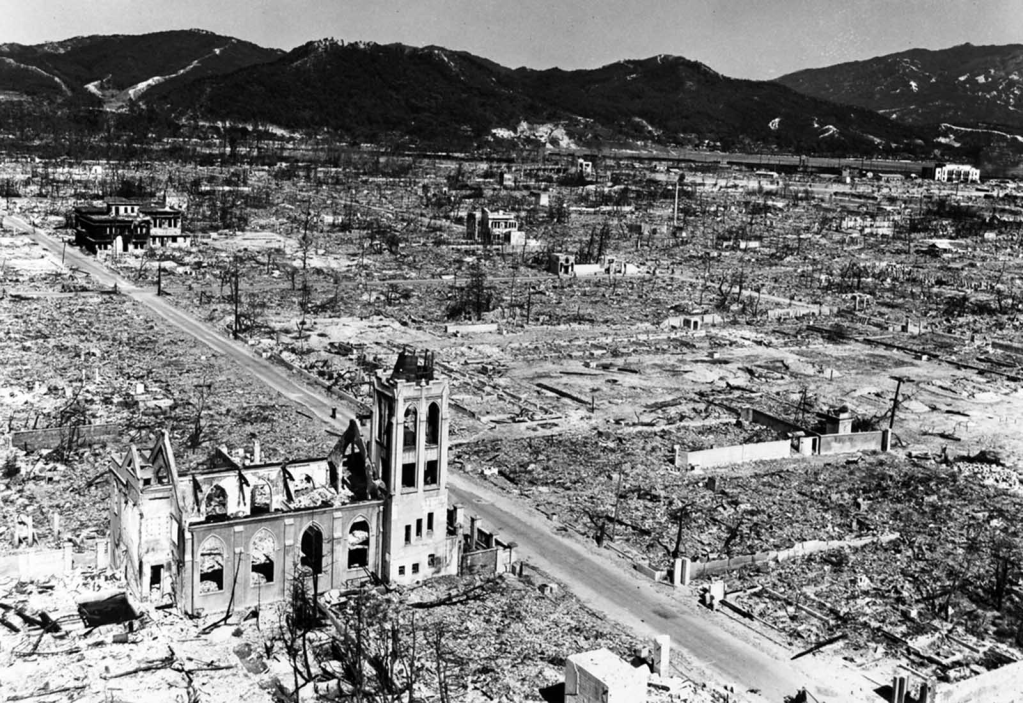
Supposing that there really is a war on the scale that they are contemplating, there is no way that it could avoid going nuclear. In which case, whether you have a few extra tins and bottles of water, or a wind up Radio to hear the King telling us to “Keep calm and carry on” as we all die, is going to be neither here nor there. There is an element of Protect and Survive about all this. In 1980, planning to introduce US nuclear cruise missiles to UK bases, the Thatcher government sent a pamphlet to every home in the country giving ludicrous instructions on how to make yourself safe in the event of a nuclear bomb being dropped on your city. This included making yourself an impromptu bomb shelter by unscrewing your bathroom door and hiding under it in the bath.

This image of Hiroshima after the bomb indicates how effective such an approach would be. Because people were aware of this at the time, the pamphlet proved to be a massive own goal for the government, anti missile groups mushroomed all over the country, and one of their campaigning tools was to act out Protect and Survive instructions in street theatre performances in town centres. Hundreds of thousands marched with slogans like “we won’t die for Thatcher” and “Jobs not bombs”.

The current instructions are more subtle. They don’t talk about nuclear war but “geopolitical tensions”, so the psychological conditioning is just enough to generate an unease that can be mobilised, but not enough to alarm people so much that there’s a mass backlash.

The deliberately small scale quality of the advice gives the impression that large scale disasters can be managed domestically. This is the equivalent of the bathroom door over the bath or the idea practiced dutifully in US schools during the 1950s that if you saw the flash of a bomb, you could survive the impact if you were to “duck and cover” under your school desk because “an atomic bomb can burn you worse than bad sunburn” (!!!) . As the schools would have been wholly incinerated, the purpose of these drills – and comparable civil defence drills for adults – was to keep the population in a mobilised Cold War mentality. It broke down by the end of the decade as people increasingly resisted taking part in them and responded to city wide drills by gathering in parks in protest against them.

The advice for a 72-Hour Emergency Kit is to stockpile, Important documents, Water (2L per person per day) Non-perishable food, Battery/wind-up radio, Torch and batteries, First aid kit, Medications, Phone charger, Cash. While it makes sense to have some of this in any case; what kind of war do they think would last for 72 hours? Perhaps the type that would make these preparations totally futile because we’d all be dead in an afternoon. Most of these items are not quantified, but the amount of water proposed is illustrative of how token this is. Two litres per person per day. At present, the average UK citizen uses 144 Litres a day, 32 of them to flush the toilet, 10 for drinking and cooking. Even being minimalist about it, 2 litres isn’t going to go very far. Trying to flush a blocked toilet with bottles of Evian? Perhaps the intention here isn’t to deal with large scale emergencies but to provide cover for water companies, which are increasingly disinclined to provide people with bottled water when they have been cut off fro long periods due to leaks. They are already under no obligation to compensate people if there is a water shortage due to “exceptional weather conditions” like the Summer droughts that are now becoming normative.

All this takes pressure of government to put in anything serious to back up public safety- and lets private companies off the hook to protect their profits. Serious public safety preparation is desperately necessary for climate breakdown, and completely pointless for a nuclear war. As they are actively preparing for the latter while ducking the former, the advice that they are offering actually puts us more at risk by psychologically prepping people to make war conceivable while playing down the consequences of climate change; which worst case projections (3C rise by 2050) now indicate could collapse the world economy by half between 2070 and 2090 and lead to the deaths of 4 billion people (almost one in two of the current global population) if the projected war doesn’t kill us first. There needs to be an urgent reversal of priorities, so the government acts consciously and consistently as a peacemaker while mobilising the entire population in a maximum effort to avert climate disaster.

Only by unthinking obedience to our leaders can we remain free?

Moments of crisis tend to expose unthinking mantras that have held up conventional wisdom for decades with the assurance of Doric columns on a bank; but which only look solid because they are unexamined.

The recent article – ‘Andy Burnham is right: Social cohesion is key to national security’– on Labour List by Sara Khan and Matthew Godwin (not Goodwin – a different character altogether) is a collection of such mantras. In previous times these may have locked together like an impervious Lego wall of unexamined presumptions, but now stand exposed as flimsy stage furniture for a play that has exceeded its run.

They start with a quote from Burnham. “I see strength at home and our strength in the world as indivisible”. This sounds similar to, but is a long way from, Clive Lewis MP’s argument that national security will be undermined if the transfer of spending from improving people’s lives onto war preparation impoverishes people and neglects social and physical infrastructure that is already crumbling. A modern version of a line an old Labour Party member in Bermondsey came out with at the start of the Thatcher Prime Ministership; “a few more years of this government, and we’ll all be living in tents surrounded by cruise missiles”.

Instead, they pose the sense that 61% of people in the UK have that “the social contract is broken” not on the feelings people get when they smash their suspension or bike wheels on pot holes, have to wait for 8 hours in A&E (and have to get a cab there because it will be quicker than an ambulance) struggle to cope in a heat wave, have to pay through the nose for heating because their house is badly insulated, see their rivers filling with toxic waste while the water companies falsify tests and bank their dividends: none of that. For them its the result primarily of ideological interventions by “our international adversaries – particularly Russia and Iran” who are seeking “the destabilisation of Western democracies” and to “disable the Western Alliance”.

They go on to outline a series of far right propositions that now have mass support, with 40% of people thinking of “Tommy Robinson’s” marches as “patriotic”, 33 per cent supporting calls for “remigration”, 31 per cent supporting the view that non-white people will never be as English/Scottish/Welsh as white people and 29 percent believing in the ‘Great Replacement’ theory. At no point do they join the obvious dots that these views reflect those we are being bombarded with from the world’s leading bully pulpit – the Presidency of the United States. They mention a meeting between “Tommy Robinson” and Elon Musk’s Nazi father without noting that “Robinson” is being funded by Musk; who is also promoting Rupert Lowe and Restore; who split from Reform because Farage was wary of linking up with him. Nor do they make any mention of the overlap between the US and UK Right and Far Right, seen recently in the ARC conference in London (an “anti elite” event that cost its participants £1500 for a ticket) denouncing everything from the reality of climate change to any notion of equality, nor the wholesale capitulation to them by the Conservative Party, nor the ongoing flow of funding, ideas and media, with US shock jock radio and Fox News the model for loss making but potent platforms like GB News, nor US tech bro platforms prioritising far Right content. This supplements the deep penetration of US influence at every level of the British state, particularly its military and Intelligence services. To misquote LBJs observation about J Edgar Hoover, in the case of British society, the USA is both in the tent and pissing in.

And this poses a big question about “Western Democracy” (with or without capital letters). Do the authors consider the United States to be democratic? They talk of the need to emphasise the differences between “Western Democracies” and “authoritarians”. Leaving aside Peter Theil and Alex Karp’s opposition to “democracy” (for the masses) as antithetical to “freedom” for the billionaires who run the show, and Marco Rubio’s racialised notion of “European civilisation” battling against the developing world, that should be kept in its place – and the people who live there, who should be kept out – that’s in the context of the Trump government unleashing ICE on communities across the country, levels of gerrymandering and voter suppression that are verging on the surreal, attempts to define social democratic opposition as “far Left Terrorism” by Secretary of State Marco Rubio. So, supporters of the Democratic Socialists of America, like New York Mayor Zohran Mamdani, AOC, and broadcasters like Amy Goodman, along with “anti-fascists” in general are now defined as “terrorists” by the administration. And that’s just domestically. Internationally they have sanctioned the International Criminal Court and its judges – international rule of law anyone? They have funded and backed Israel’s genocide in Gaza and invasion of Lebanon, backed and funded Far Right candidates across Latin America, put Cuba under siege in a way that is causing terrible suffering, launched a globally destabilising war on Iran which includes attacks on civilian infrastructure like hospitals, energy and water treatment plants that can only be described as war crimes, have bombed Nigeria and are lining up an intervention in Mali. And that’s leaving aside its trade wars and attempts to assert “Global Energy Dominance” by doubling down on the fossil fuels that are making the planet less and less habitable the more we burn them Its no wonder that a majority of people in a majority of countries across the world see the United States as the most destabilising country in the world. That includes majorities in the UK and…the United States.

It is this drive for a New American Century that underpins the rise of the Far Right in every country where the US has influence. In a country like Britain, where the US Embassy is a positively Viceregal building, this leads to “mainstream” parties bending the knee and repeating the lines they are fed from across the Atlantic to keep in line and out of the firing range. Hence Starmer’s “Island of Strangers” speech. That struck a bum note for most of us here, but its audience was in the White House. Its effect, along with the performative cruelty of immigration control measures modelled on the US, was to help legitimise “extremist views” so they are now indeed “polluting the mainstream”.

That is where “the root of hate” is.

For the authors, all this seems to have come from nowhere. There is no active agency involved. By omission, the US still stands as the core of the “Western democracies” that they want to defend – not what it actually is. For good measure, we should note that only a minority of people in the US think that their country is a democracy in Harvard’s surveys of opinion; because it is not run in the interests of the majority. The sense of broken social contract, particularly among young people, comes from “deep economic insecurity, eroding trust in democratic institutions, and growing social fragmentation”.

To put that another way, fail to improve people’s lives and that erosion will continue, handing people over on a plate to the far Right. Such a failure is baked in to the plans to increase war expenditure to a level that will suck the life out of any meaningful attempt to invest in improvements in anything else. In that situation, the house will indeed be divided against itself. Demands are arising for social justice, for proper levels of investment; something Andy Burnham is acknowledging with the real, albeit small, gestures in that direction in his first week, like the £2 bus fare cap. However, paying for that not by taxing the wealthy and reducing inequality but by seeking to squeeze money back from international climate finance is a wrong road and a short one. Similarly, more agency at local level in Burnham’s devolution agenda, while welcome, can only go so far without the investment needed to solve the problems that people identify. Once a renewed squeeze for arms spending kicks in, the pressure will be felt in all those unrealised aspirations. Can’t help but be. In that context, it becomes imperative for the ruling class to deflect any resistance downwards away from them and ruthlessly drive divisions among the majority, so the mainstreaming of racism isn’t something to be avoided for them, but a necessary tactic.

Khan and Godwin are, possibly despite their intentions, playing a soft part in this drift. In drawing a veil over the actual role of the United States, a veil with “Western Democracies” written on it, pointing to “international adversaries” (of the United States) as the culprits – and, inevitably, lazily and mendaciously smearing the movement against war and genocide in West Asia as “coopted” by “Islamic extremists” – they fail to deal with real contradictions that tear holes in their worn out world view; and become complicit in the suppression of democratic dissent that, again following US models, has banned Palestine Action as a “terrorist” organisation, gagged defendants, suppressed the rights of juries and threatened barristers with jail for reminding them that they have them.

Their solutions to “heal the wounds that divide us” do not involve any reassessment of the UK’s auxiliary role for the US; which at the moment is taking the form of aiding and abetting bombing runs into Iran from RAF Fairford that are primarily hitting civilian infrastructure. A big majority opposes this complicity. We are being ignored.

Instead they argue for a “Total Defence” strategy that requires ideological conformity at home as part of military credibility abroad. That in turn requires an even stricter policing of dissent on traditional and social media. The paradox of their argument is that they are right that far Right arguments have for the most part been capitulated to and promoted not tackled, but because they don’t identify where these arguments come from, nor in whose interests they are being put, they end up (start out) aligned with the very forces that are pushing them; and the “anti extremist” agenda, in being directed against US targets, boils down to policing internal dissent from the Left “like we did in the Cold War”. So much easier for the UK’s traditional alliances if no news from Gaza is allowed to filter through unmediated by “reliable sources”.

So, we end up with a “democratic” society in which deviation from standing to attention and saluting the right shibboleths – which will increasingly be the Right shibboleths – will be treated as treason and terror. Be prepared.
Approving Rosebank and Jackdaw will not “keep the North Sea Working”

There is a lot of media hype that Andy Burnham will approve the Rosebank oilfield and the Jackdaw gas field in his first week as PM, even though the government has been very clear up to now that doing so won’t take a penny off bills nor help energy security, as most of the production would be for export.

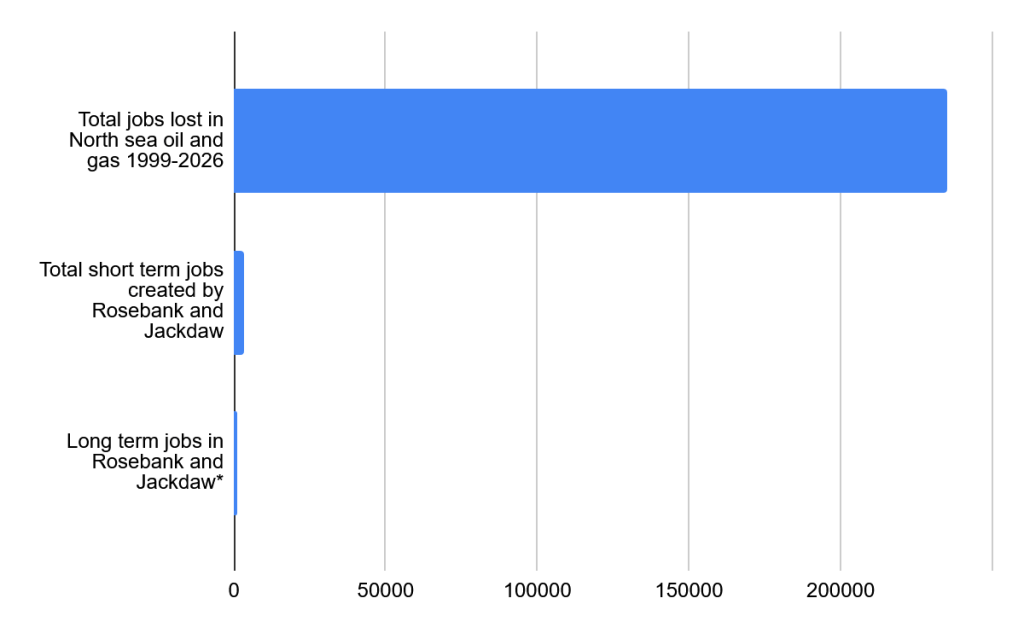
They would also do virtually nothing to defend jobs. The most optimistic projections of jobs creation from Adura – the lash up of Shell and Equinor set to run the projects – is for 3,500 jobs “at peak production”, so short term construction jobs, and 880 long term jobs to keep them going. This is a much larger projection than that of the BBC in 2023, which had 1600 in construction and 450 long term; but taking it as good coin, it is a miniscule proportion of the jobs lost (at a rate of 725 a month) since 1979.

That looks like this (even using Adura’s, possibly inflated, figures).

As you can see, the long term jobs are barely visible. Comparing the new Rosebank and Jackdaw jobs with the projected jobs decline up to the early 2030s shows a similar picture.

Assuming that government policy changes and these fields are approved. It is quite evident that the long term jobs in Rosebank and Jackdaw are a drop in the bucket and no amount of additional licences and tie ins will make any qualitative difference to the scale and speed of the job losses; as there are no other substantial fields left, and the remaining North Sea reserves cannot be “economically” extracted.

From a jobs point of view its a distraction from the main issue, because, without a plan for a transition to offshore renewables work, 60,000 workers will still lose their jobs within the decade whether they open or not. We need unity between all the North Sea unions and the climate movement to campaign for such a plan; which is the campaign we should have had all along.