Donald Trump and NATO Secretary General Mark Rutte want NATO members military expenditure increased to “Cold War levels” and for member countries to adopt a “wartime mindset” in order to prepare for a perceived threat from Russia, China, Iran and North Korea.
Neil Kinnock has just stated that 3-4% would be a “realistic” level to reach.
Part of this mindset is a preparedness to sacrfice health, welfare and pensions to fuel the military machine required to fight a war with Russia in Europe that would be suicidal for all involved if it actually broke out.
The UK’s “Defence Review” is framed in a similar “pre war framework”, posing Russia, China, Iran and North Korea as “the deadly quartet”; a good name for a jazz band, but geopolitically infantile.
The threat is posed most sharply in relation to Russia, largely because NATO is now evidently losing its proxy war in Ukraine. This impending defeat is being posed as a lever to militarise European society on the presumption that a Russian win there means that they will then threaten to invade the rest of Europe.
This is simply insane.
If you look at the balance of military expenditure between NATO and Russia, even after a sharp increase in Russian spending forced by the war to 7-8% of GDP, the imbalance in NATOs favour is overwhelming, because the combined GDPs of the NATO countries are almost incomparably bigger than Russia’s (which is smaller not only than the USA among NATO countries, but also Germany, the UK, France, Italy and Canada and barely larger than Australia).
If the argument from all quarters on high in this country is that “the world is becoming a more dangerous place”, its quite clear from this which countries are making it so in Europe. If the Russian level of expenditure shown in the yellow column is posed as a terrible threat by NATO, how much more threatening is NATOs current expenditure for the Russians?
To underline this with stark figures, with overall NATO spending in 2024 at $1185 billion and Russia’s at $109 billion,
for every dollar the Russians spend, NATO spends just under $11
and the European NATO powers alone spend £755 billion between them, which is just under $7 for every dollar spent by the Russians.
So, the question posed by this is already, who exactly is under threat from whom?
Trump and Rutte, and now Kinnock, propose to raise NATO military spending to “Cold War levels”. That was around 5% of GDP between 1970 and 1987. That would double the imbalance above and set NATO up for an offensive war with a collosal military advantage of 14 to one, even if the US kept out of it, and 22 to 1 if they were involved.
This reality is revealed by the decision of the EU to break its own fiscal rules and raid its levelling up funds to finance war preparations which, among other things, involves strengthening bridges so that “tanks may pass safely”. Were they concerned that columns of Russian tanks would be steamrollering West they would be weakening bridges so they couldn’t pass at all.
This is leaving aside the political feasibility of a Russian offensive, even if it were militarily feasible – which it obviously isn’t.
It beggars belief that a war of this sort is being envisaged with a nuclear power. The same people who argue that the UK’s nuclear weapons “keep us safe” and shouted at Jeremy Corbyn “would you press that red button, Mr Corbyn?” seem to think that a land war in Europe which, given the balance of forces, would be aimed at regime change and the balkanisation of the Russian Federation and have nothing to do with “defence” would not lead to the trip wires for use of these weapons being crossed.
So, the additional cost of meeting this target in full would be around £70 billion. Even getting half the way to it would require a transfer of £35 billion, which would have to come from “other priorities”: and not just “a small amount” as Rutte puts it. Kinnock doesn’t say what he would cut. He should be asked.
Every item cut instead would improve people’s lives. The best that can be hoped for increased military spending is that it doesn’t give our lords and masters the tools to end them.
All this flows from the strategic self subordination of Europe to the United States. As this recent article argues, the new situation for Europe is that the US is leading them into war with the continent’s strongest military power, Russia, at the same time as it deliberately undermining European rivals’ economies. It amounts to a US policy of subordinating Europe through a combination of military and economic warfare.
This is a lethal combination for Europe, the most serious threat to the entire continent since at least the end of the Cold War and in a broader sense since the end of the Second World War.
So, the fight against war, and the fight against austerity, to defend our conditions of life will have to go hand in hand.
Blairite retread George Robertson is set to lead Labour’s “Defence Review”, with former US Presidential advisor Fiona Hill on hand to keep it in line with US imperatives. The conclusions are flagged up in his premise, which is that the UK has to militarily confront a “deadly quartet” of China, Russia, Iran and North Korea. This is itself a variation on George W Bush’s “axis of evil” and flags up a sharp increase not only in direct military expenditure but also a pro war domestic agenda, trying to ramp up Cold War mentality and reflexes to enable a series of suicidal conflicts and silence dissent.
None of the four countries concerned are in a formal alliance and coordination between them is – needless to say – qualitatively below that which is permanently structured by the dominant US system of alliances, on “sharing arms, components and military intelligence”.
Taking his premise as a given – which we shouldn’t – this is the balance of military spending between the US and its allies (which includes the UK) and the so called “deadly quartet” 2023.
To spell this out. The US and its allies, who Robertson poses as being under threat, outspend the “deadly Quartet” by a factor of 3 to 1. So, who is the more “deadly”? If you were to put teeth on the US slice of this graph, it might reflect how US allies are seen in most of the world.
These figures were taken from NATOs own stats, and the wikipedia list of expenditure by country from SIPRI The NATO figures are worth a look because they show how rapidly NATO is increasing its spending (from $904 billion in 2017 to $1056 in 2021 to $1185 now) and that the number of countries spending 2% or more of GDP has doubled in the last year. The NATO figures, however, are lower than those in the SIPRI list. The US figure from NATO for 2023 is $755 billion, while for Sipri, it is a significantly larger $916 billion. So, the blue, biting pacman shown here probably has its jaws clamping down even more tightly.They also don’t include the exponential increases now being set by US allies, with Japan and Germany doubling their spending.
Robertson’s inclusion of Iran in the list also implicitly underlines the UK’s alignment with Israel. This is also evident in the current government continuing with Sunak’s attempt to exempt Israel from ICC jurisdiction and the fact that it is one of only two countries to be continuing with the defunding of UNWRA after Israel made unsubstantiated allegations about its staff being involved in Oct 7th. The other country (down from the original 16) is the United States – which is one definition of a “special relationship”. This alignment in the face of an ongoing genocidal attack on Palestinians in Gaza and escalating ethnic cleansing in the West Bank, requires the domestic demonisation of the solidarity movement in this country; which we are already beginning to see.
It beggars belief that there are people who are taking bets on a nuclear war taking place by 2025. While gambling addiction has its own dynamic, how does anyone placing one of these bets think they might be in a position to collect their winnings if it does?
The justified fear that the Ukraine war is heading in that direction is one of the factors in driving majorities in both North America and Europe to favour a ceasefire and negotiated peace over continued escalation.
A recent survey by the Institute for Global Affairs showed that more than twice as many people in Europe and the US supported NATO pushing for a ceasfire as opposed it.
The IGA notes that
In responding to Russia’s invasion, avoiding escalation with Russia is a top priority — especially among Europeans. Results suggest transatlantic support for a cautious response.
More support a negotiated settlement to end the war, with a plurality of Americans and Western Europeans citing the loss of life and casualties as a primary reason.
This is a broadly humane response that is the opposite of the course being taken by the G7 and NATO leaderships. It is perhaps no accident that all of the leaders at the G7 had a negative approval rating; ranging from Georgia Meloni on -10, through Joe Biden on -19 and Justin Tudeau on -33, Olaf Schultz and Rishi Sunak on – 44 to rock bottom Emmanuel Macron on – 52%. Even after just winning the UK General Election, as he arrives at the NATO summit in Washington, Keir Starmer’s rating is -3.
In fact, the same logic on the part of NATO that led to the war in Ukraine in 2022 is the logic that is heading inexorably over nuclear red lines, possibly before the Autumn. The problem with a nuclear balance of terror is that it only works until it doesn’t. And the calculated games of chicken only have to be got wrong once, and its the end for all of us.
It seems clear that the calculation in NATO in the Winter of 2021 that they did not have to take Russia’s attempts to end the smouldering Ukrainian civil war, and defang NATOs eastward expansion, with a
mutual security pact that would have guaranteed autonomy for the Russian speaking Donbass within Ukraine,
made Ukrainian neutrality permanent
and kicked negotiations about the status of Crimea into a possibly interminable negotiation process
seriously because they believed that either
Russian military threats were a bluff that could be called, or
that if Russia did intervene, that would be the opportunity they wanted for sanctions that would rapidly bring the Russian economy to its knees, creating domestic turmoil through which the well oiled processes of a colour revolution could lead to a “regime change” favourable to the US
were a complete miscalculation in both respects.
With the sanctions only supported by direct US allies,and largely blowing back on them, the Russian economy is doing fine, growing 5.4% in the first quarter of 2024 (compared with 0.6% in the UK, 0.4% for the US and 0.2% for Germany). And the military tide is turning slowly, remorselessly Russian, as the Ukrainian government is forced to resort to press ganging increasingly reluctant conscripts, sending them up to the line half trained, and suffering losses in soldiers and material that they can’t replace.
Faced with the prospect of defeat, the G7 and NATO are trying to up the military ante, rather than do what their populations want and seek a negotiated peace.
This is heading into very dangerous territory. Mark Rutte was confirmed as the incoming NATO Secretary General only after he assured Hungary that no Hungarian finance would be used for, or military personnel deployed to, Ukraine. That implies that other NATO forces will be, threatening the direct clash that could be a tipping point beyond the control of its instigators.
The decisions now being made at the NATO summit, with a dedicated NATO HQ being set up, promising an “irreversible path” to membership, cranked up arms spending, a no fly zone on the Western and Southern Ukrainian border, a green light for Ukraine to try to knock out Russian nuclear early warning systems that cover areas well away from Ukraine – a terrifying piece of irresponsible brinkmanship, as this makes a nervous nuclear armed power unable to tell if it is under fire or not in a context in which it is afraid it might be – deployment of NATO “instructors” within the theatre of conflict, and ever widening permissions given to fire NATO produced munitions into Russia are all edging towards catastrophe.
A letter to the FT by a number of academics and former diplomats, including Lord Skidelsky and Anatole Lieven, calling for a negotiated settlement to allow the world to be “pulled back from the very dangerous brink at which it currently stands” is a sign that the consensus at the top in favour of escalation is beginning to crack. This is likely to grow as the situation becomes more intractable and dangerous.
In this context, its important that positions taken in the Labour Movement do not rest too heavily on myths. A recent letter, Time to help Ukraine to win, signed, among others, by John McDonnell, Clive Lewis and Nadia Whittome, argued that failure on the battlefield has been down to inadequate supplies of munitions from the US and its allies, calling for the UK to “take a leading role” in supplying “all the weapons needed to free the entire country” and that, in the short term, this should take the form of obsolete MOD equipment being gifted instead of sold off, for a war crimes tribunal directed solely against the Russians and for Russian assets to be seized (stolen) by Western Banks.
There are four problems with this approach.
Myth 1. To “free the whole country” would actually be a reconquest of the Russian speaking areas that rebelled against the pro Western coup in 2014 and have been fighting it ever since, at a cost of thousands of dead from 2014 onwards; and, far from being a liberation, would constitute an occupation of those areas. This would not be pretty. Kyrill Budanov, head of Ukrainian military intelligence, has stated that this would require the mass reeducation of people “with a completely different mindset” and the “physical elimination” of some of them. Given what has happened in areas that Ukraine took back at the high point of its military efforts in autumn 2021, this does not have to be imagined.
Myth 2. McDonnell et al seem to assume that the taps can just be turned on from an infinite supply of military hardware. It can’t. The paradox of the NATO military Industrial Complex is that although it outspends the Russians 11 to 1, it characteristically produces immensely expensive and complex pieces of kit that require lengthy training, high levels of maintenance and can only be produced in relatively low numbers; and once they are used, at great expense, they are gone. This is highly profitable for the arms companies and is designed for short sharp wars against Global South countries, not long term grinding wars of attrition with near peers. Stocks are now run down, the obsolete equipment, like Leopard I and 2 tanks, Bradley AFVs and so on have been deployed and destroyed in large numbers. F16s – an aircraft first deployed in 1978 – are the next installment and will fare no better. Plans to increase production of, say, Patriot missiles, can only be incremental – from about 500 to 650 a year. That is why this position is a fantasy. The supplies sent to Ukraine have been the maximum that NATO could scrape together. The only way to shift this would be to completely retool arms manufacture, which would require massive investment over several years; and politically set a trajectory for war that would be very hard to stop. No one on the Left should support this.
Myth 3. The barrel has already been scraped for obsolete equipment. The MOD website Army Surplus Store section notes that as of May 2024 “There is currently no MOD surplus inventory for sale.”
Myth 4. McDonnell et al’s argument that “Ukraine deserves a just and socially progressive reconstruction in which trade unions and civil society can democratically participate. International support should help to restore and expand universal healthcare, education, rebuild affordable housing and public infrastructure, ensuring decent jobs and working conditions. No more advisors from the UK Government should be used to assist in retrogressive reforms of trade union and labour rights” is also, sadly, wishful thinking. The “reconstruction” of Ukraine will be a massive asset stripping fire sale, as its Western “backers” come for their loans like a flock of vultures. It has already been agreed between Western creditors and the oligarchs who have run the war, embezzled a good proportion of the “aid” and siphoned quite a bit of arms supplied into the international black market, that the “reconstruction” will be managed by Blackrock; whose priorities are not those of John McDonnell. Blackrock would, no doubt, wish for a succesful UAF offensive into the Donbass that would allow them to get their hands on the $12 Trillion worth or rare earths that are sitting below the surface there. Such an offensive is even less plausible now than when it was tried in 2022 and the UAF suffered terrible casuaklties to make marginal territorial gains of no strategic significance.
Myth 5. In this context, any notion that Ukraine’s debts will be cancelled is similarly wishful thinking. Its as if NATO powers aren’t in this conflict for themselves. As if it is some genuine genuflection to – a partially applied – principle of national self determintion. The West, will want its pound of flesh. One reason for the Ukrainian oligarchy to keep a hopeless war going is to postpone the time that the aid stops flowing and the debts come due. For NATO countries to unilaterally sieze Russian assets would be another nail in the coffin for any pretence at upholding a “rules based international order”, rule out any serious possibility of peace negotiations and be seen in the Global South as on a par with the appropriation of Venezuela’s assets by the same imperial powers.
Sections of the Left often put forward spurious – slightly fantasised – arguments in order to cover an accomodation to their imperatives of their own ruling class. The paradox of this is that the ruling class itself is more hard nosed. The section of the US ruling class that backs Trump wants to cut its losses, try to impose even more financially ruinous military spending on its European subordinate allies, so that, with or without a ceasefire in Ukraine, the US can concentrate on launching and even more ruinous war in the South China Sea.
That is where the US ruling class is heading. It is why a candidate like Trump, convicted felon and epic shyster, keeps afloat on a sea of money; and now looks like he is going to win, with all the “unpredictable violence” that Boris Johnson thinks is just what “the West needs”. This strategic shift is not because Trump is in some way “Putin’s patsy” but its actually a statement of weakness that the US no longer believes itself capable of fighting two and a half wars at once and prevailing in all of them. They have to concentrate on the biggest target, and if that causes problems for its subordinate imperial allies, so be it. To deal with the twists and turns of all this the section of the Left that finds itself cheerleading for NATO escalation will need to burn its delusions.
We will put the UK’s own defence industry on a war footing.Rishi Sunak
The UK spends more on its armed forces than every other country in the world bar six.
Why is it that the countries that spend the most on their militaries, and bomb and invade other countries the most, think that it makes the world safer if they spend even more?
David Lammy’s recent article, The Case for Progressive Realism. Why Britain Must Chart a New Global Course in Foreign Affairs claims to base itself on a “politics based on respect for facts”, to look for “realist means to pursue progressive ends” and seek “the pursuit of ideals without delusions”. His problem is that the “facts” he uses are filtered by and seen through an ideological lens that distorts them, turns things upside down and inside out; and it rapidly becomes clear that the “new course” he proposes is a reprise of the old one; as the “chart” he is using is marked up with the same old, same old Foreign Policy Shibboleths that have defined UK policy since Suez. Primarily being most favoured auxiliary for the USA during the “American Century”, and a willing supporter of attempts to prolong it for another.
Lammy aims to square a lot of circles, because that course is now increasingly unviable, and the contradictions are starting to creak. In the attempt he skates at speed across a thin ice of delusions about the world that make the ideals he touches on in places unattainable. The “means” that he defines as “realistic” are incompatible with the ends he describes as “progressive”. It is therefore not entirely coherent. Andrew Fisher, possibly kindly, describes his article as a “word salad”.
Before going through this point by point, more or less in his order, I’d like to examine one extraordinarily strange phrase that crops up near the end but, in its way, summarises the fundamental contorted distortions of his world view.
He writes “at times in the Twentieth Century, Western powers undermined the sovreignty of weaker states, especially in the Global South”.
Where do you start with this?
“At times”. As if this were an occasional aberation. An uncharacteristic lapse from an otherwise egalitarian norm of sunny mutual respect. As in, the people of the Congo had their sovreignty “undermined” “at times” by Belgium and “at times” died in their millions. Or, “at times”, Britain presided over famines in India that it took independence to stop. I could go on.
Do I really have to point out that, for the first half of the Twentieth Century, most of the Global South had no sovreignty at all, as they were under the direct territorial control of “Western” Imperial powers.
Nor that this was not abandoned willingly by the “West” in the second half of the century either.
The UK, France and Portugal fought a series of viscious post colonial rearguard actions against independence movements right up to the 1970s; Vietnam, Malaya, Aden (Yemen), Algeria, Kenya, Angola, Mozambique, Guinnea-Bissau.
Settler colonial regimes in Rhodesia and South Africa kept this up to the 1980s and 90s, and Israel is still doing it today.
The United States picked up “the white man’s burden” from France in Vietnam with lethal effect (2 million killed) backed coups and military take overs in Indonesia (600,000 killed) and all over Latin America; Guatemala, Brazil, Bolivia, Argentina, Chile.
The “neo colonial” settlement that allowed formal independence for former colonies left them at the mercy of their former colonial overlords, sometimes embodied in formal structures ensuring financial control and military presence, as in France Afrique until recently; leaving most of the Global South for most of the rest of the twentieth century hog tied by debt and unequal exchange, and sometimes fought over for resources.
Within this, the US gained greater weight over its imperial rivals via economic domination (the US notion of “decolonisation” being the removal of barriers put in the way of their trade by the territorial control of imperial competitors).
This has led to a process of incorporation and subordination of European powers and Japan into a dominant US centred imperial bloc with a parasitic relationship to the rest of the world; which is where we are now.
Western powers “undermine the sovreignty of weaker powers, especially in the Global South”, not just “at times”, butdo so all the time as a structural norm. This is underpinned by an unparallelled capacity to unleash violence on anyone who steps out of line. Recognising this is “realism”. Failing to see it is “delusion”. Accepting or supporting it is siding with the oppressor against the oppressed, the exploiter against the exploited. Always.
Things ain’t what they used to be
Lammy, however, starts his essay by bemoaning how this has began to change; comparing the world at the time of the last Labour landslide in 1997 with the one that will greet the next in 2024.
In the 1990s, after the collapse of the Soviet Union, it was possible to believe in an eternal Pax Americana, in which the entire world would eventually turn into one gigantic American suburb, through US led globalisation and the wonders of the free market. This was a fantasy, even at the time.
What Lammy describes as “the liberal democratic model” – in which all countries would eventually become wealthy clones of the US (just later in the fullness of time, after a little bit of inevitable gradualism) – meant for most of the world to continue living under the crushing weight of the Washington consensus; which policed all development in US interests, guaranteeing that millions were trapped in extreme poverty, forced to live in teeming self built slums, or rural desperation, their resources extracted for little or no benefit by Western multinationals, essential services like water supply privatised; with the threat of military intervention standing permanently behind the IMF and the World Bank.
In 1997, with a slight whiff of “Good Old Days” nostalgia, he notes that the UK had an economy that was larger than those of China and India combined; and it still adminstered Hong Kong as a colony. Not any more. Never again.
Bull in a China shop
Now, as Lammy notes, “China is a superpower”. It has a larger economy than the US, in Purchase Power Partity terms. Lammy does not note, but we should, that it has been mostly in this period from 1997 that China lifted 850 million of its people out of poverty, and eliminated extreme poverty altogether in 2020. A feat described by a Labour Foreign Policy Group report in 2021 as “perhaps the single most significant contribution to human wellbeing in world history”. Something that you’d think someone with “ideals” and “moral purpose” might welcome, or even seek to learn from.
But not a bit of it. Lammy chooses to interpret this as a threat and a “systemic challenge to British interests” (a phrase that begs more than one question).
“Democracies” – a word he uses as a euphemism for the core Imperial powers which are tightly allied to, and coralled, by the United States – are “on the back foot” and losing the “hearts and minds” of the Global South “middle class”; such that “countries described … by CIA Director William Burns as the “hedging middle” are striking bargains and setting their own agendas in Africa, Asia, and Latin America” and, even worse, “they ignore the European Union, the United Kingdom, and the United States ever more frequently”.
They are just not doing what they are told anymore, dammit!
It is the rise of China, and the failure of the US to contain it, that has sent US politics into such a delirious tailspin. Because, if the US truly is the one indispensible nation, with a political and economic system that is the best in the world, then this should not be happening. But, happening it is. And, if everything you believe about the world is being shown to be false, but you can’t bring yourself to break with your beliefs, it becomes possible, even necessary, to believe ten impossible things before breakfast to try to make sense of it. An impulse to seek truth from anything other than the facts is characteristic of the MAGA movement, but not confined to them. “Realism” is too unbearable to be acceptable. So, dangerous fantasies take its place.
We should note at this point that more people in China think that their country is a democracy – a country run in the interests of the people – than people in the US do. In a study published by the Alliance of Democracies Foundation and Latana data tracking firm, when asked whether they believe their country is democratic, those in China topped the list, with 83% saying it is, and 91% also saying that this is important to them. In the US, only 49% of those asked said their country was a democracy and 76%, said it was important.
That looks like this.
Percentage of people in each country that consider it to be a democracy
We should also note that Lammy’s concern with the “middle class” in the Global South is an odd one if his major concern is with development. A striking feature of most of the Global South is the class polarisation, with very extreme Gini coefficients which show a wealthy layer with living standards comparable to those in the “West” sitting on top of a much larger number of impoverished people living in varying degrees of desperate precarity. Rajiv Ghandi’s formula of “France in India” is quite a good way to envisage this; that India contained a nation with roughly the same population and wealth as France – about 65 million – atop over a billion living in desperate straits. This polarity explains the extremity of Rightist Global South politics, producing figures like Bolsonaro or Milei. Wealthy people living in close proximity to teeming masses that they feel threatened by often feel the need to keep in their place with extreme violence. I suspect that when Lammy talks of the “middle class”, he is refering to the wealthier sort, who are in no way middling, economically or politically, but he never clarifies.
Lammy comes back down to Earth to note, appropriately, that “Climate breakdown is no longer a future worry. It is here”. He also notes that China, the US and EU all have green transition plans that require large amounts of state led investment, to a degree that the UK does not, but without digging into the figures that show that only China is doing this on the necessary scale. This is from Adam Tooze. “Measured against the $ 4 trillion per annum benchmark, the only country(my emphasis) that over the last decade has come anywhere close to spending, lending and investing on the required scale is CCP-led China“.
Bloomberg’s tabulation of the $1.1 Trillion investment in energy transition in 2022 shows the following.
China’s investment in energy transition in 2022 was almost double that of the US and EU put together. And this gap is accelerating.
It might be fair to conclude from this that it is just as well that China did not follow the Western economic model, and that its state directed economy is better able to deal with this challenge. Without their investment in renewables, having made them cheaper than fossil fuels, we would already be sunk.
Lammy however regrets that China’s entry into the World Trade Organisation did not lead to the adoption of “liberal democratic values”, putting the private sector in the driving seat of the economy and polity. Had they done so, China could be just as succesful as we are with our neo liberal model that crashed in 2008, is now leading to ever greater concentration of wealth in the hands of a tiny minority; while infrastructure crumbles and standards of living for the majority stagnate or decline. In fact, China is the only large economy in the world in which wage rates have risen consistently for workers in the last decade, such that these are now higher than they are in Portugal and Greece and comparable with Poland.
I think Lammy is being a bit previous in stating that “the rise of China has ended the era of US hegemony”, but it certainly challenges it in trade, technology and scientific innovation – all of which flows from China’s refusal to accept permanent status as a low grade mass manufacturer, most favoured sweat shop providing cheap imports for Western consumers, while stuck in a middle level development trap for its own citizens.
Most countries around the world now trade more with China than the US, and this is a trajectory that is increasing, making attempts to “decouple” an act of self harm. This is true even when defined as “derisking” (a phrase based on the paranoia that its so much worse if a Chinese smart fridge company knows when you need to buy more milk than when Google does). Cutting Chinese tech out of 5G broadband – the most advanced in the world – is an example of voluntarily adopting additional costs for a slower service, which has the additional negative consequence of increasing unnecessary tensions. Partly because of US high technology sanctions, China has increasingly innovated and is now considered to have a lead in 37 out of 44 key technological indicators. This is particularly crucial in green transition, so “derisking” in this area carries with it a lot of serious risks that we can’t afford.
The key area in which the US maintains a crushing dominance is precisely the one that Lammy tries to present as the most threatening; the military. Lammy warns that the Chinese Navy has more ships than any other, but, as World Population Review points out, counting a small patrol vessel as having the same significance as an aircraft carrier “is akin to saying a squirrel is the same as a rhino, or a scooter is the same as an 18-wheel semi-truck”, so, “to better estimate the overall power of a given navy, some analysts turn to tonnage, which is a measure of the amount of water a ship displaces or the amount of cargo it can carry”. By this measure, the US Navy, at 3,415,893 tonnes, is just under five times bigger than the Chinese Navy, at 708,886 tonnes. As Shadow Foreign Secretary, you’d expect Lammy to know that. Perhaps he does, and is just chancing his arm in the hope that no one will check.
We can also look at this in terms of the scale of overall military spending. This year, the US is spending $831,781,000,000 on its front line military. Monthly Review has argued for some years that US military spending figures underestimate the true quantity by about half, but, even if we go with the declared amount, China’s spend of $227,000,000,000 is less than a third of the US total.
This understimates the balance, however, as direct US allies in the region, like Australia (which has a collosal military budget for a country its size), Japan and South Korea add an additional $150 billion; and some proportion of the UK’s $62 billion has to be allocated through its commitments to the AUKUS Treaty. And we should note that all these allies are under intense US pressure to increase and coordinate this spending, and other NATO allies like Italy are entering into joint projects with Japan, which is doubling its expenditure at the present time.
You can look at it in terms of overseas bases too. The US has 750 bases in 80 countries. China has 1 (in 1). The US bases near China encircle it, as we can see here. There are no Chinese bases anywhere near the United States.
The same applies to deployment. US aircraft carrier task forces, sometimes with the Royal Navy’s new carriers (probably the ugliest boats in the world, not an essential point, but they really are hideous looking) as auxiliaries regularly steam up and down the South China Sea. No Chinese Navy forces at all deploy to the Gulf of Mexico or English Channel. Imagine the headlines in the Daily Mail or USA Today if they did. In that light, it is quite amazing how calmly China takes this.
You can also look at it in terms of balance of nuclear power. The United States has 5,244 nuclear weapons. China has 500, a tenth as many. China also has a defensive, no first strike policy – the only nuclear power to have one. A First Strike policy has been US military doctrine since the 1960s, and remains so, even though it has been known since the 1980s that this would be suicidal even if it worked. The explosion of smoke and debris above the cloud layer from the first overwhelming salvo of missiles would blot out sunlight for several years; causing a nuclear winter that would obliterate the “victorious” powers through temperature collapse and starvation, just as surely as the defeated would be incinerated and blasted to death. For a sobering and essential examination of this see John Bellamy Foster’s Notes on Exterminism.
Characteristically, Lammy does not note that no one in China is arguing for a war with the United States. In fact they argue for “win, win cooperation” and “a common home for humanity” as we move towards an “ecological civilisation”; all of which seem both reasonable and essential positions that it would be helpful for humanity if the West were to respond to positively. Nor does he point out that arguing for such a war within the next decade as the only way to stop a peaceful rise by China is now a live debate in mainstream US Foriegn Policy circles; and that maybe this is more than somewhat unhinged.
Arising from all this, the question that has to be realistically asked is, who is threatening whom? Who is posing the “real security threat” and how dangerous is this, realistically? And shouldn’t Labour be seeking to restrain this rather than hype it up and cheer it on? Instead Lammy argues for AUKUS to be “a floor not a ceiling”. This is, realistically, a path to war; the consequence of which cannot be considered to have any “moral purpose” whatsoever.
It is slightly mind boggling that, while he pushes this antagonistic and confrontational military alliance, he thinks positive engagement with China on economic development, climate breakdown and AI (particularly as China is leading on this) can pootle along happily in a sort of paralell universe, not distracted at all by the war drums he is so busily beating, nor thrown off course by the diversion of necessary investment into the suicidal dead end of an arms race. You can make up your own mind about whether this is remotely “realistic” or contains a scintilla of “moral purpose”.
Little Britain blues
More parochially, in an attempt to have “tough minded honesty about the UK”, Lammy goes on to note what he sees as its three key problems.
Its economy is stuck in a low growth, low productivity, low investment slump. Which, given his concern with green transition and positive remarks about state led investment in China, the EU and US, should make him question why Labour has shrunk its green investment plan to little more than is already on the stocks from the Conservatives. He notes that the UK has the lowest level of investment in the G7, but seems to think that Keir Starmer’s “mission” to get the highest growth is possible without this investment, if only the country would have enough self belief. As delusions go, this is a big one.
Its armed forces are too small; which is only the case if you want to prepare for a war that could easily kill us all instead of taking active steps to avert it.
Public Services are crumbling. He could have noted that this also goes for infrastructure, which brings us back to the need for investment which the “realism” of the Shadow Treasury team rules out. So, do not pass Go…
Realism is for him embodied by Ernest Bevin’s actions as Foreign Secretary in the post war Labour government. The flip side of the progressive measures taken by that government, founding the welfare state and NHS, nationalising key industries, was its resolute continuity in Imperial Foriegn Policy; which led it to resist decolonisation, form NATO, aquire atomic bombs, join in the Korean war: and maintain military spending at such a high level that it had to sustain austerity to a degree that got it voted out of office in 1951.
Recognising that “realism alone will not be enough to save the planet” – which essentially means that “realism” defined in this way is anything but realistic – and that the “West” has “to cooperate with its rivals on climate change and AI” leads him to disinter the ghost of Robin Cook as the Push Me to Ernest Bevin’s Pull You. Cook is lauded for his promotion of “human rights” and “soft power”, embodied in the 0.7% of GDP allocated to development aid (a figure that Lammy notes, but does not commit to restoring) and his “realism” in making “hard choices” about “arms exports”, ie letting them go ahead. Lammy’s subsequent assertion that “governments don’t have to choose between values and interests” is belied by this.
Damned if you do, and damned if you don’t
So far so confusing; but Lammy’s attempt to have his bomb and drop it continues. The “West” made mistakes. Its interventions in Iraq, Afghanistan, Libya, the whole war on terror, became “seen as” a “recipe for disorder” because, despite initial military wins, it was unable to stabilise a viable pro Western regime anywhere. Its power lasted just as long as it could sustain boots on the ground, which is not indefinitely. The resulting chaos and impoverishment has not gone unnoticed across the world. The “moral purpose” that Lammy argues for, loses out to “self interest” every time. And because, of the decadent, parasitic stage they are now in, the US and its allies are sucking capital in, not spreading it out, and are therefore incapable of “nation building”.
Four and a half million people were killed in these wars, which I think should be categorised as the first phase of the Wars for the New American Century. Ukraine and Gaza are the start of an even more dangerous second phase, as a more desperate US takes greater risks.
The Rules are for the Little People
Lammy takes the Rules Based International Order as the embodiment of a viable global civilisation, but it is widely understood in the world that the rule that defines the rules is that Washington makes all them, none of them apply to the USA (and select few of its closest allies) and they will be changed on a whim.
A small example of this was the 1984 case at the International Court of Justice in 1984, when Nicaragua won compensation of £17 billion from the US for the damage done by the US-funded Contra war and the mining of its ports. Not a cent was paid. Who was going to make them?
A more recent example is the reaction to the ICJ ruling that Israel has a case to answer that it is commiting genocide in Gaza. The instant reaction from the US and its allies was to defund UNWRA on the back of unsubstantiated accusations from Israel that some of its workers took part in Oct 7th. That is a direct act of collusion in the attempt to starve Palestinians, and two fingers up to the formal structures of international law.
So, the failure of these interventions were a blow to Western hegemony. As Tom Tugendhat put it after the Afghan withdrawal “This feels like defeat”. But, in a quick pivot, Lammy asserts that Western standing was also damaged by the failure to intervene in Syria, or take a harder line in Ukraine in 2014.
What Lammy is describing here, without thinking it through, is that whatever the “West” does, deepens its crisis. It loses ground when it doesn’t intervene, causes chaos when it does.
Pursuing War not Peace in Ukraine
This is demonstrably the case in Ukraine. The West is supporting Ukraine like a rope supports a hanging man. The country is being destroyed. More than 100,000 Ukrainian soldiers have died so far. A great investment according to David Cameron, as “not a single American life has been lost”.
If their concern were genuinely with peace and security in Europe, NATO would at least have been prepared to negotiate with Russia about mutual security arrangements in the Winter of 2021. Instead, we had a hubristic refusal to engage to ease off tensions, which has led to the war which NATO is now visibly losing, amidst appalling casualties and damage.
The sanctions against Russia have failed. Most of the world does not support them, because, as Lammy notes, they see the conflict as between “the West vs the rest”; and have long experience of not being “at the table” with the US, and therefore being “on the menu”, as Antony Blinken put it recently. And they are no longer so securely under the West’s thumb.
Lammy’s support for military “burden sharing” for “as long as it takes to secure victory” is hard to square with any notion of “realism” if “victory” means Ukraine reconquering parts of its pre 2014 territory which actually see themselves as Russian. Even people who consider that to be desirable, have a hard job arguing that its possible. Phrases like “once Ukraine has prevailed” are evidently hollow.
Instead of looking to a peace agreement, as outlined here, that would allow all people in all parts of Ukraine to live in the state they wish to, secure neutrailty and reduce military tensions across the continent, Lammy argues for a “long term generational response” to the “Russian threat”. Again, this is playing on fantasies, as NATO at present already spends more than eleven times as much as the Russians do on its military. That looks like this.
Total military spending 2024
The NATO bloc on this is approprately reminiscent of Pacman, and should probably have teeth drawn on it
What Lammy is proposing is a long term “generational” increase in the military industrial complex and militarisation of society, with some military sources floating the reintroduction of conscription, at a time in which the “realism” of the Treasury team will impose freezes and austerity on everything else.
The (Republican) Elephant in the room
Lammy’s argument for closer links with EU powers, and bilateral pacts to supplement NATO, are the only hint of the nervousness that all the Labour front bench feel that they could be coming into power at the same point that Donald Trump takes back possession of the White House.
Its not surprising that Lammy – with stopping climate change one of his progressive aims – does not explore this possibility; as the US under Trump would go full rogue state on climate change, pull out of the Paris Agreement like they did before and “drill, drill drill” – with an overall impact of an additional 4 billion tonnes of CO2 released by the US the end of his second term. This would make a 1.5C limit completely unachievable, and the damage globally would be horrific.
Lammy, as potential Foreign Secretary would therefore either have to straddle an impossible contradiction in which the main perceived “threat”, China, was investing in the necessary transition, while the “foundation of UK security”, the US, was sabotaging it. As he says, “no country can go green without cooperation”. So, who would he seek to cooperate with? He could only resolve this contradiction by dropping concern with climate change and playing down its significance so as not to upset the “special relationship”, or break with US policy in pursuit of the only realistic understanding of its consequences. It might be argued that Labour’s downgrade of its $28 billion green investment pledge is a pre emptive move to anticipate a Trump Presidency, not just pusillanimity in the face of Neanderthal Tory attacks. This is a concrete choice that has neither “moral purpose” nor “realism”.
Is a sentiment increasingly strongly felt in Ukraine. An unwillingness to die for Grant Shapps is also a majority sentiment in the UK, with just 17% being prepared to “fight for their country” in recent polling (and just 14% of 18-24 year olds).
We are now at a very dangerous point in the war in Ukraine. NATO is having to contemplate a defeat. The Ukrainian armed forces are suffering terrible losses and retreating all along the line of contact. There are increasing reports of surrenders, sometimes whole platoons sent to occupy suicidal forlorn hope forward positions (who are asking the Russians not to include them in prisoner swaps so they don’t get sent back to the front). There are also now a lot of videos of men being press ganged by Ukrainian recruitment officers, involving chases down the road and punch ups. Sometimes they get away, sometimes they don’t. The new conscription bill, to draft younger age groups is deeply unpopular and has been a political hot potato for months. The days of eager recruits is long gone. There have been whatsapp groups used by men to warn each other when the press gangs are around, so they can keep their heads down, for quite some time now. The latest visit from US National Security Adviser Jake Sullivan is reported to have offered Zelensky a deal; pass the conscription law as the quid pro quo for the US unblocking its latest tranche of aid. Essentially, this translates as Sullivan saying you provide the men to fight and die, we’ll supply the weapons that keep them in harms way. Zelensky’s own standing is undermined by the expiry of his Presidential term this month. Elections have been cancelled until the war is “won”.
There are two problems with this.
1. “Winning” for Kyiv/NATO means;
reconquering parts of pre 2014 Ukraine that rebelled against the US/EU backed overthrow of a government they had voted for. 30% of the pre-2014 Ukrainian population spoke Russian as their first language. Calling for an end to “the Russian occupation” would actually require most of the population of Crimea and Donbass to become refugees heading for Russia. Calling for “Russian troops out” means driving the locally recruited Donbass militia, which is now integrated into the Russian armed forces – out of their homes and the land they have been fighting to defend since coming under Ukrainian attack in May 2014.
integrating Ukraine fully into NATO – the world’s dominant alliance of imperial predators – as “a big Israel in Eastern Europe” (President Zelensky). A military frontier henchman state for a US dominated bloc that, as we know from long experience, or should, applies the principle recently restated with alarming candour by Anthony Blinken at this year’s Munich Security Conference: “if you’re not at the table in the international system, you’re going to be on the menu.”
Neither of these are outcomes that anyone on the Left should support.
Even if you think that being against “campism” means that you have to defend “principles” like the “right” of a state to join an imperialist military alliance; if you find yourself agitating for that bloc to be moreaggressive in supplying arms, there is no basis on which you can oppose the militarisation of our society, and the war drive that our ruling class is engaging in, because you have become a cheerleader for it. This is revealed by the argument in a recent article on Labour Hub from the Ukraine Solidarity Campaign that the impending defeat in Ukraine “has arisen from the self-limiting approach by the democracies providing aid.” My emphasis. Who does he mean by “the democracies”? The world’s richest, most powerful economies, coralled into a military and political bloc that exploits the rest of the world under the leadership of the USA? Those “democracies”? For the author, the core of world imperialism are “the democracies” engaged in a “key battle for democracy with the new authoritarianism.” This is straight State Department terminology and framing.
This way of thinking possibly explains why USCs contribution to the war drive of the countries that account for 75% of global military spending, launched the “war on terror” that killed 4.5 million worldwide and are currently arming Israel in its genocidal assault on Gaza, is to produce wild and lurid propaganda about Russia’s “barbaric methods” that are the contemporary counterpart of those penned by Horatio Bottomly in John Bull during WW1. They have reduced themselves to a descant chorus to the relentless drone of the ruling class narrative in the dominant media. Karl Leibknecht did not say “The enemy is at home – but for the Russians, Chinese, Syrians, Libyans, Cubans, Venezuelans, Afghans, Haitians (add whoever the next target is) we’ll make an exception”.
2 “Winning”, as described above, is impossible and the attempt to do so will destroy what is left of Ukraine.
The Ukrainian offensive last year was a debacle. The Western supplied equipment, and the tactics they advised, failed appallingly. Incremental gains were won at a terrible cost in men and equipment. There is no chance of a repeat. No one now seriously envisages punching through to the Sea of Azov, let alone a march on Rostov on Don. So, what, or who, is the war for?
For NATO, sustaining the war, at the cost of thousands more dead Ukrainians, is worthwhile to “weaken the Russians”, or at least stave off a very visible defeat. NATO is the core imperial alliance. “Losing” in Ukraine would be a loss of face even more severe than that suffered when its Afghan proxy regime collapsed within weeks of direct withdawal. Can’t have that. However, this requires Ukrainians to be willing to keep fighting, with no chance of winning, no light at the end of the tunnel, the only fuel being the sense of keeping faith with the dead, whose sacrifice cannot be aknolwedged to have been in vain. As noted above, this is beginning to wear out. People need, and deserve, a future that is not an endless war.
There are two possibilities in the current situation.
The Russian armed forces continue to make steady incremental gains on the ground and thousands of Ukrainians die in a futile attempt to stop them; leading, eventually, to political collapse in Western Ukraine leading to partition and neutralisation. No amount of Western weaponry short of nuclear war is going to stop this. The argument in the latest article from Labour Hub – Labour and Ukraine: Oppose the Tory arms sales and demand the weapons to win! endorsing a proposal from John McDonnell and Clive Lewis that the UK Ministry of Defence should stop selling off its old inventory, and donate it to Ukraine instead, peddles the face saving delusion that a bit more second hand equipment would magically do in 2024 what it spectacularly failed to do in 2023. In so doing, it postpones coming to terms with what is staring us all in the face. To try to “win” would involve a level of escalation that would not only militarise society – and require “sacrifices” by the working class to pay for it – it would also threaten a direct confrontation between NATO and Russia; which would be suicidal for all of us. We should all oppose that.
NATO escalates? It is not at all clear what they are going to do. NATO intelligence already provides the UAF with satellite data. There are advisers on the ground, Some of them were killed in a recent Russian missile strike on Odessa. The Black Sea operations are being run by a Royal Navy Admiral. There are also some Special Forces and “volunteers” engaged, like the former French Foreign Legion soldiers who took part in the recent UAF incursion across the Russian border (another costly debacle). “Mission creeep” is always on the agenda. There is currently a massive NATO military exercise going on, that started in January and is scheduled to last until May, largely focussed on the area to the West of Ukraine – part of an annual series of rehearsals for a war with Russia that have been going on for decades. This is in addition to increased permanent deployment since February 2022 into the countries that border Ukraine to the West. As NATO puts it itself, “allies reinforced the existing battlegroups and agreed to establish four more multinational battlegroups in Bulgaria, Hungary, Romania and Slovakia. This has brought the total number of multinational battlegroups to eight, effectively doubled the number of troops on the ground and extended NATO’s forward presence along the Alliance’s eastern flank – from the Baltic Sea in the north to the Black Sea in the south.” So, there are forces poised. Sabre rattling from President Macron, proposing to send NATO troops into Odessa and other parts of Western Ukraine to secure it for “the West” and release Ukrainian reserves to fight and die at the front for many, many more months, kicking a resolution to the war bloodily down the road, has not been endorsed across the bloc, but has led to the deployment of sigificant French forces into Romania in recent days. Doubtless for USC this is another example of “the self-limiting approach by the democracies (sic) providing aid”. It should go without saying that this is incredibly dangerous and I wonder if USC would cheer them in if they marched across the border.
Put very simply, for NATO to attempt to “win” in current circumstances risks nuclear war, which we should all oppose. Sustaining the conflict, even with army surplus goods from the MoD, means many thousands more deaths and the destruction of whats left of Ukraine; with the war as an end in itself that has no end. A peace on the basis of accepting the self determination of both peoples in Ukraine, and securing Ukrainian neutrality could have avoided the war in the first place, and remains the best result now.
Personal post script.
In the early 1960s there was a popular record request programme on the BBC Light Service called Two Way Family Favourites. Well before the internet and mobile phones, this was primarily aimed at allowing service personnel deployed overseas a chance to connect with their family back home by way of requesting a record to be played during Sunday Dinner. A lot of requests came in from BFPO 39 (the Forces Post Office for the British Army on the Rhine) and a regular favourite was the 1812 Overture; Tchaikovsky’s triumphalist celebration of the debacle of Napoleon’s retreat from Moscow. They would always play the last part; depicting the snow swirling down and enveloping the Grande Armee as it limped West, and ending with the old Russian national anthem played as an up tempo riot, punctuated with cannons going off, heavenly choirs singing and church bells ringing. As a child, I thought at the time that the soldiers were requesting it because of the cannons, but (along with the equally frequent requests for the US President’s phone call to the Soviet General Secretary from Dr Strangelove) I think this was a way of sending the message that contemplating a war with Russia was a really bad idea.
These are pictures of children killed by the almost daily Ukrainian Army shelling of Donetsk City since 2014 on display in the Arbat in Moscow. There are more than 300 of these children. They are not reported here. The GMB Motion writes them out of history. Photo: Dan Kovalik
When you think through what it says, it becomes clear that support for the GMB Motion to the TUC on the Ukraine war means support for two things that contradict everything the trade union movement stands for.
1. The ethnic cleansing of the Donbass and Crimea
2. An unlimited commitment to a war without end and/or an escalation which could lead to a nuclear confrontation that will kill all of us.
To be precise about it:
1 Ethnic Cleansing
The Motion’s point 1 calling for the immediate withdrawal of Russian forces from all Ukrainian territories occupied since 2014 is not compatible with point 3, calling for a peaceful end to the conflict that secures the territorial integrity of Ukraine and carries the support of the Ukrainian people. This is because it eliminates the people of the Donbass and Crimea from the narrative. As we can see from the image above, this is because there has not been one undivided “Ukrainian people” since 2014.
There has been a civil war.
The success of the Maidan movement in 2014 in overthrowing President Yanukovych, backed by the US, EU, finished off any chance of sustaining the binational state in Ukraine balanced between Russia and “the West” that had been viable until then. The people of the Donbass and Crimea rebelled against the overthrow of a President they had voted for. The decision by the new regime in Kyiv to repress them by force was prevented in Crimea by a popularly supported Russian annexation, but the bombing of Donetsk City by the Ukrainian Air Force in May 2014 began a civil war that had already cost 12,000 lives before the Russian intervention in February 2022.
This eye witness account of that day from the Donetsk Anti Fascist site is from EIena Hovhannisyan, a biology teacher:
“At that time we kept up with the news from Sloviansk and Kramatorsk. We already knew how people had been martyred in Odessa, Mariupol and Krasnoarmeisk.
I had forebodings of near disaster. It was already hovering over us, but we did not think how tragic, long, brutal, hopeless the events would be. Sometimes it seemed that it was just a bad dream, that I would wake up and everything would be like before. But no. It is an illusion that the war will not touch you. It will touch everyone, sooner or later. We were simply the first to be in the epicentre.
And May 26th I will always remember. The warm, sunny weather and the roar of planes in the sky. From the balcony on the side of the airport black smoke could be seen, you could hear explosions constantly. The first shelling, deaths, destruction, grief and pain. Since that day, there would be no peace in Donetsk for another nine years. But we didn’t know it then.
And that day was endless, filled with horror and pain. The phones were literally ringing off the hook – everyone was trying to find out what happened to their loved ones, whether they were alive or not. In the evening my son arrived from work; his office was a couple of blocks from the station. He told about the horror in the city, about the dead woman vendor from the station market, about the very young guy who worked as a valet. He was killed by shrapnel from a missile fired by a Ukrainian helicopter.
People were falling, screaming, crying, calling for help. Passers-by tried to save the wounded, car alarms howled. The railway station area in any city is the most crowded place. In Donetsk on Privokzalnoye there are markets, shops, banks, the area was teeming with life. They say helicopters flew so low that you could see the pilots in the cockpit. And these pilots also saw that they hit peaceful people.
This was not done by some Hitlerites, but by Ukrainians, with whom we lived in the same country. May 26 was the day that turned everything upside down. There is no and will not be our forgiveness for Ukraine. And there will be no return. (My emphasis).
Were Kyiv a regime that was a target for the US rather than an auxiliary, does anyone doubt that this action would have been universally condemned in our media as that of “a regime that bombs its own people”?
As a result, 50,000 people from Donetsk and Luhansk have been fighting the Ukrainian Armed Forces in the Donbass militia since then. They see themselves as Russians, not Ukrainians. The demand of the Donbass Republics from 2014 onwards was to be incorporated into the Russian Federation, on the same lines as Crimea was in 2014. And that has now happened.
So, for the people who live there, the Russian troops are not occupiers, they are their army. The restoration of the 2014 borders would be over their dead bodies, or see them made refugees. Delegates should note that a third of the people who have fled the fighting have fled to Russia (the largest single destination of any country).
The threat of ethnic cleansing in Crimea and Donbass is not a claim by RT or a “Putin talking point”. It is what the Ukrainian leadership say themselves.
In this interview with Kyrylo Budanov, Ukraine’s head of military Intelligence, is quite clear about what would happen if Ukraine’s war aims were achieved (starting 36:57 minutes in). He is quite blunt that “victory” in the sense of military reoccupation would only be the start of a “difficult” “multi year process” of “reintegrating” territories with a population that is actually hostile and does not want to be reoccupied. Three million people with, as he puts it “a completely different view of the world”.
Budanov states that people with an “altered psyche” who can be “re educated” should be; without specifying what should be done with those that can’t, though “physical elimination” is a phrase he uses “for people with blood on their hands”; so, anyone who fought in the militia. He says that this will have to be done with a carrot and a stick, as the two only work together; and with a “firm hand”. This will be “hard work”.
Many words can be used to describe this scenario. “Liberation” for those 3 million people is not one of them. If you believe in self determination, you can’t support this.
If the people who live in the Crimea and Donbass are to be counted as part of “the Ukrainian people”, their wishes have to be taken into account in any settlement. The imposition of the 2014 territorial borders on them, as this motion advocates, is incompatible with a “peaceful end to the conflict” capable of carrying the support of ALL of the people of pre 2014 Ukraine.
So, the Motion should be rejected on this basis alone.
2. War without end– or to an end for all of us?
Even if you discount those people and their rights, committing to continue or escalate the war until they are crushed, if it is to be taken as meaning what it says, also has to take into account the costs of doing so. There are two levels to this.
1 Crimea
Actually trying to reconquer Crimea, as opposed to engaging in rhetoric about it, is seen by US military thinkers as being likely to cross Russia’s nuclear red lines.
So, support for this motion as it is written means being prepared to risk doing that .Supporters of the Motion should think through what that means.
The danger here is not simply what the Russians would do in this scenario, but what the Americans think they might do; and therefore what action they would take themselves.
If they suspect the Russians might launch nuclear weapons, there is no limit to how rapidly this could escalate. That’s the case even if the minimum gesture were initially deployed – like the sort of very high altitude explosion above the battlefield that NATO envisaged using as an initial warning shot above a conventional Warsaw Pact break through into central Europe during the Cold War. Even in that sort of case, is hard to imagine that NATO response would be to back off. Games of military chicken tend to escalate, especially with no time to find a mutually face saving climb down, and, with the only acceptable political leaders people who are “prepared to press that red button” we would all be standing on very thin ice indeed at that point.
And, if the the threshold were to be crossed, you have to recognise that US nuclear war fighting doctrine is based on an all out “first strike” to prevent retaliation. Which means acting fast, which makes anyone in its sights doubly nervous. As the Russians have over 3,000 nuclear missiles dispersed all across their territory, such a first strike would have to be huge, widespread and comprehensive. It would also have to smash cities, to knock out control and command centres. As long ago as the early 1960s, the Pentagon’s estimate of the impact of such a strike would be that it would immediately kill upwards of 600 million people, many of them “collateral damage” in nearby countries.
That’s bad enough, but studies done in the 1980s showed that a strike on that scale would cause a “nuclear winter”, as debris from city wide firestorms would be flung too high into the atmosphere to be rained out, thereby blocking sunlight and causing a catastrophic drop in global temperatures by up to 10C; devastating plant life and therefore harvests for years. It would therefore be suicidal for all of human civilisation; even if they got away with it and there were no direct retaliation. This is explored in depth here.
So, there are two reasons why Crimea should not be forced back into Ukraine and therefore the Motion should be rejected.
1 The people who live there don’t want it to happen.
2 The attempt to do so could lead to a nuclear war that will kill most, if not all, of us.
2 Donbass
The first reason also applies to the Donbass. The second may not. But, even if it doesn’t, the costs in men and material of trying to reconquer it are and will be appalling.
The current Ukrainian offensive is effectively stalled. Thousands of men have been killed to regain villages in no man’s land that barely approach the main Russian defences. A large proportion of the “game changing” NATO supplies of Leopard tanks and Bradley armoured vehicles have been destroyed in the attempt.
At the moment, the Kyiv government is launching a further mass conscription drive. Men from 18 to 60 have not been allowed to leave the country, and they can be called up at any time. Many are actively reluctant and are having to be effectively press ganged to fight. Kyiv has just banned 16 – 18 year olds form leaving the country too, indicating that they too may be called up. A truly horrific prospect.
Even with mass conscription on this scale, the prospect of “winning” is nil. The prospect of thousands and thousands more men dying is certain.
That is what supporting a continuation of the war amounts to.
Another reason for the Motion to be rejected.
We need a peace deal instead that will save lives and respect the people on both sides of the Ukrainian divide, allow them to put their shattered lives back together; and both sides of the European divide too, as there can be no “just and enduring peace” without a mutual security arrangement that allows everyone to live without feeling threatened, and that has to include the Russians.
Smaller points
The Motion tries to make an analogy with support for the Spanish Republic in the 1930s without noting
a) that the internationalists who went to fight with the Republican side in Spain were from the trade union movement and the Left. Whereas a significant proportion of the people who have volunteered to fight in Ukraine since 2014 have been from the far right.
They look like this. Photo taken in November 2014 in front of Azov Battalion HQ in Mariupol featuring Oleg Pyenya, a volunteer who posted it on his VK page, who can also be seen here in front of another Nazi flag.
A further difference with Spain in the 1930s is that at that time the British government maintained an arms embargo against the Republic, which mostly received support from the Soviet Union. Today, the British government is very keen to supply Kyiv with arms, with BAE systems opening an office in Kyiv as it has, as the Guardian puts it “benefited from increased defence spending as a result of the conflict”. The United States moreover is spending almost as much on this war as it did when fighting directly for itself in Vietnam – which makes it the major protagonist, just using the Ukrainians to do the fighting.
NATO is not explicitly mentioned in the Motion, but no Motion concerned about “imperialist aggression” deserves support if it actively encourages its intervention, as this one does.
NATO is the military core of global imperialism, responsible for 62% of global arms spending (outspending the Russians by 19 to 1) and the deaths of 4.5 million people in the last 20 years of “war on terror”. It is not a defensive human rights organisation.Its refusal to even negotiate about mutual security arrangements with Russia led directly to the war, perhaps because it has a strategic aim to partition Russia into controllable fragments at the end of it.
b) The Motion argues that trade unions in Russia are banned; whereas there are 23 million trade union members there. The main Federation was considered an acceptable affiliate of the ITUC until it suspended itself in February 2022. The Motion also, however, notes that trade unions in Ukraine do not have “full …labour rights”. In fact, since 2014, Ukraine’s labour standards have diverged from compliance with the norms that would be required for EU membership; as more and more of the economy has been privatised, laws have been passed under the tutelage of the IMF and land has been bought up by Western agribusinesses like Monsanto. The reconstruction Plan for post war Ukraine hands the task over to Blackrock, which will sell the country wholesale into a neo liberal dystopia.
For all these reasons the GMB Motion should be rejected.
A reconquest of Donetsk or Crimea by Kyiv backed by NATO, or NATO with Ukrainians doing the fighting, would require massive ethnic cleansing because the people who live there don’t want to be part of Ukraine.
Attempting to do it will cause hundreds of thousands more deaths or a risk of nuclear war.
This look at Mike Phipp’s review of Gilbert Achar’s The New Cold War-The United States, Russia and China from Kosovo to Ukraine, is because it represents an archetype of the thinking among sections of the Left that have fallen into becoming cheerleaders for NATO; despite their recognition that, as the author approvingly quotes Achar it “continues to push, global relations in the worst possible direction, (my emphasis) at a time when the world should be focused on fighting the greatest threats that humanity has ever faced short of a nuclear Armageddon—climate change and pandemics—as well as the socioeconomic consequences of global economic crises related to these same threats.” So should we all.
The title of the review is a belated acknowledgement by the author that this is not a war between Russia and Ukraine, but a war between Russia and “the West”. “The West” can be described in many ways. “Global North” is another label for it. The most developed, advanced, dominant countries in the world, united militarily in NATO with the United States at its core is another. And it is, indeed, pushing global relations in the worst possible direction. The tragedy of the position taken by the author is that the logic of it provides them with left cover to do so.
With the collapse of the Soviet Union in the early 1990, the way that pushing global relations in the worst possible direction manifested itself was a drive by the United States to “dominate the post Soviet space”. This is thoroughly documented, but the author ignores it because it is such a blatant move by the dominant global imperial power to extend its dominion eastwards; with the ultimate aim of control of Russia itself, “a gas station masquerading as a country” as Senator Lindsay Graham put it. Understanding this makes supporting NATO’s war aims under the guise of supporting Ukraine’s national self determination an unsustainable posture; therefore the only possible position is disavowal. Look right at it, and not see. Or try to talk it away…
So, let’s look and see.
Dominating the post Soviet space meant not only moving to absorb Eastern European members of the former Warsaw Pact into the USA’s political, military and economic orbit, but also breaking the USSR down into its constituent republics, and seeking to control the leadership in Russia while this took place.
By 1992, precursors to the neo cons, often with direct fossil fuel interests like Dick Cheney, argued for partitioning Russia into smaller parts immediately, the better to dominate it and, “get the gas”. This is now back on the agenda, both in Ukraine and the US. The more cautious heads, who won out in 1991, felt that this would lead to uncontrollable political and economic chaos that would be more trouble than it was worth, particularly with several thousand nuclear weapons in the mix. They went for holding the country together under the control of a biddable President (Yeltsin) while shock therapy shattered its economy and reduced it to its knees as a competitive power.
Politically, in Eastern Europe, this also meant disinterring old nationalist identities from the shadows that, in their rejection of a common Soviet past, celebrated collaborators with the Nazis as national heroes, particularly in Ukraine and the Baltic States.
Economically, as the author puts it, “The IMF-blessed economic reforms plundered the former USSR, wrecking the economy and impoverishing the mass of people” throughout the nineties. GDP declined 3% in 1990, 5% in 1991, 14.5% in 1992, 8.7% in 1993 and 12.7% in 1994 and didn’t recover sustained growth until 1999. Between 1988 to 1999 per capita income in Russia dropped from $3,777 pa to just $1,331 pa.
This also involved overt anti democratic action, backed by “the West”. Again, as the author puts it ” when the Russian parliament became a centre of opposition to the policy, the then President Boris Yeltsin dissolved it and ordered the military to shell the building in 1993″ killing 147 people and wounding 437, according to Yeltsin’s own officials. The anniversary of this event on October 4th passes in silence in the West every year. Hardly surprising as the US at the time praised Yeltsin’s “superb handling” of the situation.
It is evident that Western shock therapy could not be carried through without repression. The author puts this mildly. “There’s no doubt that the economic policies imposed on Russia by the West contributed significantly to this process.” Indeed.
But he then makes an arbitrary detachment of the military dimension of US policy “It’s less evident, in my view, that US-led military policies played the same role”, on the basis that “they did not impact on the life of ordinary people in Russia in anything like the same way as the economic destruction.” As if the military, economic and political dimensions of a single policy can be divided from each other. As if the economic destruction could have been guaranteed without the military threat of the US in the full flush of its unipolar moment. This serves a purpose because, if NATO expansion is conceded to be a real, and very widely understood, threat in Russia, the whole house of cards resting on the oft repeated phrase “unprovoked invasion” collapses.
Instead, the author spins his argument around speculation about how the rise of Vladimir Putin – as an embodiment of nationalist self assertion – might have been avoided. This implies that – far from being inherently locked into a push for its own dominance, the US could have applied a different policy, one that built up and integrated Russian into a “common European home” perhaps and, instead of shock therapy, applied a Marshal Plan to the “post Soviet space”. The implication of this is that he shares Gorbachev’s delusions about the nature of US imperialism. That it is possible that it could genuinely lead the world in the interests of anything other than its venal ruling class. As though the Marshal Plan itself were an act of selfless generosity, rather than a hard nosed intervention by the US to prevent Europe going Communist – reviving flattened European competitors to revive as the price paid – allowing Western European Social Democracy half a century of delusion that its welfare states were a tribute to its own strength and wisdom rather than the temporary price paid to stave off the red threat.
This gets quite surreal when discussing Putin’s proposal to join NATO in 2001. Nowhere does the author consider why the US turned this down. The clue is in Putin’s own statement, that “Europe (my emphasis) will reinforce its reputation of a strong and truly independent centre of world politics soundly and for a long time if it succeeds in bringing together its own potential and that of Russia, including its human, territorial and natural resources and its economic, cultural and defence potential.” A strengthened European pole inside NATO with Russia as a hefty and unshiftably consolidated component part is the last thing the US wanted then, and now, as it would put its own hegemony in Europe at risk.
But, not letting the Russians in, and continuing to expand NATO at the same time, while fomenting or taking advantage of political crises in Russia’s “near abroad” in Georgia and Ukraine particularly meant that Russia, with the 20 million dead from World War 2 seared into living memory, was bound to feel under threat. Because it was, in fact, threatened. It takes an extraordinary level of dulled empathy to ignore this; or treat it as some sort of irrational paranoia on their part – or attribute it to a personality defect on the part of President Putin – all of which have become articles of faith among these currents.
In presenting the “colour revolutions” in Georgia and Ukraine as “attempts to break free” the author swallows the US narrative whole. Becoming imperial junior partners of the United States is not the same thing as to “break free”.
His argument that local actors have agency – which they do – is presented as in itself a sufficient refutation of any notion that these movements were “Western orchestrated” or “designed to encircle Russia militarily”; as if all three can’t be true at the same time.
This is odd, because the author comes close to acknowledging the point when he states, “Equally, from the standpoint of the opportunities available to self-interested Western capitalism, any military or diplomatic arrangement with Russia which left the latter’s hegemony over these states intact would be less than satisfactory, especially given the exploitable, mineral-rich nature of some of them. If opportunities for a grand US-Russia rapprochement were missed, it was not accidental. (my emphasis)”. Quite so.
There is reckoned to be $12 trillion worth of rare earths and related minerals, most of it in the rebellious region of the Donbass; which “self interested Western capitalism” would like under its control, regardless of the rights or views of the people who live there.
The Maidan movement in Ukraine had popular support in Western Ukraine. The hegemonic political current within this is passed over without comment, the better not to acknowledge the strength of the far right. To do so is embarrassing, so best not. The US and EU were also active participants in the process, and the aim to pull Ukraine decisively into the Western orbit economically and politically, and to begin to pull it in militarily, had been part of the agenda since 1991. Not to acknowledge this is disavowal again.
What is even stranger about this is that the argument is completely inverted when it comes to Eastern Ukraine and Crimea. When people there rebelled against the overthrow of a government they had, for the most part, voted for, their “local agency” is dismissed by the author’s camp as completely invalid, and reduced to them being simply Russian agents.
This is where the author’s central argument, that “for socialists, the central starting point is the human and social rights of the peoples in the states involved, which could not be sacrificed to great power bloc considerations” exposes itself as utter tosh. The human and social rights of the people of the Donbass, who rebelled against Kyiv in 2014 and have been shelled and bombed by the UAF daily ever since, and mobilised in tens of thousands into the Donbass militia, are ignored completely, of no account, dismissed, written out of history. Some people, it seems, are more equal than others.
Its also evident that Ukraine itself is part of the “post Soviet space” that the US and its allies were, and are, seeking to dominate. The impact since separation in 1991 has also been to wreck the economy. As Renfrey Clarke has noted“World Bank figures show that in constant dollars, Ukraine’s 2021 Gross Domestic Product was down from the 1990 level by 38 per cent. If we use the most charitable measure, per capita GDP at Purchasing Price Parity, the decline was still 21 per cent. That last figure compares with a corresponding increase for the world as a whole of 75 per cent.”
Even before the war, Ukraine had the worst death rate in Europe and was losing 600,000 young people to emigration every year. The country has been asset stripped at an increasing pace, especially since 2014, with Western agri-businesses buying up land, and the post war reconstruction deal aimed to be run by Blackrock seeking to recoup the debts Ukraine has run up to the West by acting as its henchman/military frontier state/ willing sacrificial victim. This is grotesque any way you want to look at it, and will be crippling, whatever the residual assets and territory controlled by Kyiv.
The most recent apologia for a pro war stance on Labour Hub from Vincent Présumey and Stefan Bekier claims to be dispelling myths, but is transparently erecting many of its own. The most glaring is this statement slipped in towards the end. “This all-out war since February 2022 was in no way caused by NATO expansion or any aggression towards Russia on its part.” There is no attempt to justify this statement. It is simply an assertion. The most obvious rejoinder to it is that it does not look that way in Russia.
If an assessment of this war and the historical background to it has any prospect of being taken seriously, it is necessary to have some analysis of Russian motivation that goes beyond trivialised prolefeed notions that its all a manifestation of a belated mid life crisis on Vladimir Putin’s part or that Russia is inherently, timelessly imperialist, but one of the strangest things about the wall to wall coverage in the media here since Feb 24th last year has been how little of it has seriously examined why the Russians sent their troops over the border, and this piece is no exception.
Here is a list of why they did, from their point of view; which can largely be summarised as the massive increase in Ukrainian military spending and NATO military aid, training and technical assistance from 2014 to 2021.
The signing of a new military doctrine (2015) which explicitly named Russia as Ukraine’s enemy (in violation of the Ukrainian constitution).
The number of soldiers increased from 140k in 2014 to 250k in 2015, and then by 2020 with 900K reserves). Even without the reserves, this is three times bigger than the British Army and about half the size of that of the US! It is also, again, even without reserves, significantly larger than the force the Russians invaded with (around 150K).
The growth of the Ukrainian nationalist national guard from 15k in 2014 to 60k men in 2019. These included overtly fascist elements.
The ongoing war in the Donbass in which 14,000 people were killed, including over 3,000 civilians in the Donetsk Rebel Republics.
The ongoing flow of far right volunteers to fight in the Donbass.
US military aid alone amounting to almost $3 billion dollars by the end of 2021. This has, of course, been dwarfed since, with a level of expenditure comparable to what they were putting into Vietnam in the late 60s.
The presence of NATO advisers in military units along the frontlines in the Donbass, sometimes as contractors from western military security companies.
The presence of a large contingent of US intelligence officers in the headquarters of the SBU (Ukrainian intelligence service) in Kiev (according to former SBU chief).
Statements from senior Ukrainian figures (including a former Foreign Minister and the head of the armed forces) that discussed a future war with Russia, the targeting of Russian cities and power stations, and the annexation of Russian territory in the Kuban.
In that context, Ukrainian claims that they had developed and would begin producing long-range cruise missiles (2019). Not hard to see who they would be aimed at.
Statements by a senior Ukrainian politician that the Russian population of the Donbass and Crimea should be put in concentration camps following their ‘liberation’ by Ukraine.
Statements by various officials during 2021 that Ukraine would seek to acquire nuclear weapons, which substantiated a long-term far right desire for Ukraine to become a nuclear armed power.
Increasing verbal expressions of support for a future Ukrainian membership of NATO by senior western politicians.
The cutting of military-to-military relations between NATO and Russia in late 2021.
Recent admissions by Hollande and Merkel that they used the Minsk 1 and 2 agreements to buy time for the Ukrainian military to grow.
The cutting off of water supplies to Crimea and the Donbass, which affected the civilian population.
The January-February 2022 incursions by Ukrainian special forces into Russia and the shelling of border posts near the Donbass.
The massing of Ukrainian forces around the Donbass, which Russia interpreted as preparation for an invasion of the rebel provinces of Donetsk and Lugansk.
Border incursions by NATO ships in the Black Sea during late 2021.
The use of Ukrainian territory for flights by US reconnaissance drones and aircraft.
And this is without considering the political context within Ukraine since 2014:
The post 2014 purging of the state, and the promotion of fascist nationalists within its institutions.
The glorification of Nazi Germany and its collaborators in Ukraine, and the justification of their war against the peoples of the USSR, by both the state (in education especially) and the media.
The effective banning of socialist symbols and imagery through the twin effects of a ‘de-communisation’ law and a law on extremist symbolism which clearly defined socialist symbols, left Nazi symbols undefined, and which was exacerbated by selective application only to Soviet symbols such as the red star and flag, the hammer and sickle and so on.
Allowing nationalists and fascists to create a widespread network of social organisations, youth movements and businesses which propagated fascist ideology targeting Russians, Russian-ness (what they call the ‘internal occupation’) and manifestations of ‘Sovietism’.
Legal and social repression of the use of the Russian language, including in the education and state systems.
The imprisonment and judicial harassment of opposition activists and critical academics, the assassination of critical journalists and social leaders.
The adoption of laws that equated dissent with ‘separatism’ and ‘sedition’, which meant that even calls for peace and a negotiated solution to the Donbass crisis became criminalised.
And the total refusal of NATO to even consider negotiating about any of this in the period between November 2021 and February 24th, during which Russian attempts to propose a mutual security arrangement that would have demilitarised the crisis were turned down flat, mobilisations were treated as bluff and concessions seen as signs of weakness.
This is not simply rationally calculated on the Russian side. but emotionally felt. If you were to walk down the Arbat in Moscow, you would pass poster sized black and white portrait photographs of the hundreds of children killed by Ukrainian shelling in Donetsk since 2014. This might be considered as emotionally manipulative as the coverage we have on the BBC, though it lacks Orla Guerin’s mordant voiceovers, but it makes the point that, in any war, no one has a monopoly on suffering. Coverage that downplays that of the other side, or attempts to ignore their motivation leads to decisions based on outrage and lack of understanding.
On the Left, those that support the escalation of this war rely a lot on emotive propaganda of this sort. The point of which is to emotionally short circuit awkward questions, rule out of consideration any awkward facts, with a fierce emotional response that has to feed on itself more and more as the war drags on, digging so deep into a trench that it becomes impossible to see beyond it. This necessarily leads to some weird rewriting of history to justify it and a realignment alongside the traditional Atlanticist right in the Labour Movement in their bloc with the British ruling class and their “Special Relationship” with the USA. Ukraine Solidarity is calling a conference next weekend with the aim of generating a “new internationalism” which will gather together the currents that prioritise targeting enemies of the United States.
The Presumey and Bekier piece also contains a number of very strange historical assertions that simply don’t bear scrutiny.
That 19th Century cultural figures like Gogol and Tchaikovsky were Ukrainian because they were born on current Ukrainian territory. I may be wrong here, but I don’t think that Gogol or Tchaikovsky considered themselves to be Ukrainian; or indeed, Trotsky, Khrushchev or Brezhnev, all of who were born in Ukraine, would have either. Identity is more complex than birthplace, and this kind of claim is crude, misleading and ahistorical.
The “specific Ukrainian and peasant revolution in 1917-1918” occurred within two broad developments; an attempt to set up Soviet Republics in the Industrial South and East and an attempt to set up a nationalist regime under Petliura in the rural West. In the Civil War that followed the Russian Revolution, the Petliura forces distinguished themselves by carrying out even more antisemitic pogroms that the Whites, who were hardly restrained on that front. That political division from 1917 to 1921 reflected the split between urban/industrial and Russian speaking on the one hand and rural and Ukrainian speaking on the other, and has been broadly replicated in voting patterns within modern Ukraine since 1991.
The existence within Ukrainian nationalism of left wing currents is taken to imply that the movement itself was overall leftish or progressive and still is. This does not look reality in the face. All national movements are diverse, but the question is, which current is dominant/hegemonic and why, (which relates to where such movements get their external support from), Given that Ukrainian nationalism’s core was in Western Ukraine, gaining sustenance initially from the Habsburgs, then later the Nazis is why even Presumey and Bekier have to concede points like “The majority of the ‘Banderist’ forces (in fact split into several armed factions) actively engaged in anti-Semitic genocide” and “Ukrainian peasants, while they were oppressed for centuries, undoubtedly had their own victims: the Jews, and a substantial part of the population had been favourably disposed towards, and even participated in, the Shoah” and today “a part of the oppressed Ukrainian youth has internalized the stigma and turned it around, taking up Banderite or Fascist emblems and flags.” While this is not original sin, there is no doubt that it is an accurate description of what the dominant current in Ukrainian nationalism has been, and still is.
The 1991 independence referendum is taken as still an accurate reflection about which state the peoples in the Donbass and Crimea want to be part of, without reflecting that at that time it was considered feasible to have a binational state with equal rights peacefully coexisting with Russia on the one side and the EU/USA on the other. Rather a lot has happened since then, and it no longer is.
The description of the 2014 crisis presents the Maidan movement as purely popular and anti oligarchic, with ne’r a whiff of Western intervention misses both the role of the US and EU and the reaction against it in other parts of Ukraine, which was equally popular. Putting “colour revolution” in inverted commas for the earlier movement of 2004 is of a piece with this and the statement about NATO having no role in the crisis. The most powerful actor in these crises is painted over, ignored, looked at and not noticed. Its as if it wasn’t (and isn’t) there. The movement against the results of the Maidan in the South and East is presented as though it had no popular support. This is an equally serious evasion of reality that makes a mockery of the fact that over 3,000 civilians have been killed by Ukrainian army shelling and thousands of Donbass residents have been actively fighting the Ukrainian Army since 2014 in the Donbass militias. They have a memorial garden in Donetsk City to all the children that have been killed. And these kids are just as dead as any killed in Western Ukraine. They won’t get the full Fergal Keane treatment on the BBC, but they are just as dead. While Donetsk holds these graves…So, any attempt to get a peace settlement has to take their rights into account as much as those of people in Western Ukraine. There is a distinct sense that Presumey and Bekier don’t think they should and that “pro Russian” forces and currents deserve everything they get for being “pro Russian”. It being OK to ban Parties, close down media outlets and even take reprisals against individuals because they are “pro Russian”. In taking this position they concede that “pro Russian” forces are sufficiently present to require such repression, which ought to make them wonder why.
This is also expressed in their attempt to downplay the Odessa massacre – nearly 50 people burnt to death – with a piece of nit picking about what the name of the building they were burnt to death in was, and that the people killed were “pro Russian” not just “trade unionists” as if that makes it OK somehow. They were still burnt to death. At the hands of a right wing nationalist mob.
If anyone thinks the Azov battalion have been sanitised, have a look at some of their films. The influence of the far right is not demonstrated in their showing in elections but by what role they play in the state. This assertion “the ethnic or culturally exclusive conception of the nation, expressed by the extreme right-wing currents claiming to be more or less Banderist, has in fact been in retreat since the Maïdan surge of social self-activity in favour of a democratic, inclusive and civic conception” is the direct opposite of the truth. Consider these points from Freedom House, quite a right wing source, from 2018. After Ukraine’s 2014 Euromaidan Revolution and Russia’s subsequent aggression, extreme nationalist views and groups, along with their preachers and propagandists, have been granted significant legitimacy by the wider society.Extremist groups are, however, aggressively trying to impose their agenda on Ukrainian society, including by using force against those with opposite political and cultural views. They are a real physical threat to left-wing, feminist, liberal, and LGBT activists, human rights defenders, as well as ethnic and religious minorities.In the last few months, extremist groups have become increasingly active. The most disturbing element of their recent show of force is that so far it has gone fully unpunished by the authorities. Their activities challenge the legitimacy of the state, undermine its democratic institutions, and discredit the country’s law enforcement agencies.
The notion that Ukraine since 2014 has been primarily characterised by ” the self-organisation of civil society” misses both this and the overarching pattern of privatisation in both industry and agriculture that has gained pace since then; and which the agreement signed between President Zelensky and Blackrock will copper bottom it if Ukraine “wins”. Negotiations with the EU on a path to Ukrainian membership have been marked by complaints from the EU that Ukraine is diverging from EU standards on labour rights and environmental standards and corruption is rife and deep rooted, with twice as many Ukrainian Oligarchs named in the Panama papers as the next most corrupt country (Russia). President Zelensky was one of the people named. This was leading to a structural crisis in which 600,000 people, mostly men, were emigrating every year, both to find better prospects and avoid being conscripted and the economy was close to collapse according to the Finance Minister speaking in January last year.
As “the essence of montage is conflict” these two sentences coming one after the other create a dissonance that the authors seem unaware of. There is an oligarchic faction behind Zelenskiy – that of Kolomoiski, of Dnipro, which financed his studios – but he will emancipate himself from it. He began by trying to move towards the implementation of the Minsk agreements, before backing down. Funny kind of “emancipation”. As with an earlier statement about the supporters of the Orange Revolution being deceived by the politicians it had put in power, this is noted without examination, the better to move quickly on. That Zelensky was elected on peace ticket accounts for his landslide win over Poroshenko. But the way that he was rapidly brought to heel by both the far right and the US and carried on with the war as before is passed over in silence.
Their summary – that the Russian intervention is a “genocide” – that to Russia “Ukrainians can only be Russians or dead” is the complete nonsense of people made delirious by their own rhetoric. The Russian war aims are for a demilitarised Ukraine that is outside NATO and without far right influence, was initially for autonomy for the Donbass but is now for its incorporation within the Russian Federation. That is still a reasonable basis for a peace settlement that could begin to ratchet down tensions and allow people to live, if not together, at least side by side.
Not settling on this sort of basis begs a number of questions, which no one from Ukraine Solidarity ever addresses. As Russia has military superiority and the supply of NATO arms at the current rate isn’t stopping them making slow but definite military progress, at terrible cost in casualties on the Ukrainian side, and with increasing damage to infrastructure like power stations and railways, USC has called for a specific escalation of arms supplies. So, as they think the reconquest of the part of Ukraine that does not want to be part of a nationalist Ukraine is a justifiable objective, they should answer these four questions;
How much additional weaponry would be needed to do it?
How would this be paid for, and what else would be sacrificed to do so?
Do support escalating beyond nuclear thresholds, which the Americans have already broadly concluded it would be crossed if there were an attempt to reconquer Crimea?
What would be the impact of the prolonged war that such an extension of military supply would entrench be on what’s left of Ukraine and the people who live there?
Give a little to NATO, and you end up capitulating a lot.
“…military press releases tend to be loaded with so many euphemisms, elaborations and aggressive improvements on the truth that if placed in any body of water, they would sink immediately to the bottom” Malcolm Gladwell in The Bomber Mafia.
Information in wars is even more heavily controlled than it is in peacetime*. This is partly about what is reported and partly how. This is sometimes deliberate, sometimes an unconscious function of a set of ideas so taken for granted that contrary information becomes impossible to process. This can therefore be profoundly misleading. Reliance on solely Western/Global North/NATO sources for news on the Ukraine war produces a disorienting bubble in which it becomes necessary to believe that the Russians would shell a nuclear power station occupied by their own troops; because accepting that the Ukrainians are doing it disturbs an otherwise untroubled moral compass. As a trigger warning, this blog contains info from sources like the Military Summary channel and the Duran, which take info from both Russian and Ukrainian official statements as well as info sent in from people on the ground.
This is supplemented by analyses in specialised journals, like this one, which originally appeared in the Journal of the US Marine Corps, and is essential reading to understand both how the Russians have operated on all three fronts, and how this is viewed from within sections of the US military establishment – when they are not spinning a line for popular consumption as a TV talking head. This analysis is illuminating because it is not distorted by a need to emotionally manipulate its readers. A debate among serious military leaders has to be more objective than that, so they can be clear eyed about what they are dealing with; so the information given will be more objective than the prolefeed in the mass media.
However, Western media imperatives can lead to catastrophic developments on the ground if military actions are taken to provide raw material for politically necessary myths.
The current Kherson offensive is a case in point. At the time of writing (evening 5th September) it is unclear if the current stabilisation of the front line reflects the culmination of the attack, the point at which it runs out of steam, or whether it is an operational pause before another attempt to push forward.
In a Blog last week, I noted that this long heralded Ukrainian counter offensive to retake Kherson Region had not materialised and opined that it probably wouldn’t. I had quite a lot of company at the time. The day before it started, the Daily Telegraph – which has a huge retired military readership much in evidence in its letter columns actively taking a keen professional interest – published an article citing Ukrainian military sources saying that such an offensive was off the cards, because they didn’t have the air or artillery cover to make it viable.
While this may have been classic wartime misdirection – on the presumption that the Russian General Staff would read the Telegraph, relax and let their guard down – that assessment seems to be accurate and have borne out by events so far.
The Press Release from the British Ministry of Defence on Saturday that redefined this offensive as having “strictly limited tactical objectives” might be seen as a post facto rationalisation that, whatever the objectives at the outset, strictly limited tactical objectives appears to be all that it is achieving – at enormous cost to the soldiers sent into it; while seriously depleting Ukraine’s already limited stock of armoured vehicles at the same time. Gains of a few kilometers. Thousands of men dead to gain them. Like the Somme. Or Passchendaele. President Zelensky yesterday proudly proclaimed the reconquest of four small settlements – and a “marines at Iwo Jima” type photo of a soldier putting a flag up is doing the rounds – while the hospitals in every city behind the front line are full of wounded soldiers.
Sending thousands of infantrymen with limited and vulnerable armoured support across open fields without air cover or sufficient artillery backing, and expecting them to press on regardless potentially for 50 kilometres to reach the Dnieper River, is a forlorn hope. The terrain for the attack is doubly unfavourable because it is so open and flat. Very little in the way of woodland or built up areas. No cover. This is a contrast to the Donbass, which is heavily urbanised, with the main roads between major towns strung out with linear settlements almost all the way along.
Speculation that this offensive was ordered for political reasons against the advice of the General Staff appears vindicated by the way the Ukrainian military have published no bulletins at all about what’s going on – theirs not to reason why, but also theirs to reserve their right not to put a positive spin on it. A sort of silent protest.
The political reason for it being the need to give some backing to stories in the West/Global North that “the Ukrainians have the initiative”, as General Petraeus put it on one US News programme a day or two before the offensive went in. This is not because support from the ruling class in the West/Global North is in any question, as the Ukrainians are acting as proxy fighters for them, but support among their populations might. A couple of months in which the Russians have consolidated in Luhansk and made steady progress in Donetsk, and appear to be gearing up to push on to Mykolaiv, is not conducive to keeping NATO populations geared up for sustaining the cost of the war with their fuel bills over the Winter. The 70,000 strong demonstration in Prague on Sunday against energy prices and NATO being the first of many in prospect. If its all going tits up, the feeling that its time to cut losses becomes stronger; whatever anyone’s sympathies.
Nevertheless, an offensive which would require a minor miracle to be successful does not seem a very good way to try to go about this; and indicates a certain desperation.
Petraeus, in the same programme, used the revealing phrase “IF Europe can survive this Winter”… (my emphasis) all will be well because the EU will have weaned itself off Russian gas and oil, which will hit Russia’s economy hard. He hasn’t noticed that the Russians are selling gas and oil east and south and will continue to do so, that their income from this has strengthened the rouble, and that some of this oil and gas is finding its way back to Europe; having been sold on at a mark up by countries like India and China. With the US itself now less willing to sell its own oil and gas overseas, to keep domestic prices down, whether Europe can survive this Winter without unpredictable upheavals that will bring down governments and put all sorts of issues up for question is doubtful. But it is also overshadowed by a deeper shift, that, having started out thinking they still held the whip hand that they are used to in weaponising energy, NATO countries find that they have accelerated a shift in global trade patterns and energy supply to their own disadvantage and the cost of their populations. Backing down would be a destabilising humiliating defeat, but not doing so risks upheavals that may be beyond their control in their own heartlands.
Back in Kherson, so far, these attacks have either gained a few kilometres, been held off, or driven back; or, in the case of one salient in the centre of the line south of the Ingulets river that defines the front line for quite some way, could have become a trap – with the three pontoon bridges that enabled the troops and their vehicles to get across, and provided their only escape route too, blown up – and the soldiers in it coming under ferocious bombardment; which has left the area littered with burnt out armour.
This offensive is beginning to look more like the last effort of the Iranian military in the Iran Iraq war – in which a comparable superiority in manpower enabled a push into an sparsely populated area of Southern Iraq, which then became a killing zone for superior Iraqi artillery – than the successful Croatian offensive into the Krajina in 1995 – in which better trained troops with superiority in artillery and tanks overwhelmed a strong but outclassed militia. The Ukrainians don’t have this.
A Russian push north of the same river on the edge of the pocket, has nevertheless been driven back by the Ukrainians, and they have captured the pontoon bridge the Russians constructed to get across. They will presumably now try to get resources across this bridge, either to reinforce or resupply the soldiers trapped in the pocket; or will have to try to use it to extricate them from an impossible position. Either way, this is a slender thread to be relying on, as anything moving across it in either direction will be a sitting duck for attack from the air or from artillery which will have it in their sights. And the bridge itself could be destroyed quite easily, unless the Russians calculate that it is to their advantage to keep it in being as a magnet for targets; as supplies, reinforcements or retreating troops are funnelled narrowly towards it.
So, it looks as though this attack will achieve neither its military nor its political objectives. If you listen solely to the news here, reporting of developments has been very limited, bigging up limited gains, within a framework of an upbeat view of the Ukrainian military’s potential for ultimate victory that fits rather well with Malcolm Gladwell’s comments at the top of this blog. The latest line from MiniDef is that the Russian army will mutiny this Winter; which reads very like wishful thinking.
How long they can keep this up with any credibility remains to be seen.
*Orwellian post script.
The description in Orwell’s 1984 of Winston Smith’s job falsifying propaganda – a real event eliminated here, a totally fictional one broadcast as truth there – drew directly on his experience of working for the British Ministry of Information during WW2.
This was housed in the University of London’s Senate House – then the tallest building in London and a model for the Ministry of Truth – and, as the University history puts it, was “responsible for subterfuge, censorship and propaganda” for the duration.
Plus ca change…so, pinches of salt all round I think.
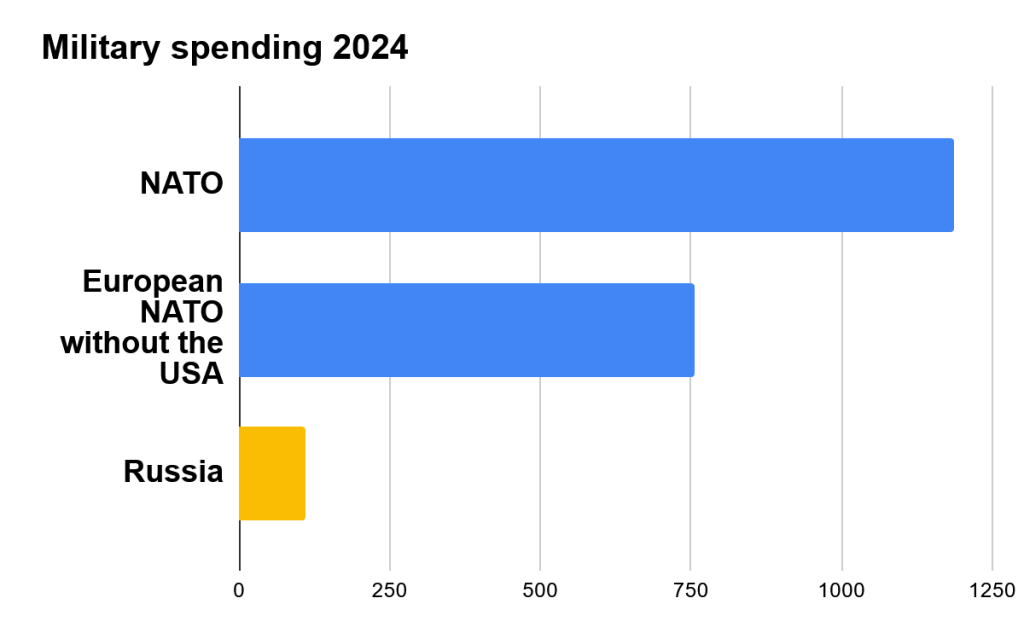

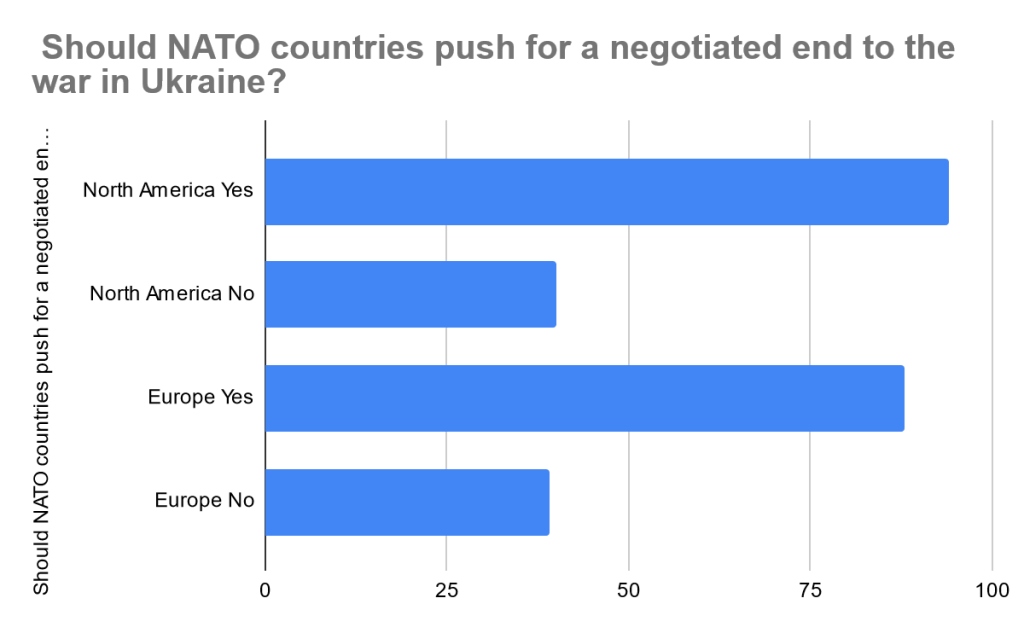


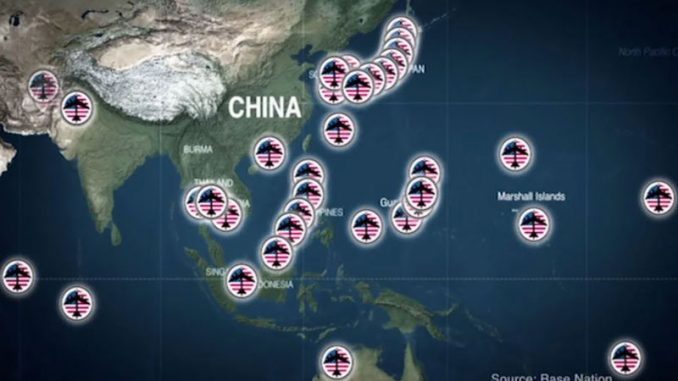

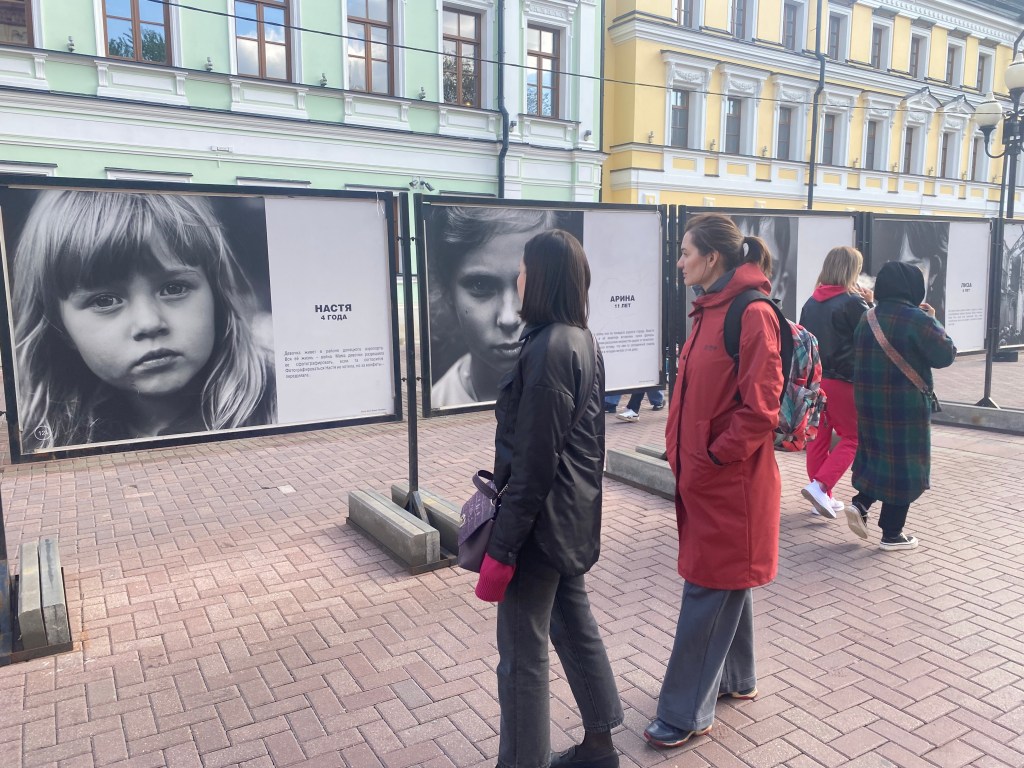


 Urban ramblings