‘Every day, we should drag a sacred cow of our party to the town market place and slaughter it until we are up to our knees in blood.’Wes Streeting MP
O Rose thou art sick.
The invisible worm,
That flies in the night
In the howling storm:
Has found out thy bed
Of crimson joy:
And his dark secret love
Does thy life destroy.
William Blake
Last week, after a 44 year membership, I cancelled my standing order to the Labour Party. This morning I had a standard letter “will you hear us out” inviting me to rejoin.
I thought that it required the courtesy of a reply, so here it is.
Dear Gail
After many years in the Party, including being a ward and constituency officer, I now find that so much of “staying in the fight”, as you put it, requires opposition to what this government is doing.
In the 1970s, when I was scraping National Front stickers with the slogan “send them back” off lamp posts, I never thought that the Party I have voted for all my life would be boasting about how many people it is deporting. I fear that next May’s local elections will be a complete debacle because the attempt to cosplay Reform emboldens them while making Labour voters stay at home, or vote Green, or Lib Dem, or Your Party.
I could go on. Gaza. The gesture of recognising a Palestinian state while taking no measures to put real pressure on Israel to stop the genocide is unconscionable.
Signing up to an annual £77 billion black hole of increased military spending that will suck the life out of the investments we need in infrastructure and green transition.
The abject attempts to talk up “the special relationship” at a time that the USA is going full rogue state on climate, trade, diplomacy, as its hegemony wanes, and threatens the world with war shackling us to a suicidal course for humanity.
And, because it knows that it is on thin ice on all these issues, the response of the Labour leadership is to close down debate, silence dissent; rule out motions that are awkward, decree entire areas out of bounds, deselect local councillors who do things they don’t like (like twinning with Palestinian towns). Peter Kyle MP responded to the “Unite the Kingdom” march by saying that it shows that “free speech is alive and well in the UK”. Free speech for who? There were 1500 police on duty at that march, which included violent attacks on police officers and counter demonstrators. There were 3000 on duty for the silent, peaceful sit in in protest at the bizarre categorisation of Palestine Action as terrorist (when most people can tell the difference between an Improvised Explosive Device and a tin of paint). Politics is indeed the language of priorities.
There are still good people in Labour, who want it to remain Labour and not adopt “muscular Conservatism”, as I understand the new buzz phrase goes in leading circles, but I believe at this point that what might be called “Blue Labour Blueshirtism” will work its way through until Labour has shrunk to the depths of the French SP or PASOK in Greece.
The fight continues, and I will be part of it. I hope that many remaining Labour members will be part of it too. We are in unprecedented times, and the old road no longer leads onwards. Bob Dylan wrote a song about that…
Paul Atkin
Blue Labour, whose organiser Maurice Glasman was the only person from the European Social Democratic tradition to be invited to Donald Trump’s inauguration. They organise on the slogan “Faith, Flag, Family”.
The Blueshirt reference in this is to Keir Starmer’s Chief of Staff Morgan McSweeney’s political origins in Fine Gael, the more right wing of the two traditional parties in Ireland, the one that grew from the Free State forces in the Irish Civil War and sent fighters to support Franco in the Spanish Civil War. Recalled bitterly in Christie Moore’s Viva La Quinta Brigada
When the bishops blessed the blueshirts in Dun Laoghaire, As they sailed beneath the swastika to Spain.
The weather is never kind to bunting, which has a short shelf life.
This Summer has not been quite as mad as the last one, with no full scale riots outside the North of Ireland, but more insidious. The demonstrations outside hotels housing refugees (“illegals”, as they like to say) have hyped up the sexual threat to “our girls” from the “invasionof fighting age men in small boats”, pushed by the Far Right (Homeland Party, Britain First and the like) echoed by the Inside Far Right (Farage) and the dominant Farageiste wing of the incredible shrinking Conservative Party (Jenryk, Philp and other slithey toves) and completely capitulated to by the government, who are trying to fight Reform by being as much like them as possible on immigration.
The demonstrations have actually been quite small, often attended by the sort of blokes who think assaulting women and girls is their job, and often out mobilised by Stand Up to Racism. Nevertheless, they are said by Keir Starmer and Yvette Cooper to have “legitimate concerns”, while the hundreds of thousands who demonstrate against genocide in Gaza are one step removed from “terrorists”, and the government falls over itself to boast about how deportations are up on the numbers the Tories managed, the new restrictions they are bringing in on refugee families, how they plan to house them in containers on old industrial sites, and on and on.
The success of this strategy can be seen in the polling numbers, which show Labour well behind Reform, as it alienates left voters and fails to attract those lining up with Reform with an air of self righteous indignation: though it should be obvious to them that Farage is a charletan and a bit of a spiv; the sort of bloke who, in wartime, would loudly proclaim his patriotism while nursing a bone spur or two to keep him safely at home in a snappy suit, and then flog you knocked off nylons down the market.
The press is really whipping this up. The headline in the Sun on the day that Lucy Connolly – who’d been inside for a year after writing online encouragement to burn down asylum hotels was “Mum’s Home!” Because nothing says “Mum” more than inciting a mob to burn people to death. She was a matryr to “two tier justice” apparently.
The move to fly Union Jacks and St George’s crosses in public areas – attached to lamp posts and so on – is quite extensive in some areas. Particularly where Far Right activists have painted red crosses on the white stripes on roundabouts and zebra crossings. Why they want people walking on the flag I’m not sure. Some of these in Kent are being flown from quite well to do properties, which should remind us that Nigel Farage is a stockbroker from Sevenoaks, who shows that he is a “man of the people” by banking with Coutts.
This is very reminiscent of Northern Ireland, where Loyalists paint their kerbstones red, white and blue, and Nationalists paint theirs green, white and gold; so you know where you are. The difference is that this sort of identity is entrenched in the Loyalist areas every Summer with vast angry bonfire ceremonies, burning effigies of people they fear and hate, bonding in atavistic loathing. Wickermen for the 21st Century. This year, models of refugees in boats were a popular target; a celebration of the pogrom in Ballymena. Nationalist areas, by contrast, have abandoned bonfires in recent years and turned to more open, hopeful, music and cultural festivals. Better craic by a long way. People looking to make a better future, not marinade in the dubious glories of a lost past, for want of being able to imagine anything better.
To watch the news, you’d think this was everywhere, but when I went into London the week after it started, I kept an eye out and only saw two flags (and one of those was Palestinian) on the whole journey through the East End. I’d have expected more, given that its the Women’s Rugby World Cup and England are favourites; which usually generates a bigger, more innocent, crop of them.
In Grays, there’s a little cluster in a side road off the High Street, where the Conservative Club used to be and just opposite a weird little shop that sells second hand reconditioned white goods (which is almost a metaphor) and those life size tin silhoeuttes of WW1 soldiers that have started populating War Memorials since 2014. (See photos) The shops nearby include a Halal Butchers, several Eastern European Delis (and the wonderful Lulu’s cakes and bakes with its encroaching cafe street culture) an Asian/East African General Store (good spice collection) and a couple of charismatic church venues in repurposed shops; which is probably what they don’t like.
There are quite a few flags in Chadwell. But even there – on the Western fringe of James Murdoch’s seat – former Leeman Brothers banker, elected for Reform even after a conviction for kicking his girlfriend – “save our girls” – but he’d taken out loans for a couple of dubious companies during COVID, one of which had no employees – almost all of them are attached to lamp posts along the main road and alongside the A1089, the massive road that now slices up to the A13 from Tilbury Docks. So, this is a bit like the old NF sticker campaigns but more effective. But, as the saying goes. “Posters in windows means you’ve got support, Posters stuck up in the streets means you’ve got glue” or, in this case, plastic ties and a ladder.
This was also the case right across East Thurrock to Basildon, where, on the long bus ride back from the hospital, I counted just eight flags or strings of bunting in anyone’s windows; and we passed hundreds of houses. There were more on lamp posts, but only in enclaves, not generalised.
The response of Yvette Cooper, in her last week as Home Secretary, was to say that there should be more of them because the flag “brings us together”. This is in the context of a couple of youngish blokes in Basildon who filmed themselves painting St Georges crosses on the white background of some first floor flats above a row of shops while abusing a woman in a hijab, “Oi! Raghead!” etc. Really bringing us together. They have, thankfully, been arrested for criminal damage and racial abuse. It takes a really dim sense of entitlement to assume you can film yourself doing stuff like this and for it not to be taken down and used in evidence. If Reform were in government I guess they’d just recruit them to the British version of ICE, so they can deport most of the people who look after us in Care Homes and Hospitals.
I note in passing that Gary Lineker has just won the BBC presenter of the year award. Cue Match of the Day theme.
On my way back from the shops yesterday, I passed two neighbours chatting in the street outside their houses. A woman in a hijab with her small child was bantering about ice cream with the bloke next door, who was audibly Eastern European. They obviously knew each other well, and got on. Friends, not starngers.
This is in Thurrock, an area that was Brexit central, with a 72.6% leave vote in 2016. I find that, nevertheless, this is an area that is converging with Brent, where I normally live, the most ethnically diverse borough in the country. My neighbours in both places are not simply diverse, they are also ethnically mixed. As is my family.
When I used to analyse the ethnic monitoring stats for the school I used to work at in Islington, the fastest growing group was “mixed”. So, far from immigration making us an “island of strangers” many of us are getting on well enough to be as intimate as you can get.
In this context, and in the wake of Keir Starmer’s pedestrian dog whistling about immigration on Monday, Labour List’s article Local elections: Reform took four times more Labour seats than other parties is disingenuous. It implies, without stating it, that the loss of SEATS to Reform must mean that there is a loss of VOTES to them. And what follows from that is that there is a need – in the framework of the sort of electoral pragmatism that cares not what platform a Party stands on so long as it wins on it – to “address the concerns” of Reform voters in order to win those votes back.
This is a fallacy for three reasons and one principle.
Reform has the momentum on the Right, and cannibalised the Conservative vote. Whether they will eat the whole Party before the next General Election is open to speculation, but it seems likely. These elections were held for the most part in Tory held areas that have been Conservative since the Jurassic and have now voted for a different, even worse, kind of Conservative Party (in the hopes of getting back there).
The Labour vote did not migrate to Reform in a big way. It mostly stayed at home. Feedback from the doorsteps in the Runcorn and Helsby by election was that it was the cuts to winter fuel allowance that was the biggest demobiliser; so people who voted for a change from austerity and “hard decisions” taken at the expense of the poorest last Summer, were now less than enthused by what the Party had to offer.
The government has been trying to cosplay Reform for some time, even to the extent of putting out ads boasting about how many people they have deported in Reform colours (which would be taken by most people as a Reform ad anyway, so self harm in more than one respect). The week of the elections saw announcements on a tougher line on immigration from Yvette Cooper on the presumption that the approach “Reform is right about immigration, we are trying to stop it, vote for us to stop Reform” would do anything other than legitimise them; and demoralise anti racist Labour voters. And, so it came to pass…
Tony Blair remarked after the 2017 General Election that if Corbynism was the way to win, he didn’t want to take it. Given the interests that have made him an extremely wealthy hollowed out husk of a man, this is hardly surprising. But the point applies in the opposite direction. Anyone even pretending to be on the Left who starts trying to exploit – and create – false divisions in our communities is doing the Right’s job for it. For the Labour Party, a lurch onto Reform’s xenophobic turf is a jump into quicksand.
The next lot of local elections will be in the cities. Reform is likely to still make the running on the Right. Labour, if it carries on trying to compete with it on its own terms, while presiding over austerity and an arms drive, instead of making a sharp turn to wealth taxes and investment in infrastructure, public services and green transition, will shed a collosal number of votes, to the Greens, to Independents (especially purged former councillors) even to the Lib Dems in some places, and many will stay at home.
Apologetics of the type that Labour List just published, will help drive that outcome.
“In many ways, this looks more like an election the Conservatives have lost than one Labour has won.” John Curtice.
This is evidently the case for the Conservatives. Their support more than halved from 2019.
The splintering of the Tory vote almost down the middle between the Conservatives and “Deform UK” is their most serious split since the Corn Laws in the 1840s. And its a real split. It can’t be overcome by some fantasy of getting “the Conservative Family” back together and arithmetically adding the Conservative vote to the Reform vote (which, at 39% would be 4% larger than Labour’s share).
Farage has a programme to ruthlessly pursue the logic of Brexit, slashing and burning regulation and taxes and the welfare state, cracking down on unions, playing racist dog whistles on trombones in a manner calculated to cause social unrest and violence, and suicidally abandon any attempt to resist climate change; in a way that more traditional Conservatives would consider disruptive and dangerous to social order and profitability.
Add to that the fact that Reform’s economic policy is like that of Liz Truss, but without the restraint, and you get an environment that is too risky for slow and steady profitability. The problem for the wing of the Tories that don’t want to go for this kind of adventurist far right alternative is that the Tory grassroots are largely in that camp; which has meant bending to them in Parliament. So, that’s where the realignment of the Right is heading. This will be put on boosters if Trump regains the White House.
With Tommy Robinson’s thugs planning a street action in London to “take over” central London on July 27th, when Farage promises “something that willstun all of you” its hard not to think that rubber truncheons will be involved.
At the same time, when people say things like, Labour is now “once again in the service of working people”, or how changed Labour has regained popular trust, those statements stack up oddly against the number of people who could be bothered to get out and vote for the Party.
In 2017, under “shh, you know who”, Labour won 12,877,000 votes.
In 2019, under the same man, Labour won 10,300,000 votes.
Yesterday, under Starmer, Labour won 9,600,000 votes, more than half a million fewer than in 2019, still being talked about as “Labour’s worst result since 1935”.
Overall this amounts to 35% on the share of the vote, up less than 2% from 2019.
And this was on a turnout of 60%, down from 67% in 2019.
Most of this small rise is accounted for by a 17% rise in Scotland at the expense of the SNP.
In a constituency somewhere in South Essex, four leaflets plop through the letter box.
The Conservative leaflet is on the bottom. Because I am hoping they will get buried on Thursday.
One is from the sitting MP. She is a Conservative, but seems a bit shy about that. The leaflet leads with her name in large letters. If you look really hard you can see the word “Conservative” in tiny letters tucked into the bottom right corner in an attempt not to draw too much attention to itself, with that squiggly tree logo, from their greenwash phase, tucked alongside. Just so you don’t forget what she looks like, there are eight photos of her in a single folded A4 leaflet. This is not many by her standards. Her previous one had thirteen! An MP since 2010 and only briefly a junior minister, under Liz Truss, so definitely not front rank. The usual phative slogans – A Secure Future – A Brighter Future – are superimposed on a photo of the candidate looking away from the camera into the middle distance with a slightly constipated expression, while standing on a footbridge over a busy road and, hopefully, not breathing in too hard. Roads loom large in her pitch too, the solution to traffic congestion being to build more of them. Her Ayn Randish vision of the constituencyas “the best it can be” is a curiously dated hyperdevelopmentalism, in which hopefully the whole area will be tarmaced over and full of commerce freed from red tape and taxation rushing products in and out and through. Not a “green and pleasant” vision, however you look at it. The only remaining trees will probably be the tiny ones on Conservative leaflets. Her overall pitch of development for “our(sic) local priorities”, which is a bit previous in assuming that everyone else’s local priorities are the same as hers, with the Council – run and bankrupted by her Party until May this year – posed as the enemy and a Labour controlled Westminster, possibly with a “huge majority”, even more so. Its hard to tell who she is referring to when she says “our”. Perhaps she is just giving herself airs and using the majestic pronoun. There is, nevertheless, a whiff of panic about it.
A standard cut and paste job from Reform, in varying shades of blue, uses a template photomontaging images of Nigel Farage looking upwards like a toad in search of heavenly inspiration while holding his hands together in cut price man of destiny pose no.3 and Richard Tice – on a slightly smaller scale, so you get the heirarchy right – pointing up at the slogan “Vote Reform UK on July 4th”, while smiling to indicate this is a happy prospect. The candidate and constituency are slotted in to a small panel at the top. The sort of leaflet that sometimes gets rushed out with “insert name of candidate here” if the Party agent has had a rough night before proof reading it. The front page has two slogans against immigration but tosses in two others – make work pay – zero waiting lists – with no elaboration at all on how this might be done. Given the overall tenor of their politics the former might be achieved by starving the jobless and the latter by weeding the undeserving out of the queue, especailly “immigrants”. The entire reverse side attacks immigration on the argument that freezing it will make life better, in the same way that Brexit made life better presumably. Fool me once… A leaflet aimed at generating knee jerk reactions, not convincing anyone who doesn’t already have them. The Nastier Party.
The Lib Dems have a busy little leaflet that, oddly for them, does not contain a bar chart saying that only the Lib Dems can win here – perhaps because everyone knows they never have, and it wouldn’t wash. Instead, they have a little panel referring to a by election in an unnamed other constituency at an unnamed date, which shows that “Lib Dems can win anywhere”. With a long local record of lost deposits and no local councillors, I wouldn’t bet on that. Beyond that, they have a potted biography of their candidate, which is at least a human touch, but implies that he’s doing this to get elected as a councillor somewhere at some point in the future. The pledges – under the rubric For a Fair Deal – are positive but vague, like ” a fair plan to protect the poor and pensioners, tackle soaring prices and get our economy back on track”. Yes, but, what is it?
Labour, breaking the mould in this case, sends a letter, not from the local candidate but from Keir Starmer. This might be considered an odd choice as Starmer is far less popular than the Party; with a favourability rating of -19. The heading has a smiling Keir, with no tie on to show that he is relaxed and getting on with rolling his shirt sleeves up, staring confidently from right to left, into a future that is just off the page, superimposed on half a Union Jack that doubles up as an arrow pointing towards the word Change, with his name underneath it, in case anyone doesn’t recognise him. At this point, this should not be taken as an injunction on the Party to “change Keir Starmer”, though perhaps the designer has a sense of humour. The pitch is a simple one. There are two possible governments and “versions of Britain” posed as “Conservative chaos” vs “Britain rebuilt by Labour”. “Rebuilt” is an interesting word, as to some people it will mean “transformed” to others it will mean “restored”. On the one hand, the future. On the other, the past. Perfectly pitched for the sort of voters who preferred it in the good old days, when life was harder; and want a future just like it. The pledges are either oddly limited and specific – Recruit 6,500 teachers – or – Set up Great British Energy – too limited and specific to make a serious dent in the problems they purport to address, or magnificently vague – Deliver economic stability – Cut NHS waiting times (a phrase that begs the questions, to how long, by when?) while economicstability can mean solid, reliable, not flaky (like Liz Truss) but it can also mean immobile; not collapsing but not transforming either. Steady as she goes is not full steam ahead. Perhaps Small Change would be a better title.
Every one of these leafets is a parochial and infantilist retail offer. Vote for us and we will do this that or the other on your behalf, or, vote for us and we will take out your frustrations on someone who is worse off than you are. Looking at them, you wouldn’t think that this election is being held under the shadow of two wars in which the UK is complicit, one of them threatening nuclear war and the other a slow moving genocide, and an accelerating pace of climate breakdown that is risking serious global food shortages within a decade. The challenges facing us on a world scale to draw back from confrontation, seek a peaceful modus vivendi in which we can limit the climate damage are titanic. It is a sign of a crisis of leadership that not one of these leaflets seriously addresses these issues, or treats voters as citizens capable of doing so themselves.
Discussions about PR in the Labour Party usually arise at low points of political confidence and are aimed at trying to shift the electoral system as a way to build in structural damage limitation in a period of apparent Conservative dominance.
This article looks at what the balance of Parliamentary forces would have been with the following presumptions.
If PR had just been adopted for that election – as the impact of a new voting system on patterns of voting behaviour can be predicted, but not with any certainty – and, for that matter, the impact of these patterns on the configuration of political parties would tend towards fragmentation – with smaller, more marginalised currents seeking to try their luck with the public rather than soldier on in with all the frustrations of a broader coalition.
If the PR system adopted were a faithful and exact reflection of votes cast. Such a system does not exist and most actually existing PR variations have a threshold, below which a Party will fail to take any seats. 10% in Turkey. 5% in Germany and Australia. In Israel – a real study in extreme party fragmentation – the electoral threshold has been raised from 1% before 1992 to 3.5% since 2014, in a not very successful attempt to prevent tiny parties having unrepresentative leverage, collapsing unstable coalitions with confrontational grandstanding designed to keep the enthusiasm of their sliver of the vote intact. Using any of these Thresholds would be problematic in the UK particularly in relation to the North of Ireland, but to some extent even to Scotland and Wales; where there are regional parties that do not stand anywhere else; so the prospect of any of them reaching UK wide thresholds would be slim. The impending prospect of the break up of the UK – accelerated by a Brexit led by forces unable to comprehend the country as anything more than Greater Little England – would remove this problem in the process of creating many more.
The speculation on probable outcomes is entirely mine, and you can take it or leave it.
1997
A Labour landslide under First Past the Post and a totemic event for the Labour right. But, when you look at the voting figures, not so much.
Labour clearly the largest Party, but not able to govern on its own. Probable outcome. a Labour/Liberal Democrat coalition. Blair and Ashdown were very close, and without the thumping majority allowed by FPTP the introduction of PR was very much on the cards had Labour had to rely more on Lib Dem support. A coalition of the “Conservative family”, bringing in the Referendum Party/UKIP and Ulster Unionists (both UUP and DUP) only adds up to 35.7%. The SNP are noticeably marginal at this point. Policies of the government? Probably not too different from the policies we had. With the Lib Dems as part of it, probably more pressure to join the Euro, but the Atlanticist interventionism and “third way” economics, independence for the Bank of England, PPI and minimal but valuable positive reforms like the minimum wage would almost certainly have been the same.
It should also be noted that turnout in 1997 was 71.3%, down 6.4% from 1992; indicating a drop in Conservative vote that nevertheless continued to brood in the shires and small towns.
2001
Another Labour landslide under FPTP, but with turnout down even more than in 1997 at 59.4%. Quite a sharp fall of 11.9%. Possibly indicating that, while the Conservatives were still unable to reignite their support, Labour wasn’t building enthusiasm so much as maintaining compliance.
This is essentially a rerun of 1997 with added apathy. Labour again the largest single Party, but unable to rule on its own. Conservatives making a little ground but nowhere near being able to form a coalition, unless they could flip the Liberal Democrats; not very likely at this point – given diverging positions on the EU and the attempts by the LDs to position themselves as a “progressive” Party. Likely policies, very similar to what we had under New Labour; but the divergent response of Charles Kennedy to the war on terror and invasion of Iraq could have led either to a breakdown in the government’s enthusiastic compliance with the US offensive or, more likely, a coup within the Liberal Democrats to replace Kennedy with a leader more acceptable to the US Embassy; which plays the same Vice-Regal role here as such embassies do in all US allied capitals.
The SNP are still a marginal force at this point.
2005
The tectonic plates had shifted under New Labour by this point. While still returning a workable majority through FPTP, the impact particularly of the Iraq war severely dented its support, which leached away partly to non voting, partly to the Liberal Democrats – who had opposed the war – and gave the Greens enough voters to get over the 1% mark.
Likely outcome? Uncertain. Labour still with a larger vote share than the Tories, but not by much. More because of a sharp drop in the Labour vote than the small and incremental increase in Conservative support. Both capable of forming a coalition but neither in a strong position to do so. With the Lib Dems positioning themselves to Labour’s left on the war and civil liberties, a coalition with an increasingly Eurosceptic and dog whistling Conservative Party under Michael Howard – “are you thinking what we’re thinking?” – would be very unlikely; but with the sharp divergence on Iraq an ongoing coalition with Blair would also have been problematic.
The BNP scraped up a potentially ominous 0.7% support which, added to UKIPs 2.2% put the far right Nationalists on just under 3%.
Meanwhile, a notable shift had taken place in the North of Ireland since 1997, with the DUP now the largest Party among Unionists and Sinn Fein among Nationalists. The SNP was still plateaued.
2010
Another slight uptick (3.7%) in turn out to 65.1%. The 2008 crash was the coup de grace for New Labour. Towards the end of the Blair-Brown period, legislation like schools academisation had to be passed with Conservative support in the face of rebellions from the left of the Party. Despite Brown’s role in stabilising the global financial system and his initial attempts to pose the 2010 election as a battle between Tory austerity and Labour investment, the dominance of right wing “sound money” economics – expressed rather neatly by Alastair Darling’s comment that. if re-elected. Labour’s cuts would be “deeper and tougher” than Margaret Thatcher’s in the eighties far from cutting a “statesmanlike” figure as he hoped simply demobilised a significant slice of potential support; and set up a dominant austerity consensus for the decade we have just endured.
The result gave the Conservatives their first lead since 1992 and a momentum towards forming a government. While the Lib Dems retained a significant part of their “progressive” reputation, the eclipse of Charles Kennedy and his replacement by Nick Clegg sealed a victory for the “Orange Book” wing of economic neo-liberals; who now dominated the Party and who would always be more at home with the Conservatives than Labour on policy (as well as sociologically, given their common predominantly public school backgrounds). The result therefore is likely to have been parallel to what actually happened, with Cameron and Clegg forming a coalition. A grand coalition “in the National Interest” of all three main Parties, committed to austerity and “hard choices” at the expense of the worst off is a theoretical possibility, but not really needed to form a government in the absence of a significant opposition. Better to have a pro austerity government and a pro austerity “opposition” so the message that “there is no alternative” could really be rammed home.
The BNP vote of just under 2% – their high water mark – combined with UKIPs 3.1% put the Nationalist/racist right just over 5% of the vote.
The Greens and SNP continued to plateau.
In the North of Ireland, Nationalist votes outnumbered Unionist votes and Sinn Fein were the largest Party for the first time.
2015
Another 1.3% incremental increase in turn out. Now up to 66.4%.
This election might have been the first one to actually be called under PR, but wasn’t. Part of the deal between Clegg and Cameron was to hold a referendum on introducing it. Thoroughly out-manoeuvred by the Conservatives – stitched up a treat by them, on this as well as so many other issues – the Lib Dem proposals for an Alternative Vote system to replace FPTP were defeated in 2011 by 67:32% on a dismal 42% turnout; showing that the electorate “wasn’t bothered”.
Nevertheless, this is the election in which really significant and dramatic shifts took place that ushered in the ensuing period of instability and heightened political crisis; in which the slaughter of sacred cows became almost routine and history seemed to accelerate away from its habitual British somnambulism.
The Conservatives held their vote, but there was a dramatic increase in the vote to their right; with UKIP taking 12%. The 2010 BNP vote largely collapsed into this.
Labour increased its vote overall, just, but collapsed in Scotland in a way that shattered any complacency and sense of security as a UK wide potential Party of government ever again. The SNP – on the back of an independence referendum defeat in which Labour had formed a bloc with the Conservatives with no distinctive voice – sucked the bulk of Labour’s voters away on the promise of a social democratic Scotland with no Trident missiles defying an entrenched Tory Westminster.
The Green Party, standing to Labour’s left, quadrupled its vote to 4%.
The Liberal Democrats totally collapsed, retaining barely one in three of their 2010 voters. As the custodians of the slightly more progressive wing of the austerity coalition, they were always going to be punished harder than the Conservatives, but the scale of it was dramatic. It was as though the electorate was picking a fight with the Mitchells (from Eastenders) shied away from taking on Phil and contented themselves with kicking the shit out of Billy.
Possible government outcomes? There are a number. A Tory, UKIP, Unionist bloc enshrining a sharp nationalist turn would have been 50.4%. A brutal internal struggle in the Conservative Party – of the sort that took place in 2019 – would have been required to consolidate this. A continuing Conservative Lib Dem coalition might have been possible, but on just under 45% support without a majority and throwing unbearable strains on both parties; over Europe for both and over whether a further stint as the Tory’s bag carriers would finish them off for good for the Lib Dems. Even the most optimistic projection for Labour, putting them together with the Greens and SNP and SDLP would stack up to less than 40%, so a wounded minority formation. Overall, a variation on what we had is again most the likely. The Conservatives continuing with austerity and trying to finesse their internal schism over Europe by going for a referendum, to either absorb or put paid to UKIP, setting the scene for 2017.
2017
This was the first of two elections that were held in the backwash of the EU referendum of 2016 which, in narrowly voting to break with the EU, turbo charged the political instability that had resulted from the 2008 crash. Turn out was up again by 2.3% to 68.7%.
The Conservative strategy in 2017 was to try to regroup the Eurosceptic vote behind them and utterly crush Labour – on the presumption that an overtly left wing programme was “unelectable”. The Labour right had the same presumption. The first part of this worked up to a point. The UKIP vote collapsed, but not all of it went to the Tories. The Conservative vote went up over 6%, but the combined Tory/UKIP vote was down to just over 45% from 49.4% in 2015.
More interesting was what happened to the Labour vote. The immediate aftermath of the 2015 election saw an explosion of rage from the mass forces in the trade unions that had been campaigning against austerity from 2010, with significant co-ordinated public sector strikes on issues like pensions, expressed in demonstrations tens of thousands strong within weeks of the election. This spilled over into the Labour Party as the right wing drew the lesson from defeat that they had to be more like the Tories expressed in a succession of excruciating mea culpeas from supposed “leading” figures like Tristram Hunt that, yes indeed, the crash of 2008 was the result of “Labour spending too much” in trying to get UK public services up to European standards (and nothing to do with the banks overextending credit); a self flagellation greeted by the sort of death groan from media audiences that signifies complete contempt. There was an ensuing membership revolt against the PLP supporting Conservative Benefit Cuts in fear of being seen as soft on welfare; with people in CLPs usually seen as being on the right raging at the betrayal. The Party was shaken and stirred. The sheer exhaustion of the right wing programme, the trauma of the sudden evaporation of Labour Scotland, and the uninspired quality of the mainstream leadership candidates set the stage for Jeremy Corbyn being elected leader. He amassed three out of every five votes cast amidst a huge surge of new members and supporters. Those who had been driven away by austerity lite, the legacy of Iraq, the sheer illiberalism of “hard man” Home Secretaries like Blunkett and Reid, or the soul crushing sleaziness of “taxis for hire” Steven Byers, Geoff Hoon and Patricia Hewitt, flocked back; gathering in huge revivalist rallies to express their determination to make a change, break some moulds, and drain some swamps.
The calculation on the right of the Party had been that having Corbyn in the race “to broaden the debate” would see the left smashed and definitively out of contention from there on; so several right wingers agreed to nominate him to get him on the ballot so that this could come to pass. On the left too, there was a certain caution, with the target of knocking Liz Kendall into fourth place considered a respectable result. Which just shows how wrong you can be, and how fast things can change.
This election of an internationalist, anti-racist, anti nuclear, pro- trade union leader who was comfortable with extra parliamentary mobilisation led to the most extreme attacks ever on a Labour leader, including from the right of the Party, who tried to force him out in 2016 and whose officials in the Party machine actively sabotaged the General Election campaign in 2017. Despite all this, Labour’s left policies struck a nerve with an electorate tired of austerity and none to keen on interventionist wars; and the vast young urban militia that had regenerated the Party after 2015 flung itself into the streets and through the treacherous gullies of social media, clawing back support from the Greens, SNP and even from some UKIP supporters; amassing a share of the vote that was breathing down the Tory’s necks by polling day – having started twenty points behind.
The Lib Dems were still down and out, their vote share even down slightly on the debacle of 2015, too small to be king makers, even if anyone else had been inclined to give them the time of day.
Under PR this would have been an even more uncertain outcome than it was under FPTP. The logic of the Conservative position would have compelled them to form a pro Brexit bloc, accelerating the developments that led to Theresa May’s defenestration and the dominance of the patriotic cartoon tendency under Boris Johnson into the period immediately after the election; but even with UKIP and the Ulster Unionists on board, that would not have given them a majority; requiring them to go after the small pro Brexit wing of Labour, in which they would probably have had some success with the right wing fringe – people like Gisela Stuart and Kate Hoey.
For Labour, a bloc with the SNP, Greens, Plaid and the SDLP would have amounted to 45.4%, still a minority unable to form a stable government, even assuming a deal could have been done and the Lib Dems 7.4% been prepared to tolerate it; hanging over its head like a permanent right wing sword of Damocles.
So, again, what we’d have got with PR would most likely have been a variant on what we ended up with anyway, albeit on a more rapid timescale.
2019
Bleak mid winter. Turn out, on a miserable, rainy deep and dark December day on which our canvas sheets turned to mush on our clipboards, was down 1.5% at 67.3%.
This election is presented as a Tory triumph. In fact, Boris Johnson increased the Conservative share of the vote by a miserable 1.2%; on a decreased turn out representing hardly any additional voters at all. The Brexit Party/UKIP vote nudged up by barely 0.3%, making the hard Brexit vote barely 45.9%. Not a majority.
The decisive feature of this election was that every ruling class political faction and institution united to stop a Labour government under Corbyn; above and beyond their position on Brexit. This was completely explicit from the Lib Dems, who ruled out any prospect of a coalition with Corbyn, but kept the door open for an arrangement with the Conservatives – against whom they were supposed to be at daggers drawn because of their loudly declared allegiance to remaining in the EU. This was politically suicidal on their part because Labour offered the prospect of a soft Brexit or remaining in the via a second referendum. This allowed Labour to hold the partial revival of Lib Dem support generated by the huge pro remain movement that was in a state of continuous mass mobilisation between 2016 and 2019 to 11.5%.
Labour tried to fight 2017 again but more so, with even huger mass canvassing sessions but with a looser and less calibrated set of policies; and a presumption that an offensive into Tory marginals that could have paid off in 2017 would work out in 2019. So, the militia marched determinedly off onto the stony ground of bleak suburbs and resentful small towns. In an election defined by Brexit, a section of the 37% of Labour voters who had voted Leave would always be vulnerable to the Conservatives, and the 63% that voted Remain to the Lib Dems and SNP. At the same time, the full spectrum character assassination of Corbyn- intensified after the near miss of 2017 and described by Mike Pompeo as “running the gauntlet” – had had its effect; the SNP went back up to 3.9%, the Greens to 2.8%, primarily at the expense of Labour. And there was an increase of former Labour voters just not voting.
With a PR Parliament, a Labour led coalition bolting in the Lib Dems, SNP, Greens and smaller Parties like Plaid and the SDLP on the basis of opposing a hard Brexit might have been a mathematical possibility, had the virulent hostility to Labour from the Lib Dems in particular not been so marked. A coalition of Conservatives, Brexit and Ulster Unionists would still have been just about enough to “get Brexit done”, though the Parliamentary arithmetic would have been far tighter.
Now What?
While actual voting under PR systems would have differed from voting under FPTP, it is hard to argue that any system of PR would have led to an increase in the Labour vote.
The question for Labour now is what adopting PR would mean for the kind of policies it would fight for in between elections. There is a view widely held that the point of Labour is to get elected so it can do things with the powers of the state, at national or local level. This misses the point that getting into office is contingent on mobilising people, and the extent to which the levers of state will actually work if deployed against the existing pattern of wealth and power is itself contingent on the extend to which there is a mass mobilisation behind any proposal for change.
At present the policy of the “new leadership” – in seeking to exorcise the Corbyn period as an aberration and return to normalcy – is to make itself “electable” by reassuring the powers that be that any use of the levers of state will not go beyond any boundary set by them.
In current circumstances therefore, the danger for anyone campaigning for Labour to adopt PR is that this will copper bottom this approach by seeking a “progressive alliance” as a potential government- with the Lib Dems at its core and the Greens as window dressing. The eagerness with which the “new leadership” seeks to reintegrate the former MPs who split to form Change UK – and their preference for donations from “high net worth individuals” over trade unions indicates how comfortable they would be with this prospect; and what the core of its politics would be.
This issue is therefore a diversion from fighting for Labour to campaign on the side of the resistance to the attacks of the Conservative government and break from a style of opposition that has been far too “constructive” for its own good.
“Sincerity – if you can fake that, you’ve got it made.” George Burns.
Tony Blair came to Kings College on the 120th anniversary of the founding of the Labour Party last week to seek to bury it.
Four core points stuck out from a word cloud of vaguely progressive sounding things that were otherwise as substantial and hard edged as a bowl of blancmanc.
1) That Labour has only been in power for a quarter of its history.
2) That elections are won “on the centre ground” by “broadening the coalition”.
3) There is a need for a “progressive realignment” with the Liberal Democrats – on an entirely undefined political prospectus.
4) That the current membership of the Labour Party is full of people who are an obstacle to this – because of their commitment to “old fashioned” things like public ownership (and peace) and are therefore a problem.
The key phrase he used here is “you decide first and unite after”. And what he wants unity on is a significant move rightwards. He skids over what this might consist of so as not to scare the horses. A way to imagine it is to recall that he put a lot of effort into courting Rupert Murdoch and had the endorsement of the Sun in 1997. Think about what policies you’d have to adopt to get such an endorsement now and that’s your Blair manifesto for 2024.
This is of course entirely consistent with the practice of the right of the Party during Jeremy Corbyn’s leadership. They did not agree with the decision of the members, so they did not unite; and many of them worked “every single day to bring forward the end of his tenure in Office”Peter Mandelson (1). Given the daily quantities of ordure dropped on Jeremy Corbyn from a great height since 2015 – with such significant sections of the Parliamentary Labour Party throwing in their own faeces right up to polling day – its quite miraculous we did as well as we did in the December election. Despite these attacks, Corbyn’s leadership and politics led to our two highest popular votes out of the four general elections held since the the 2008 crash and its important to register that. It should also be noted that Boris Johnson has given Ian Austen and John Woodcock peerages in eternal gratitude. Peter Mandelson already has one.
This is the Third Way greatest hits playlist. He even re-heated his old “gotcha” anecdote about a Party member in the early 90s complaining that Blair’s strategy was to get people who voted Tory to vote Labour – but changed the context and the gender of the member in the retelling, thereby making it about as plausible as David Cameron’s “I met a black man once” story. The laughter that greets this story as the penny drops is designed to obscure the content of the complaint (if there ever was one); that he was aiming to make Labour safe for Tory voters by being as much like the Tories as possible; and that is more of a problem than he seems to think.
What is striking about this speech is the things he misses. He misses out the 2008 crash – and the impact this has had on removing the conditions for his sort of economic and political framework – altogether. He mentions the climate crisis but in an extraordinarily complacent way; as though its all in hand and will be taken care of one way or another by the wealthy and intelligent people (like him) who run the planet. He doesn’t mention the completely catastrophic economic and political course being followed by the United States in sabotaging the Paris process and doubling down on fossil fuels in an attempt to stave off the rise of China – scheduled to have an economy much bigger than the US by 2030 at current rates of growth. Nor that if the US succeeds we’re screwed and if they fail (given the scale of the Chinese investment in renewables) – there’s some hope. Its not surprising that he does this given his “pro western” orientation (which is entirely consistent – it seems- with him offering lucrative advice to the President of Kazakhstan).
His comments on antisemitism are very revealing. The problem he says is not so much antisemitism, but “the world view” of people who are pro Palestinian, or the “hard left” in general. That world view is opposition to imperialism; which he sees as not “patriotic” and “anti Western”. The distinction between antisemitism and people having a dim view of Israel passes him by because he wants to elide the two. If they were in fact one and the same, the 54% of people in the UK who have a negative view of Israel would translate into a comparable figure for racist attitudes towards Jewish people. It doesn’t – thankfully. The rate for that is 4%. He ducked a question about military interventions – lest we remember what his abject subordination to the United States led to and how many people died as a result.
He uses lots of soothing phrases in a comforting montage of cliches – that all sound good if you like political muzak but have no content. “Modern”. “Future”. “Forward looking”. But on what we’d need to do he has nothing to say apart from negatives. He says the right will respond to the climate crisis and AI in the wrong way, but doesn’t spell out how, nor what the correct way might be. The left way forward – the colossal state investment in the green transition that’s being done in China, and was being done in Bolivia until the coup – he dismisses as old fashioned stateism that the “public” is bound to reject. The close election result in 2017 passing him by it seems. The problem with this is that if we never elect a government that will do what needs to be done with democratic consent, and popular mobilisation, to do it, we will end up faced with one that does far more authoritarian things as a matter of necessity when the consequences of inaction are crashing life support systems all around us (and many of us will die as a result). As the The Age of Consequences: The Foreign Policy and National Security implications of Global Climate Change report chillingly put it “Governments with resources will be forced to engage in long nightmarish episodes of triage; deciding what and who can be salvaged from engulfment by a disordered environment. The choices will need to be made primarily among the poorest, not just abroad but at home.” (2)
His notion that there should be an re-alignment of “progressive” forces begs a number of questions about what makes a party “progressive”. The Lib Dems went into coalition with the Tories not just because the parliamentary arithmetic stacked up that way but because they were more aligned on economics. Blair would have been aligned that way too – and so would the people who supported his wing of the party – from Alasdair Darling to Chris Lesley. This would not be a “progressive” realignment but a centre right bloc with nowhere to go.
Four key points underline why a Blair is wrong and a “move to the centre” cannot work.
No “return to normalcy” is on the cards and the future looks more like a trap than a promise
The period we are in is defined by the 2008 crash and its aftermath. The “sweet spot” of the USA’s unipolar moment from 1991 to 2008, with cheap and ever expanding credit, buy now pay (through the nose) later PFI deals, cheap imports allowing governments to be grudgingly tolerated and re-elected with low votes while life slowly got better for most people has gone and won’t come back. People are insecure, pressured, uncertain, more political but rarely well thought out about it. We are – perhaps – about to hit another economic crash; with very little prospect of the same methods being viable to get out of it. At that point all sorts of unthinkable things will start to happen.
We also have the climate crisis inexorably becoming more apparent. . It is becoming apparent that we can no longer take our environment for granted as a generally safe space. People are waking up – and not just “woke” people.
In such circumstances people tend to polarise – to either cling on hard to certainties that used to make sense, dancing ever more frantically to the old failed nationalist tunes, while snatching gratefully after small mercies – or look for answers beyond borders. On a global scale this can be simplified as a retreat into nationalism (America – or Britain – or wherever – First) and a “New Dark Age” (as the Daily Telegraphenthusiastically put it) or Global Green New Deal.
Parties of the Left have to embrace the latter with policies and campaigns that both pose solutions and develop deeper social roots; so what we are proposals an expression of where our communities are at and overcome the fear of change that freezes them like hedgehogs in headlights waiting to be squashed.
The Green New Deal must be right at the heart of things – but also posed as – “this is what it will mean for our town, city, neighbourhood”. In the run up to the General election, Labour Local Authorities had been asked – for example – to make plans for home insulation so that an incoming Labour government could hit the ground running and get this done. Putting those plans on the leaflets, citing examples of where such plans had began to be implemented, holding meetings about them in the affected communities could have been very effective in making the prospect of positive change real for people who might be sceptical about it.
2. There is no individualist “aspirational” solution.
People want life to be better. We want our children to have decent work and security. This has too often been posed as “aspirational” in the sense of “getting up and out” with “social mobility”. There is virtually no social mobility in the UK. We are the most unequal society in Europe and Brexit will copper bottom that. The individual route up and out is effectively blocked for almost everyone. This will only get worse under Johnson. We either try to organise collective solutions in this pressure cooker situation or people turn on each other with – expertly choreographed – blame games.
3. Neo -liberalism is bust.
Neo-liberalism – in shorthand – is the acceptance of the Thatcherite economic settlement. It encompasses those strains of thought that argue that politics should be subordinated to a free market economics in which deregulation and privatisation are seen as solutions and the best those at the bottom can hope for is that the prosperity that this channels to the top will “trickle down”. This was a foundation stone for Tony Blair’s governments and made them acceptable to the powers that be. Since 2008 it has survived on life support because it functions very well for the 1%. It does nothing for the rest of us. Life expectancy in the UK is now in decline.
In 2010 part of the problem for Labour was that it embraced austerity almost as strongly as the Tories did in a bid to be “credible”. If you track the opinion polls from the 2010 election, the point at which Labour ceased to be gaining ground on the Tories was when Alasdair Darling announced that the cuts Labour would make would be more severe than Thatcher’s. “Credibility” was not credible with the voters.
To add insult to injury, in George Osborne’s first budget, when he announced his eye watering £19 billion in cuts, he was at pains to point out that this was £1 billion less than he had been advised to cut by Alasdair Darling.
Had Labour been in office with such a policy – in the “patriotic” “national interest” that made “hard choices” to dump the costs of recovery on those least able to bear them – the effect would have been catastrophic; not only for the people affected by the cuts but also the Party.
The fate of the European Social Democratic parties that have imposed such a programme in government, is an eloquent warning for where this leads.
In Ireland it was not the Irish Labour Party that smashed the old sterile centre right duopoly in the General election this month, but Sinn Fein on an anti austerity programme. Irish Labour, having been in a coalition government with Fine Gael imposing austerity between 2011 and 2016 saw its share of the vote drop to 6% – below the Greens.
In Germany, the SPD, in a terribly responsible middle of the road coalition with Angela Merkel’s Christian Democrats, are currently polling at 14%.
In France, the Parti Socialiste never recovered from Francois Holland’s lacklustre pro austerity Presidency. It now has just 25 of 577 members of the National Assembly, its membership collapsed from 173 000 in 2012 to 40 000 in 2017 and is now polling at just 11%. The realignment of the “progressive centre” advocated by Blair and personified by Emmanuel Macron – which took a substantial slice of SP voters and members with – it has now collided brutally with the French trade unions in a series of bruising general strikes and is shedding both MPs and popular support. His Party, La Republique en Marche, is now polling at 18% with Macron himself having a 30% disapproval rating. (4)
The danger in all this is that opposition to the status quo is ceded to ethno-nationalist currents who blame immigrants – from the Alternative fur Deutschland to the Rassemblement Nationale (or the Brexit Party).
We should compare this experience that of the Socialist Parties in Portugal and Spain which have opposed austerity in government and have formed governing coalitions with “Hard left” Parties like Podemos or the Portuguese Left bloc for a way ahead that we need to stick to. We have such a coalition already inside the Labour Party. Tony Blair would like to suicidally split it.
4. There are no “national” solutions and the Pax Americana guarantees war
There is an established view of what might be called the “national mission” which is replete with symbols and imagery from WW2 and Empire which holds us back into a nostalgia and fantasies of a “special relationship” with the United States that will undo us if we let it. This has more hold with the old, but going beyond it – which we will need to do – requires us to not so much live upto our past but live it down, and make up for it too– posed as something we are not just doing for ourselves but the world.
This is a crucial issue because the glue that holds the right of the Labour Party together is not so much Europhilia as Atlanticism. Blair has – for now – abandoned any idea of rejoining the EU. This from the man that wanted to join the Euro. Quite what the glue would be to combine Labour with the Lib Dems in this context is unclear, but Atlanticism would be part of it. This is a tricky act to pull off in the age of Trump, who makes no concessions to the vanity of his auxiliaries; and its rather difficult to argue that we should be forever Robin to America’s Batman when Batman is behaving more and more overtly like the Joker: but it won’t stop them trying.
Being “pro Western”, in the way the Labour right supports, means being signed up to a Pax Americana that’s in crisis. It is not a “safe” option. Not only because the US’s global thrashing around to hold on to its dominance in the face of a level of Chinese growth that will make the Chinese economy half as big again as its own within the decade, nor the prospect of being pulled in Trump’s wake into the international axis for climate change denial, but because of the domestic consequences flowing from Johnson’s projected post Brexit US trade deal. This poses ever deepening national subordination and humiliation at the hands of the Americans as their pharmaceutical companies latch on to the NHS and UK labour regulations are degraded to US levels. To pick two examples. the US is the only developed economy in which there is no guaranteed right to paid maternity leave and US holiday entitlements are half the European average. This will hit the people who voted for Brexit – thinking that it would return them to a period of decent jobs with decent terms and conditions and less pressured public services – very hard indeed. They don’t know what’s going to hit them. Blair’s commitment to “get up the arse of the White House and stay there” (5) means that Labour would have no framework to resist this.
The US is now smashing up many of the multilateral institutions that have previously mediated its dominance into a series of bilateral relationships that its easier for it to dominate – they are even blocking the selection of new judges for the World Trade Organisation Court because they don’t want to be held accountable to it. So there is no doubt that part of the price of the deal Johnson is lining up with Trump will be ever enthusiastic participation in US interventions, not just being a cheerleader for its destabilisation efforts across the world. The rapidity with which Dominic Raab flipped from calling for de-escalation to dropping right into line on Iran is the shape of things to come with this government. Not following suit is vital for Labour.
All this explains why Blair’s speech had to cover the consequences of following his line with such an easy listening soundtrack of soothing muzak. He was very clear that a move slightly towards the centre – as with Keir Starmer – would not be enough for the forces he represents. The ruthless logic of recognising that Labour will no longer be tolerated as a safe alternative government by the ruling class so long as it retains a programme that challenges it, a mass membership that supports it, institutional links to mass working class self organisation in the form of trade unions leads inexorably in the direction of a Macron type formation jettisoning the left or a US Democrat Party without the Sanders/AOC wing. Those who start out on that road thinking that it need not lead so far or require the abandonment of so much have been warned and should take stock. This is a search for office without power. The challenge to us posed by the December result – on the contrary – is to organise to shift power at every level, utilising whatever levers and handles there are to struggle inside and through every level of what Gramsci described as the outworks of the state; so that an election victory represents genuine mobilised support throughout society out of the deep seated resistances to the tumultuous attacks we are about to face.
Sun Tsu wrote “In the absence of strategy, an argument about tactics is the noise before defeat.” He might have gone on to note that after a defeat, there is a tendency for people to hunker down back into default tactics and console themselves with self soothing myths. These set a course for future defeats. Here are some of the most potent and popular.
Myth 1. Boris Johnson won an overwhelming mandate for a hard Brexit.
No he didn’t. Winning a majority of seats in parliament is not the same as having majority support in society. A majority of seats in parliament means a government can ram through whatever legislation it likes, but, without majority support in the country that cannot be done with impunity – or sparking resistance. Given this government and who its leading figures are, there aren’t enough fridges in the country for them to hide in when the going gets tough – as it is bound to do. Here are the figures.
The total votes in the UK cast for the Conservatives and Brexit Parties in favour of a hard Brexit was 47%.
The total votes cast for parties opposed to hard Brexit was 52%. Essentially, this is the 2016 referendum in reverse, but, as with the last US Presidential election, the side with the lower popular vote winning.
However you look at this, the blue slice isn’t even a majority, let alone an overwhelming one.
This matters because the end of 2020 is crunch time to decide if the UK stays in regulatory alignment with the EU or not. Johnson is already signalling that it won’t. The EU will not agree to this. So we are looking again at no deal and the rapid implementation of deal with Trump that has been being negotiated quietly behind our backs – and remains mostly redacted – for the last couple of years while the charade in Brussels has played itself out and occupied everyone’s attention. Resisting this from day 1 and getting the truth out as it unfolds is an imperative. Whatever the theoretical merits of a “Left Exit” from the EU in the eyes of those who support it – the Brexit we’re going to get has nothing in common with that and should be resisted by the whole Labour movement.
Myth 2. “The British Lion Roars for Boris and Brexit” Daily Express Headline 13 December 2019.
Not in Scotland, Ireland or Wales it didn’t. For the Express and a lot of its readers, “Britain” is basically Greater Little England. Given the figures, perhaps it was the idea of “Britain” that was roaring. But if that was the case, that idea is revealed to be only alive and well in small town England.
In Scotland the combined Conservative, Brexit Party, UKIP vote in favour of a hard Brexit was 26.6%, while the combined vote of the SNP Labour, Liberal Democrats and Greens – opposed to hard Brexit – was 74.4%. Pretty overwhelming. The Scottish Lion was roaring “no”.
In Wales they did better, but were still a minority. The combined Conservative, Brexit Party, UKIP vote in favour of a hard Brexit was 41.4%, while the combined vote of Labour, Liberal Democrats, Plaid and Greens – opposed to hard Brexit – was 58.8%.
In the North of Ireland the combined DUP, Northern Ireland Conservative and UKIP vote favouring hard Brexit was 30.8% while the combined vote of Sinn Fein, SDLP, Alliance, UUP, Aontu, People Before Profit and the Greens was 68.5%. This overstates the support for Johnson’s deal, because the DUP, although in favour of a hard Brexit in principle, are opposed to this one and any other that would lead to a border between North and South or in the Irish sea – i.e. any deal that might actually exist in the real world.
I was going to make a joke about Johnson being “a one nation Conservative” in that he only represents one of the nations in the UK; but he doesn’t even do that. Even in England, hard Brexit did not win a majority. A damned close run thing, but the combined vote for the Conservatives, Brexit Party and UKIP was 49.3% while the combined votes for Labour, Liberal Democrats and Greens was 49.4%.
So, Johnson’s huge majority in Parliament represents a minority in every country in the UK.
This matters because the attempt to implement his Trump Brexit will exacerbate the national tensions within the country and accelerate centrifugal tendencies.
At the moment there is no majority for independence in Scotland – because separation from the rest of the UK would be even more of a wrench than separation of the UK from the EU – but support for IndyRef2 is likely to be one form of resistance as Johnson tries to drive his deal through: in the same way that support for devolution reached tipping point when the Conservatives used the Scots as the guinea pigs for the Poll Tax in the 1980’s. Depending on how much this grows and how stiff necked and effortlessly offensive Johnson is – and he is, after all, a man who can’t resist making provocative “jokes” to see how much he can get away with – we could be seeing a dynamic like the one in Catalonia and “the British Lion” might find itself biting its own tail off.
Similarly in the North of Ireland. The current deal would see a tax border of sorts in the Irish Sea – with an inevitable depressing effect on the Northern Irish economy and letting it remain in orbit around Brussels even as the rest of the UK disengages. The geo-political logic of this is obvious. Going out with no deal would reopen the issue of the border in Ireland and there would be stronger support for a border poll to unite the country. In this election, for the first time ever, there are more nationalist MPs (Sinn Fein and SDLP) than Unionist. Johnson might find himself having to take the St Patrick’s cross out of the Union Flag quicker than he thinks.
The break up of the country is a worst case scenario from the point of view of anyone who wants to keep it together, but it follows the logic of taking back control at smaller and smaller levels. Whatever happens, it means trouble, not a return to calm or “normality”.
Myth 3. Johnson’s majority means that he can “face down the ERG”.
This piece of wishful thinking appeared in a number of places in the immediate aftermath of the election, not least the Guardian. The fraction of the ruling class opposed to Brexit but more worried that the only viable vehicle to stop it was a left Labour government, and poured more money into the Liberal Democrats than they knew what to do with, churned out some articles, possibly to keep their own hope alive and console themselves for the damage that’s coming. The measures in the Queen’s speech should have put paid to these delusions. Here they are in case anyone was in any doubt about where Johnson is heading.
The pledge to keep workers entitlements and rights up to at least EU standards has been discarded.
All out strikes in public transport and other services are to be banned.
The pledge to raise the minimum wage was dropped.
Britain is to be given the power to strike down EU protection on working hours.
Britain is to be given the power to strike down EU protection on holiday entitlements.
British judges are to be given the power to strike down EU protection on sick leave.
British judges are to be given the power to strike down EU protection on working hours.
Ways are to be sought to limit the right of the courts to limit government actions.
Even Lord Dubs amendment to the EU Withdrawal Bill to continue to give refugee children sanctuary post-Brexit has been dumped.
Clear enough I think. This matters because Brexit is not “done”. The UK will leave the political structures of the EU at the end of January but still be inside the economic arrangements until the end of the transition period. The damage that will be done by a no deal exit is real; so this argument will continue. The extent to which it spills out from behind closed doors will indicate the extent to which any fraction of the ruling class is prepared to make a stand on the question of regulatory alignment. I wouldn’t hold my breath, but these articles are a sign that they haven’t entirely given up the ghost.
Myth 4: This was an unprecedented defeat for Labour and this is all Corbyn’s fault.
If we look at the results for the six General elections we’ve had this century, the graph looks like this.
Its quite clear from this that Corbyn led Labour to its best (2017) and third best (2019) result this century. More than Blair in 2005, Brown in 2010 and Miliband in 2015. In 2005 far fewer Labour votes led to a majority government.
This matters because Labour’s stance in the next five years will determine whether it has any chance of toppling Johnson in 2025 – or possibly before then if things get bad enough – which they might. Corbyn’s politics – against austerity and for significant state investment to regenerate the economy, create an inclusive and more equal society, make the green transition we need and distance ourselves from wars of intervention – are all needed if we are to resist and organise against the impact of Johnson’s Brexit.
Myth 5: the defeat is entirely down to what Labour did or did not do.
This is not usually stated as such, but seems to be a premise for a lot of the soul searching that has gone on since Friday the 13th, which has tended to look inwards at the Party, its leadership, policies and campaign. This is missing the bigger part of the picture; which is not just about how Labour lost but how the Conservatives won. Its a bit like if Napoleon’s Marshals sat down for a post mortem on Waterloo and paid no attention to anything the Duke of Wellington or Marshal Blucher had done.
it is a truth universally acknowledged that Theresa May’s 2017 election campaign was a bit of a car crash. But this judgement needs nuance. May increased the Tory vote over Cameron’s 2015 score more than Johnson did over hers this year. See graph.
However, what May’s campaign failed to do was neutralise the threat from Labour – which put on a spectacular increase in support during the election campaign which destroyed her majority. In 2017 the Conservatives were over confident. They believed that their initial 20 point lead was unassailable. They thought that they could get away with saying some of the unpopular things they would actually do before they did them – like the punitive social care policy which blew up in their faces. They hadn’t quite reached their current state of shamelessness and had the decency to look awkward when they ducked debates. They also thought that Corbyn’s “old fashioned socialist” ideas were sufficiently discredited that all they had to do was give him enough rope. which just shows how wrong you can be,
This time, knowing that their own vote was not going to go up much beyond the hard leave tribe, they played a cannier game to hold back a Labour surge.
They adjusted spending policy just enough to be able to talk about what looks like significant sums of money going into areas that they have been running down to destruction for the last ten years – while claiming that the previous policy had nothing to do with them guv – even though they were in Parliament (and sometimes the cabinet) voting for it. That these sums of money would still leave these services underfunded (and in the case of the NHS are a pre-emptive move to cover the costs of the increased drug bills it will be paying as a result of their pending and half negotiated deal with the US) passed most people by. This had a significant impact on people who previously might have come out to vote Labour to get any increase in funding for the health service. or their children’s school. In 2017, the NUT (now the NEU) waged a huge school gate campaign – without endorsing any party – on the impact of school spending cuts, which is credited with shifting 700 000 votes in Labour’s direction. In 2019 a similar campaign was waged by the NEU – with even more people taking part – but had nothing like the same impact. The Tories did just enough to innoculate themselves against this issue.
They were vague and bland about what their plans are. Beyond the mantra of “get Brexit done”, there was little concrete in their manifesto and they sold themselves on a false prospectus.
They fully embraced “post truth”politics. Having had Labour run rings round them online in 2017, they bought up space on websites so that whenever anyone searched for a Labour related item they were directed first to Conservative supporting sites attacking them. They were controlling the gateways to any narrative anyone wanted to find online as well as in most of the established mass media. Its amazing what money can do. They have picked up lying rebuttal techniques from sites with fake ids characteristic of the US Republican Party. So, the story about the little boy waiting on the floor in hospital – which was completely substantiated and documented by the Yorkshire Post and Daily Mirror, was rubbished online by anonymous sites claiming to be or know a nurse in the hospital who said it wasn’t true and then put around as fact by Tory supporters, or dupes. Moreover, 88% of Conservative online advertising was found to be at least “misleading”. The comparable figure for Labour was 0%.
They ran a tag team operation with other Parties. Most obvious was the role of “the Brexit Party” which withdrew from Tory marginals after being effectively instructed to by Donald Trump on a phone in to Nigel Farages’s LBC show. Farage blustered about second order issues as a bit of face saving but followed his master’s voice and did the deed.
The role of the Liberal Democrats bears deeper examination and they were essential to the Conservative win. They were dragged kicking and screaming into the alliance to stop no deal because it was being led by Corbyn. They blocked a transitional Corbyn government to block no deal, renegotiate with the EU to stay in the customs union and single market then put that back to the people, because keeping Corbyn out of No 10 was more important to them than stopping Brexit. At a ppoint that Johnson’s deal was about to be subject to scrutiny that would tear it apart, they and the SNP went behind Labour’s back to give Johnson the election he wanted, on the issue he wanted at the time he wanted it. One interpretation is that, lush with cash and the hubris of their rapid revival during the EU election campaign, they actually believed that they could win up to 100 seats and be in a position to hold the balance on a hung parliament or even provide a coalition Prime Minister. Another is that they were playing the role the ruling class – even their fraction of it – needed them to play; which was to split the vote against no deal Brexit and damage Labour in remain leaning marginals. This was built up throughout the campaign by “tactical voting” sites that initially advised voting Lib Dem in seats in which they’d been a distant third in 2017. Candidates who stood down to try to stave off a Tory win in Labour Tory marginals were slapped down and replaced by Jo Swinson. On polling day in London, the Evening Standard was covered in a wrap round advert calling for “Remainers” to vote Lib Dem – even though by this stage they were a busted flush almost everywhere and the effect of a Lib Dem vote would let in a hard Brexit supporting Tory. This was also behind the split in the People’s Vote campaign between those who saw it as a vehicle to stop Brexit and those – like Peter Mandelson and Alastair Campbell – who saw it as a vehicle to damage Corbyn. The logic of this was spelled out during the campaign by Lib Dem Deputy Leader Ed Davey, who said that in a choice between Corbyn and a hard Brexit, it would be a hard Brexit every time.
Myth 6. The leave vote is the voice of the working class.
Only if you believe
that there are no working class people in Glasgow, Liverpool, Manchester, Sheffield, London or any other big city.
The leave vote is a vote from small town England. Ashcroft’s poll after the referendum concluded that a typical leave voter was an ageing middle class white man who lived in the South of England and voted Tory.
Myth 7: Labour lost because it pledged to allow a second referendum on any deal negotiated with the EU.
There are a number of problems with this argument.
It only looks at the seats Labour lost; which were all in regions in which there was an overall shift in votes to leave, not at the whole picture – including the marginal seats that Labour would have to gain to win an election in every other region – in which the overall shift to remain parties was substantially greater than the shift to Brexit supporting parties.
It discounts any shift in voting intentions between 2017 and 2019 to make the false assertion that the primary potential damage to Labour was by leaking leave votes to the Conservatives. This is to turn Maths on its head. The Labour vote in the referendum was 37 leave to 63 remain. The damage done by losing remain votes was always going to be greater. And so it came to pass at the time of the EU election. Up to that point Labour had been level pegging with the Conservatives in voting intention polls. At the election there was a colossal hemorrhage of votes to the Lib Dems and- to a lesser extent – the Greens. Labour polled 14% and went down in national voting intention to the low 20s and didn’t recover.
This matters because a shift towards “winning back traditional voters” has led to the nostrums of “Blue Labour” rising like a zombie waving a “controls on immigration” mug. Maurice Glassman’s slogan of “family, faith and flag” has some horrifying echoes that we could do without and would destroy Labour as any kind of progressive force.
To sum this up in one paragraph, the disagreements within the ruling class – nationally and internationally -over Brexit, while serious, were tactical, while their objection to a Corbyn government was strategic. So every single establishment institution and every single political current that – when it comes to the crunch – favours continued dominance by capital, whatever their view on Brexit, threw the kitchen sink at stopping Corbyn as an over riding priority. And they did.
Reading the section of the Conservative Manifesto on climate change- one page tucked away as a sort of afterthought – one item among so many – on page 55 (out of 64) to show just how important they think it is – I can’t help but be reminded of a 1971 meeting between Thurrock Friends of the Earth and the local Young Tories. We were from different planets of course. Thurrock FOE – like a foretaste of the UKSCN -was made up entirely of school students. Mostly working class high flyers from Grays and Aveley Tech and the Convent Girls School living on estates in Grays, Stifford Clays and Tilbury. In the Conservative Party it was possible at that time to be considered “young” at the age of 35, but the two brittly over confident chaps who came to talk with us weren’t much older than we were. They were also from Orsett, a well to do rural enclave that could double for Ambridge on a good day.
Our concerns were global, systemic. Even before climate change was recognised as the threat that it is, there was a sense that we were using resources in a way that was reckless for our own survival. We picketed Tescos because of overpackaging and worried about the built in obsolescence of so much of the tat that was being produced – the philosophy at the time being neatly skewered in Tom Stoppard’s play “Jumpers” as “no problem is insoluble; given a large enough plastic bag.” We picketed the motor show over safety and pollution. We worried about the air we were breathing. With the huge cement works by the Dartford Tunnel, where Lakeside is now, and the predominantly westerly winds, everyone between there and the Estuary was breathing solid lungfuls of cement dust on a daily basis. That then blew across the North Sea and contributed to the acid rain that was killing European forests at the time. We worried about Dutch elm disease as the local variant of deforestation – all the magnificent elms in Dell Woods, Alfred Russel Wallis’s* abandoned arboretum, were dying- and we were beginning to see all this as a manifestation of a system driven by profit.
The Young Conservatives saw the fundamental issue with “the environment” as being litter. More to the point, litter and fly tipping being brought in by people from Basildon – at that time a relatively new New Town full of decanted Londoners and therefore deeply suspect. It struck me at the time that this missed the point on every level that it was possible to miss it on.
Today’s Conservative Manifesto – written as it is by a consultant for a fracking company – does much the same. It starts with a self soothing pat on the back for achievements they have not made.
“Our Government’s stewardship of the natural environment, its focus on protecting the countryside and reducing plastic waste, is a source of immense pride.” Really? Walk down any urban street and check out how successful they have been at “reducing plastic waste”. Take a deep breath and savour the air that has led them to being taken to court – twice – by the European Union for failing to clear up dangerous levels of air pollution. Bear in mind that this was the government that wanted to sell off National Parks and – for a while – was prepared to contemplate fracking within them.
“But today, the climate emergency means that the challenges we face stretch far beyond our borders.”
This would be the climate emergency that was introduced into parliament by Jeremy Corbyn and the Labour Party and on which most Conservative MPs abstained. Note that the challenge that stretches beyond our borders is one that “we” face. Not a global problem that has to be faced together, but one that has to be seen through the distorting lens of nation. The challenges being faced now under the impact of climate change in the developing world are seen in the framework of a possibly threatened cosy domesticity.
“Thanks to the efforts of successive Governments, the UK has cut carbon emissions by more than any similar developed country. We are now the world’s leader in offshore wind – a fantastic success story of Government and the private sector working hand in hand to cut costs and deliver ever more electricity at plummeting costs.”
This sentence stands boldly and four square on the thinnest of thin ice.
The UK has cut its carbon emissions by a sharp shift away from coal for energy generation and by offshoring significant parts of manufacturing industry to China and other developing countries. The cement dust in the air I grew up with is no longer in Thurrock, but in Chongking. The goods that are consumed in the UK are not counted towards its carbon emissions. If they were, UK carbon emissions from consumption would almost double.
There is no mention here of onshore wind – which the Conservatives have hobbled. Onshore wind installation – now the cheapest form of energy generation – fell by 80% in 2018 because of planning restrictions brought in by the Conservative government.
Nor is there a reference to solar. The removal of the solar subsidy – on the grounds that a “mature industry” should stand on its own two feet in an open market – led to new solar installation falling by half in 2016 and again in 2017.
Fossil fuel subsidy in UK in 2018 was running at £12 billion – the highest level in the EU. So much for mature industries competing on a level playing field.
These decisions are perverse and suicidal – not something anyone could be proud of. We should also note that without the colossal Chinese investment in wind technology which have reduced its costs to below those of fossil fuel equivalents, there would be no expansion even of offshore wind. Freeloading of the efforts of others while taking credit for them is ever the Conservative way.
“Unlike Jeremy Corbyn, we believe that free markets, innovation and prosperity can protect the planet.”
This translates as, leave it to the good old boys in charge- when have they ever let you down? Such complacency in the face of all the evidence to the contrary. How far have “free markets, innovation and prosperity” reduced carbon emissions so far? Innovation requires a level of investment that the private sector is proving remarkably resistant to making. Prosperity is an odd word to lay claim to after ten years of austerity. More urgently, business as usual free market investment decisions, already taken and in the pipeline, threaten the world with a 4C temperature rise. That is not according to Jeremy Corbyn. That is according to the Governor of the Bank of England. The fossil fuel companies spend millions on subverting any decisions that might affect their profits in the short term – in the same way that the tobacco companies and the asbestos companies did. Left to itself the “free market” is knowingly pushing us to hell in a handcart.
Lets look at what the Conservatives propose to do if re-elected.
“We will lead the global fight against climate change by delivering on our world-leading target of Net Zero greenhouse gas emissions by 2050, as advised by the independent Committee on Climate Change.”
2050 is better than many but not world leading. Sweden is aiming for 2045, Finland 2035 and Norway by 2030. But more significant than the date is the action taken to meet it. The Parliamentary Science and Technology Committee pointed out in August that “Fundamental change is required, but government keeps papering the cracks instead of fixing the foundations.” Current plans, none of them revised by this Manifesto, mean the UK will miss its existing targets and increasingly fall behind in the next ten crucial years – which, as Labour rightly points out – have to be front loaded with initiatives if we are to have a chance of keeping temperature rises below 2C, let alone 1.5C. The Conservatives seem content to keep playing chicken with physics. We really can’t afford to let them keep doing that.
“We have doubled International Climate Finance. And we will use our position hosting the UN Climate Change Summit in Glasgow in 2020 to ask our global partners to match our ambition.”
“Doubled” sounds impressive, but the actual quantity of International climate Finance coming from the UK is £5.8 billion over 5 years (2016-21); about a billion a year. Developed countries – acting under the Paris Agreement – are supposed to be transferring £100 billion a year to developing countries to allow development without carbon emissions, but the actual transfer is running at between a tenth and a fifth of that. Meanwhile the UK continues to use development funding through UK Export Finance to finance fossil fuel developments (amounting to 96% of UKEF funding over five years of £2.4 billion to developing countries). The ambition we need from Glasgow is an awful long way beyond the compromised, hesitant half steps taken by the UK so far.
We will set up new international partnerships to tackle deforestation and protect vital landscapes and wildlife corridors. We will establish a new £500 million Blue Planet Fund to help protect our oceans from plastic pollution, warming sea temperatures and overfishing, and extend the Blue Belt programme to preserve the maritime environment. We will continue to lead diplomatic efforts to protect 30 per cent of the world’s oceans by 2030.
Half a billion pounds – to “protect our oceans from plastic pollution, warming sea temperatures and overfishing”. Very grandiose ambitions for such a tiny amount of money. This is a quarter of what they propose to spend on filling in potholes in roads. The phrase “drop in the ocean” comes to mind. No budget for the “international partnerships to tackle deforestation.” It should be noted that planting lots of trees has recently been adopted by sections of the right internationally as an alternative to taking any other action on climate change.
Our first Budget will prioritise the environment: investing in R&D ; decarbonisation schemes ; new flood defences, which will receive £4 billion in new funding over the coming years; electric vehicle infrastructure including a national plug-in network , and gigafactory; and clean energy.In the next decade, we will work with the market to deliver two million new high quality jobs in clean growth. We have ambitious targets:
All this is what might be called feelgood broad brush. There are no budgets or timescales. “We will invest” an unspecified amount in all sorts of things that sound terribly good but we’re not going to say what they are or how much or what results we expect nor by when. “I shall do such things. what they are I know not.” *The key phrase is “we will work with the market”. Working with the market means that the interests of private sector profit trumps everything else and the state will help it along. This has not worked out well so far and there is little reason to suppose there will be any change in the immediate future. And we don’t have long.
Their record on this is not good. Once David Cameron decided to “clear out the green crap” Conservative policies in the renewable energy sector led to a third of the jobs being lost between 2014 and 2017. There is no sign in this manifesto of the either the policies required to reverse this nor the scale of investment that would be needed to get anywhere near the figure of two million jobs; which they seem to have sucked out of their thumbs by taking Labour’s promise and doubling it but with neither the required level of investment nor the sector by sector analysis of where these jobs would come from (or be). Labour’s plan has more precise and credible projections – 98,000 jobs building an additional 7,000 offshore and 2,000 onshore wind turbines. 450,000 jobs by upgrading every home in Britain by 2030 to cut emissions. 26,500 jobs in Hydrogen production in Yorkshire, the Humber and the north-east. 195,000 jobs in electric car production. 25,000 in nine new recycling sites.
Nor is there any reason to suppose that – if re-elected “the green crap” would sit around very long before being cleared out again. This is quite evident in their section on fracking – which they completely reversed before the manifesto even went out.
We placed a moratorium on fracking in England with immediate effect. Having listened to local communities, we have ruled out changes to the planning system. We will not support fracking unless the science shows categorically that it can be done safely.
This is quite outrageous. Just two days after announcing their “ban”, not only did they re-designate it a “moratorium”, but government documents were released that foreshadowed proposals to allow fracking “at will” with no planning permission, making fracking “as easy as building a conservatory.” The shape of things to come if we allow them back in.
It is also indicated by their approach to transport.
We will support clean transport to ensure clean air, as well as setting strict new laws on air quality. We will consult on the earliest date by which we can phase out the sale of new conventional petrol and diesel cars.
Its tempting to say that this is “breathtaking”. They have been taken to court TWICE by the EU on air quality. They have been in government for TEN YEARS. Where have the “strict new laws” been all that time? More to the point – what will they say? Given that Conservative candidates often make opposition to clean air zones one of the points in their campaigns “strict” should not be taken at face value. “Support” for clean transport can mean anything from being pleased that there is a bit of it coming on stream to actually taking steps to ensure that there is. There is a definite big budget for building roads. Building new roads tends to increase motor traffic; the opposite of what we need. No budget for bus services, reopening or electrifying rail lines nor for making sure that the vehicles running on these roads are actually “clean”. The consultation on the earliest date to phase out sale of new petrol/diesel vehicles gives the game away. If you consider whose interests have been prioritised every time the Conservatives launch a consultation its clear that they will dance to the tune of the motor manufacturers, not set them the tough targets we need to actually make the transition.
This graphic summary of the financial projections for these “ambitious targets” listed here, alongside what they plan to spend on building roads and filling in potholes illustrates just how lacking in ambition they are. This is a deeply perverse set of priorities.
Their one relatively substantial commitment is this.
We will help lower energy bills by investing £9.2 billion in the energy efficiency of homes, schools and hospitals.
This is one twenty fifth of what Labour would do and would barely scratch the surface; so, by 2030 we’d still have the overwhelming majority of our homes leaking carbon at a ludicrous rate with people paying the energy companies through the nose for the privilege. Labour would fix that problem in both respects.
This graphic is a suitable illustration of the different scale of Party ambition. What we have with the Conservative manifesto is muddling on with business as usual, kicking the can further down a road that we are about to run out of, a little tweak here, a little tweak there, but nothing that recognises either the scale of the crisis nor the level of urgency with which it has to be tackled because of its deep seated aversion to the necessary state action.
*Alfred Russel Wallace came up with the theory of evolution at the same time as Darwin. In fact, it was a letter from Russel Wallace that persuaded Darwin to publish, out of fear that Russel Wallace would do it first. He lived for a while in Grays in the early 1870s building one of the world’s first concrete houses, later used as a convent (!) and now converted into flats. The grounds of the house included a 16 acre walled arboretum along a steep hill which has been disused and run wild for over a hundred years – a place of mystery and darkness for generations of local children.
Down outside Wembley Central on that strangely soulless piazza with the station at one end and “Brighthouse” at the other launching Brent North’s election campaign.
Passers by stop off for a handshake, photo and chat with Barry Gardiner, who lives round the corner and is one of those MPs that really works his constituency and is available to everyone in it for a helping hand.
Most people are friendly – or at least relaxed about taking a leaflet.
Some stop for a chat. One elderly Indian bloke tells me he’s voted for every Labour Prime Minister since “that man with the cigars”. “Harold Wilson?” “That’s him.”
A few are hostile. It is only a few, but there’s more of an edge to it than previously.
Another guy says that Wembley High Street has gone “downhill under Labour – not like Harrow.” “Harrow is Labour too.” “Ah.” The same guy sees climate change as the end of days. “Its all in the book” (of Revelations) so he is not convinced that doing anything about it is worthwhile; a betrayal of posterity wrapped up in religious fatalism.
As we are packing up a muscly bald guy leans out of a powerful motor stuck in traffic and yells “scum!”
I know I shouldn’t react to things like that but I’ve always had a barely suppressed death wish and call back, arms outstretched, questioning look, “That was articulate. Could we have a sentence please?”
Him going a bit red “Scum!”
Me, arching eyebrows a bit more. “Sentence?”
Him, looking around to see if he can jump out of the car and run across and start belting us. “Absolute scum!”
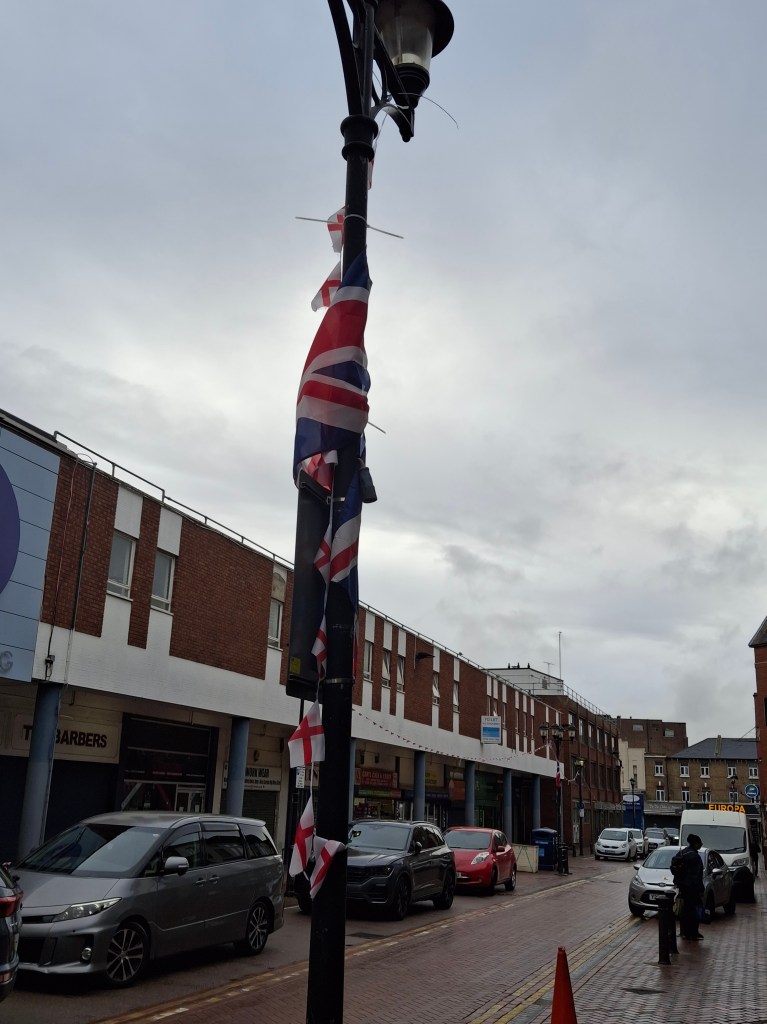


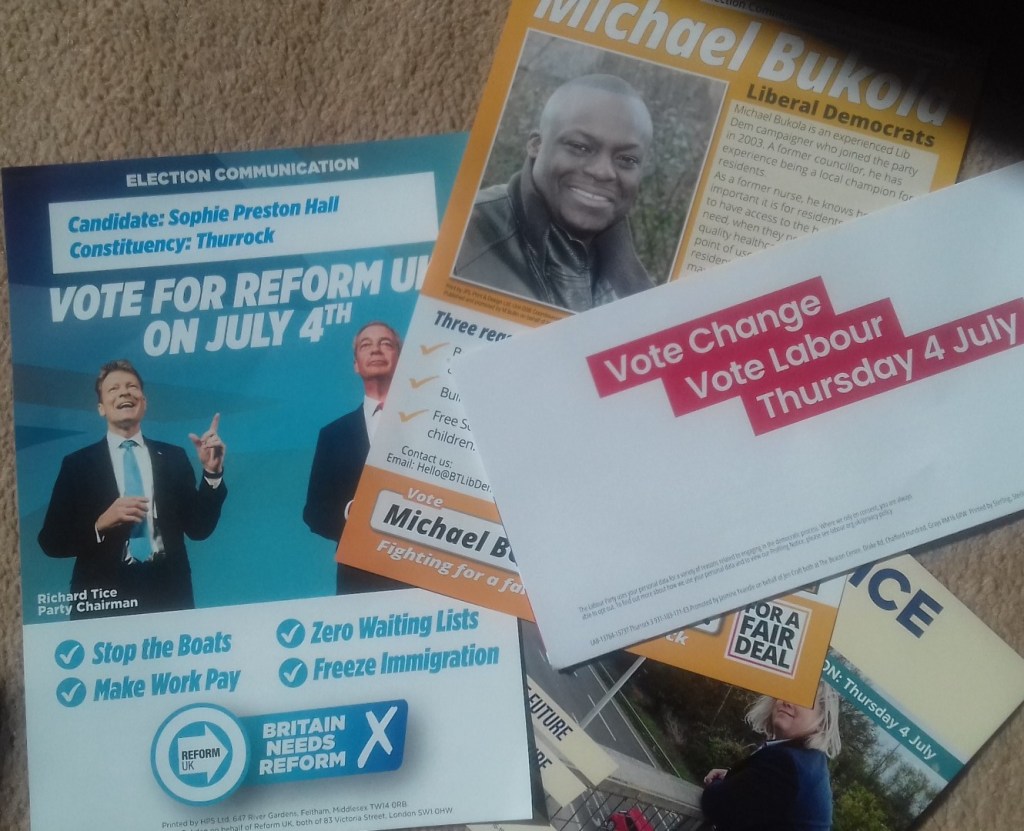


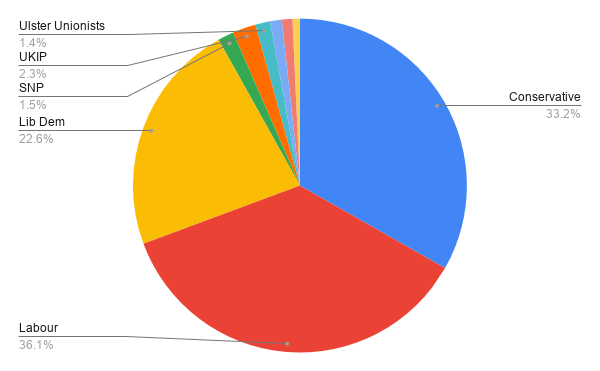


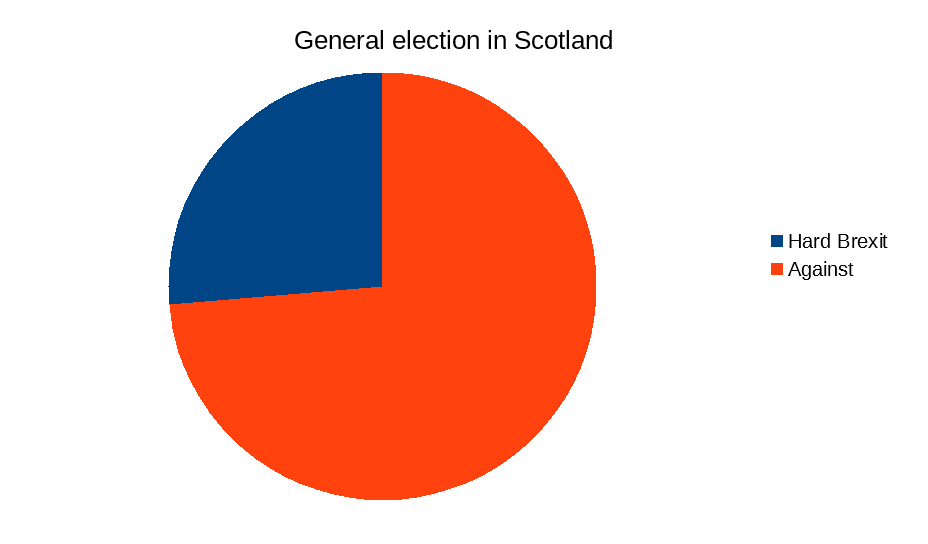


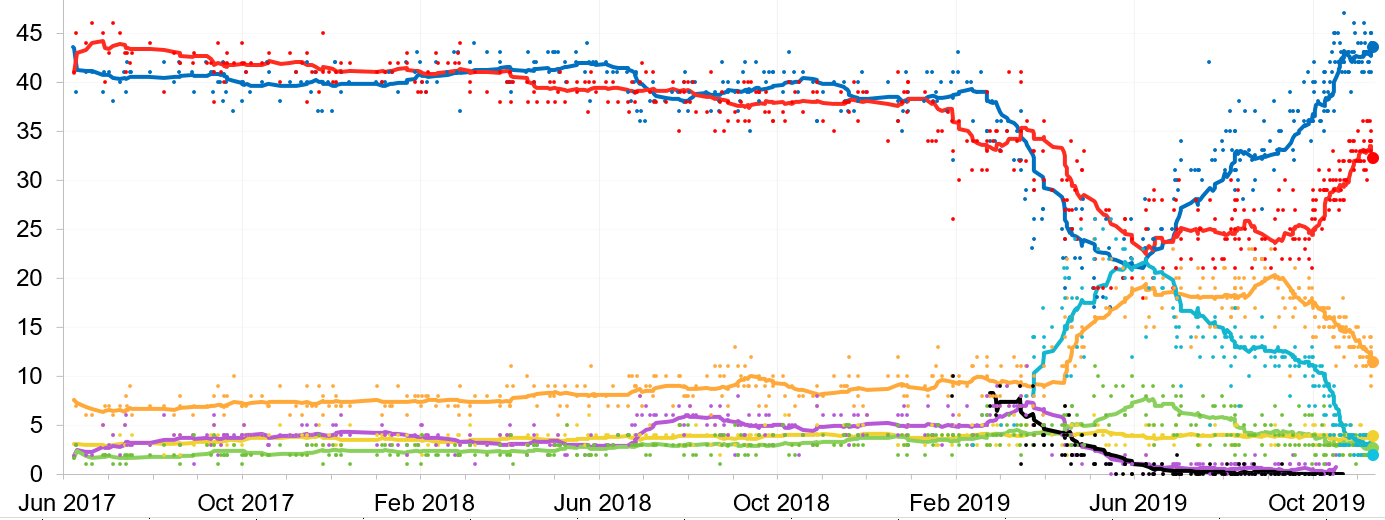
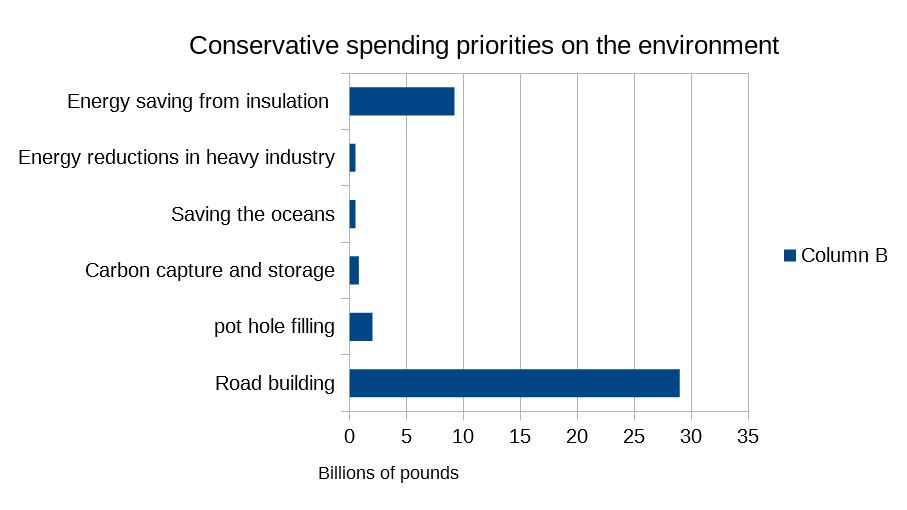
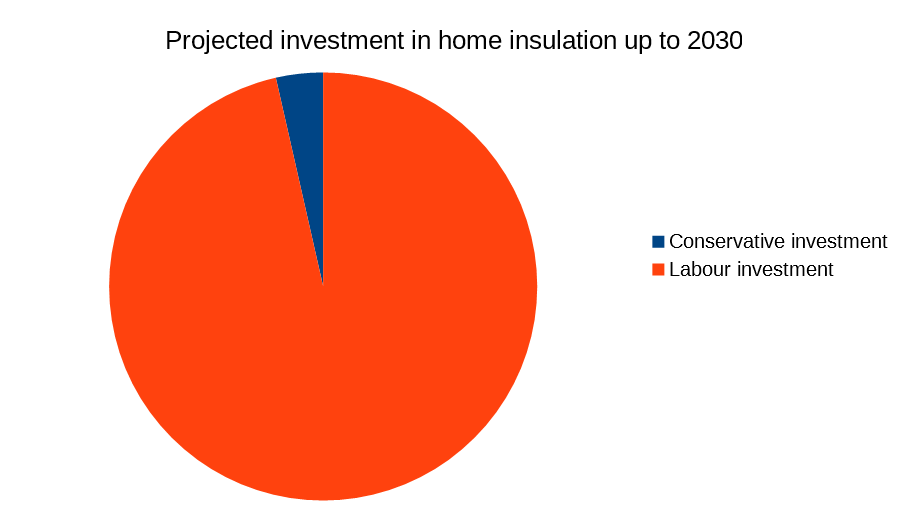
 Urban ramblings