The Words of the Prophets…

…are written on the subways walls, and tenement halls” or, very often, the walls of pub toilets. In the toilet at the Chandos pub, wedged between St Martin in the Fields and the Colosseum, and reached up a narrow twisting staircase lined with black and white photos of opera singers, you’d expect something classy.

Above a startlingly black and white diamond floor, someone has written gnomic messages in the tiny capitalised writing of the obsessive along the grout between the wall tiles. “The World is flat”. “The World is grey”. “Trump is a bump in the road” The last of which can’t help but make you wonder “Where to?” Rather than clean up these rather faint assertions, the pub management has drawn over them in coloured marker; which paradoxically draws attention to them and makes decoding what you can and can’t see underneath a bit of a mission.

Behind the cistern, someone has written, bolder, larger, in green, red and black, “Free, Free Palestine!” then poignantly added “please!” drawing an angry retort in scrawled biro, most of which has been equally angrily scribbled over so only the sentiment “Let us finish the job” can be read. A third person, presumably the one who scribbled it out, has drawn an arrow to the sentiment and added “You did that in 1948”. So, at the pub toilet in the Chandos, as in the Oxford Union, its evident that Israel’s exercise of its “right to defend itself” has blown away any pretence it had at moral standing with every bomb it has dropped, every tactical success lays the ground for strategic failure; and the writing is now on the wall.

Graffiti in pub toilets varies with the clientelle. Back in the seventies in York, when I was more inclined to be a regular than the very occasional visitor I am now, the Spread Eagle in Walmgate seemed to specialise in satire at the expence of John Smiths brewery. Just above the urinal, someone had written, “You don’t buy the beer here, you rent it”. Somone else had added “Don’t take the piss out of John Smiths bitter – you might remove its entire liquid content”. In the more sophisticated refuge of the York Arms, a cosy mostly gay pub tucked snugly in behind Bootham Bar, there was a line in arch and witty comments about anything and everything. Most were a fleeting laugh, but, for a reason that is mysterious to me, this one has stuck. “To be is to do” Rousseau. “To do is to be” Sartre. “Oo be do be do” Sinatra.

A similar mixture of the cod profound and the down to earth was written on the whiteboard on the concourse of Piccadilly Circus tube station that was crowded with people rushing hither and thither in an even busier than usual pre Xmas crush, giving a Hallmark sentiment a practical punch line. “Life is about the journey, not the station – SO KEEP MOVING”.

A sticker in the tube car read “My girlfriend said it was her or Reading – I still miss her sometimes”. My initial thought was that Reading is a nice place, definitely deserves to be a city, but not so nice as to break up over living there, and that this was a strange way to promote its charms; until I tumbled that it was about the football club. The same thought applied though…

Another tube advert illustrated the limitations of synthetic phonics as a method of teaching reading. It read “Whne yuo cna’t dceipher thier priicng bnudles”. I expect that most people reading this will have had no trouble working out what that said, because you’d have been using your sense of meaning and syntax to work with your knowledge of possible letter/sound correspondences (which can vary in English, vowels being especially slippery, as in “I like reading in Reading” or “Gove loves to move”). If the sentence had had a jumbled word order as well as a jumbled letter order, it would have been much harder to work out.

The problem with an over dogmatic phonic approach to reading is the insistence that meaning follows decoding, when it is necessarily very often the other way round. Even when learning the phonemes themselves, its a lot more effective to do so from a word that has meaning for the learner (like their name, or words like “Mum”) than a random list.

The brain works like a very sophisticated version of the spellcheck/predictive text systems that are now on phones. As you type, the system will give you possible options for words that might make sense if they come next. As you type more letters, the words change as the possibilities narrow.

This perception is important from the off, as without making sense being built into the process, there is a danger of what used to be called “barking at print”, where a child might learn to decode the sounds and pronounce the words, but be reading them as a random list. This might get good marks in the phonic screening children in Year 1 have to do, which is set up exactly as a random list, many of them as “non words” to eliminate any input from meaning contaminating the purity of the letter,sound correspondences; but it doesn’t allow lift off into self sustaining reading for pleasure or information – because the activity is abstracted from all that.

More creative mishears. In a discussion on the antecedents of the HTS in the Al Nousra Front and Jolani’s split from ISIS, I misheard the name of the ISIS caliph Abu Bakr Al Bagdhadi as Big Daddy, which conjured a different image altogether.

Sleepwalking into World War 3?

My letter to the Observer this morning

Did Andrew Rawnsley seriously write “Senior military officers privately worry that Britain’s Armed Forces would have difficulty fighting a high intensity war in Europe for more than a month or two”? (Britain has never looked more exposed, adrift in the Atlantic in a world pulsing with perils Observer 8/12/24) How long does he think “a high intensity war in Europe” – with an unnamed power which, for the sake of argument we’ll call “Russia” – would last? Never mind a month or two, with nuclear weapons we’d be lucky to get to the end of an afternoon, and no one would be “home in time for tea and medals”, because we’d all be dead. 

What is seriously worrying is that our futures are in the hands of people who think that ramped up confrontation on the lines envisaged in the “Defence Review” is in any way survivable. As he says at the start of his article, “I don’t know what effect these men have upon the enemy, but, by God, they frighten me”.

That Time of Year #5: A train called Barry – Pants Panto and Creative Mishears.

One of the good things about having ears blocked enough to not quite hear things straight, is that some of the mishears are quite evocative. Getting out of a train the other day, the following, rather poignant message came over the speaker – “We have now reached our destination. When you leave the train, please take all of your longings with you…”

The C2C train that I got out of in Grays station had a name plate. Barry Flaxman. Not quite Thomas the Tank Engine, but quirky in its own way. C2C being owned by TrenItalia, you’d expect something zappier and well travelled, the Marco Polo perhaps, or the Amerigo Vespucci. But those would work better for high speed rail over continental distances. If the Belt and Road Initiative was a European enterprise heading East to Samarkand, Ulan Bator and Beijing, instead of vice versa, the locomotives might have names like that. For a short haul commute between Southend and Fenchurch Street, Barry it is.

An appropriate honour for a man from Southend who spent his life from 1949 onwards campaigning for passenger improvements, died of a heart attack on his way to view a new train in 1998 and whose “timetabling knowledge was the driving force behind the electrification scheme benefits of the early 1960s that brought such a step change in journey time and frequency.” The world is full of barely acknowledged contributions to life being a tiny bit better, made by people unknown outside their own field and tiny circle. Its a pity that the train just has the name, with no further information, leaving it to stand alone in almost anonymous obscurity.

All the same, perhaps Barry himself might have been a bit cross that the train with his name on it was having a problem with its connecting doors on the day I went down; making the carriage with the toilet in it innaccesible from the rear coach. Having indulged in a coffee from Fenchurch Street, which seemed like a good idea at the time, this was becoming more and more of a problem as the stations counted down.

Dagenham Dock,

Rainham,

Purfleet,

Grays.

The train glided into its final destination in what felt like mocking sloth and was in no hurry to let the doors bleep their escape signal. Limping at speed to the toilets in the Precinct and just about making it, or so I thought; there being an “Out of Order” sign improvised in cardboard across the Mens. Knowing that I would never make it back to the toilets in Morrisons before suffering leaks on a grand scale, I expressed my frustration at slightly “Broken Britain” with a satisfying fricative explosion

“F*$*£!!!!”

“No need to swear”, says a concerned woman passing by.

“There’s a disabled toilet. You can use that. Are you disabled?”

“I will be in a minute if I can’t use it”.

My nephew, who is a very talented musician, is now in the band for this year’s Aladdin Panto, with Gok Wan, a Loose Woman and the surviving Chuckle Brother. Most of the music in Panto is what they call “stings”; musical sound effects that punctuate the story and draw attention to jokes. Ba -boom – tisshhh – Ta – daaah! – Wa, Wa Waaaaa! That sort of thing. Not massively taxing, and not a lot of room for solo improvisation, but quite fun.

Meanwhile, at the Thameside Theatre, this year’s version of Snow White has just one named actor – Luke Coldham (who may, or may not, be a cold ham) – playing “Nurse Kelly” – a character I don’t recall either from Grimm or Disney – who looms very large and central in the poster. None of the other actors merits a mention, but they are all smiling happily, if anonymously, enough. Its possible that this is Panto’s answer to Tom Stoppard’s Rosencrantz and Guildenstern are dead, where he takes two minor but essential characters out of Hamlet and makes their offstage existential angst the centre of the play, posing the fundamental question of what Non Playable Characters think of when they are not being played, but probably not.

And SMILE! A broadside of dentistry to brighten the bleak midwinter – and not a dwarf in sight. What have they DONE with them? The other acts being advertised at the Thameside, and Civic Centre, have a definite nostaglic quality: The Upbeat Beatles, The Jersey Boys, The Roy Orbison story: appealing to people who remember 1963 and think the world has gone to pot since; partly because the Beatles did themselves and got a lot less upbeat and a lot more quirky as a result. I’m not knocking the concerts, I expect they are good fun, albeit in a safe retread sort of way, but its the sheer uniformity of the cultural offer – nothing for anyone under 60, no cultural influences other than an aging transatlantic mainstream: like Radio 2 forty years ago. And the only other piece of Theatre on offer is a stage version of “Allo! Allo!”, the 1980s situation comedy in which the situation is the Nazi occupation of France reimagined as farce. Always good for a laugh, if you don’t have much grasp of what that was actually like.

Luke probably gets a mention, not because he might have been on Eastenders once in 2013, but because he’s a Thameside Panto regular – having played Sarah the Cook in Dick Whittington (who?) Widow Twanky in a former Aladdin production, Dame Dolly Doughnut in Peter Pan, Stanley in One Man Two Guv’nors and must do it well enough to be a bit of a draw. He’s also played Maximilian Robespierre at the Royal Opera House, so he’s not a one trick pony (unless he’s playing him in drag). Like everyone in the Arts, you get the work where you can.

Meanwhile, the Guardian quotes Keira Knightly as saying that her latest Xmas set thriller will “ruin Christmas”. Many of us think that she and Richard Curtis did that already with Love Actually, which will probably be running on a loop on most channels for most of the holiday.

That Time of Year #4. Deck the Halls with plastic holly…

In the precinct – not a tree, but a simulation of a tree. A geometric shape in plastic. A prefab structure with built in baubles. Tall, pretty in its way, but by definition lifeless and sterile. None of the tension of a real dying live tree, no reflection of the mid Winter dramas of light in the darkness, evergreen boughs, blood berries and spiky leaves. And no aroma; no fresh gusts of pine leaf and sap to quiver the nostrils and refresh the mind.

When the school that I worked in for many years fell seriously foul of OFSTED and we were forcibly academised – which tipped a difficult situation into one that became almost irretrievable – on the first Christmas after the takeover, I walked into the reception area between the Scylla of the Head’s Office and the Charybdis of the Office office, and there, standing in the corner, was a silver, plastic tree (with attached baubles). Frank the Premises Manager had just put it up and was appraising it with his head on one side. Under the old regime we had had TWO real trees. Big ones. One in the reception, one in the Middle Hall, where most Assemblies took place. These were lovingly decorated with great craft and skill by the TAs and the whole school was treated to great wafts of aromatherapy for the whole of December. This was not a box being ticked. There was a heart to it. I looked at the plastic replica of a tree, looked at Frank. We both looked back at it, then at each other. We had the same expression. “Sums it up in a way, doesn’t it?” “Yeah, it does”.

Customers are fairly sparse. The independent cafe in the centre is closed, but the Costa on the corner facing onto the High Street is full of people drinking vast bowls of coffee at the bladder bursting end of the spectrum.

Meanwhile, at the War Memorial, an equal opportunities Remembrance Parade, in crochet, lines up on the bollards.

Fox Hunting by Bus in Search of Nirvana

On the pavement outside Kwikfit, two of the monks from the Buddhist Temple on Kingsbury Road, resplendent in smouldering saffron and crimson, but simultanously down to earth in grey woolly socks and hats (a sartorial middle way) walk past. One of them has his nose in a leaflet about life insurance, which he might well have need of if he doesn’t look up before he gets to the edge of the pavement.

When waiting for the 324 bus outside Brent Cross, there is always a steady stream of 112 buses heading for the headily named Tally Ho Corner in North Finchley. To give the bus a bit of panache the destination board on the front reads FINCHLEY Tally Ho! as if grinding up Ballards Lane from one bit of nondescript bit of suburbia to another had all the dash of a hunt of sherried up hoorays jumping their horses pell mell over hedges, and hurtling through the countryside in full tilt pursuit of the foxes that now slink around our bins at night – probably at Tally Ho corner too. The arrival must be an anticlimax, but that exclamation mark gives the journey a bit of imaginary zip. In the same way that there is a suburb of Polokwane in South Africa that is called Nirvana. I don’t suppose its all that, but having it as a destination on the front of a bus…wonderful! Saves all that reincarnation.

US Presidential Election Final Score: what comes next?

My last blog did not take account of just how slowly votes are counted in US presidential elections. While the result has been obvious from the grey dawn of Nov 6th, and the outlines of the vote equally apparent, a precise accounting has had to wait until now. Even now (Nov 27th) the vote count stands at 99.7%, so there’s roughly another few hundred thousand votes to tot up, but these won’t make much difference to the broad conclusions that were reasonably obvious, and therefore broadly misrepresented in the media, from day 1.

First of all, contrary to my initial blog, Trump did gain votes from 2020. But not many. His total was just over 77 million this year, compared to just over 74 million in 2020; so, a gain of just under 3 million votes.

Similarly, Kamala Harris lost a lot of votes on Joe Biden’s total in 2020, down from just under 81.3 million to just over 74.4 million; so a total loss of 6.9 million votes.

Turnout was down overall by about 3 million votes.

So, the core conclusion that this was more a Democrat slump that a Trump surge still holds. This matters because some of the conclusions coming from Democratic Party reinforce the strategic choices that led them to lose. There are basically three strands to this.

  1. They are in denial about “the economy”, arguing that people under $100,000 a year, whose real wages were lower at the end of the Biden term than the beginning were suffering a delusion because “economic indicators” were going so well. Putting this across as people not “feeling” how well they were doing, when they were actaully doing pretty badly, is a form of gaslighting that, evidently, doesn’t work.
  2. They seem to think that the problem with Kamala, campaigning with the Cheyneys, “I own a Glock”, “border state prosecutor”, “Israel has a right to go after the terrorists” Harris was that she was too “woke”.
  3. They are having a tactical discussion about whether Biden should have withdrawn earlier – obviously he should – and whether they should have had a primary process – neither of which addresses the fundamental problem that any candidate wedded to the same strategy would have faced the same defeat.

This denial is designed to move the Democrats onto the same ground as the Republicans on the spurious argument that there was a significant shift towards them. There wasn’t. It is not a strategy to remobilise their lost voters, let alone an attempt to pose answers that meet the needs of working class voters. Quite the opposite.

It reflects a deeper reality that – their protestations that Trump is a fascist nothwithstanding – they would prefer to lose than contradict the demands of their donors, let alone challenge core US imperial imperatives; which is the fundamental purpose of both parties and the reason why the US political structure is set up the way it is; to squeeze out any genuine challenge that might express the popular progressive majorities that exist for, for example, Medicare for all, Abortion Rights, Serious action on climate, raising the national minumum wage, ending US support for the war in Ukraine and the genocide in Gaza and opposing a wider war involving Iran.

Polling showed, for example, that taking a harder line with Israel would have won Harris significant votes in the swing states.

What we had instead from the Biden adminstration was a performative 30 day ultimatum – due to expire conveniently after the election – for Israel to allow more aid into the Gaza strip on pain of having (some) arms cut off – because even in performative ultimatums, you wouldn’t want to go too far in case the wrong signal gets picked up – in the hope that this gesture would bring back some of the votes that their single minded support for Israel had alienated.

Needless to say, when the 30 days were up, in the middle of Israel’s most ruthless offensive yet – implementing the “General’s Plan” to completely clear the whole of Northern Gaza of its Palestinian population, making it a free fire zone and totally shutting down of any supply of food, water or medicine – the US declared that enough aid was being allowed in for them to keep praising Netanyahu and passing the ammunition.

The psychological shock to a lot of people in the mainstream of politics is that 2020 was supposed to be a “return to normalcy” from the insane aberation of four years of Trumpian excess, after which the Pax Americana could be reasserted on its customary tried and tested basis, with all its familiar landscape intact. The problem is that it can’t, now that the US is no longer the world’s largest and most dynamic economy, the old rules won’t work anymore, so what people thought Biden was now looks like an interegnum in a “new normal” in which the US takes off its masks and stands before the world in all its hideous nakedness as a climate denying rogue state, reduced to having to bully its allies to increase military spending and banking on increasingly overt threats to try to bluff its way out of decline.

This is unlikely to work, but is extremely dangerous and damaging nonetheless.

Beyond the grotesque and demeaning soap opera of his cabinet picks, like putting the former head of the Worldwide Wresting Federation in charge of Education, which could be filmed by Hollywood as the Joker taking control of the Gotham City Mayor’s office.

  • If Trump imposes 60% tariffs on China and 20% tariffs on everyone else “on the first day” the knock on effect on the world economy will be severe – causing an economic squeeze and political turmoil among allies as well as opponents, sharply rising prices in the US itself and a hard hit to living standards. Those who voted for him under the impression that they would be better off – and many did despite misgivings about his other policies – a response identified as a definite trend by exit pollsters – are in for a shock and are likely to turn.
  • The same applies to mass deportations, if they are carried out. Removing hundreds of thousands, possibly millions, from the workforce would be seriously disruptive economically, even discounting the immensely divisive and traumatic social and political impacts across communities.
  • If Trump carries out his promise to reverse major US climate policies passed during Joe Biden’s presidency, this could push $80bn of investment to other countries and cost the country up to $50bn in lost exports, according to a new study by researchers at Johns Hopkins University.
  • The required ramp up of military spending among allies, in the context of an economic squeeze generated by the tariffs, would also create increasingly febrile and feverish politics even within the US’s core supporters; as we are already seeing in Japan.

The decline of US power has entered a bumpy and perilous period and the election of Trump is a symptom of that. Standing on much thinner ice than the media is suggesting, the harder he tries to grip, the more things will slip through his fingers; the harder he tries to assert US power, the more he will expose how much it has already slipped.

That Time of Year#3. How are the Mighty Fallen?

Seen in Foyles Bookshop on Saturday. Someone with a sense of humour has placed the parody of Boris Johnson’s memoir alongside the original; which many reviewers thought was surreal enough.

This may be a desperate attempt to boost sales for that, as the red sticker showing that its on sale for half the recomended retail price does not indicate that it is exactly flying off the shelves.

Yesterday’s man.

That Time of Year #2. A Carnival for Carnivores!

Grays High Street was not its usual quiet self on Saturday morning. A blue tent with a sound stage flanked by huge loudspeakers was deployed at the strategic centre between Clarence Road and George Street. Manned by a tiny, grey complexioned DJ in his fifties, it was belting out Romanian techno beats, while he rapped along with it, hopping about with an enthusiasm appropriate to someone a third of his age like a gleeful goblin.

We have the meats….

In front of the shops on either side were lines of Eastern European market stalls, most selling meat. Steaming meat, cured meat, barbecued meat, meat to take away, meat to eat. Tables were laid out in between so people could sit and munch in their anoraks while the vibrations from the sound stage thundered through their chests.

Giblets steaming on gibbets…

There is something almost medieval about it. All you’d need is some jugglers and fire breathers.

In case the last stall didn’t have enough meat, here’s some more…and a bit of cheese.

In case you were in any doubt where the meat comes from, this makes it pretty apparent. Not Kosher, pretty Haraam and no place for a vegetarian.

It was quite sparsely attended when I passed it in the morning, but it was rammed in the afternoon. A mix of local people enjoying being swamped by an alien culture. The Disco King on the stage was playing a Techno verison of the Lambada as I walked past; proof positive that multiculturalism is dead.

One of the regular young black evangelists a little further down offers me a leaflet. I politely decline and he says “Jesus loves you”; which is quite a pitch when you think about it, particularly to anyone who feels otherwise unloved.

That time of Year #1. The Nativity with no baby.

In the midst of the great Temple of Mammon that is Brent Cross Shopping Centre, a not quite life size Nativity scene is installed on the first floor. It looks normal enough until you notice that, in the midst of the manger, where the Christ baby should be, there is a void.

As a result the hand and face gestures that should express awe and wonder are more akin to shock and bewilderment, puzzlement or even irritation. Where’s that baby gone? He was here a minute ago?

The Gold and Frankincense seems to have arrived with two of the Three Magi, but there’s no Myrrh for the third. Its obviously a result of something prosaic – some of the parts haven’t been delivered perhaps.

Nevertheless, it comes across almost as a statement of doubt. The absence at the heart of doctrine. Faith without object. Or perhaps as a practical joke, or a Shopping Mall Treasure Hunt – find the missing Son of God and win a Waitrose voucher (bonus points for the missing Myrrh).

A small dog strains on his lead to sniff through the barrier at one of the plastic sheep, trying to work it out.

Labour’s Climate Strategy – strengths and weaknesses.

This was an introduction given at the Campaign Against Climate Change Trade Union Group’s energy strategy day. Afterthoughts and updates, like the next few paragraphs, have been added in bold.

This introduction was delivered before Keir Starmer’s speech at COP 29, which made the very welcome pledge of an 81% cut in carbon emissions by 2035, but also included the promise that the government would not “tell people how to live their lives”.

This makes the way we live now somehow sacrosanct- and assumes that “people” are incapable of rising to the challenge of changing it if thats whats needed to secure a livable world for their children and grandchildren. It also ducks the government’s responsibility to implement Article 12 of the Paris Agreement which is a call for mass popular information, education and mobilisation campaigns, to enable society to act collectively to save itself.

Parties shall cooperate in taking measures, as appropriate, to enhance climate change
education, training, public awareness, public participation and public access to information,
recognizing the importance of these steps with respect to enhancing actions under this
Agreement.

As 66% of the public want more action to combat climate change, we should be mobilised to do so. We will have to get to sustainability by marching forward on both the technological transformation leg and the social transformation leg. We won’t get there if we have to hop hopefully on just one of them.

Labour’s strengths and weaknesses

I’d like to stress that there are a range of views in the Greener Jobs Alliance, and these are mine.

To start with a statement of the obvious, it doesn’t look as though the government sees itself as an instrument to mobilise society to transform itself to sustainability.

They treat the climate crisis as an item on a list – limited to a mission to make the UK a “Green Energy Superpower” – not the framework in which everything else has to be posed.

That leaves huge gaps. Some examples.

1.The current curriculum review for schools does not explicitly have addressing the climate crisis at the heart of it, although the current Ministerial team are open to a discussion about it in a way that the last was not.

2.A climate conscious budget would, as a minimum,

i) have raised fuel duty and hypothecated the revenue to keep the £2 bus fare cap and invested the rest in enhanced public transport.

ii) raised a wealth tax on incomes above £10 million per annum, as suggested by Greenpeace – to raise £130 billion over 5 years (1% of GDP) which, they argue, would raise the revenue to cover insulating 19 million homes, cap bus fares outside London at £1.65, and free for under 25s, fund an unlimited rail ticket for £49, provide retraining for the 3.2 million workers at risk in high carbon industries and shift agriculture onto an agro- ecological basis.

That might be optimistic, but its that scale of ambition thats needed, along with a relentless explanation of why its necessary as a national and international mission.

And to play fantasy Chancellor a little longer, a recommitment to the £28 billion a year future proofing investment with a plan for every sector that works with the relevant unions to develop it and identify the skills gaps that have to be filled. This applies to expanding sectors as well as high carbon sectors that will have to shrink.

Reeves and Starmer’s overall strategy is for “growth” – any growth – conceived in completely traditional terms, not framed as transformation. This can sometimes even be framed in a way that undermines the government’s own targets -as expressed in the recent Sun article under Starmer’s name headlined – “I will never sacrifice Great British Industry to the drum beating, finger wagging Net Zero Zealots”.

I guess that’s us. Perhaps we should all get badges.

Also, I don’t know if its just me, but does all this “Great British this, Great British that” have a really early Victorian feel to it?

3. This can also be seen in housing. The challenge is to build 1.5 million new homes a year. The GJA wrote to Angela Rayner in October last year whether all new homes would be

i) built to a zero carbon standard, with a sound level of insulation, heat pumps, electric cookers and hubs, solar panels as standard and no connection to the gas grid (as this would be a wasted investment).

ii) with all essential facilities within walking distance, integrated green spaces and trees, good public transport links and car clubs to reduce the burden of individual car ownership.

iii) zero impact assessments on water tables and sewage and other questions including who will build them? Arguing that there needs to be a plan to expand Local Authority Direct Labour Organisations with a link to local FE colleges to skill up the new workers we will need to do it

iv) And, crucially, the last question. If the aim is to use existing developers, how will you prevent them from blackmailing the government to water down standards to enable them to squeeze in more units, cut the proportion of social housing, sit on land banks and refuse to develop them, or claim that necessary environmental standards impact on their profits too much?

We didn’t get a reply, but there are indications that they could let developers rip through reducing planning restrictions even on the water table and sewage – which is quite extraordinary, given the massive concern about sewage in our rivers – and there are signs of a retreat on a solar panel default after push back from the industry which shows where the battle is. New rules ensuring that no new homes are connected to the gas grid are, however, scheduled to come into force by 2027 and implemented from 2028. The key question now is how stringent the environmental standards for new builds will be and not allowing the developers to kick the costs of meeting them onto households.

All this poses a question for the trade union approach to Just Transition. At the moment, the new TUC Worker Led Transition Team is focussed on enabling a transition in threatened high carbon sectors – cars, cement, steel etc – which is vital and important work, but we also need campaigns for employment that doesn’t currently exist. Construction and retrofit are probably the most promising sector for this.

The TUC WLT have been working since May and you can read about them and find their contact details in the latest Greener Jobs Alliance Newsletter.

Just Transition doesn’t have to mean like for like jobs. I saw in Edie this week that there’s a skills gap for 50% of the jobs projected as “green” by 2030 – which indicates a huge demand and potential, but also a risk if that gap isn’t filled.

4. This also applies to Foreign Policy. David Lammy made a speech in September stating that the government would put climate change at the heart of UK foriegn policy.

Wouldn’t it be lovely if it did?

For him this had three components.

i) A “clean power alliance” to scale up finance for “clean power” in the Global South.

ii) Measures to unlock global finance to “leapfrog fossil fuels” there.

iii) Implementation of the 30 by 30 agreement (safeguarding 30% of land and oceans by 2030).

The problems with this are that the UK went to the recent Nature COP without a plan for 30/30. “Clean power” is sometimes used as a synonym for “green power” but it is also often used, especially in the US, as a specific description for the cluster of technologies being posed as an alternative to renewables; nuclear, hydrogen, carbon capture and storage.

Most crucially, unlocking finance does not mean increasing aid levels – which are still at 0.5% of GDP, with no plans even to get back up to 0.7%.

What Lammy means is trying to find investment opportunities for the City of London/UK finance sector. For this to work it would have to be profitable for them, as banks follow the money; which is why they have invested twenty times as much in carbon bombs as the Global South has received in climate finance since the Paris Agreement was signed in 2015.

So this is a bit greenwashy, especially as the actual heart of UK Foreign policy is not prioritising fighting the climate crisis, but its strategic subordination to the United States; expressed this week by Starmer “looking forward” to working with Trump “in defence of our shared values” – even as Trump is poised to exit the Paris Agreement and trash all domestic environment protection measures and even the bodies that monitor them.

The question posed by this is the extent to which the government will adapt to US pressure; particularly as this is finding expression here in the alignment of every political force from the Tories rightwards on opposition to “the madness of Net Zero” or the “costs of Net Zero” as they put it. The use of these phrases is now ubiquitous and serves to associate “Net Zero” with “madness in people’s minds – pushed as it is by “eco zealots” and therefore by definition unreasonable without the inconvenience of having to make an argument to justify the association; which they have to do because both are the opposite of the truth. The only thing mad about Net Zero is not reaching it in time, the costs of not getting there are enormous and, indeed, fatal.

As will be the end result of the increased military spending that they falsely pose as keeping us “safe”.

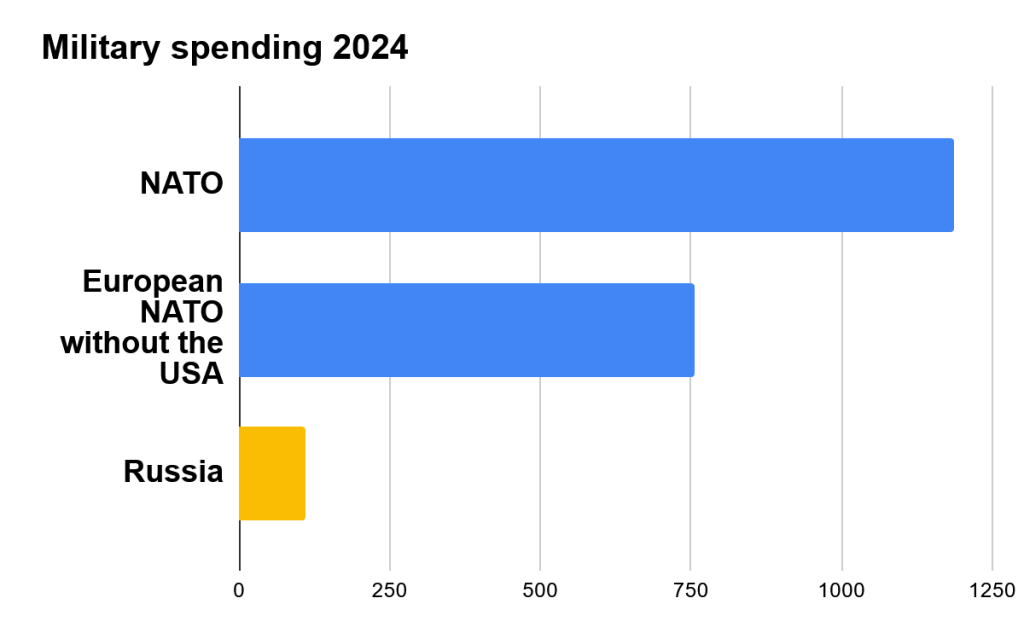
One aspect of US pressure is to sharply increase and prioritise military spending. Starmer is due to announce a schedule for the UK to increase its military spending to 2.5% of GDP straight after Trump’s inauguration, which will do little to appease him when he’s pushing for an eye watering 4%. This is dangerous in itself, but also sucks resources away from investing in transition and/or improving people’s lives; thereby deepening the cost of living crisis and the risk of war.

This is in the context of some EU leaders going to Trump, according to the FT, and suggesting “lets avoid a tariff war and team up against China”; thereby proposing to form a bloc with a climate rogue state against the world’s largest investor in renewable energy.

At the same time they are relaxing their formerly sacred fiscal rules to allow stepped up investment in military production and military focussed infrastructure investment, like strengthening bridges “so tanks can pass in safety”to prepare for a continental war with Russia which, were it to happen, would kill us all. It is an explicit presumption of the current UK Defence Review that we are in ” a pre war period” with Russia, Iran, China, North Korea, or all four. This is suicidal lunacy and we don’t have to accept it.

In the context of Trump expecting these ruinous increases in military spending from all US subordinate allies, a better course for all of them is to seek peace and mutual security with the targetted countries. In Europe, that means finding a modus vivendi with the Russians that would allow a lasting peace in Ukraine – not just a pause while both sides feel they have to tool up for Armageddon – and a reduction in tensions and barriers across the whole of Eurasia.

5) Lastly, on the “Green Energy Superpower” project, there is good news and bad news.

The good news is

i) the unblocking of onshore wind and solar farms,

ii) the 2.5 times increase in offshore wind in this years Contracts for Difference auction – though this needs to double again next year and stay at that level to meet the 2030 target

iii) getting a fast feasibility study done from NEOS that its possible to get the grid in shape to take on all the new renewable energy sources – and finding that this would cut people’s bills

iv) moving zombie projects out of the planning system so those most ready can go first

…all this is positive and means there will be a substantial increase in renewable energy by 2030.

But,

i) The investment in CCUS and blue hydrogen announced last month is a misallocation of funds that could have more of a climate impact and create more jobs elsewhere.

ii) The failure to maintain the original plan for retrofit means that demand and emissions will be higher than they need to be.

iii) As does the insufficient focus on sustainable transport and the continued low funding for local authorities that makes most local climate action plans well intentioned and doing some good things – from bee corridors to LTNs and cycle paths, public EV charging points, officially approved guerilla gardening, school streets programmes and so on, but not resourced enough to qualitatively impact neighbourhoods.

Above all, and overarching, this is the lack of just transition bodies with mass participation at national. regional and local levels because, if I can misquote Lenin, Sustainability = electrification plus Just Transition Commissions.