George Monbiot’s comments about the war in Ukraine on BBC Question Time last week are completely disorientated, and disorientating for anyone who swallows them.
His columns in the Guardian are often a haven of well argued, deeply felt sanity in a time when the impasse of capitalism, the decline of US hegemony and the ever mounting climate crisis are driving most columnists in most papers well off the rails and up the wall, but the one entitled A Trump win would change my mind about rearmament (Guardian 5/7/24), was profoundly confused, and underpins the line he took on QT.
He argues that Trump’s Second Coming should “end… our abiding fantasies about a special relationship” without reflecting that, in abusive relationships, abiding fantasies are often clung to harder to avoid having to face facts. There is no doubt that the British ruling class will cling to it as hard as it needs to.
As it is, few, now, have any delusions that this relationship is one of equals. A deferential cringe is built into it, and everyone knows it. The relationship was abjectly summarised by Tony Blair when he told the British Ambassador to Washington to “get up the arse of the White House and stay there”. We have seen what this looks like on film. “Yo! Blair!”
What makes it “special” is being one of the closest US henchmen in their global dominance: one of the “five eyes” countries that share Intelligence gathering (the US and what used to be called the “White Commonwealth”) that is at the core of their system of alliances.
George spells out what this has been about, listing just a few of the brutal and deadly military interventions and coups “we” have been party to since the Second World War – Afghanistan, Iraq, Gaza – with the US as number one and the UK desperate to believe that its number 2.
Although he recognises that these alliances, with NATO as its core, defend a rules based order that “favours capital over the democratic state”, he doesn’t draw the structural conclusion that this also constitutes a Global North military bloc forged to keep the Global South in its place. So, the interventions he mentions were, and are, not random pieces of malevolence that just happened to happen, but systematic attempts to assert global power and dominance. This is posed in these countries as “defence”.
The military forces at their disposal are the tools do do this job, and the stronger and bigger they are, the more they can get away with doing it.
So if, as George argues, our principle is that we are opposed to “imperialism, fascism and wars of aggression”, we have to recognise that not only do we live in a core imperialist state ourselves; one that has committed many wars of aggression in our lifetimes, but that that state is integrated into the system of alliances that guarantees the existing unjust global order.
We therefore have to restrain its capacity to carry out these wars as an act of solidarity with its victims in the rest of the world; in the first instance those in Gaza.
Israeli Foreign Minister Israel Katz was a guest at the NATO summit in July and Israel has had representation at the alliance since Turkiye lifted its veto in 2016, and a cooperation agreement since 2017. The ongoing US, and UK, arms and intelligence supplies during the genocidal IDF operations in Gaza underline what this alliance is for.
George argues that the UK and EU have “leant on the US for security”. What this means is being part of the world’s most aggressive and high spending military alliance. NATO accounts, with its allies in the Pacific, for between 67 and 75% of global military spending (depending on how you measure it). The strongest powers within it – the US, Japan, Germany, France – are boosting their military spending rapidly (Germany and Japan doubling theirs); while simultaneously complaining that it is not “realistic” to expect them to stump up their promised $100 billion annual contribution to help the Global South develop sustainably. In fact, just the increase in NATO military spending since 2015 amounts to $543 billion a year (with a total spend in 2023 of $1341 Billion). So, building up military capacity gets five times as much commitment as the promise to alleviate climate breakdown in the Global South – a promise that has never been fulfilled.
That looks like this.
George, nevertheless, argues that a Trump restoration would be “a threat to our peace, security and wellbeing” not so much because the US would
go full rogue state on climate – with an estimated 4 billion tonnes of additional emissions from pro fossil fuel policies and attempts to break up the Paris process – “drill, drill, drill!”
give Israel carte blanche to double down on the Gaza genocide – “you’ve got to finish the problem”
but because he thinks he would break up NATO, supposedly in cahoots with President Putin; citing his remark that he would be quite happy for Russia to invade any NATO member not spending as much on its military as Trump wants it to and would “end US support for Ukraine” which would “allow Putin to complete his invasion” teeing up “an attack on a NATO country within five years”.
This is where George’s argument aligns with that of other Guardian/Observer columnists and editorials, including the increasingly frenzied Simon Tisdall; one of whose columns last year condemned German Chancellor Olaf Scholz as “overly fearful of nuclear escalation”. Perish the thought that anyone would be worried about that. Tisdall’s critique of last year’s NATO summit was, as ever, that it did too little to escalate the war in Ukraine. No fear of nuclear escalation for him; arguing for no fly zones in the West of the country and missile strikes into Russia, for an alliance that is not “afraid of a fight” in face of the threat that an incoming Trump Presidency would try to force a peace by accepting a partition of pre 2014 Ukrainian territory because he is, as the Observer editorial puts it on the same day, “a keen admirer of Vladimir Putin”.
This profoundly misreads whats going on. Trump is in no kind of bloc with Putin. He’d like to break Russia from its alignment with China, though that ship has long sailed. What Trump is trying to do now is to bully subordinate European allies into taking most of the military weight in Europe off the US. This is so it can concentrate on China; which he sees as the main challenge to the US world order. This will be costly for the countries that do it, but that is of no concern to Trump. Thats the price they have to pay to stay in the kind of “special relationship” with the US that allows them to be at the table and not on the menu, even if it means they will be increasingly relegated farther below the salt.
Trump is not a diplomat. He does not issue quiet threats on secure telephone lines to allow appearances to be kept up, as Joe Biden did for Obama. He is a corrupt wheeler dealer with mob boss characteristics. He doesn’t spare anyone’s feelings. He bullies openly, so everyone is clear who the boss is. Remember his official visit in 2018? That calvalcade of armoured limousines that was longer than the Mall? Those hideous Osprey aircraft repeatedly buzzing London’s airspace?
And it is already working. 23 of NATOs 31 non US members now hit the 2% target, “more than twice as many as two years ago” according to Jens Stoltenburg and the only way is up, with Germany already committed to 3.5%. Job almost done.
So, when George says the “UK and Europe will need to find the means of defending ourselves against a Trump regime and its allies” he misses the point that the UK and EU countries are the allies of the US and, as everyone in the new cabinet is keen to point out, the UK will accomodate to whoever is in the White House because it has to, so they will remain core allies of “the Trump regime” too. David Lammy is quite explicit about that, saying that Trump is “often misunderstood” over NATO, and pledging increased UK spending to stay in the club. Increases in military spending by European countries is exactly what Trump wants. It won’t be used “againsta Trump regime” but to facilitate it, and cover its back in Europe so it can go after China.
The key point for the climate and labour movements therefore is that the policy choice to sink or swim with the US alliance will clash with having to break from it to resist climate breakdown. A very concrete way that this is posed is, when it comes to priorities, will the Starmer government jump to Trump’s tune and increase military spending to 2.5 or 3% or even 5% of GDP, or does it put those resources into its mission for clean energy by 2030? They are unlikely to be able to do both.
Trump wants to pull some US military resources out of Europe to concentrate on China because the US can’t do both any more. Thats why commentators like Tisdall are spinning fantasies. NATO has been unable to supply Ukraine with enough material to “win”, because it can’t.
Some pro EU commentators like Timothy Garton Ash argue that this gives the EU the chance and need to step up and become a serious military power in its own right and George now argues “I now believe we have to enhance our conventional capacities, both to support other European nations against Russia and…perhaps to defend ourselves”.
This presumes that the Russians are at war because they are on some crazed mission of global conquest. In fact, their stance throughout has been to seek mutual security pacts so that they don’t feel under threat from NATO; which, at the moment, they do. This has been the case since Gorbachev proposed a “Common European Home” in 1991. The US and NATO have never accepted that and it has been a US mission to break up any mutually beneficial economic arrangements, partcularly between Russia and Germany, the better to maintain US dominance of the continent.
Seeking such a peaceful arrangement, following a ceasefire in Ukraine, using the war as a terrible example of what everyone in Europe should agree that we need to avoid, is the preferable, alternative course to rearmament and war preparation.
Because George should think about what he’s saying. If there is a war in Europe, even if it stays conventional through some miracle, it will look like Eastern Ukraine or Gaza on a gigantic scale. The attempt to “defend ourselves” militarily will be suicidal, even if nuclear weapons can be kept out of it. War won’t “defend” anyone. Mutually assured destruction can be done conventionally if alliances are not “afraid of a fight”. The danger in proposals to seriously retool the UK, and other, military industrial complexes to be able to fight just such a conventional war of attrition with Russia by the end of the decade, is that this carries its own momentum and will become a self fulfilling prophecy, displacing diplomatic alternatives. If the UK military gets into a position to “fight and win a war in Europe”, the UK ruling class will be tempted to try to do so.
An alternative approach that would avoid economic ruin and a step by step escalation towards war, would be to welcome the US departure and seek mutual security arrangements with Russia in a “common European home”, as Gorbachev put it. A localised version of that was, after all, what the Russians were asking for in the Winter of 2021, which NATO refused even to discuss.
The US uses NATO to maintain its own dominance over Europe – political, military, economic. Which is why Trump’s threats to reorder it, with the US pulling back its commitments to nuclear and air cover and the European powers expected to dramatically increase conventional forces on the ground could end up as an own goal.
A recent poll showed strong majorities in the UK in favour of both NATO and retaining the UK’s nuclear weapons. This is because these are framed as a way of keeping the population safe from overseas threats.
This begins to crack – and you get a mass anti war movement – when that mask slips. In 1980, the incoming Thatcher government, eager to turn the screw in the Cold War and gain compliance with stationing US medium range cruise missiles in the UK, scored a spectacular own goal by issuing a civil defence booklet to every household in the country called “Protect and Survive”, as a guide on how to survive a nuclear war (with no more equipment than you’d find in the average garden shed). After decades in which the “nuclear deterrent” had been motivated as a way to make nuclear war unthinkable, it suddenly became apparent to every household in the country that 1. the government was actively contemplating having one and 2 that the self protection measures outlined in the booklet – like making a do it yourself shelter (for one) by unscrewing your bathroom door and putting it over you as you took shelter in your bathtub – were absurd.
Millions of people realised that it was our government that was putting them at risk and the sense of vulnerability that had always generated a strong anti nuclear and anti war sentiment in Glasgow – as the nearest city to the Holy Loch base of Polaris, and then Trident, submarines – became more widespread – and linked up with the reaction against the monetarist crash that also came in with Thatcher. “A few more years of this government”, as one old campaigner in Bermondsey put it, “and we’ll all be living in tents surrounded by cruise missiles”.
Donald Trump and NATO Secretary General Mark Rutte want NATO members military expenditure increased to “Cold War levels” and for member countries to adopt a “wartime mindset” in order to prepare for a perceived threat from Russia, China, Iran and North Korea.
Neil Kinnock has just stated that 3-4% would be a “realistic” level to reach.
Part of this mindset is a preparedness to sacrfice health, welfare and pensions to fuel the military machine required to fight a war with Russia in Europe that would be suicidal for all involved if it actually broke out.
The UK’s “Defence Review” is framed in a similar “pre war framework”, posing Russia, China, Iran and North Korea as “the deadly quartet”; a good name for a jazz band, but geopolitically infantile.
The threat is posed most sharply in relation to Russia, largely because NATO is now evidently losing its proxy war in Ukraine. This impending defeat is being posed as a lever to militarise European society on the presumption that a Russian win there means that they will then threaten to invade the rest of Europe.
This is simply insane.
If you look at the balance of military expenditure between NATO and Russia, even after a sharp increase in Russian spending forced by the war to 7-8% of GDP, the imbalance in NATOs favour is overwhelming, because the combined GDPs of the NATO countries are almost incomparably bigger than Russia’s (which is smaller not only than the USA among NATO countries, but also Germany, the UK, France, Italy and Canada and barely larger than Australia).
If the argument from all quarters on high in this country is that “the world is becoming a more dangerous place”, its quite clear from this which countries are making it so in Europe. If the Russian level of expenditure shown in the yellow column is posed as a terrible threat by NATO, how much more threatening is NATOs current expenditure for the Russians?
To underline this with stark figures, with overall NATO spending in 2024 at $1185 billion and Russia’s at $109 billion,
for every dollar the Russians spend, NATO spends just under $11
and the European NATO powers alone spend £755 billion between them, which is just under $7 for every dollar spent by the Russians.
So, the question posed by this is already, who exactly is under threat from whom?
Trump and Rutte, and now Kinnock, propose to raise NATO military spending to “Cold War levels”. That was around 5% of GDP between 1970 and 1987. That would double the imbalance above and set NATO up for an offensive war with a collosal military advantage of 14 to one, even if the US kept out of it, and 22 to 1 if they were involved.
This reality is revealed by the decision of the EU to break its own fiscal rules and raid its levelling up funds to finance war preparations which, among other things, involves strengthening bridges so that “tanks may pass safely”. Were they concerned that columns of Russian tanks would be steamrollering West they would be weakening bridges so they couldn’t pass at all.
This is leaving aside the political feasibility of a Russian offensive, even if it were militarily feasible – which it obviously isn’t.
It beggars belief that a war of this sort is being envisaged with a nuclear power. The same people who argue that the UK’s nuclear weapons “keep us safe” and shouted at Jeremy Corbyn “would you press that red button, Mr Corbyn?” seem to think that a land war in Europe which, given the balance of forces, would be aimed at regime change and the balkanisation of the Russian Federation and have nothing to do with “defence” would not lead to the trip wires for use of these weapons being crossed.
So, the additional cost of meeting this target in full would be around £70 billion. Even getting half the way to it would require a transfer of £35 billion, which would have to come from “other priorities”: and not just “a small amount” as Rutte puts it. Kinnock doesn’t say what he would cut. He should be asked.
Every item cut instead would improve people’s lives. The best that can be hoped for increased military spending is that it doesn’t give our lords and masters the tools to end them.
All this flows from the strategic self subordination of Europe to the United States. As this recent article argues, the new situation for Europe is that the US is leading them into war with the continent’s strongest military power, Russia, at the same time as it deliberately undermining European rivals’ economies. It amounts to a US policy of subordinating Europe through a combination of military and economic warfare.
This is a lethal combination for Europe, the most serious threat to the entire continent since at least the end of the Cold War and in a broader sense since the end of the Second World War.
So, the fight against war, and the fight against austerity, to defend our conditions of life will have to go hand in hand.
Blairite retread George Robertson is set to lead Labour’s “Defence Review”, with former US Presidential advisor Fiona Hill on hand to keep it in line with US imperatives. The conclusions are flagged up in his premise, which is that the UK has to militarily confront a “deadly quartet” of China, Russia, Iran and North Korea. This is itself a variation on George W Bush’s “axis of evil” and flags up a sharp increase not only in direct military expenditure but also a pro war domestic agenda, trying to ramp up Cold War mentality and reflexes to enable a series of suicidal conflicts and silence dissent.
None of the four countries concerned are in a formal alliance and coordination between them is – needless to say – qualitatively below that which is permanently structured by the dominant US system of alliances, on “sharing arms, components and military intelligence”.
Taking his premise as a given – which we shouldn’t – this is the balance of military spending between the US and its allies (which includes the UK) and the so called “deadly quartet” 2023.
To spell this out. The US and its allies, who Robertson poses as being under threat, outspend the “deadly Quartet” by a factor of 3 to 1. So, who is the more “deadly”? If you were to put teeth on the US slice of this graph, it might reflect how US allies are seen in most of the world.
These figures were taken from NATOs own stats, and the wikipedia list of expenditure by country from SIPRI The NATO figures are worth a look because they show how rapidly NATO is increasing its spending (from $904 billion in 2017 to $1056 in 2021 to $1185 now) and that the number of countries spending 2% or more of GDP has doubled in the last year. The NATO figures, however, are lower than those in the SIPRI list. The US figure from NATO for 2023 is $755 billion, while for Sipri, it is a significantly larger $916 billion. So, the blue, biting pacman shown here probably has its jaws clamping down even more tightly.They also don’t include the exponential increases now being set by US allies, with Japan and Germany doubling their spending.
Robertson’s inclusion of Iran in the list also implicitly underlines the UK’s alignment with Israel. This is also evident in the current government continuing with Sunak’s attempt to exempt Israel from ICC jurisdiction and the fact that it is one of only two countries to be continuing with the defunding of UNWRA after Israel made unsubstantiated allegations about its staff being involved in Oct 7th. The other country (down from the original 16) is the United States – which is one definition of a “special relationship”. This alignment in the face of an ongoing genocidal attack on Palestinians in Gaza and escalating ethnic cleansing in the West Bank, requires the domestic demonisation of the solidarity movement in this country; which we are already beginning to see.
It beggars belief that there are people who are taking bets on a nuclear war taking place by 2025. While gambling addiction has its own dynamic, how does anyone placing one of these bets think they might be in a position to collect their winnings if it does?
The justified fear that the Ukraine war is heading in that direction is one of the factors in driving majorities in both North America and Europe to favour a ceasefire and negotiated peace over continued escalation.
A recent survey by the Institute for Global Affairs showed that more than twice as many people in Europe and the US supported NATO pushing for a ceasfire as opposed it.
The IGA notes that
In responding to Russia’s invasion, avoiding escalation with Russia is a top priority — especially among Europeans. Results suggest transatlantic support for a cautious response.
More support a negotiated settlement to end the war, with a plurality of Americans and Western Europeans citing the loss of life and casualties as a primary reason.
This is a broadly humane response that is the opposite of the course being taken by the G7 and NATO leaderships. It is perhaps no accident that all of the leaders at the G7 had a negative approval rating; ranging from Georgia Meloni on -10, through Joe Biden on -19 and Justin Tudeau on -33, Olaf Schultz and Rishi Sunak on – 44 to rock bottom Emmanuel Macron on – 52%. Even after just winning the UK General Election, as he arrives at the NATO summit in Washington, Keir Starmer’s rating is -3.
In fact, the same logic on the part of NATO that led to the war in Ukraine in 2022 is the logic that is heading inexorably over nuclear red lines, possibly before the Autumn. The problem with a nuclear balance of terror is that it only works until it doesn’t. And the calculated games of chicken only have to be got wrong once, and its the end for all of us.
It seems clear that the calculation in NATO in the Winter of 2021 that they did not have to take Russia’s attempts to end the smouldering Ukrainian civil war, and defang NATOs eastward expansion, with a
mutual security pact that would have guaranteed autonomy for the Russian speaking Donbass within Ukraine,
made Ukrainian neutrality permanent
and kicked negotiations about the status of Crimea into a possibly interminable negotiation process
seriously because they believed that either
Russian military threats were a bluff that could be called, or
that if Russia did intervene, that would be the opportunity they wanted for sanctions that would rapidly bring the Russian economy to its knees, creating domestic turmoil through which the well oiled processes of a colour revolution could lead to a “regime change” favourable to the US
were a complete miscalculation in both respects.
With the sanctions only supported by direct US allies,and largely blowing back on them, the Russian economy is doing fine, growing 5.4% in the first quarter of 2024 (compared with 0.6% in the UK, 0.4% for the US and 0.2% for Germany). And the military tide is turning slowly, remorselessly Russian, as the Ukrainian government is forced to resort to press ganging increasingly reluctant conscripts, sending them up to the line half trained, and suffering losses in soldiers and material that they can’t replace.
Faced with the prospect of defeat, the G7 and NATO are trying to up the military ante, rather than do what their populations want and seek a negotiated peace.
This is heading into very dangerous territory. Mark Rutte was confirmed as the incoming NATO Secretary General only after he assured Hungary that no Hungarian finance would be used for, or military personnel deployed to, Ukraine. That implies that other NATO forces will be, threatening the direct clash that could be a tipping point beyond the control of its instigators.
The decisions now being made at the NATO summit, with a dedicated NATO HQ being set up, promising an “irreversible path” to membership, cranked up arms spending, a no fly zone on the Western and Southern Ukrainian border, a green light for Ukraine to try to knock out Russian nuclear early warning systems that cover areas well away from Ukraine – a terrifying piece of irresponsible brinkmanship, as this makes a nervous nuclear armed power unable to tell if it is under fire or not in a context in which it is afraid it might be – deployment of NATO “instructors” within the theatre of conflict, and ever widening permissions given to fire NATO produced munitions into Russia are all edging towards catastrophe.
A letter to the FT by a number of academics and former diplomats, including Lord Skidelsky and Anatole Lieven, calling for a negotiated settlement to allow the world to be “pulled back from the very dangerous brink at which it currently stands” is a sign that the consensus at the top in favour of escalation is beginning to crack. This is likely to grow as the situation becomes more intractable and dangerous.
In this context, its important that positions taken in the Labour Movement do not rest too heavily on myths. A recent letter, Time to help Ukraine to win, signed, among others, by John McDonnell, Clive Lewis and Nadia Whittome, argued that failure on the battlefield has been down to inadequate supplies of munitions from the US and its allies, calling for the UK to “take a leading role” in supplying “all the weapons needed to free the entire country” and that, in the short term, this should take the form of obsolete MOD equipment being gifted instead of sold off, for a war crimes tribunal directed solely against the Russians and for Russian assets to be seized (stolen) by Western Banks.
There are four problems with this approach.
Myth 1. To “free the whole country” would actually be a reconquest of the Russian speaking areas that rebelled against the pro Western coup in 2014 and have been fighting it ever since, at a cost of thousands of dead from 2014 onwards; and, far from being a liberation, would constitute an occupation of those areas. This would not be pretty. Kyrill Budanov, head of Ukrainian military intelligence, has stated that this would require the mass reeducation of people “with a completely different mindset” and the “physical elimination” of some of them. Given what has happened in areas that Ukraine took back at the high point of its military efforts in autumn 2021, this does not have to be imagined.
Myth 2. McDonnell et al seem to assume that the taps can just be turned on from an infinite supply of military hardware. It can’t. The paradox of the NATO military Industrial Complex is that although it outspends the Russians 11 to 1, it characteristically produces immensely expensive and complex pieces of kit that require lengthy training, high levels of maintenance and can only be produced in relatively low numbers; and once they are used, at great expense, they are gone. This is highly profitable for the arms companies and is designed for short sharp wars against Global South countries, not long term grinding wars of attrition with near peers. Stocks are now run down, the obsolete equipment, like Leopard I and 2 tanks, Bradley AFVs and so on have been deployed and destroyed in large numbers. F16s – an aircraft first deployed in 1978 – are the next installment and will fare no better. Plans to increase production of, say, Patriot missiles, can only be incremental – from about 500 to 650 a year. That is why this position is a fantasy. The supplies sent to Ukraine have been the maximum that NATO could scrape together. The only way to shift this would be to completely retool arms manufacture, which would require massive investment over several years; and politically set a trajectory for war that would be very hard to stop. No one on the Left should support this.
Myth 3. The barrel has already been scraped for obsolete equipment. The MOD website Army Surplus Store section notes that as of May 2024 “There is currently no MOD surplus inventory for sale.”
Myth 4. McDonnell et al’s argument that “Ukraine deserves a just and socially progressive reconstruction in which trade unions and civil society can democratically participate. International support should help to restore and expand universal healthcare, education, rebuild affordable housing and public infrastructure, ensuring decent jobs and working conditions. No more advisors from the UK Government should be used to assist in retrogressive reforms of trade union and labour rights” is also, sadly, wishful thinking. The “reconstruction” of Ukraine will be a massive asset stripping fire sale, as its Western “backers” come for their loans like a flock of vultures. It has already been agreed between Western creditors and the oligarchs who have run the war, embezzled a good proportion of the “aid” and siphoned quite a bit of arms supplied into the international black market, that the “reconstruction” will be managed by Blackrock; whose priorities are not those of John McDonnell. Blackrock would, no doubt, wish for a succesful UAF offensive into the Donbass that would allow them to get their hands on the $12 Trillion worth or rare earths that are sitting below the surface there. Such an offensive is even less plausible now than when it was tried in 2022 and the UAF suffered terrible casuaklties to make marginal territorial gains of no strategic significance.
Myth 5. In this context, any notion that Ukraine’s debts will be cancelled is similarly wishful thinking. Its as if NATO powers aren’t in this conflict for themselves. As if it is some genuine genuflection to – a partially applied – principle of national self determintion. The West, will want its pound of flesh. One reason for the Ukrainian oligarchy to keep a hopeless war going is to postpone the time that the aid stops flowing and the debts come due. For NATO countries to unilaterally sieze Russian assets would be another nail in the coffin for any pretence at upholding a “rules based international order”, rule out any serious possibility of peace negotiations and be seen in the Global South as on a par with the appropriation of Venezuela’s assets by the same imperial powers.
Sections of the Left often put forward spurious – slightly fantasised – arguments in order to cover an accomodation to their imperatives of their own ruling class. The paradox of this is that the ruling class itself is more hard nosed. The section of the US ruling class that backs Trump wants to cut its losses, try to impose even more financially ruinous military spending on its European subordinate allies, so that, with or without a ceasefire in Ukraine, the US can concentrate on launching and even more ruinous war in the South China Sea.
That is where the US ruling class is heading. It is why a candidate like Trump, convicted felon and epic shyster, keeps afloat on a sea of money; and now looks like he is going to win, with all the “unpredictable violence” that Boris Johnson thinks is just what “the West needs”. This strategic shift is not because Trump is in some way “Putin’s patsy” but its actually a statement of weakness that the US no longer believes itself capable of fighting two and a half wars at once and prevailing in all of them. They have to concentrate on the biggest target, and if that causes problems for its subordinate imperial allies, so be it. To deal with the twists and turns of all this the section of the Left that finds itself cheerleading for NATO escalation will need to burn its delusions.
We will put the UK’s own defence industry on a war footing.Rishi Sunak
The UK spends more on its armed forces than every other country in the world bar six.
Why is it that the countries that spend the most on their militaries, and bomb and invade other countries the most, think that it makes the world safer if they spend even more?
David Lammy’s recent article, The Case for Progressive Realism. Why Britain Must Chart a New Global Course in Foreign Affairs claims to base itself on a “politics based on respect for facts”, to look for “realist means to pursue progressive ends” and seek “the pursuit of ideals without delusions”. His problem is that the “facts” he uses are filtered by and seen through an ideological lens that distorts them, turns things upside down and inside out; and it rapidly becomes clear that the “new course” he proposes is a reprise of the old one; as the “chart” he is using is marked up with the same old, same old Foreign Policy Shibboleths that have defined UK policy since Suez. Primarily being most favoured auxiliary for the USA during the “American Century”, and a willing supporter of attempts to prolong it for another.
Lammy aims to square a lot of circles, because that course is now increasingly unviable, and the contradictions are starting to creak. In the attempt he skates at speed across a thin ice of delusions about the world that make the ideals he touches on in places unattainable. The “means” that he defines as “realistic” are incompatible with the ends he describes as “progressive”. It is therefore not entirely coherent. Andrew Fisher, possibly kindly, describes his article as a “word salad”.
Before going through this point by point, more or less in his order, I’d like to examine one extraordinarily strange phrase that crops up near the end but, in its way, summarises the fundamental contorted distortions of his world view.
He writes “at times in the Twentieth Century, Western powers undermined the sovreignty of weaker states, especially in the Global South”.
Where do you start with this?
“At times”. As if this were an occasional aberation. An uncharacteristic lapse from an otherwise egalitarian norm of sunny mutual respect. As in, the people of the Congo had their sovreignty “undermined” “at times” by Belgium and “at times” died in their millions. Or, “at times”, Britain presided over famines in India that it took independence to stop. I could go on.
Do I really have to point out that, for the first half of the Twentieth Century, most of the Global South had no sovreignty at all, as they were under the direct territorial control of “Western” Imperial powers.
Nor that this was not abandoned willingly by the “West” in the second half of the century either.
The UK, France and Portugal fought a series of viscious post colonial rearguard actions against independence movements right up to the 1970s; Vietnam, Malaya, Aden (Yemen), Algeria, Kenya, Angola, Mozambique, Guinnea-Bissau.
Settler colonial regimes in Rhodesia and South Africa kept this up to the 1980s and 90s, and Israel is still doing it today.
The United States picked up “the white man’s burden” from France in Vietnam with lethal effect (2 million killed) backed coups and military take overs in Indonesia (600,000 killed) and all over Latin America; Guatemala, Brazil, Bolivia, Argentina, Chile.
The “neo colonial” settlement that allowed formal independence for former colonies left them at the mercy of their former colonial overlords, sometimes embodied in formal structures ensuring financial control and military presence, as in France Afrique until recently; leaving most of the Global South for most of the rest of the twentieth century hog tied by debt and unequal exchange, and sometimes fought over for resources.
Within this, the US gained greater weight over its imperial rivals via economic domination (the US notion of “decolonisation” being the removal of barriers put in the way of their trade by the territorial control of imperial competitors).
This has led to a process of incorporation and subordination of European powers and Japan into a dominant US centred imperial bloc with a parasitic relationship to the rest of the world; which is where we are now.
Western powers “undermine the sovreignty of weaker powers, especially in the Global South”, not just “at times”, butdo so all the time as a structural norm. This is underpinned by an unparallelled capacity to unleash violence on anyone who steps out of line. Recognising this is “realism”. Failing to see it is “delusion”. Accepting or supporting it is siding with the oppressor against the oppressed, the exploiter against the exploited. Always.
Things ain’t what they used to be
Lammy, however, starts his essay by bemoaning how this has began to change; comparing the world at the time of the last Labour landslide in 1997 with the one that will greet the next in 2024.
In the 1990s, after the collapse of the Soviet Union, it was possible to believe in an eternal Pax Americana, in which the entire world would eventually turn into one gigantic American suburb, through US led globalisation and the wonders of the free market. This was a fantasy, even at the time.
What Lammy describes as “the liberal democratic model” – in which all countries would eventually become wealthy clones of the US (just later in the fullness of time, after a little bit of inevitable gradualism) – meant for most of the world to continue living under the crushing weight of the Washington consensus; which policed all development in US interests, guaranteeing that millions were trapped in extreme poverty, forced to live in teeming self built slums, or rural desperation, their resources extracted for little or no benefit by Western multinationals, essential services like water supply privatised; with the threat of military intervention standing permanently behind the IMF and the World Bank.
In 1997, with a slight whiff of “Good Old Days” nostalgia, he notes that the UK had an economy that was larger than those of China and India combined; and it still adminstered Hong Kong as a colony. Not any more. Never again.
Bull in a China shop
Now, as Lammy notes, “China is a superpower”. It has a larger economy than the US, in Purchase Power Partity terms. Lammy does not note, but we should, that it has been mostly in this period from 1997 that China lifted 850 million of its people out of poverty, and eliminated extreme poverty altogether in 2020. A feat described by a Labour Foreign Policy Group report in 2021 as “perhaps the single most significant contribution to human wellbeing in world history”. Something that you’d think someone with “ideals” and “moral purpose” might welcome, or even seek to learn from.
But not a bit of it. Lammy chooses to interpret this as a threat and a “systemic challenge to British interests” (a phrase that begs more than one question).
“Democracies” – a word he uses as a euphemism for the core Imperial powers which are tightly allied to, and coralled, by the United States – are “on the back foot” and losing the “hearts and minds” of the Global South “middle class”; such that “countries described … by CIA Director William Burns as the “hedging middle” are striking bargains and setting their own agendas in Africa, Asia, and Latin America” and, even worse, “they ignore the European Union, the United Kingdom, and the United States ever more frequently”.
They are just not doing what they are told anymore, dammit!
It is the rise of China, and the failure of the US to contain it, that has sent US politics into such a delirious tailspin. Because, if the US truly is the one indispensible nation, with a political and economic system that is the best in the world, then this should not be happening. But, happening it is. And, if everything you believe about the world is being shown to be false, but you can’t bring yourself to break with your beliefs, it becomes possible, even necessary, to believe ten impossible things before breakfast to try to make sense of it. An impulse to seek truth from anything other than the facts is characteristic of the MAGA movement, but not confined to them. “Realism” is too unbearable to be acceptable. So, dangerous fantasies take its place.
We should note at this point that more people in China think that their country is a democracy – a country run in the interests of the people – than people in the US do. In a study published by the Alliance of Democracies Foundation and Latana data tracking firm, when asked whether they believe their country is democratic, those in China topped the list, with 83% saying it is, and 91% also saying that this is important to them. In the US, only 49% of those asked said their country was a democracy and 76%, said it was important.
That looks like this.
Percentage of people in each country that consider it to be a democracy
We should also note that Lammy’s concern with the “middle class” in the Global South is an odd one if his major concern is with development. A striking feature of most of the Global South is the class polarisation, with very extreme Gini coefficients which show a wealthy layer with living standards comparable to those in the “West” sitting on top of a much larger number of impoverished people living in varying degrees of desperate precarity. Rajiv Ghandi’s formula of “France in India” is quite a good way to envisage this; that India contained a nation with roughly the same population and wealth as France – about 65 million – atop over a billion living in desperate straits. This polarity explains the extremity of Rightist Global South politics, producing figures like Bolsonaro or Milei. Wealthy people living in close proximity to teeming masses that they feel threatened by often feel the need to keep in their place with extreme violence. I suspect that when Lammy talks of the “middle class”, he is refering to the wealthier sort, who are in no way middling, economically or politically, but he never clarifies.
Lammy comes back down to Earth to note, appropriately, that “Climate breakdown is no longer a future worry. It is here”. He also notes that China, the US and EU all have green transition plans that require large amounts of state led investment, to a degree that the UK does not, but without digging into the figures that show that only China is doing this on the necessary scale. This is from Adam Tooze. “Measured against the $ 4 trillion per annum benchmark, the only country(my emphasis) that over the last decade has come anywhere close to spending, lending and investing on the required scale is CCP-led China“.
Bloomberg’s tabulation of the $1.1 Trillion investment in energy transition in 2022 shows the following.
China’s investment in energy transition in 2022 was almost double that of the US and EU put together. And this gap is accelerating.
It might be fair to conclude from this that it is just as well that China did not follow the Western economic model, and that its state directed economy is better able to deal with this challenge. Without their investment in renewables, having made them cheaper than fossil fuels, we would already be sunk.
Lammy however regrets that China’s entry into the World Trade Organisation did not lead to the adoption of “liberal democratic values”, putting the private sector in the driving seat of the economy and polity. Had they done so, China could be just as succesful as we are with our neo liberal model that crashed in 2008, is now leading to ever greater concentration of wealth in the hands of a tiny minority; while infrastructure crumbles and standards of living for the majority stagnate or decline. In fact, China is the only large economy in the world in which wage rates have risen consistently for workers in the last decade, such that these are now higher than they are in Portugal and Greece and comparable with Poland.
I think Lammy is being a bit previous in stating that “the rise of China has ended the era of US hegemony”, but it certainly challenges it in trade, technology and scientific innovation – all of which flows from China’s refusal to accept permanent status as a low grade mass manufacturer, most favoured sweat shop providing cheap imports for Western consumers, while stuck in a middle level development trap for its own citizens.
Most countries around the world now trade more with China than the US, and this is a trajectory that is increasing, making attempts to “decouple” an act of self harm. This is true even when defined as “derisking” (a phrase based on the paranoia that its so much worse if a Chinese smart fridge company knows when you need to buy more milk than when Google does). Cutting Chinese tech out of 5G broadband – the most advanced in the world – is an example of voluntarily adopting additional costs for a slower service, which has the additional negative consequence of increasing unnecessary tensions. Partly because of US high technology sanctions, China has increasingly innovated and is now considered to have a lead in 37 out of 44 key technological indicators. This is particularly crucial in green transition, so “derisking” in this area carries with it a lot of serious risks that we can’t afford.
The key area in which the US maintains a crushing dominance is precisely the one that Lammy tries to present as the most threatening; the military. Lammy warns that the Chinese Navy has more ships than any other, but, as World Population Review points out, counting a small patrol vessel as having the same significance as an aircraft carrier “is akin to saying a squirrel is the same as a rhino, or a scooter is the same as an 18-wheel semi-truck”, so, “to better estimate the overall power of a given navy, some analysts turn to tonnage, which is a measure of the amount of water a ship displaces or the amount of cargo it can carry”. By this measure, the US Navy, at 3,415,893 tonnes, is just under five times bigger than the Chinese Navy, at 708,886 tonnes. As Shadow Foreign Secretary, you’d expect Lammy to know that. Perhaps he does, and is just chancing his arm in the hope that no one will check.
We can also look at this in terms of the scale of overall military spending. This year, the US is spending $831,781,000,000 on its front line military. Monthly Review has argued for some years that US military spending figures underestimate the true quantity by about half, but, even if we go with the declared amount, China’s spend of $227,000,000,000 is less than a third of the US total.
This understimates the balance, however, as direct US allies in the region, like Australia (which has a collosal military budget for a country its size), Japan and South Korea add an additional $150 billion; and some proportion of the UK’s $62 billion has to be allocated through its commitments to the AUKUS Treaty. And we should note that all these allies are under intense US pressure to increase and coordinate this spending, and other NATO allies like Italy are entering into joint projects with Japan, which is doubling its expenditure at the present time.
You can look at it in terms of overseas bases too. The US has 750 bases in 80 countries. China has 1 (in 1). The US bases near China encircle it, as we can see here. There are no Chinese bases anywhere near the United States.
The same applies to deployment. US aircraft carrier task forces, sometimes with the Royal Navy’s new carriers (probably the ugliest boats in the world, not an essential point, but they really are hideous looking) as auxiliaries regularly steam up and down the South China Sea. No Chinese Navy forces at all deploy to the Gulf of Mexico or English Channel. Imagine the headlines in the Daily Mail or USA Today if they did. In that light, it is quite amazing how calmly China takes this.
You can also look at it in terms of balance of nuclear power. The United States has 5,244 nuclear weapons. China has 500, a tenth as many. China also has a defensive, no first strike policy – the only nuclear power to have one. A First Strike policy has been US military doctrine since the 1960s, and remains so, even though it has been known since the 1980s that this would be suicidal even if it worked. The explosion of smoke and debris above the cloud layer from the first overwhelming salvo of missiles would blot out sunlight for several years; causing a nuclear winter that would obliterate the “victorious” powers through temperature collapse and starvation, just as surely as the defeated would be incinerated and blasted to death. For a sobering and essential examination of this see John Bellamy Foster’s Notes on Exterminism.
Characteristically, Lammy does not note that no one in China is arguing for a war with the United States. In fact they argue for “win, win cooperation” and “a common home for humanity” as we move towards an “ecological civilisation”; all of which seem both reasonable and essential positions that it would be helpful for humanity if the West were to respond to positively. Nor does he point out that arguing for such a war within the next decade as the only way to stop a peaceful rise by China is now a live debate in mainstream US Foriegn Policy circles; and that maybe this is more than somewhat unhinged.
Arising from all this, the question that has to be realistically asked is, who is threatening whom? Who is posing the “real security threat” and how dangerous is this, realistically? And shouldn’t Labour be seeking to restrain this rather than hype it up and cheer it on? Instead Lammy argues for AUKUS to be “a floor not a ceiling”. This is, realistically, a path to war; the consequence of which cannot be considered to have any “moral purpose” whatsoever.
It is slightly mind boggling that, while he pushes this antagonistic and confrontational military alliance, he thinks positive engagement with China on economic development, climate breakdown and AI (particularly as China is leading on this) can pootle along happily in a sort of paralell universe, not distracted at all by the war drums he is so busily beating, nor thrown off course by the diversion of necessary investment into the suicidal dead end of an arms race. You can make up your own mind about whether this is remotely “realistic” or contains a scintilla of “moral purpose”.
Little Britain blues
More parochially, in an attempt to have “tough minded honesty about the UK”, Lammy goes on to note what he sees as its three key problems.
Its economy is stuck in a low growth, low productivity, low investment slump. Which, given his concern with green transition and positive remarks about state led investment in China, the EU and US, should make him question why Labour has shrunk its green investment plan to little more than is already on the stocks from the Conservatives. He notes that the UK has the lowest level of investment in the G7, but seems to think that Keir Starmer’s “mission” to get the highest growth is possible without this investment, if only the country would have enough self belief. As delusions go, this is a big one.
Its armed forces are too small; which is only the case if you want to prepare for a war that could easily kill us all instead of taking active steps to avert it.
Public Services are crumbling. He could have noted that this also goes for infrastructure, which brings us back to the need for investment which the “realism” of the Shadow Treasury team rules out. So, do not pass Go…
Realism is for him embodied by Ernest Bevin’s actions as Foreign Secretary in the post war Labour government. The flip side of the progressive measures taken by that government, founding the welfare state and NHS, nationalising key industries, was its resolute continuity in Imperial Foriegn Policy; which led it to resist decolonisation, form NATO, aquire atomic bombs, join in the Korean war: and maintain military spending at such a high level that it had to sustain austerity to a degree that got it voted out of office in 1951.
Recognising that “realism alone will not be enough to save the planet” – which essentially means that “realism” defined in this way is anything but realistic – and that the “West” has “to cooperate with its rivals on climate change and AI” leads him to disinter the ghost of Robin Cook as the Push Me to Ernest Bevin’s Pull You. Cook is lauded for his promotion of “human rights” and “soft power”, embodied in the 0.7% of GDP allocated to development aid (a figure that Lammy notes, but does not commit to restoring) and his “realism” in making “hard choices” about “arms exports”, ie letting them go ahead. Lammy’s subsequent assertion that “governments don’t have to choose between values and interests” is belied by this.
Damned if you do, and damned if you don’t
So far so confusing; but Lammy’s attempt to have his bomb and drop it continues. The “West” made mistakes. Its interventions in Iraq, Afghanistan, Libya, the whole war on terror, became “seen as” a “recipe for disorder” because, despite initial military wins, it was unable to stabilise a viable pro Western regime anywhere. Its power lasted just as long as it could sustain boots on the ground, which is not indefinitely. The resulting chaos and impoverishment has not gone unnoticed across the world. The “moral purpose” that Lammy argues for, loses out to “self interest” every time. And because, of the decadent, parasitic stage they are now in, the US and its allies are sucking capital in, not spreading it out, and are therefore incapable of “nation building”.
Four and a half million people were killed in these wars, which I think should be categorised as the first phase of the Wars for the New American Century. Ukraine and Gaza are the start of an even more dangerous second phase, as a more desperate US takes greater risks.
The Rules are for the Little People
Lammy takes the Rules Based International Order as the embodiment of a viable global civilisation, but it is widely understood in the world that the rule that defines the rules is that Washington makes all them, none of them apply to the USA (and select few of its closest allies) and they will be changed on a whim.
A small example of this was the 1984 case at the International Court of Justice in 1984, when Nicaragua won compensation of £17 billion from the US for the damage done by the US-funded Contra war and the mining of its ports. Not a cent was paid. Who was going to make them?
A more recent example is the reaction to the ICJ ruling that Israel has a case to answer that it is commiting genocide in Gaza. The instant reaction from the US and its allies was to defund UNWRA on the back of unsubstantiated accusations from Israel that some of its workers took part in Oct 7th. That is a direct act of collusion in the attempt to starve Palestinians, and two fingers up to the formal structures of international law.
So, the failure of these interventions were a blow to Western hegemony. As Tom Tugendhat put it after the Afghan withdrawal “This feels like defeat”. But, in a quick pivot, Lammy asserts that Western standing was also damaged by the failure to intervene in Syria, or take a harder line in Ukraine in 2014.
What Lammy is describing here, without thinking it through, is that whatever the “West” does, deepens its crisis. It loses ground when it doesn’t intervene, causes chaos when it does.
Pursuing War not Peace in Ukraine
This is demonstrably the case in Ukraine. The West is supporting Ukraine like a rope supports a hanging man. The country is being destroyed. More than 100,000 Ukrainian soldiers have died so far. A great investment according to David Cameron, as “not a single American life has been lost”.
If their concern were genuinely with peace and security in Europe, NATO would at least have been prepared to negotiate with Russia about mutual security arrangements in the Winter of 2021. Instead, we had a hubristic refusal to engage to ease off tensions, which has led to the war which NATO is now visibly losing, amidst appalling casualties and damage.
The sanctions against Russia have failed. Most of the world does not support them, because, as Lammy notes, they see the conflict as between “the West vs the rest”; and have long experience of not being “at the table” with the US, and therefore being “on the menu”, as Antony Blinken put it recently. And they are no longer so securely under the West’s thumb.
Lammy’s support for military “burden sharing” for “as long as it takes to secure victory” is hard to square with any notion of “realism” if “victory” means Ukraine reconquering parts of its pre 2014 territory which actually see themselves as Russian. Even people who consider that to be desirable, have a hard job arguing that its possible. Phrases like “once Ukraine has prevailed” are evidently hollow.
Instead of looking to a peace agreement, as outlined here, that would allow all people in all parts of Ukraine to live in the state they wish to, secure neutrailty and reduce military tensions across the continent, Lammy argues for a “long term generational response” to the “Russian threat”. Again, this is playing on fantasies, as NATO at present already spends more than eleven times as much as the Russians do on its military. That looks like this.
Total military spending 2024
The NATO bloc on this is approprately reminiscent of Pacman, and should probably have teeth drawn on it
What Lammy is proposing is a long term “generational” increase in the military industrial complex and militarisation of society, with some military sources floating the reintroduction of conscription, at a time in which the “realism” of the Treasury team will impose freezes and austerity on everything else.
The (Republican) Elephant in the room
Lammy’s argument for closer links with EU powers, and bilateral pacts to supplement NATO, are the only hint of the nervousness that all the Labour front bench feel that they could be coming into power at the same point that Donald Trump takes back possession of the White House.
Its not surprising that Lammy – with stopping climate change one of his progressive aims – does not explore this possibility; as the US under Trump would go full rogue state on climate change, pull out of the Paris Agreement like they did before and “drill, drill drill” – with an overall impact of an additional 4 billion tonnes of CO2 released by the US the end of his second term. This would make a 1.5C limit completely unachievable, and the damage globally would be horrific.
Lammy, as potential Foreign Secretary would therefore either have to straddle an impossible contradiction in which the main perceived “threat”, China, was investing in the necessary transition, while the “foundation of UK security”, the US, was sabotaging it. As he says, “no country can go green without cooperation”. So, who would he seek to cooperate with? He could only resolve this contradiction by dropping concern with climate change and playing down its significance so as not to upset the “special relationship”, or break with US policy in pursuit of the only realistic understanding of its consequences. It might be argued that Labour’s downgrade of its $28 billion green investment pledge is a pre emptive move to anticipate a Trump Presidency, not just pusillanimity in the face of Neanderthal Tory attacks. This is a concrete choice that has neither “moral purpose” nor “realism”.
Is a sentiment increasingly strongly felt in Ukraine. An unwillingness to die for Grant Shapps is also a majority sentiment in the UK, with just 17% being prepared to “fight for their country” in recent polling (and just 14% of 18-24 year olds).
We are now at a very dangerous point in the war in Ukraine. NATO is having to contemplate a defeat. The Ukrainian armed forces are suffering terrible losses and retreating all along the line of contact. There are increasing reports of surrenders, sometimes whole platoons sent to occupy suicidal forlorn hope forward positions (who are asking the Russians not to include them in prisoner swaps so they don’t get sent back to the front). There are also now a lot of videos of men being press ganged by Ukrainian recruitment officers, involving chases down the road and punch ups. Sometimes they get away, sometimes they don’t. The new conscription bill, to draft younger age groups is deeply unpopular and has been a political hot potato for months. The days of eager recruits is long gone. There have been whatsapp groups used by men to warn each other when the press gangs are around, so they can keep their heads down, for quite some time now. The latest visit from US National Security Adviser Jake Sullivan is reported to have offered Zelensky a deal; pass the conscription law as the quid pro quo for the US unblocking its latest tranche of aid. Essentially, this translates as Sullivan saying you provide the men to fight and die, we’ll supply the weapons that keep them in harms way. Zelensky’s own standing is undermined by the expiry of his Presidential term this month. Elections have been cancelled until the war is “won”.
There are two problems with this.
1. “Winning” for Kyiv/NATO means;
reconquering parts of pre 2014 Ukraine that rebelled against the US/EU backed overthrow of a government they had voted for. 30% of the pre-2014 Ukrainian population spoke Russian as their first language. Calling for an end to “the Russian occupation” would actually require most of the population of Crimea and Donbass to become refugees heading for Russia. Calling for “Russian troops out” means driving the locally recruited Donbass militia, which is now integrated into the Russian armed forces – out of their homes and the land they have been fighting to defend since coming under Ukrainian attack in May 2014.
integrating Ukraine fully into NATO – the world’s dominant alliance of imperial predators – as “a big Israel in Eastern Europe” (President Zelensky). A military frontier henchman state for a US dominated bloc that, as we know from long experience, or should, applies the principle recently restated with alarming candour by Anthony Blinken at this year’s Munich Security Conference: “if you’re not at the table in the international system, you’re going to be on the menu.”
Neither of these are outcomes that anyone on the Left should support.
Even if you think that being against “campism” means that you have to defend “principles” like the “right” of a state to join an imperialist military alliance; if you find yourself agitating for that bloc to be moreaggressive in supplying arms, there is no basis on which you can oppose the militarisation of our society, and the war drive that our ruling class is engaging in, because you have become a cheerleader for it. This is revealed by the argument in a recent article on Labour Hub from the Ukraine Solidarity Campaign that the impending defeat in Ukraine “has arisen from the self-limiting approach by the democracies providing aid.” My emphasis. Who does he mean by “the democracies”? The world’s richest, most powerful economies, coralled into a military and political bloc that exploits the rest of the world under the leadership of the USA? Those “democracies”? For the author, the core of world imperialism are “the democracies” engaged in a “key battle for democracy with the new authoritarianism.” This is straight State Department terminology and framing.
This way of thinking possibly explains why USCs contribution to the war drive of the countries that account for 75% of global military spending, launched the “war on terror” that killed 4.5 million worldwide and are currently arming Israel in its genocidal assault on Gaza, is to produce wild and lurid propaganda about Russia’s “barbaric methods” that are the contemporary counterpart of those penned by Horatio Bottomly in John Bull during WW1. They have reduced themselves to a descant chorus to the relentless drone of the ruling class narrative in the dominant media. Karl Leibknecht did not say “The enemy is at home – but for the Russians, Chinese, Syrians, Libyans, Cubans, Venezuelans, Afghans, Haitians (add whoever the next target is) we’ll make an exception”.
2 “Winning”, as described above, is impossible and the attempt to do so will destroy what is left of Ukraine.
The Ukrainian offensive last year was a debacle. The Western supplied equipment, and the tactics they advised, failed appallingly. Incremental gains were won at a terrible cost in men and equipment. There is no chance of a repeat. No one now seriously envisages punching through to the Sea of Azov, let alone a march on Rostov on Don. So, what, or who, is the war for?
For NATO, sustaining the war, at the cost of thousands more dead Ukrainians, is worthwhile to “weaken the Russians”, or at least stave off a very visible defeat. NATO is the core imperial alliance. “Losing” in Ukraine would be a loss of face even more severe than that suffered when its Afghan proxy regime collapsed within weeks of direct withdawal. Can’t have that. However, this requires Ukrainians to be willing to keep fighting, with no chance of winning, no light at the end of the tunnel, the only fuel being the sense of keeping faith with the dead, whose sacrifice cannot be aknolwedged to have been in vain. As noted above, this is beginning to wear out. People need, and deserve, a future that is not an endless war.
There are two possibilities in the current situation.
The Russian armed forces continue to make steady incremental gains on the ground and thousands of Ukrainians die in a futile attempt to stop them; leading, eventually, to political collapse in Western Ukraine leading to partition and neutralisation. No amount of Western weaponry short of nuclear war is going to stop this. The argument in the latest article from Labour Hub – Labour and Ukraine: Oppose the Tory arms sales and demand the weapons to win! endorsing a proposal from John McDonnell and Clive Lewis that the UK Ministry of Defence should stop selling off its old inventory, and donate it to Ukraine instead, peddles the face saving delusion that a bit more second hand equipment would magically do in 2024 what it spectacularly failed to do in 2023. In so doing, it postpones coming to terms with what is staring us all in the face. To try to “win” would involve a level of escalation that would not only militarise society – and require “sacrifices” by the working class to pay for it – it would also threaten a direct confrontation between NATO and Russia; which would be suicidal for all of us. We should all oppose that.
NATO escalates? It is not at all clear what they are going to do. NATO intelligence already provides the UAF with satellite data. There are advisers on the ground, Some of them were killed in a recent Russian missile strike on Odessa. The Black Sea operations are being run by a Royal Navy Admiral. There are also some Special Forces and “volunteers” engaged, like the former French Foreign Legion soldiers who took part in the recent UAF incursion across the Russian border (another costly debacle). “Mission creeep” is always on the agenda. There is currently a massive NATO military exercise going on, that started in January and is scheduled to last until May, largely focussed on the area to the West of Ukraine – part of an annual series of rehearsals for a war with Russia that have been going on for decades. This is in addition to increased permanent deployment since February 2022 into the countries that border Ukraine to the West. As NATO puts it itself, “allies reinforced the existing battlegroups and agreed to establish four more multinational battlegroups in Bulgaria, Hungary, Romania and Slovakia. This has brought the total number of multinational battlegroups to eight, effectively doubled the number of troops on the ground and extended NATO’s forward presence along the Alliance’s eastern flank – from the Baltic Sea in the north to the Black Sea in the south.” So, there are forces poised. Sabre rattling from President Macron, proposing to send NATO troops into Odessa and other parts of Western Ukraine to secure it for “the West” and release Ukrainian reserves to fight and die at the front for many, many more months, kicking a resolution to the war bloodily down the road, has not been endorsed across the bloc, but has led to the deployment of sigificant French forces into Romania in recent days. Doubtless for USC this is another example of “the self-limiting approach by the democracies (sic) providing aid”. It should go without saying that this is incredibly dangerous and I wonder if USC would cheer them in if they marched across the border.
Put very simply, for NATO to attempt to “win” in current circumstances risks nuclear war, which we should all oppose. Sustaining the conflict, even with army surplus goods from the MoD, means many thousands more deaths and the destruction of whats left of Ukraine; with the war as an end in itself that has no end. A peace on the basis of accepting the self determination of both peoples in Ukraine, and securing Ukrainian neutrality could have avoided the war in the first place, and remains the best result now.
Personal post script.
In the early 1960s there was a popular record request programme on the BBC Light Service called Two Way Family Favourites. Well before the internet and mobile phones, this was primarily aimed at allowing service personnel deployed overseas a chance to connect with their family back home by way of requesting a record to be played during Sunday Dinner. A lot of requests came in from BFPO 39 (the Forces Post Office for the British Army on the Rhine) and a regular favourite was the 1812 Overture; Tchaikovsky’s triumphalist celebration of the debacle of Napoleon’s retreat from Moscow. They would always play the last part; depicting the snow swirling down and enveloping the Grande Armee as it limped West, and ending with the old Russian national anthem played as an up tempo riot, punctuated with cannons going off, heavenly choirs singing and church bells ringing. As a child, I thought at the time that the soldiers were requesting it because of the cannons, but (along with the equally frequent requests for the US President’s phone call to the Soviet General Secretary from Dr Strangelove) I think this was a way of sending the message that contemplating a war with Russia was a really bad idea.
An info graphic tucked away on the back page of Tuesday’s Financial Times shows why articles have started appearing across the press in recent weeks, rowing back on previous optimism, to project that the forthcoming Ukrainian military offensive is a last throw of the dice.
Confirming the analyses of commentators like Brian Berletic, who has argued from the beginning that this is a war of attrition, the info graphic compared the munitions so far supplied to Ukraine by the US and its allies, with the annual production of those munitions that they can manage if working their factories at full stretch (“surge” production) and the number of years it would take to replenish stocks already expended.
When read in conjunction with comments from Ukrainian military figures that Ukraine is fast running out of the Soviet era S300 air defence missiles that it has hitherto relied on to contest the air space above its cities and the battlefront, this makes a harsh reality check for anyone arguing that the NATO military input into Ukraine should be increased; because, even if you think that’s the right thing to do, its not actually possible.
For 155mm shells, over a million have already been supplied. They can be produced – when really pushing it – at 240,000 a year. It would take 7 years to replenish stocks to previous levels at that rate* and, its quite evident that even if every shell produced went to Ukraine, that would supply around a quarter of the supply for the first year from here on.
155mm precision shells would take 4 years to replenish, Javelin missiles 6 years, Stinger missiles 7 years and Himars systems 3 years.
To significantly increase military production capacity would require
significant investment, that would have to come from elsewhere in the economies, at a time when all the Western countries are undergoing a sharp squeeze on living standards and increasing political turbulence.
time, to make the machine tools, build the factories, put in the infrastructure, train the workers; a matter of years not months.
a rethink about how the Western military industrial complex functions; as it has hitherto been set up to produce very expensive and sophisticated kit that requires a lot of training to use and, because it is so sophisticated, very lucrative for the manufacturers. This is a viable approach when the wars the West was fighting were either relatively short, or low key against opponents with limited capacity who could be technologically overawed, though is not so effective in protracted attempts to occupy hostile countries, hence the debacles in Iraq and Afghanistan. It does not hack it at all when what’s needed is the sustained mass production of simple munitions like shells for a prolonged war of attrition; which the Russians are set up to do very effectively, even though they spend a lot less on their military than NATO countries do on average, and far less in total ($1 to every $19 spent by NATO in fact).**
That is a material constraint on the US and NATO because they want sufficient of a stockpile to be able to credibly threaten or fight wars elsewhere. So the longer they have to supply more munitions than they can produce to Ukraine, the weaker their global position becomes.
Hence the increasingly open anger of right wingers in the US who think that engaging in this war is a strategic error; because they want to keep as much powder dry (and missiles in stock) as possible for the war with China they see as the priority to fight before the end of the decade.
This is causing a reframing of the narrative for the forthcoming Ukrainian offensive.
Into the Valley of Death?
Whatever view you take on the rights and wrongs of this conflict, it is hard to contemplate this forthcoming, and much advertised, offensive without a sense of horror for the appalling loss of life that it will require. Like knowing that the battle of the Somme is about to start.
Posed initially as a big push with new Western weapons – primarily Leopard tanks – that would break through Russian lines and lead to a political crisis in Russia leading to a victory and reconquest of all territory up to the 2014 borders, the expectations for this offensive are now being downgraded.
Commentators from Admiral Chris Parry to Daily Telegraph columnists to arch hawk Simon Tisdall in the Observer, are now arguing that, in the words of Admiral Parry, the Russians are “too well dug in” to be shifted much. The logic of this is to try to ward off too much disappointment and war fatigue, such that pressure for a ceasefire and negotiated settlement grows significantly. Reports, from Russian sources, so take them with a pinch of salt if you like – of an increasing tendency for Ukrainian soldiers to surrender and, in some cases, offer to turn change sides, indicates what could happen on a wider scale as the prospect for “victory” is no longer posed as just over the horizon, but as an uncertain and remote possibility in an and unending slog with horrific and remorseless casualties.
So, in some quarters there is now an explicit argument that the aim of the offensive is to gain ground to put Ukraine into a more advantageous position when these negotiations come. The overt call, coming from the Ukrainian military and these same writers, is that the supply of munitions from NATO is insufficient and should be, or should have been, even greater than it has been. The problem with this position is that, in reality, as outlined above, there is insufficient capacity in the Western military industrial complex to provide the level that is demanded. So, it is a demand that cannot be fulfilled. In the event of a debacle these commentators can nevertheless cry betrayal, as reality rarely stands in the way of a politically useful myth.
The scale of the shift in investment required to make it so would require a shift in resources on a scale that could not help but hit domestic living standards very hard indeed; and the militarisation of society that would follow would require dissent to be repressed as treason. The legal case already being taken out in the US against four members of the anti war African People’s Socialist Party for “conspiring to covertly sow discord in U.S. society, spread Russian propaganda and interfere illegally in U.S. elections” is the beginning of what threatens to be a much wider and deeper process across the NATO countries.
Its possible that this offensive will make no ground at all. That the 50,000 or so troops assembled for it will make little or no headway against heavily fortified Russian positions and be hammered by superior Russian artillery and air power and, ultimately, a concentration of reservists that will outnumber them. It is, however, also possible that a heavy enough concentration of forces could break through and reoccupy territory. The Russians have been evacuating civilians in preparation of such a possibility. This is posed by our press as “abductions”, though, what they’d have them do to keep these civilians safe I don’t know. Given the way the Ukrainian army has tried to use the continued presence of civilians as human shields, the chutzpah here is quite extraordinary.
Whatever the impact, the question of what happens when it runs out of steam – as casualties mount, munitions are used up, soldiers succumb to exhaustion – is rarely addressed. There seems to be a presumption that the Russians will be equally exhausted, will not have military reserves in place, or the political will, to push back; which seems unlikely.
Any assessment of what happens then is necessarily speculative. A successful Russian push back with limited territorial aims but aiming for regime change in Kyiv – as spelled out in tub thumping terms by Dmitri Medvedev – would involve a loss of face for NATO that it would find unbearable. So, a partial occupation of Western Ukraine by some NATO forces as a face saving territory holding operation is being rumoured; with the Polish Army being set up to do this. If this is clearly understood and expected by both sides through back channel diplomacy it could lead to a ceasefire and frozen conflict on pre determined territorial lines and avert the very real risk of direct engagement leading potentially to nuclear catastrophe. If not, we could all be in very serious trouble indeed.
In that situation, the cries of betrayal from the right – and some sections of the NATO supporting left – would be very loud; and there would be every prospect of a lower intensity continuing conflict with Azov type forces trying to conduct raids across whatever DMZ might be set up. Alongside this there would be continuing campaigns to increase military spending in the NATO countries and attempts to line everyone up behind it; and demonise and criminalise those that don’t.
At the same time, the price for the aid to Ukraine, which is in the form of loans, will be called in by the NATO powers and Ukraine’s mineral and agricultural resources will be asset stripped on a grand and ruthless scale from the part of the country it occupies. So much for sovereignty and the rights of nations to self determination. The war time legislation stripping workers of what rights they still had will be reaffirmed in the name of national survival and the oligarchy in Kyiv will make a comfortable living on brokering the deals.
Chinese solutions
There have also been articles arguing that China could put pressure on Russia in order to pull NATOs nuts out of the fire; which is more wishful thinking. Why China should do this when the US is actively trying to mobilise the reluctant population of Taiwan to play the same role viz a viz China as it has managed to get the Ukrainian oligarchy to do viz a viz Russia, is unclear. China’s capacity to broker a peace should not be underestimated. They have managed to get Saudi Arabia and Iran to restore diplomatic relations, which has led to a real prospect for peace in Yemen. The recent call between President Zelensky and President Xi opens the door to an end to the conflict that is not primarily framed by NATOs interests; which will therefore be resisted by it. The comment of a US major about the Vietnamese village of Ben Tre in 1968 “in order to save the village, it was necessary to destroy it” could end up as the preferred US position on Ukraine, if the alternative involves a Chinese brokered peace.
*These are the FTs figures. Although 1,074,000 divided by 240,000 gets you just under four and a half years, presumably they are taking other factors into account lime depreciation, use on live fire exercises etc.
**A World War 2 analogy might be in comparing the T34/85 and the PZKWV (Panther) tanks. Panthers were designed as an answer to the T34. They were heavier, better armoured, faster, more sophisticated and overall more effective tank to tank, but they were far more prone to breakdown (with only 35% of vehicles considered “combat ready” in 1944) and were more expensive and time consuming to build; so that from 1943 to 45 the Nazis built around 6,500 of them, while in the same period the USSR built29,400 T34/85s.
Dmitriy Kovalevich’s monthly updates provide a strikingly different insight into the war in Ukraine from the received opinion/agreed narrative that the Western press sticks to. The italicised set of very revealing excerpts below might come as a shock to anyone just used to listening to the BBC or reading The Guardian. Reading it is like opening a closed book. The whole report can (and should) be read on the New Cold War site here.
Kirril Mochanov’s notion of Ukraine as a “Kamikazi state” reminds me of a comment in John Keegan’s History of the First World War; noting that the scale of the defeats suffered by the Austro Hungarian Empire by 1915 were so severe that past imperial practice would have led to swift peace negotiations and an attempt to salvage a truncated country with territorial concessions. Instead, locked into an alliance with the more powerful German Empire, the Austro Hungarians kept fighting until the end, by which time there was nothing left to salvage. This puts the relationship between the Ukrainian Oligarchy and the West the right way round, with those who are paying the piper calling the tune; and the Ukrainian people forced to do a dance of death on their behalf.
The first month of 2023 in Ukraine was marked by the defeat of Ukrainian troops near Soledar, …Ukraine suffered heavy losses in fighting around the city in January. It is continuing with the capture and forced conscription of young men on the streets of its towns and cities to compensate for its large military losses in Bakhmut.
Aleksey Arestovich, an adviser to the office of the Ukrainian president, said in January that many Ukrainian soldiers could not withstand the Russian onslaught against Soledar and fled. According to him, during the entire defense of the city there were “a substantial number” of refuseniks who declared they “cannot fight any longer in this terrible war”. Arestovich said, “We have people who refused to dig trenches, and when they were led into ready-made trenches, they just stood still. Many said the enemy (Russian soldiers) were too close and it was better to move several miles back from the front lines.”
The battle for Soledar also showed the eroding motivation of military personnel in Ukraine. Many of those being forcibly mobilized are showing no desire to fight. In mid-January, the Ukrainian media published a video in which Sgt. Igor Bondarenko, deputy platoon commander of the 60th brigade, berates his subordinate Ukrainian soldiers who had taken refuge in a residential building and were unwilling to fight. The video was filmed for the purpose of reporting to a higher command, which demands that military recruits be driven into battle by all necessary means.
The German magazine Der Spiegel, referring to German intelligence information, reported at the end of January that in and around Bakhmut alone, Ukraine was seeing hundreds of its soldiers killed every day. The Ukrainian Telegram channel ‘XUA-photo of the war’ has broadcast terrible film footage demonstrating the extent of deaths among the Armed Forces of Ukraine in the area. It comments, “Of course, the full scale of this tragedy needs to be documented in the future. On the front lines of Bakhmut-Soledar, the Ukrainian military command has displayed complete failure. There are huge numbers of deaths among the manpower of the Armed Forces of Ukraine.”
Pentagon chief Lloyd Austin told a meeting of NATO-country war ministers at the U.S. Air Force base in Ramstein, Germany at the end of January that a crucial moment in the fighting in Ukraine had arrived and Russia was gathering strength.
Russian military experts are once again noticing that Western media and politicians are constantly talking about “crucial moments” and “imminent turning points” in Ukraine...and…They see the West actively pressuring Kyiv to send more military recruits to the slaughter in order to achieve a ‘tipping point’ as quickly as possible. In contrast, Russian tactics involved orderly entries or exits from selected territories designed to wear down the Ukrainian army and economy while maintaining main forces in reserve in case of a major conflict with NATO in the future.
Against the backdrop of its serious losses, military conscription has intensified throughout Ukraine. Sometimes, it resembles the straightforward kidnapping of men of military age. Military commissars are increasingly trying to hand out summonses in the most unlikely and inappropriate places (albeit fully permitted legally), such as entrances to shops, in parking lots or at gas stations. Sometimes they resort to roadblocks.
Other subscribers from Odessa comment that men are brought to the military enlistment offices by ambulances and ‘Nova Poshta’ (delivery service) vehicles. Military commissars often go about their work in civilian clothes. Not everyone surrenders without a fight. “Near Kulikovo field (a neighborhood in central Odessa) in the courtyard of a nine-story building, two unknown people put up serious physical resistance to two “messengers of death” (as military conscription officers are called), as a result of which the young civilian men prevailed and the losing ‘military’ side lost their package of documents and money,” writes ‘Typical Odessa’.
The director of the Institute for the Study of the Consequences of Military Actions in Ukraine, Russian political scientist Kirill Molchanov, calls Ukraine a “kamikaze state”. He emphasizes that there exists another Ukraine, which is represented by refugees and residents in the south of Ukraine who are attending protest rallies organized by the wives and mothers of servicemen. According to him, these are the people who voted for Zelensky in 2019 because of his promise to end the nationalist dictatorship and the war in Donbass of his predecessor, Petro Poroshenko. (Poroshenko was elected in May 2014 as the suppression of opposition to the coup of February 2014 was already well advanced.) Molchanov argues that, “In order to get away from the Western-imposed role of Ukraine as a kamikaze state, a platform is needed to find consensus and develop a common vision for Ukrainians who disagree with Kyiv’s current course.”
The former commander of Polish Land Forces, reserve Colonel-General Waldemar Skrzypczak, …argued… for the mobilization of those Ukrainians residing in Western countries who managed to escape military service in Ukraine. When asked by a journalist that Ukrainians in the West probably do not want to fight, the general replied that their opinions do not matter. “Ah, so now we are going to ask them if they want to be soldiers or not? It is necessary to mobilize, draft into the army – and that’s all,” said the Polish general …and… the head of the IMF told the assembled faithful in Davos in January that the conflict in Ukraine is global, not regional. For the sake of this, hundreds of Ukrainians are dying every day in and around Bakhmut, and such losses are being replaced by forceful kidnappings on the streets of Ukraine.
“This coming winter will bring a reckoning. Western governments must either invite economic misery on a scale that would test the fabric of democratic politics in any country, or face the fact that energy supply constrains the means by which Ukraine can be defended.”
Put more bluntly, this means that the cost of energy is now so high – a recent email from Octopus Energy to its customers stated that wholesale natural gas is now eight times more expensive than it was before the war – that unless it is stopped soon, the economic and political consequences will be catastrophic.
We can have war, or social stability. We can’t have both.
This is already unfolding in parts of the Global South, which has nothing to do with fuelling this war either way, but as always suffers the blowback first and hardest. Sri Lanka is an example.
This means that “Western governments”, should they decide to keep fuelling the war with loans, munitions and rhetoric, will face the blowback of an economic crisis beyond their control; with unpredictable political consequences and an unprecedented level of turmoil.
A straw in the wind for this is advice given to their workers by the Austrian Supermarket chain SPAR, not to intervene to try to stop mass looting in the event of energy blackouts this Winter, on the grounds that the looters would then become enraged and smash the shops.
Governments, like Italy’s, or, in Boris Johnson’s case, Prime Ministers, are already beginning to topple. Olaf Scholtz is looking shaky. Ukraine is the Trojan Horse for the Latin Americanisation of Europe. Local instability the price for an increased US grip.
Recent moves, reported in the FT but not much more widely, that the US had pressured the EU to ease off on sanctioning insurance for Russian oil shipments, indicates that the impact of the price of gasoline at petrol stations on how people vote in the mid term elections is a material consideration for the Biden administration. So, they will soft pedal aspects of sanctions which are too much to bear; for them.
But, this is a tactical nudge within a framework of seeking a long war “to weaken Russia” on the lines of the Afghan war in the 1980s; so, there’s the tension.
The problem for the “West”/Global North/NATO is that anything less than a sudden Russian collapse this Autumn will see such a severe level of economic blowback that they may not be able to sustain it.
There is no sign that such a Russian collapse is on the cards. Quite the contrary. The most optimistic assessment from the Ukrainian Ministry of Defence this week is that the war is at a “strategic stalemate”. This is not the case, but, even if it were, Winter is coming, and a frozen conflict would freeze the economic crisis into place; with everything that flows from it. There needs to be a quick resolution.
Even when looking through the filtered reports in the media here, the military situation on the ground appears to be one of continuing incremental Russian advances in the Donbass, where they seem to be punching through both flanks of the fortified Ukrainian defences opposite Donetsk City, with the infantry trying to hold the line taking heavy casualties; as well as making advances around Kharkiv in the North. The massive Ukrainian counter offensive to retake Kherson in the South, that was widely broadcast as in the offing at the end of July, has not materialised, and is unlikely to; being replaced with small but spectacular sabotage operations, or possibly drone strikes, in Crimea. This could continue for a horribly long time.
Meanwhile, the Ukrainian economy is in a state of collapse (60% down even from the beginning of the year, when the Ministry of Finance was warning of its then unviability). The response has been to organise a massive fire sale of state assets to the private sector and cement in place legislation that removes the trade union and contract rights of the workers the government is conscripting to fight at the front. While the military conflict is going badly for Ukrainian oligarchs, the class war within Ukraine is all in their favour. But short term gains of this sort have no long term viability if the war continues to degrade the country.
More to the point, aiming to reconquer the Donbass and Crimea is beyond Ukraine’s current capacity. It implies a war without end, requiring permanent Western loans to keep the economy functioning on life support level. This would reduce Ukraine to even more of a client/frontiersman state than it already is – a source of raw materials and foot soldiers, and assets to be gobbled up, but not a genuinely independent sovereign nation on any part of its territory.
So, a continuation of the war is far more disastrous to Ukraine than it is to Russia; in the short, medium and long terms.
The G20 in Indonesia on 15/16th November, with the NATO powers, Putin, Xi Xinping and the Presidents of the BRIC countries and Turkiye attending could be a point at which the outlines of a cease fire and peace deal could be set up, global tensions reduced, food and energy supplies boosted, the suffering in the war stopped and the world’s attention turned back to cooperation to deal with climate breakdown and global poverty. Or not.
For that to happen, we need countries currently pushing and fueling the war to start pushing for a solution to it instead. This is difficult, because they have invested so much face in it – and bluff is nine tenths of power. The first instinct of government’s like the one we can expect from Liz Truss will be to brass it out – having already signalled that they will promote the war, expect workers to see their living standards fall “in the national interest”, face down any domestic unrest, pass laws to make lawful strikes or protest harder. And that’s just for starters.
The issue for the labour movement therefore, is whether it allows itself to be dragged behind such a policy. We can expect enormous pressure to be put on “enemies within”, dissent interpreted as treason, peace campaigns put on proscription lists.
We can also expect an even louder emphasis on atrocity stories, as, if you are going to mobilise a population behind a war, you need them to fear and loathe the other side. The argument is essentially that the suffering in the war has been, and is, so bad that we should keep it going until the Russians are punished for “starting” it. The continuing suffering of everyone involved as the fighting drags on is somehow collateral damage that can be disregarded. News of the last atrocity fuels the next one, and the one after that.
It is essential in stories like these to project the other side as the sole source of atrocities, or morally culpable for all of them. Hence the need to talk about “Russia’s unprovoked attack” – a constantly repeated phrase used by everyone from President Biden to the Ukraine Solidarity Campaign aimed to mesmerise anyone listening into ignoring everything that happened in Ukraine from 2014 onwards.
You don’t have to agree with Sergei Lavrov that all accusations of Russian atrocities are made up – because all armies commit atrocities in war, which is why the UK government recently passed legislation making British soldiers immune from prosecution for the war crimes the same government likes to pretend they wouldn’t dream of committing – to recognise that many of them have been exaggerated (in exactly the same sort of way that those committed by German soldiers in Belgium in 1914 were) to moralise the public response behind the war drive. But it is helpful to be oblivious that the scale of Russian attacks on civilian infrastructure in Ukraine has been limited compared to what the Americans do in “Shock and Awe” attacks – in which all power stations and water treatment plants are smashed on Day 1.
The need to moralise the public response also requires that people are guided away from any awareness of atrocities committed by the side that “we” support. In the interests of balance, here’s four.
In recent weeks the Ukrainian army has taken to firing thousands of petal mines into Dontesk City. This is an anti personal mine designed to maim; essentially to blow people’s legs off. Firing them into a city is targeting civilians in an indiscriminate way. Thousands of them. We can be sure that any victims of this won’t be given the full Feargal Keene treatment. No instrumentally useful sympathy due there.
In the last fortnight, Ukrainian artillery has been shelling the Zaporozhzhia nuclear power station. The potential consequences of this hardly need spelling out. This is unhinged. But, instead of a simple demand that this stops, we have had surreal reports in the press here echoing Ukrainian claims that the Russians themselves are actually shelling a power station that they control, before moving quickly on before anyone has a chance to reflect on how absurd this is; the same sort of ludicrous stretch in credulity that conspiracy thinking depends on. Everything bad must be done by the bad people so we can stay comfortable in our moral certainty.
In the case of the Bucha massacre, the public claim by the Press Officer of the Azov battalion that their troops were moving through Bucha after the Russian withdrawal to “cleanse” the town of “saboteurs and collaborators” would account for why so many of the victims were found with Russian ration packs or water bottles. This does not mean that no civilians were killed by the Russians, but it takes a real act of will not to conclude that many of them were killed by Azov. This is dismissed in Western media, but, as its a public statement by them on Twitter, I think we can take them at their word.
And there are over 1000 warrants out for treason, and dissidents have been “disappeared” or just shot (and their bodies posted on social media with tags like “one less traitor”).
The bottom line here is that war brings out the worst in everyone. Which underlines why we need to end it.
To conclude. The war is slowly going Russia’s way. Ukraine’s economy is collapsing. Continued NATO arms and financial support won’t change the dynamic of either. Without a resolution – or basis for it – at the latest by the G20, we face a scale of economic and political crisis – even in the wealthiest countries – that is off the map.
We need to campaign for opposition Parties to break with the government line of fuelling the war if we want to avoid economic misery on a scale that would test the fabric of democratic politics.
Historical Note
Sometimes in these discussions, people put the argument that Ukraine has been struggling for independence against Russia for over 100 years. This map from time of the Treaty of Brest Litovsk in 1918 is very interesting when you compare it with the map showing votes in the 2010 Presidential election. Leaving aside the parts of Western Ukraine that were still parts of the Austro Hungarian Empire in 1918, the division between the rest of Western Ukraine and the areas in the South and East that formed Soviet Republics foreshadows almost exactly the political/national fault line shown up by the way people voted in 2010.This shows that the Nationalist movements thatare presented as the representation of the people of Ukraine as a whole are not representative of all of it, and never were.
This map from 2019 showing an aspirational Greater Ukraine, incorporating both Novaya Rossiya and the lands of the Don Cossacks as far as the Caspian Sea, shows that inside every thin nation struggling for self determination, yearning to breathe free, there can be a bloated expansionist version busting to get out and impose itself on others if given the chance.

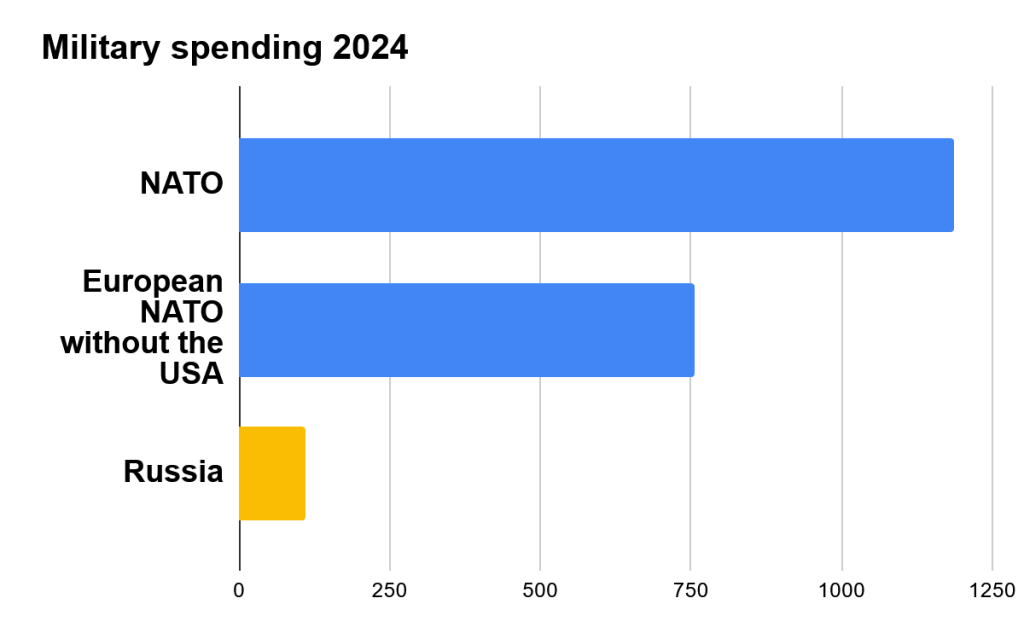

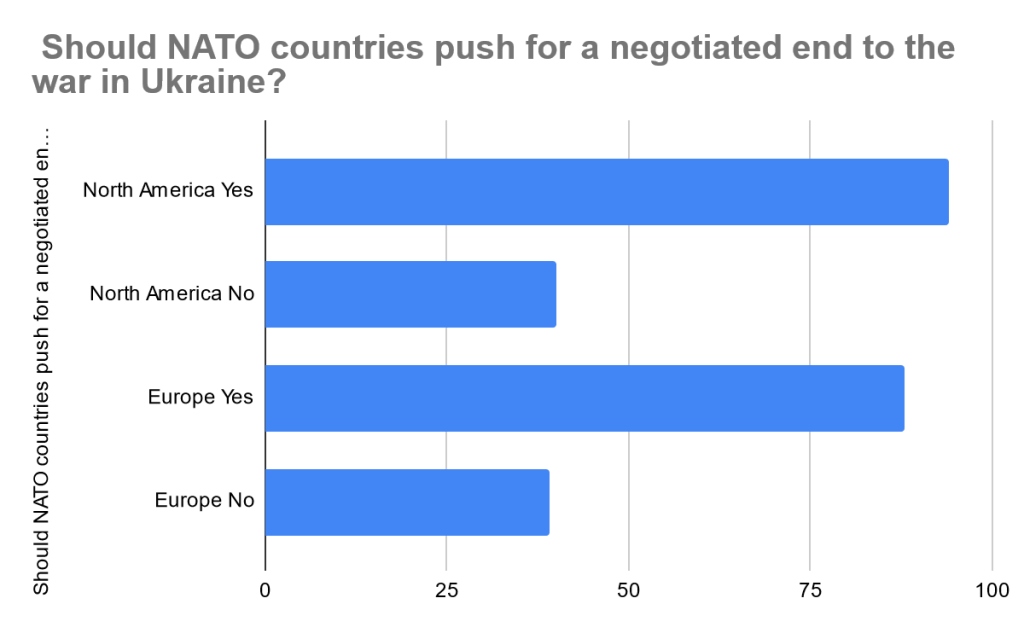


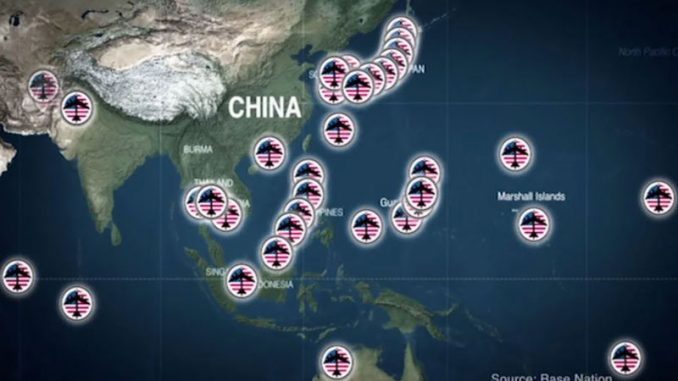

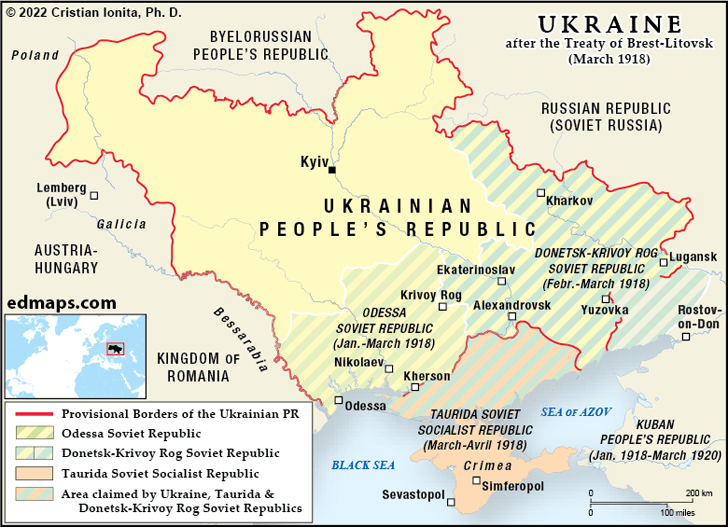
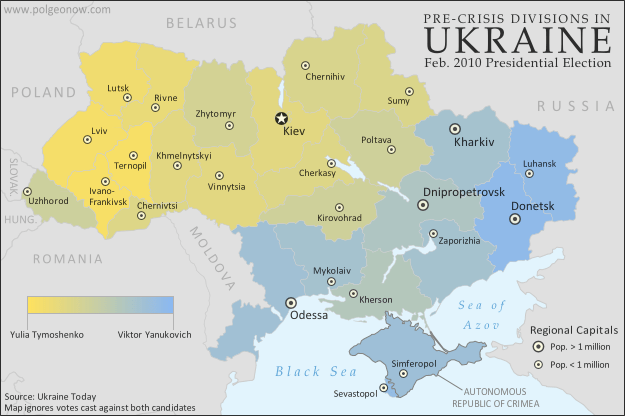
 Urban ramblings