This was an introduction given at the Campaign Against Climate Change Trade Union Group’s energy strategy day. Afterthoughts and updates, like the next few paragraphs, have been added in bold.
This introduction was delivered before Keir Starmer’s speech at COP 29, which made the very welcome pledge of an 81% cut in carbon emissions by 2035, but also included the promise that the government would not “tell people how to live their lives”.
This makes the way we live now somehow sacrosanct- and assumes that “people” are incapable of rising to the challenge of changing it if thats whats needed to secure a livable world for their children and grandchildren. It also ducks the government’s responsibility to implement Article 12 of the Paris Agreement which is a call for mass popular information, education and mobilisation campaigns, to enable society to act collectively to save itself.
Partiesshall cooperate in taking measures, as appropriate, to enhance climate change education, training, public awareness, public participation and public access to information, recognizing the importance of these steps with respect to enhancing actions under this Agreement.
As 66% of the public want more action to combat climate change, we should be mobilised to do so. We will have to get to sustainability by marching forward on both the technological transformation leg and the social transformation leg. We won’t get there if we have to hop hopefully on just one of them.
Labour’s strengths and weaknesses
I’d like to stress that there are a range of views in the Greener Jobs Alliance, and these are mine.
To start with a statement of the obvious, it doesn’t look as though the government sees itself as an instrument to mobilise society to transform itself to sustainability.
They treat the climate crisis as an item on a list – limited to a mission to make the UK a “Green Energy Superpower” – not the framework in which everything else has to be posed.
That leaves huge gaps. Some examples.
1.The current curriculum review for schools does not explicitly have addressing the climate crisis at the heart of it, although the current Ministerial team are open to a discussion about it in a way that the last was not.
2.A climate conscious budget would, as a minimum,
i) have raised fuel duty and hypothecated the revenue to keep the £2 bus fare cap and invested the rest in enhanced public transport.
ii) raised a wealth tax on incomes above £10 million per annum, as suggested by Greenpeace – to raise £130 billion over 5 years (1% of GDP) which, they argue, would raise the revenue to cover insulating 19 million homes, cap bus fares outside London at £1.65, and free for under 25s, fund an unlimited rail ticket for £49, provide retraining for the 3.2 million workers at risk in high carbon industries and shift agriculture onto an agro- ecological basis.
That might be optimistic, but its that scale of ambition thats needed, along with a relentless explanation of why its necessary as a national and international mission.
And to play fantasy Chancellor a little longer, a recommitment to the £28 billion a year future proofing investment with a plan for every sector that works with the relevant unions to develop it and identify the skills gaps that have to be filled. This applies to expanding sectors as well as high carbon sectors that will have to shrink.
Reeves and Starmer’s overall strategy is for “growth” – any growth – conceived in completely traditional terms, not framed as transformation. This can sometimes even be framed in a way that undermines the government’s own targets -as expressed in the recent Sun article under Starmer’s name headlined – “I will never sacrifice Great British Industry to the drum beating, finger wagging Net Zero Zealots”.
I guess that’s us. Perhaps we should all get badges.
Also, I don’t know if its just me, but does all this “Great British this, Great British that” have a really early Victorian feel to it?
3. This can also be seen in housing. The challenge is to build 1.5 million new homes a year. The GJA wrote to Angela Rayner in October last year whether all new homes would be
i) built to a zero carbon standard, with a sound level of insulation, heat pumps, electric cookers and hubs, solar panels as standard and no connection to the gas grid (as this would be a wasted investment).
ii) with all essential facilities within walking distance, integrated green spaces and trees, good public transport links and car clubs to reduce the burden of individual car ownership.
iii) zero impact assessments on water tables and sewage and other questions including who will build them? Arguing that there needs to be a plan to expand Local Authority Direct Labour Organisations with a link to local FE colleges to skill up the new workers we will need to do it
iv) And, crucially, the last question. If the aim is to use existing developers, how will you prevent them from blackmailing the government to water down standardsto enable them to squeeze in more units, cut the proportion of social housing, sit on land banks and refuse to develop them, or claim that necessary environmental standards impact on their profits too much?
We didn’t get a reply, but there are indications that they could let developers rip through reducing planning restrictions even on the water table and sewage – which is quite extraordinary, given the massive concern about sewage in our rivers – and there are signs of a retreat on a solar panel default after push back from the industry which shows where the battle is. New rules ensuring that no new homes are connected to the gas grid are, however, scheduled to come into forceby 2027 and implemented from 2028.The key question now is how stringent the environmental standards for new builds will be and not allowing the developers to kick the costs of meeting them onto households.
All this poses a question for the trade union approach to Just Transition. At the moment, the new TUC Worker Led Transition Team is focussed on enabling a transition in threatened high carbon sectors – cars, cement, steel etc – which is vital and important work, but we also need campaigns foremployment that doesn’t currently exist. Construction and retrofit are probably the most promising sector for this.
The TUC WLT have been working since May and you can read about them and find their contact details in the latest Greener Jobs Alliance Newsletter.
Just Transition doesn’t have to mean like for like jobs. I saw in Edie this week that there’s a skills gap for 50% of the jobs projected as “green” by 2030 – which indicates a huge demand and potential, but also a risk if that gap isn’t filled.
4. This also applies to Foreign Policy. David Lammy made a speech in September stating that the government would put climate change at the heart of UK foriegn policy.
Wouldn’t it be lovely if it did?
For him this had three components.
i) A “clean power alliance” to scale up finance for “clean power” in the Global South.
ii) Measures to unlock global finance to “leapfrog fossil fuels” there.
iii) Implementation of the 30 by 30 agreement (safeguarding 30% of land and oceans by 2030).
The problems with this are that the UK went to the recent Nature COP without a plan for 30/30. “Clean power” is sometimes used as a synonym for “green power” but it is also often used, especially in the US, as a specific description for the cluster of technologies being posed as an alternative to renewables; nuclear, hydrogen, carbon capture and storage.
Most crucially, unlocking finance does not mean increasing aid levels – which are still at 0.5% of GDP, with no plans even to get back up to 0.7%.
What Lammy means is trying to find investment opportunities for the City of London/UK finance sector. For this to work it would have to be profitable for them, as banks follow the money; which is why they have invested twenty times as much in carbon bombs as the Global South has received in climate finance since the Paris Agreement was signed in 2015.
So this is a bit greenwashy, especially as the actual heart of UK Foreign policy is not prioritising fighting the climate crisis, but its strategic subordination to the United States; expressed this week by Starmer “looking forward” to working with Trump “in defence of our shared values” – even as Trump is poised to exit the Paris Agreement and trash all domestic environment protection measures and even the bodies that monitor them.
The question posed by this is the extent to which the government will adapt to US pressure; particularly as this is finding expression here in the alignment of every political force from the Tories rightwards on opposition to “the madness of Net Zero” or the “costs of Net Zero” as they put it. The use of these phrases is now ubiquitous and serves to associate“Net Zero” with “madness“in people’s minds– pushed as it is by “eco zealots” and therefore by definition unreasonable – without the inconvenience of having to make an argument to justify the association; which they have to do because both are the opposite of the truth.The only thing mad about Net Zero is not reaching it in time, the costs of not getting there are enormous and, indeed, fatal.
As will be the end result of the increased military spending that they falsely pose as keeping us “safe”.
One aspect of US pressure is to sharply increase and prioritise military spending. Starmer is due to announce a schedule for the UK to increase its military spending to 2.5% of GDP straight after Trump’s inauguration, which will do little to appease him when he’s pushing for an eye watering 4%.This is dangerous in itself, but also sucks resources away from investing in transition and/or improving people’s lives; thereby deepening the cost of living crisis and the risk of war.
This is in the context of some EU leaders going to Trump, according to the FT, and suggesting “lets avoid a tariff war and team up against China”; thereby proposing to form a bloc with a climate rogue state against the world’s largest investor in renewable energy.
At the same time they arerelaxing their formerly sacred fiscal rules to allow stepped up investment in military production and military focussed infrastructure investment, like strengthening bridges “so tanks can pass in safety” – to prepare for a continental war with Russia which, were it to happen, would kill us all.It is an explicit presumption of the current UK Defence Review that we are in ” a pre war period” with Russia, Iran, China, North Korea, or all four. This is suicidal lunacy and we don’t have to accept it.
In the context of Trump expecting these ruinous increases in military spending from all US subordinate allies, a better course for all of them is to seek peace and mutual security with the targetted countries. In Europe, that means finding a modus vivendi with the Russians that would allow a lasting peace in Ukraine – not just a pause while both sides feel they have to tool up for Armageddon – and a reduction in tensions and barriers across the whole of Eurasia.
5) Lastly, on the “Green Energy Superpower” project, there is good news and bad news.
The good news is
i) the unblocking of onshore wind and solar farms,
ii) the 2.5 times increase in offshore wind in this years Contracts for Difference auction – though this needs to double again next year and stay at that level to meet the 2030 target
iii) getting a fast feasibility study done from NEOS that its possible to get the grid in shape to take on all the new renewable energy sources – and finding that this would cut people’s bills
iv) moving zombie projects out of the planning system so those most ready can go first
…all this is positive and means there will be a substantial increase in renewable energy by 2030.
But,
i) The investment in CCUS and blue hydrogen announced last month is a misallocation of funds that could have more of a climate impact and create more jobs elsewhere.
ii) The failure to maintain the original plan for retrofit means that demand and emissions will be higher than they need to be.
iii) As does the insufficient focus on sustainable transport and the continued low funding for local authorities that makes most local climate action plans well intentioned and doing some good things – from bee corridors to LTNs and cycle paths, public EV charging points, officially approved guerilla gardening, school streets programmes and so on, but not resourced enough to qualitatively impact neighbourhoods.
Above all, and overarching, this is the lack of just transition bodies with mass participation at national. regional and local levels because, if I can misquote Lenin, Sustainability = electrification plus Just Transition Commissions.
In a constituency somewhere in South Essex, four leaflets plop through the letter box.
The Conservative leaflet is on the bottom. Because I am hoping they will get buried on Thursday.
One is from the sitting MP. She is a Conservative, but seems a bit shy about that. The leaflet leads with her name in large letters. If you look really hard you can see the word “Conservative” in tiny letters tucked into the bottom right corner in an attempt not to draw too much attention to itself, with that squiggly tree logo, from their greenwash phase, tucked alongside. Just so you don’t forget what she looks like, there are eight photos of her in a single folded A4 leaflet. This is not many by her standards. Her previous one had thirteen! An MP since 2010 and only briefly a junior minister, under Liz Truss, so definitely not front rank. The usual phative slogans – A Secure Future – A Brighter Future – are superimposed on a photo of the candidate looking away from the camera into the middle distance with a slightly constipated expression, while standing on a footbridge over a busy road and, hopefully, not breathing in too hard. Roads loom large in her pitch too, the solution to traffic congestion being to build more of them. Her Ayn Randish vision of the constituencyas “the best it can be” is a curiously dated hyperdevelopmentalism, in which hopefully the whole area will be tarmaced over and full of commerce freed from red tape and taxation rushing products in and out and through. Not a “green and pleasant” vision, however you look at it. The only remaining trees will probably be the tiny ones on Conservative leaflets. Her overall pitch of development for “our(sic) local priorities”, which is a bit previous in assuming that everyone else’s local priorities are the same as hers, with the Council – run and bankrupted by her Party until May this year – posed as the enemy and a Labour controlled Westminster, possibly with a “huge majority”, even more so. Its hard to tell who she is referring to when she says “our”. Perhaps she is just giving herself airs and using the majestic pronoun. There is, nevertheless, a whiff of panic about it.
A standard cut and paste job from Reform, in varying shades of blue, uses a template photomontaging images of Nigel Farage looking upwards like a toad in search of heavenly inspiration while holding his hands together in cut price man of destiny pose no.3 and Richard Tice – on a slightly smaller scale, so you get the heirarchy right – pointing up at the slogan “Vote Reform UK on July 4th”, while smiling to indicate this is a happy prospect. The candidate and constituency are slotted in to a small panel at the top. The sort of leaflet that sometimes gets rushed out with “insert name of candidate here” if the Party agent has had a rough night before proof reading it. The front page has two slogans against immigration but tosses in two others – make work pay – zero waiting lists – with no elaboration at all on how this might be done. Given the overall tenor of their politics the former might be achieved by starving the jobless and the latter by weeding the undeserving out of the queue, especailly “immigrants”. The entire reverse side attacks immigration on the argument that freezing it will make life better, in the same way that Brexit made life better presumably. Fool me once… A leaflet aimed at generating knee jerk reactions, not convincing anyone who doesn’t already have them. The Nastier Party.
The Lib Dems have a busy little leaflet that, oddly for them, does not contain a bar chart saying that only the Lib Dems can win here – perhaps because everyone knows they never have, and it wouldn’t wash. Instead, they have a little panel referring to a by election in an unnamed other constituency at an unnamed date, which shows that “Lib Dems can win anywhere”. With a long local record of lost deposits and no local councillors, I wouldn’t bet on that. Beyond that, they have a potted biography of their candidate, which is at least a human touch, but implies that he’s doing this to get elected as a councillor somewhere at some point in the future. The pledges – under the rubric For a Fair Deal – are positive but vague, like ” a fair plan to protect the poor and pensioners, tackle soaring prices and get our economy back on track”. Yes, but, what is it?
Labour, breaking the mould in this case, sends a letter, not from the local candidate but from Keir Starmer. This might be considered an odd choice as Starmer is far less popular than the Party; with a favourability rating of -19. The heading has a smiling Keir, with no tie on to show that he is relaxed and getting on with rolling his shirt sleeves up, staring confidently from right to left, into a future that is just off the page, superimposed on half a Union Jack that doubles up as an arrow pointing towards the word Change, with his name underneath it, in case anyone doesn’t recognise him. At this point, this should not be taken as an injunction on the Party to “change Keir Starmer”, though perhaps the designer has a sense of humour. The pitch is a simple one. There are two possible governments and “versions of Britain” posed as “Conservative chaos” vs “Britain rebuilt by Labour”. “Rebuilt” is an interesting word, as to some people it will mean “transformed” to others it will mean “restored”. On the one hand, the future. On the other, the past. Perfectly pitched for the sort of voters who preferred it in the good old days, when life was harder; and want a future just like it. The pledges are either oddly limited and specific – Recruit 6,500 teachers – or – Set up Great British Energy – too limited and specific to make a serious dent in the problems they purport to address, or magnificently vague – Deliver economic stability – Cut NHS waiting times (a phrase that begs the questions, to how long, by when?) while economicstability can mean solid, reliable, not flaky (like Liz Truss) but it can also mean immobile; not collapsing but not transforming either. Steady as she goes is not full steam ahead. Perhaps Small Change would be a better title.
Every one of these leafets is a parochial and infantilist retail offer. Vote for us and we will do this that or the other on your behalf, or, vote for us and we will take out your frustrations on someone who is worse off than you are. Looking at them, you wouldn’t think that this election is being held under the shadow of two wars in which the UK is complicit, one of them threatening nuclear war and the other a slow moving genocide, and an accelerating pace of climate breakdown that is risking serious global food shortages within a decade. The challenges facing us on a world scale to draw back from confrontation, seek a peaceful modus vivendi in which we can limit the climate damage are titanic. It is a sign of a crisis of leadership that not one of these leaflets seriously addresses these issues, or treats voters as citizens capable of doing so themselves.
David Lammy’s recent article, The Case for Progressive Realism. Why Britain Must Chart a New Global Course in Foreign Affairs claims to base itself on a “politics based on respect for facts”, to look for “realist means to pursue progressive ends” and seek “the pursuit of ideals without delusions”. His problem is that the “facts” he uses are filtered by and seen through an ideological lens that distorts them, turns things upside down and inside out; and it rapidly becomes clear that the “new course” he proposes is a reprise of the old one; as the “chart” he is using is marked up with the same old, same old Foreign Policy Shibboleths that have defined UK policy since Suez. Primarily being most favoured auxiliary for the USA during the “American Century”, and a willing supporter of attempts to prolong it for another.
Lammy aims to square a lot of circles, because that course is now increasingly unviable, and the contradictions are starting to creak. In the attempt he skates at speed across a thin ice of delusions about the world that make the ideals he touches on in places unattainable. The “means” that he defines as “realistic” are incompatible with the ends he describes as “progressive”. It is therefore not entirely coherent. Andrew Fisher, possibly kindly, describes his article as a “word salad”.
Before going through this point by point, more or less in his order, I’d like to examine one extraordinarily strange phrase that crops up near the end but, in its way, summarises the fundamental contorted distortions of his world view.
He writes “at times in the Twentieth Century, Western powers undermined the sovreignty of weaker states, especially in the Global South”.
Where do you start with this?
“At times”. As if this were an occasional aberation. An uncharacteristic lapse from an otherwise egalitarian norm of sunny mutual respect. As in, the people of the Congo had their sovreignty “undermined” “at times” by Belgium and “at times” died in their millions. Or, “at times”, Britain presided over famines in India that it took independence to stop. I could go on.
Do I really have to point out that, for the first half of the Twentieth Century, most of the Global South had no sovreignty at all, as they were under the direct territorial control of “Western” Imperial powers.
Nor that this was not abandoned willingly by the “West” in the second half of the century either.
The UK, France and Portugal fought a series of viscious post colonial rearguard actions against independence movements right up to the 1970s; Vietnam, Malaya, Aden (Yemen), Algeria, Kenya, Angola, Mozambique, Guinnea-Bissau.
Settler colonial regimes in Rhodesia and South Africa kept this up to the 1980s and 90s, and Israel is still doing it today.
The United States picked up “the white man’s burden” from France in Vietnam with lethal effect (2 million killed) backed coups and military take overs in Indonesia (600,000 killed) and all over Latin America; Guatemala, Brazil, Bolivia, Argentina, Chile.
The “neo colonial” settlement that allowed formal independence for former colonies left them at the mercy of their former colonial overlords, sometimes embodied in formal structures ensuring financial control and military presence, as in France Afrique until recently; leaving most of the Global South for most of the rest of the twentieth century hog tied by debt and unequal exchange, and sometimes fought over for resources.
Within this, the US gained greater weight over its imperial rivals via economic domination (the US notion of “decolonisation” being the removal of barriers put in the way of their trade by the territorial control of imperial competitors).
This has led to a process of incorporation and subordination of European powers and Japan into a dominant US centred imperial bloc with a parasitic relationship to the rest of the world; which is where we are now.
Western powers “undermine the sovreignty of weaker powers, especially in the Global South”, not just “at times”, butdo so all the time as a structural norm. This is underpinned by an unparallelled capacity to unleash violence on anyone who steps out of line. Recognising this is “realism”. Failing to see it is “delusion”. Accepting or supporting it is siding with the oppressor against the oppressed, the exploiter against the exploited. Always.
Things ain’t what they used to be
Lammy, however, starts his essay by bemoaning how this has began to change; comparing the world at the time of the last Labour landslide in 1997 with the one that will greet the next in 2024.
In the 1990s, after the collapse of the Soviet Union, it was possible to believe in an eternal Pax Americana, in which the entire world would eventually turn into one gigantic American suburb, through US led globalisation and the wonders of the free market. This was a fantasy, even at the time.
What Lammy describes as “the liberal democratic model” – in which all countries would eventually become wealthy clones of the US (just later in the fullness of time, after a little bit of inevitable gradualism) – meant for most of the world to continue living under the crushing weight of the Washington consensus; which policed all development in US interests, guaranteeing that millions were trapped in extreme poverty, forced to live in teeming self built slums, or rural desperation, their resources extracted for little or no benefit by Western multinationals, essential services like water supply privatised; with the threat of military intervention standing permanently behind the IMF and the World Bank.
In 1997, with a slight whiff of “Good Old Days” nostalgia, he notes that the UK had an economy that was larger than those of China and India combined; and it still adminstered Hong Kong as a colony. Not any more. Never again.
Bull in a China shop
Now, as Lammy notes, “China is a superpower”. It has a larger economy than the US, in Purchase Power Partity terms. Lammy does not note, but we should, that it has been mostly in this period from 1997 that China lifted 850 million of its people out of poverty, and eliminated extreme poverty altogether in 2020. A feat described by a Labour Foreign Policy Group report in 2021 as “perhaps the single most significant contribution to human wellbeing in world history”. Something that you’d think someone with “ideals” and “moral purpose” might welcome, or even seek to learn from.
But not a bit of it. Lammy chooses to interpret this as a threat and a “systemic challenge to British interests” (a phrase that begs more than one question).
“Democracies” – a word he uses as a euphemism for the core Imperial powers which are tightly allied to, and coralled, by the United States – are “on the back foot” and losing the “hearts and minds” of the Global South “middle class”; such that “countries described … by CIA Director William Burns as the “hedging middle” are striking bargains and setting their own agendas in Africa, Asia, and Latin America” and, even worse, “they ignore the European Union, the United Kingdom, and the United States ever more frequently”.
They are just not doing what they are told anymore, dammit!
It is the rise of China, and the failure of the US to contain it, that has sent US politics into such a delirious tailspin. Because, if the US truly is the one indispensible nation, with a political and economic system that is the best in the world, then this should not be happening. But, happening it is. And, if everything you believe about the world is being shown to be false, but you can’t bring yourself to break with your beliefs, it becomes possible, even necessary, to believe ten impossible things before breakfast to try to make sense of it. An impulse to seek truth from anything other than the facts is characteristic of the MAGA movement, but not confined to them. “Realism” is too unbearable to be acceptable. So, dangerous fantasies take its place.
We should note at this point that more people in China think that their country is a democracy – a country run in the interests of the people – than people in the US do. In a study published by the Alliance of Democracies Foundation and Latana data tracking firm, when asked whether they believe their country is democratic, those in China topped the list, with 83% saying it is, and 91% also saying that this is important to them. In the US, only 49% of those asked said their country was a democracy and 76%, said it was important.
That looks like this.
Percentage of people in each country that consider it to be a democracy
We should also note that Lammy’s concern with the “middle class” in the Global South is an odd one if his major concern is with development. A striking feature of most of the Global South is the class polarisation, with very extreme Gini coefficients which show a wealthy layer with living standards comparable to those in the “West” sitting on top of a much larger number of impoverished people living in varying degrees of desperate precarity. Rajiv Ghandi’s formula of “France in India” is quite a good way to envisage this; that India contained a nation with roughly the same population and wealth as France – about 65 million – atop over a billion living in desperate straits. This polarity explains the extremity of Rightist Global South politics, producing figures like Bolsonaro or Milei. Wealthy people living in close proximity to teeming masses that they feel threatened by often feel the need to keep in their place with extreme violence. I suspect that when Lammy talks of the “middle class”, he is refering to the wealthier sort, who are in no way middling, economically or politically, but he never clarifies.
Lammy comes back down to Earth to note, appropriately, that “Climate breakdown is no longer a future worry. It is here”. He also notes that China, the US and EU all have green transition plans that require large amounts of state led investment, to a degree that the UK does not, but without digging into the figures that show that only China is doing this on the necessary scale. This is from Adam Tooze. “Measured against the $ 4 trillion per annum benchmark, the only country(my emphasis) that over the last decade has come anywhere close to spending, lending and investing on the required scale is CCP-led China“.
Bloomberg’s tabulation of the $1.1 Trillion investment in energy transition in 2022 shows the following.
China’s investment in energy transition in 2022 was almost double that of the US and EU put together. And this gap is accelerating.
It might be fair to conclude from this that it is just as well that China did not follow the Western economic model, and that its state directed economy is better able to deal with this challenge. Without their investment in renewables, having made them cheaper than fossil fuels, we would already be sunk.
Lammy however regrets that China’s entry into the World Trade Organisation did not lead to the adoption of “liberal democratic values”, putting the private sector in the driving seat of the economy and polity. Had they done so, China could be just as succesful as we are with our neo liberal model that crashed in 2008, is now leading to ever greater concentration of wealth in the hands of a tiny minority; while infrastructure crumbles and standards of living for the majority stagnate or decline. In fact, China is the only large economy in the world in which wage rates have risen consistently for workers in the last decade, such that these are now higher than they are in Portugal and Greece and comparable with Poland.
I think Lammy is being a bit previous in stating that “the rise of China has ended the era of US hegemony”, but it certainly challenges it in trade, technology and scientific innovation – all of which flows from China’s refusal to accept permanent status as a low grade mass manufacturer, most favoured sweat shop providing cheap imports for Western consumers, while stuck in a middle level development trap for its own citizens.
Most countries around the world now trade more with China than the US, and this is a trajectory that is increasing, making attempts to “decouple” an act of self harm. This is true even when defined as “derisking” (a phrase based on the paranoia that its so much worse if a Chinese smart fridge company knows when you need to buy more milk than when Google does). Cutting Chinese tech out of 5G broadband – the most advanced in the world – is an example of voluntarily adopting additional costs for a slower service, which has the additional negative consequence of increasing unnecessary tensions. Partly because of US high technology sanctions, China has increasingly innovated and is now considered to have a lead in 37 out of 44 key technological indicators. This is particularly crucial in green transition, so “derisking” in this area carries with it a lot of serious risks that we can’t afford.
The key area in which the US maintains a crushing dominance is precisely the one that Lammy tries to present as the most threatening; the military. Lammy warns that the Chinese Navy has more ships than any other, but, as World Population Review points out, counting a small patrol vessel as having the same significance as an aircraft carrier “is akin to saying a squirrel is the same as a rhino, or a scooter is the same as an 18-wheel semi-truck”, so, “to better estimate the overall power of a given navy, some analysts turn to tonnage, which is a measure of the amount of water a ship displaces or the amount of cargo it can carry”. By this measure, the US Navy, at 3,415,893 tonnes, is just under five times bigger than the Chinese Navy, at 708,886 tonnes. As Shadow Foreign Secretary, you’d expect Lammy to know that. Perhaps he does, and is just chancing his arm in the hope that no one will check.
We can also look at this in terms of the scale of overall military spending. This year, the US is spending $831,781,000,000 on its front line military. Monthly Review has argued for some years that US military spending figures underestimate the true quantity by about half, but, even if we go with the declared amount, China’s spend of $227,000,000,000 is less than a third of the US total.
This understimates the balance, however, as direct US allies in the region, like Australia (which has a collosal military budget for a country its size), Japan and South Korea add an additional $150 billion; and some proportion of the UK’s $62 billion has to be allocated through its commitments to the AUKUS Treaty. And we should note that all these allies are under intense US pressure to increase and coordinate this spending, and other NATO allies like Italy are entering into joint projects with Japan, which is doubling its expenditure at the present time.
You can look at it in terms of overseas bases too. The US has 750 bases in 80 countries. China has 1 (in 1). The US bases near China encircle it, as we can see here. There are no Chinese bases anywhere near the United States.
The same applies to deployment. US aircraft carrier task forces, sometimes with the Royal Navy’s new carriers (probably the ugliest boats in the world, not an essential point, but they really are hideous looking) as auxiliaries regularly steam up and down the South China Sea. No Chinese Navy forces at all deploy to the Gulf of Mexico or English Channel. Imagine the headlines in the Daily Mail or USA Today if they did. In that light, it is quite amazing how calmly China takes this.
You can also look at it in terms of balance of nuclear power. The United States has 5,244 nuclear weapons. China has 500, a tenth as many. China also has a defensive, no first strike policy – the only nuclear power to have one. A First Strike policy has been US military doctrine since the 1960s, and remains so, even though it has been known since the 1980s that this would be suicidal even if it worked. The explosion of smoke and debris above the cloud layer from the first overwhelming salvo of missiles would blot out sunlight for several years; causing a nuclear winter that would obliterate the “victorious” powers through temperature collapse and starvation, just as surely as the defeated would be incinerated and blasted to death. For a sobering and essential examination of this see John Bellamy Foster’s Notes on Exterminism.
Characteristically, Lammy does not note that no one in China is arguing for a war with the United States. In fact they argue for “win, win cooperation” and “a common home for humanity” as we move towards an “ecological civilisation”; all of which seem both reasonable and essential positions that it would be helpful for humanity if the West were to respond to positively. Nor does he point out that arguing for such a war within the next decade as the only way to stop a peaceful rise by China is now a live debate in mainstream US Foriegn Policy circles; and that maybe this is more than somewhat unhinged.
Arising from all this, the question that has to be realistically asked is, who is threatening whom? Who is posing the “real security threat” and how dangerous is this, realistically? And shouldn’t Labour be seeking to restrain this rather than hype it up and cheer it on? Instead Lammy argues for AUKUS to be “a floor not a ceiling”. This is, realistically, a path to war; the consequence of which cannot be considered to have any “moral purpose” whatsoever.
It is slightly mind boggling that, while he pushes this antagonistic and confrontational military alliance, he thinks positive engagement with China on economic development, climate breakdown and AI (particularly as China is leading on this) can pootle along happily in a sort of paralell universe, not distracted at all by the war drums he is so busily beating, nor thrown off course by the diversion of necessary investment into the suicidal dead end of an arms race. You can make up your own mind about whether this is remotely “realistic” or contains a scintilla of “moral purpose”.
Little Britain blues
More parochially, in an attempt to have “tough minded honesty about the UK”, Lammy goes on to note what he sees as its three key problems.
Its economy is stuck in a low growth, low productivity, low investment slump. Which, given his concern with green transition and positive remarks about state led investment in China, the EU and US, should make him question why Labour has shrunk its green investment plan to little more than is already on the stocks from the Conservatives. He notes that the UK has the lowest level of investment in the G7, but seems to think that Keir Starmer’s “mission” to get the highest growth is possible without this investment, if only the country would have enough self belief. As delusions go, this is a big one.
Its armed forces are too small; which is only the case if you want to prepare for a war that could easily kill us all instead of taking active steps to avert it.
Public Services are crumbling. He could have noted that this also goes for infrastructure, which brings us back to the need for investment which the “realism” of the Shadow Treasury team rules out. So, do not pass Go…
Realism is for him embodied by Ernest Bevin’s actions as Foreign Secretary in the post war Labour government. The flip side of the progressive measures taken by that government, founding the welfare state and NHS, nationalising key industries, was its resolute continuity in Imperial Foriegn Policy; which led it to resist decolonisation, form NATO, aquire atomic bombs, join in the Korean war: and maintain military spending at such a high level that it had to sustain austerity to a degree that got it voted out of office in 1951.
Recognising that “realism alone will not be enough to save the planet” – which essentially means that “realism” defined in this way is anything but realistic – and that the “West” has “to cooperate with its rivals on climate change and AI” leads him to disinter the ghost of Robin Cook as the Push Me to Ernest Bevin’s Pull You. Cook is lauded for his promotion of “human rights” and “soft power”, embodied in the 0.7% of GDP allocated to development aid (a figure that Lammy notes, but does not commit to restoring) and his “realism” in making “hard choices” about “arms exports”, ie letting them go ahead. Lammy’s subsequent assertion that “governments don’t have to choose between values and interests” is belied by this.
Damned if you do, and damned if you don’t
So far so confusing; but Lammy’s attempt to have his bomb and drop it continues. The “West” made mistakes. Its interventions in Iraq, Afghanistan, Libya, the whole war on terror, became “seen as” a “recipe for disorder” because, despite initial military wins, it was unable to stabilise a viable pro Western regime anywhere. Its power lasted just as long as it could sustain boots on the ground, which is not indefinitely. The resulting chaos and impoverishment has not gone unnoticed across the world. The “moral purpose” that Lammy argues for, loses out to “self interest” every time. And because, of the decadent, parasitic stage they are now in, the US and its allies are sucking capital in, not spreading it out, and are therefore incapable of “nation building”.
Four and a half million people were killed in these wars, which I think should be categorised as the first phase of the Wars for the New American Century. Ukraine and Gaza are the start of an even more dangerous second phase, as a more desperate US takes greater risks.
The Rules are for the Little People
Lammy takes the Rules Based International Order as the embodiment of a viable global civilisation, but it is widely understood in the world that the rule that defines the rules is that Washington makes all them, none of them apply to the USA (and select few of its closest allies) and they will be changed on a whim.
A small example of this was the 1984 case at the International Court of Justice in 1984, when Nicaragua won compensation of £17 billion from the US for the damage done by the US-funded Contra war and the mining of its ports. Not a cent was paid. Who was going to make them?
A more recent example is the reaction to the ICJ ruling that Israel has a case to answer that it is commiting genocide in Gaza. The instant reaction from the US and its allies was to defund UNWRA on the back of unsubstantiated accusations from Israel that some of its workers took part in Oct 7th. That is a direct act of collusion in the attempt to starve Palestinians, and two fingers up to the formal structures of international law.
So, the failure of these interventions were a blow to Western hegemony. As Tom Tugendhat put it after the Afghan withdrawal “This feels like defeat”. But, in a quick pivot, Lammy asserts that Western standing was also damaged by the failure to intervene in Syria, or take a harder line in Ukraine in 2014.
What Lammy is describing here, without thinking it through, is that whatever the “West” does, deepens its crisis. It loses ground when it doesn’t intervene, causes chaos when it does.
Pursuing War not Peace in Ukraine
This is demonstrably the case in Ukraine. The West is supporting Ukraine like a rope supports a hanging man. The country is being destroyed. More than 100,000 Ukrainian soldiers have died so far. A great investment according to David Cameron, as “not a single American life has been lost”.
If their concern were genuinely with peace and security in Europe, NATO would at least have been prepared to negotiate with Russia about mutual security arrangements in the Winter of 2021. Instead, we had a hubristic refusal to engage to ease off tensions, which has led to the war which NATO is now visibly losing, amidst appalling casualties and damage.
The sanctions against Russia have failed. Most of the world does not support them, because, as Lammy notes, they see the conflict as between “the West vs the rest”; and have long experience of not being “at the table” with the US, and therefore being “on the menu”, as Antony Blinken put it recently. And they are no longer so securely under the West’s thumb.
Lammy’s support for military “burden sharing” for “as long as it takes to secure victory” is hard to square with any notion of “realism” if “victory” means Ukraine reconquering parts of its pre 2014 territory which actually see themselves as Russian. Even people who consider that to be desirable, have a hard job arguing that its possible. Phrases like “once Ukraine has prevailed” are evidently hollow.
Instead of looking to a peace agreement, as outlined here, that would allow all people in all parts of Ukraine to live in the state they wish to, secure neutrailty and reduce military tensions across the continent, Lammy argues for a “long term generational response” to the “Russian threat”. Again, this is playing on fantasies, as NATO at present already spends more than eleven times as much as the Russians do on its military. That looks like this.
Total military spending 2024
The NATO bloc on this is approprately reminiscent of Pacman, and should probably have teeth drawn on it
What Lammy is proposing is a long term “generational” increase in the military industrial complex and militarisation of society, with some military sources floating the reintroduction of conscription, at a time in which the “realism” of the Treasury team will impose freezes and austerity on everything else.
The (Republican) Elephant in the room
Lammy’s argument for closer links with EU powers, and bilateral pacts to supplement NATO, are the only hint of the nervousness that all the Labour front bench feel that they could be coming into power at the same point that Donald Trump takes back possession of the White House.
Its not surprising that Lammy – with stopping climate change one of his progressive aims – does not explore this possibility; as the US under Trump would go full rogue state on climate change, pull out of the Paris Agreement like they did before and “drill, drill drill” – with an overall impact of an additional 4 billion tonnes of CO2 released by the US the end of his second term. This would make a 1.5C limit completely unachievable, and the damage globally would be horrific.
Lammy, as potential Foreign Secretary would therefore either have to straddle an impossible contradiction in which the main perceived “threat”, China, was investing in the necessary transition, while the “foundation of UK security”, the US, was sabotaging it. As he says, “no country can go green without cooperation”. So, who would he seek to cooperate with? He could only resolve this contradiction by dropping concern with climate change and playing down its significance so as not to upset the “special relationship”, or break with US policy in pursuit of the only realistic understanding of its consequences. It might be argued that Labour’s downgrade of its $28 billion green investment pledge is a pre emptive move to anticipate a Trump Presidency, not just pusillanimity in the face of Neanderthal Tory attacks. This is a concrete choice that has neither “moral purpose” nor “realism”.
The wording of the Labour curates egg amendment to the SNP ceasefire now motion has all the signs of being written in haste in an attempt to build loopholes into it that would allow wiggle room for the “catastrophic humanitairian consequences” of Israel’s ongoing assault to go ahead. My additional wording to tease out its imbalances are in bold.
That this House believes that an Israeli ground offensive in Rafah risks catastrophic humanitarian consequences and therefore must not take place;
notes the intolerable loss of Palestinian life as a result of the Israeli offensive so far and the prospect of famine if it continues, the majority being women and children;
condemns the terrorism of Hamas who continue to hold hostages and the actions of Israel in holding many more prisoners without charge;
supports Australia, Canada and New Zealand’s calls for Hamas to release and return all hostages and adds that Israel should release Palestinian prisoners and not rearrest them and for an immediate humanitarian ceasefire, which means an immediate stop to the fighting and a ceasefire that lasts and is observed by all sides, noting that Israel cannot be expected to cease fighting if Hamas continues with violence nor that Palestinians can be expected to cease resisting if Israel continues its attacks and that Israelis have the right to the assurance that the horror of 7th October cannot happen again and that Palestinians have the right to the assurance that there will be no more IDF assaults on Gaza, and ethnic cleansing in the West Bankwill end;
therefore supports an immediate ceasfirefollowed by diplomatic mediation efforts to achieve a lasting ceasefire;
demands that rapid and unimpeded humanitarian relief is provided in Gaza an the UK immediately restores and increases its funding for UNWRA;
demands an end to settlement expansion and violence;
urges Israel to comply with the International Court of Justice’s provisional measures and for the UK to withdraw all diplomatic, military or other aid until it does;
calls for the UN Security Council to be meet (?) urgently and pledges that the UK will vote for a ceasefirewhen it does with no equivocation;
and urges all international partners to work together to establish a diplomatic process to deliver the peace of a two-state solution on the lines of China’s proposed international peace conference, with a safe and secure Israel alongside a viable Palestinian state, including working with international partners to recognise a Palestinian state as a contribution to rather than outcome of that process, because statehood is the inalienable right of the Palestinian people and not in the gift of any neighbour and further recognising that leadership of that state must be the choice of the Palestinian peoplethemselvesnot imposed on them.
the sky all along the North American Atlantic seaboard turned orange from wildfires in Quebec,
and the two year drought in Northern Italy was broken by six months worth of rain in 36 hours,
and on the first day of “Big Green Week”,
Rachel Reeves announced that Labour’s modest plan to bring the UK up to the European average by investing £28 billion a year into green transition would be subject to “fiscal rules” that meant they would have to “ramp up” to get there.
Despite these brave words from Ed Miliband, “Some people don’t want Britain to borrow to invest in the green economy. They want us to back down. But Keir, Rachel and I will never let that happen. Britain needs this £28bn a year plan and that is what we are committed to”; the way that Reeves framed her argument implied that the “ramp” is likely to be be long and shallow, and the chances of getting to then end of it slight.
This poses a number of questions.
Are we in a climate emergency or not?
Outside the wilder reaches of the Tory back benches and the cluster of delusionary think tanks clustered around Tufton Street and the Spectator, it is generally agreed that we are; so does this not require emergency measures?
As the breakdown of the conditions for human civilisation to survive is a greater existential threat than any we face apart from nuclear war, and certainly more overwhelming than the Second World War: do you think anyone in 1940 would have said, “we are committed to fighting the Nazis, but we have to be fiscally responsible about it and make sure the books are balanced as we do it?”
Given that a failure to invest on this scale will mean that the UK will be unable to match levels of subsidy and support going in from the EU and the USA, does this not imply a collapse in any prospect of “investing in the industries of the future” and therefore the prospect that, as the industries of the past are outmoded and superseded, the UK becomes a deindustrialised backwater – as the private sector investment you want to attract is drawn elsewhere?
As you have previously calculated that £6 billion a year will be needed to meet your pledge on insulating homes, is this an irreducible bottom line, or are you also abandoning your pledge to cut energy bills for everyone “for good”?
As unnamed Shadow Ministers have been quoted in the press arguing that some investment in, for example, housing and transport will be needed that are not part of “the net zero agenda”, how will you make sure that any investment that could contribute to net zero does; as any investment that is not part of the solution is part of the problem?*
If your plan is to “ramp up”, at what point will you start, with how much investment in what projects; and how do you calibrate the return on the investment?
If your problem is a lack of government income, why are you not planning to tax the energy producing companies on every penny of their windfall profits, which would pay for the £28 billion a year several times over?
If these fiscal rules are sacrosanct, will they also apply to military spending and, when there is a choice between military escalation and saving our society, which will take precedence?
*An example that links the two is what kind of housing development Labour will push. There is a world of difference between
the current paradigm of cookie cutter, ticky-tacky houses with poor insulation, with the maximum number of units squeezed in so developers can get the biggest possible profits, built in the green belt in car dependent “amazon deserts” (like an American suburb but meaner)
and 15 minute neighbourhoods built as communities with all necessary facilities within walking distance, good public transport links to larger centres; and made up of homes built at zero carbon standard with very low energy use and bills.
Being in support of “the builders not the blockers” without legislating the latter as standard will mean that the next generation of mass house building will follow the line of least resistance – with developers cutting corners, skimping on materials, maximising units and profitability; and dumping the ensuing problems on a future that is getting shorter and more threatening all the time.
In his latest piece for Labour Hub, Mike Phipps argues that it would be better to have an anti war movement that is not actually against the war aims of our own ruling class. His argument, and attempted intervention into the anti-war movement, rests on two dubious assertions.
That NATO expansion and US militarism have nothing to do with the origins of this phase of the war in Ukraine and therefore the anti war movement should ignore it.
That Ukrainian nationalism is a progressive “anti-colonial” current fighting for liberation from Russia as an imperial oppressor and therefore the anti war movement should support it.
Let’s look at each of these in turn.
1NATO
The NATO summit that has just concluded has agreed to expand its membership, increase its arms expenditure, get 300,000 troops at a permanent state of “readiness” and forward deploy more of them to the frontier with Russia and to sustain a long war in Ukraine.
This is motivated as a way to “defend” members of the alliance from a Russian threat that they are very careful not to quantify. That is because Russian military expenditure is less than Britain’s and one twentieth that of NATO. The projected expansion of the alliance and large increases in expenditure will make NATO’s military dominance even more extreme. So, a reasonable question might be, who is threatening whom?
So, when the new chief of staff for the British armed forces, Sir Patrick Sanders, argues that we have to be ready to fight World War 3 in on land in Europe, its quite clear what that “readiness” is for, and who is on the offensive. His argument that if you want to preserve the peace you have to prepare for war, was exactly what all sides were arguing in 1914. It was an argument that worked very well. Until it didn’t.
Mike doesn’t engage at all with what NATO has been doing in Eastern Europe since 1991, or more particularly in Ukraine since 2014. Simply ignores it and tries to waft it away with an airy “I don’t see this as a central factor at all”. Jens Stoltenburg, NATO Secretary General, however, is very proud of what they have done and quite candid about it. “The reality is that we have been preparing for this since 2014…that is the reason we have increased our presence in the eastern part of the alliance, why NATO allies have started to invest more in defence, why we have increased our readiness”. My emphasis. I suspect that Stoltenburg has a better grasp of what he’s doing – and the significance of it – than Mike does, unless there is some conscious disavowal going on; seeing, understanding, but choosing not to acknowledge.
Stoltenburg’s comment is underlined by the remark of Sir Richard Shirreff, former NATO Deputy commander, on Radio 4 recently that “this war started in 2014”.
2014. Not on February 24th 2022. It has been noted widely that while Ukraine has not been in NATO, NATO has certainly been in Ukraine: training, re-equipping, getting the Ukrainian army ready to go beyond the shelling of the Donbass to try to retake it.
It takes a real act of will not to look at NATO, or the USA, and what it is trying to do, and how the war in Ukraine fits into it. Mike draws rage from the horrors of the war – in a determinedly one sided way that implies total barbarity on one side and saintliness on the other (because no lies have been told, butter wouldn’t melt in the Azov battalion’s mouth, issuing a decree to arm civilians en masse doesn’t erase the distinction between them and combatants, and no oppositionists have been “disappeared” or assassinated) – and is averse to looking up at the strategic picture because it is so obvious what’s happening when you do.
He reflects least of all on what NATO is.
NATO is a military alliance of the world’s major predatory imperial powers, under the aegis of the United States, pledged to defend a “rules based” imperial world order in which the rules are written in Washington. The European powers are part of it because they can’t take the US on, and do better being subordinate members of its global gang than trying to act as lone wolves. This maintains domination of the Global South, with $2 trillion flowing from it to the Global North in 2013 alone. NATO is the armed guarantee that that will keep happening. That’s why people like Paul Mason, who thinks that the working class in the rich countries should prosper at the expense of the peoples of the majority world, support it.
That means that taking active steps to join NATO – as US influenced Ukrainian governments have done -is not a neutral act. It is the repudiation of neutrality by definition. It is also a self limitation on national sovereignty. It is ganging up with the USA – essentially taking up a job as a henchman – and will be understood as a threatening act by any country in its sights, especially any nearby.
NATO’s expansion into Eastern Europe to pressure Russia serves two purposes – setting up the preconditions for a regime change colour revolution in Russia itself, so a more compliant Yeltsin like leadership can be brought in – and in the immediate term also to decouple Russia from the EU; the better to cement control of the rest of Europe, particularly Germany.
This explains the refusal of the US and NATO to even discuss Russia’s proposal for mutual security guarantees when the Ukraine crisis started brewing up from November last year onward. You’d think we’d all have an interest in that. But mutual security and reduction in tension – which would be good for all of us – would increase Russia’s weight in Europe with the EU, and make it harder for the US to dominate it. No chance to deploy those troops, sell those arms, export that fracked Liquid Natural Gas. So, we can’t have that, can we?
The demonstrative mobilisation of the Russian armed forces throughout the winter in response, was an attempt to show how seriously they took what they saw as an existential threat. It seems to me that what triggered the actual invasion was the NATO summit the week before in Munich, at which those European powers, principally Germany and France, that had been pushing for easing off on confrontation and continued negotiations within the Minsk framework, were very visibly brought to heel by the USA. A partial withdrawal of Russian forces in Belarus that week was taken not as a welcome gesture that could lead to a reciprocal step towards negotiation; but a sign of weakness to be exploited. Watching the news of that, I had a real sinking feeling. It sent a very clear message. Crowing on the news combined with Russian fears that the Ukrainian military build up in the Donbass heralded an imminent intervention to snuff out the Donbass republics with NATO backing. It seemed that war was inevitable. It was just a matter of when, and who struck first.
This war was generated in neither Kyiv nor Moscow, but Washington.
2 Ukrainian Nationalism
Mike’s attempt to ignore the entire geo-political context of the NATO build up and the self subordination to it by the Ukrainian government, means that he simply buys into the narrative of Ukrainian nationalism – effortlessly erasing from historical significance the large Russian population living in what is now part of Ukraine, but was Noviya Rossiya (New Russia) from the eighteenth century onwards – that the whole Ukrainian people have been engaged in a long term struggle to liberate themselves from Russian oppression. Small left currents in Ukraine put this in anti-colonial terms, and Mike quotes one of them. But the mainstream dominant tradition here is not anti colonial, but pro colonial; the far right. These were the hegemonic street forces in the Maidan movement. They have since become entrenched in the Ukrainian military; and wield an influence on the streets far greater than their formal electoral representation.
Again, it requires real disavowal to ignore this, to look and not see. But to give an indication of just how bad this is, here are some headlines from western media from before February 24th, when they weren’t trying to cover this up.
Ukraine celebrates Nazi collaborator; bans book critical of pogroms leader.
Ukraine’s got a real problem with far right violence (and, no, RT did not write this headline).
Hundreds march in Ukraine in annual tribute to Nazi collaborator.
Violent Anti-Semitism is gripping Ukraine – and the government is standing idly by.
Ukraine conflict: “White Power warrior” from Sweden.
Ukraine conflict: child soldiers join the fight.
Far- Right fighters from Europe fight for Ukraine.
Nazi symbols. salutes on display at Ukrainian nationalist march.
Yes. Its (still) OK to call Ukraine’s C14 neo Nazi.
A new Eurasian far right rising.
Far Right extremists in Ukrainian military bragged about Canadian training.
German TV shows Nazi symbols on helmets of Ukrainian soldiers.
Ukraine designates national holiday to commemorate Nazi collaborator.
Kiev’s far right groups refuse to disarm.
FBI: Militia trained by US military in Ukraine now training US White Supremacists
Ukrainian Neo Nazi C14 vigilantes drive out Roma families, burn their camp
Ukraine underplays role of far right in conflict
New “Glory to Ukraine” army chant invokes nationalist past
Britons join neo Nazi militia in Ukraine
Neo-Nazis and the far right are on the march in Ukraine
How the far right took top positions in power vacuum
Ukraine’s far right menace
With axes and hammers far right vigilantes destroy another Romany camp in Kyiv
“Defend the White Race” American extremists being targeted by Ukraine’s far right
Paints a picture that the BBC and others are now trying to consign to the memory hole.
A leader of the C14 far right militia group expressed a core belief of this movement when he said that the problem in Ukraine is that “certain people” had too much power and money. When pressed on who he meant, he said, “you know, Russians and Jews”.
Nationalism takes many forms. When fighting imperial domination, it can be progressive. When allying with a dominant imperialism against others, it is reactionary. Ukrainian nationalism – in its dominant tradition – lionises Stepan Bandera; who was a Nazi collaborator. Since 2014, he has, grotesquely, been celebrated as a hero across the country, had statues put up and the road leading to Babi Yar named after him. This is like, but even more offensive than, renaming the Finchley Road up to Golders Green Sir Oswald Mosley Way. Similarly, the renaming of the Molotov Cocktail as the Bandera Smoothie, is comparable to an Italian movement calling them Mussolini Milkshakes. Ukrainian nationalism, in its conscious subordination to greater imperial powers, Austria Hungary, Nazi Germany and now the USA, is not a progressive movement; and the small left wing currents that tried to take part in the Maidan were smashed out of it as surely as a Lexit contingent would have been on an EDL march.
It was when they took this south and burned down the trade union HQ in Odessa, killing 42 people, that the Donbass rebelled, Russia annexed Crimea with overwhelming local popular support; and the war in the East started.
The debacle of the “broad anti war movement”
In pursuit of the “broad anti war movement” that Mike proposed, a demonstration was called for 9 April with Paul Mason, recently exposed for having connections with the intelligence services, Peter Tatchell and others speaking, and supported by currents like the AWL. This was intended to eclipse Stop the War, so there could be an “anti war” movement at peace with the ruling class. One of the main chants was “Arm! Arm! Arm Ukraine!” – which is exactly what the British state is doing, what the Tory government and Labour front bench want to carry on doing. This is not “anti war”. It is pro war. A comparable position in 1991 would have been to support the 1991 war after the invasion of Kuwait by Iraq, and organise demonstrations with chants of “Arm! Arm! Arm Kuwait!” Despite having the formal support of a number of unions, it was very small. A couple of hundred. This is not a “broad anti war movement”. It is a fig leaf for the ruling class and has no independence from it.
As such, it is comfortably aligned with the Labour front bench which, instead of calling for a ceasefire, a negotiated settlement, and a redirection of “defence” spending to meet the cost of living and climate crises, never misses an opportunity to try to polish its patriotic credentials by calling for guns not butter. John Healey, Shadow Defence Secretary bemoaned a short term cut in army numbers like this.
“Now, this is embarrassing. It’s not responding to the growing threats we face, and it is putting into question Britain’s ability to fulfil our NATO obligations when I want Britain to continue to be the leading European nation within NATO” noting that the 1,000 additional soldiers committed to NATO’s new 300,000 strike force “might not even be based on the border with Russia, but back in Britain”. Forward, he cried, from the rear.
The Left – all of it, whatever its views on this war – should be opposing these increases in military expenditure and the deployments that go with them.
As the NATO war drive ups a gear, with no end in prospect, with the UK an enthusiastic participant, with “war austerity” already with us, and hitting the Global South very hard indeed, the anti war movement here will gain strength from opposing it, and clarity from analysing it. Hopefully we will build up enough strength to divert it from killing us all.
Post Script
I sent this Blog to Mike suggesting that it could go up on Labour Hub as a contribution to debate. This was turned down on the grounds that the views expressed were very much a minority on the Hub WhatsApp: which begs the question; who do you debate if not a minority? We had a thoughtful exchange of emails over whether I had misrepresented Mike’s view. I don’t believe I have. This Blog is open for any comments Mike, or anyone else, wishes to make.
Government attempts to divide the Rail workers from others are falling flat. An independent poll by Opinium shows strong public support for the workers’ case.
On pay, there is overwhelming support for rail workers to get a pay rise that reflects the increase in the cost of living. This is an interest we all have in common and its becoming increasingly plain that the government does not agree. They now explicitly state that wage claims should be BELOW the rate of inflation. This is the death knell for any claim that they want to “level up”, or believe in a “high wage economy”.
Three out of five support the right to go on strike if negotiations fail. Government sabre rattling about restricting the right to strike is not cutting with the grain.
The weakest part of the government’s case is their belief in privatisation and the sacrosanct character of profits and dividends, with overwhelming support for profits from rail services to be reinvested in protecting jobs and improving services. This reflects a growing awareness that the share of the economy being taken by owners of capital is rocketing at a time that the rest of us are being squeezed until our pips squeak.
This takes a specific form in large majorities opposing cuts to jobs on trains and stations.
And even more opposing cuts to staff inspecting and maintaining safety on the tracks.
Given that the government is very evidently intervening to make sure that the rail companies do NOT meet the concerns of the workers, they are doing the opposite of what the public wants them to do.
Labour should take note. We are heading into a summer and autumn in which the rising costs of food and energy are propelling workers to turn to their unions to try to stop themselves being forced under. This affects all of us. Most of of the public support the workers taking action. If Labour front benchers give “a categorical no” to support for that action, as David Lammy did for airline workers in UNITE and GMB on Sunday, the Party will be acting as a human shield for the government (and giving it a lifeline).
100,000 now dead. One of the highest totals in the world. Still in the thick of it.
There is a certain sort of Tory who is either in denial about the severity of Coronavirus, or who sees it as an invigorating social Darwinist challenge that will make our society leaner and fitter as part of the bracing new Brexit Britain by killing off the unproductive elderly; or anyone in the workforce with the sort of “underlying conditions” which might require them to claim sick pay from time to time.
Even as the winter wave and new more infectious variants were forcing the government into a far stricter lockdown last week to sustain their bottom line – avoiding a collapse in the Health Service that could prove fatal to them too – a member of the “COVID Recovery Group” of back bench Tory MPs raged in the Evening Standard about Education Secretary. “Gavin Williamson’s saving grace is that he wanted schools to stay open but he was crushed by the Health Department and Cabinet Office. If he had more clout he could have told Health to f*** off.”
Telling Health to “f*** off” indeed.
SAGE told the government before New Year that – with the new infectious variant – it would be impossible to keep the R rate below 1 unless schools were shut. They nevertheless pressed on regardless until slightly beyond the last minute; closing most schools down a day after they had partially reopened. However, unlike in the Spring, they have kept Nurseries open, and initially widened the essential worker list so that more kids could come in. Trying to accelerate even as they were pressing on the brake. The effect was that three or four times as many were in by the end of the first week back; requiring another screeching u turn to get the number down again. With a more infectious virus, and looser restrictions than in the Spring, the trajectory of infections is unlikely to come down rapidly, even if the vaccination programme hits its targets.
This illustrates why Boris Johnson’s Tory government is presiding over a health and economic disaster. Influenced by the sort of libertarian, economy first thinking that sees human life in instrumental terms – and makes a hard nosed calculation that those likely to die are disproportionately not people like them, which allows them to use phrases like “take it on the chin” with a certain devil may care insouciance – they have sought to “balance” economic concerns with health concerns. No such balance is possible. Attempts to reopen the economy before the virus is eliminated can’t fire on all cylinders even before the virus gets back out there and starts spreading wildly again. So we have a sort of macabre hokey cokey approach which prolongs the crisis on all fronts.
Its hard to imagine a Labour government doing half as badly, or being give a tenth as much indulgence – either by the media or the opposition.
Tony Blair – who is advising Matt Hancock – made several comments this week in the Evening Standard which are both revealing and characteristically ignore the fundamentals. He simultaneously drops the bombshell that on current polices it will take “two or three years” to deal with the pandemic – TWO OR THREE YEARS – notes that the UK government has been “behind the curve” every step of the way, then lets Johnson off the hook; arguing that “no government” has done any better. Really? New Zealand, Taiwan, Australia, Vietnam, China? All these countries have had a COVID elimination strategy; and it has worked. All are now fully active societies with recovering economies. Hard to imagine from here right now, but its never too late to do the right – effective – thing.
The charge sheet against Johnson is plain. Failure to
lock down early when they knew what was coming,
shut off air travel from well heeled business travelers,
use the potential for social mobilisation shown in the rapid growth of local mutual self help groups,
set up an effective track and trace system; outsourcing it to SERCO rather than using GPs and local authorities,
and, most damning, failure to press on with the initial lock down to the point that infections were so low and rare that an effective track and trace system could have squashed any further outbreaks.
Projections of the decline in infections in mid May indicated that – other things being equal – sticking with the restrictions in the first lockdown could have eliminated domestic infections at some point in June. Instead they thought they could “manage” the situation and “live with” the virus; started lifting the restrictions and allowed the genie back out of the bottle; with the results that are all around us.
At the moment their approach seems to be a variant on the Great Barrington Declaration. They aim to vaccinate the most vulnerable, then remove restrictions to allow the rest of us to take our chances while explicitly ruling out an elimination strategy. Given that vaccination and having had the virus only confers a certain immunity for a limited time – 5 to 6 months – and vaccinating the entire population will take longer than that, the problem is obvious. This inevitably means that the virus will continue to evolve – probably to be more infectious than it currently is – because that’s how evolution works – unless it is eliminated.
Labour’s policy throughout has been defined by a search for “national consensus”, which has taken the form of tactical criticism on points of detail, but no alternative strategy. At points Keir Starmer was pressing the government from the wrong side, flagging up an “exit strategy” as the key issue during the first lockdown – rather than an “elimination strategy” within which “exit” would have been implicit – and for schools to open before it was safe to do so. This is in contrast with the approach of the teaching unions – especially the NEU – which have followed the science and put health first. Thousands of Section 44 safety letters generated from a 400,000 strong NEU meeting on the last day of the Xmas break will have helped nudge the government in the right direction. Slightly stronger calls from the front bench now are being driven by just how bad things are getting, but are too often phrased hesitantly. Nurseries should “probably” close, and so on.
This approach helps explain why a recent YouGov Poll showed that far more people blame each other than blame the government. This is absurd. An overwhelming majority of people both support and comply with restrictions brought in to stop infections. Despite mixed messages from the top and the campaigning of anti-lockdown head bangers like Nigel Farage, very, very few are breaking them lightly or rashly. Put bluntly, Boris Johnson is getting away with it – and persisting with a strategy that will cost many, many avoidable deaths – because the opposition is not pushing for the Zero COVID strategy we need to avoid them.
This Zero Covid rally at noon on Sunday 24th January should be built as widely as possible.
Confirmed Speakers:
Diane Abbott MP
Howard Beckett , Unite the Union
Richard Burgon MP
Richard Horton, editor of The Lancet.
Rokhsana Fiaz , Mayor of Newham
Along with other leading scientists, campaigners and activists to be announced!
This is a possible motion that could be put to CLPs.
Draft Resolution for GC
XXXX CLP recognises that
The evolution of a more infectious variant of the COVID19 virus is leading to a rapid increase in infections, hospitalisations and deaths.
The government’s approach has led to one of the highest per capita death toll among the larger countries. The objective of prioritising the economy has also been completely counter-productive as 900,000 people have already lost their jobs and international bodies such as the IMF and OECD forecast Britain will have one of the deepest recessions of any major economy.
the governments approach is exactly the opposite of that needed; which is to drive down infections to the point that they can be controlled and managed until the virus is eliminated, which has been achieved in a number of other countries.
We welcome the deployment of vaccines as a way to speed up this elimination, but it is clear that the government has already mishandled the roll-out and its vaccination programme is not going to prevent new cases and deaths for weeks or months. We believe that the Party nationally – and the front bench in Parliament – should be calling for a zero COVID strategy – designed to eliminate the virus. That requires
A serious lockdown to squash transmission to a point that the virus can be eliminated, the closure of all non-essential workplaces, schools, colleges and universities.
Full economic support for everyone affected.
Overhauling test and trace through the Health Service and Local Authorities so that it actually works, and full financial support for those in isolation.
An economic recovery plan to regenerate the economy that also transforms it by investing in green transition on the scale proposed by the TUC – which could create 1.2 million jobs, stave off a recession and avert poverty.
Resolves
to send this resolution to our NEC representatives and appropriate Shadow Minsters and circulate members.
to investigate Zero Covid initiatives and discuss them at the next EC.
The UK economy has been hit worse by the Coronaviris crisis than any other in the developed world. (1) The OECD projects an 11.5% drop in economic activity.
Under the impact of this economic pressure, the government is compounding its problems by trying to unlock the economy before the virus is contained and without adequate systems for containing it; which sets us up for chaos.
The measures announced by the Chancellor on July 8th are hopelessly tactical, lack any strategic vision capable of mobilising people behind it; and amount to little more than a set of minor bungs to Conservative supporting sectors – the stamp duty holiday primarily benefiting private landlords, the £1000 retention bonus just a top up for firms that are secure enough to retain their workers until January.
The decisive question for any economic recovery is investment. If the government and/or companies invest, the economy is stimulated, work is done, goods are made and services provided, income is generated, tax revenue comes in, workers are hired and so on, in a virtuous cycle.
The problem we have is that we have a government which believes that the purpose of economic activity is not “the greatest happiness of the greatest number”, nor the most efficient use of available resources to enrich the lives of the people, or address deep rooted threats to our civilisation like poverty or ignorance, let alone the degradation of the environment we live in and the breakdown of the climactic conditions we need to survive. They believe that the purpose of the economy, and society come to that, is to produce profits. All else flows from that.
That’s why they are not committed to state led investment to put as many solar panels as possible on as many roofs as we can find and wind farms in all the potential places, to retrofit our housing and public building stock to reduce energy demand and bills, to strategically invest in urban mini forests and rewild swathes of the countryside, to electrify our remaining railways – to mention just four initiatives that could generate jobs while cutting carbon emissions as drastically as we need to. Instead, they are giving tiny nudges to the private sector in the hope that they will invest – in anything, they are not fussed about what – instead.
The problem with that is that they won’t. The private sector is risk averse and will only invest if it thinks a profit can be turned on the investment. If the experience of ten years of austerity – in which this approach was tried to death – isn’t enough to convince, a recent survey of company finance directors by Deloitte should be enough to administer the coup de grace. Sixty five percent of the companies surveyed said that they will be cutting investment in the next three years.
The Private Sector is not going to invest.
That is because eighty percent of them expect their revenues to decrease in the next year.
80% also believe that their business faces uncertainty – could close – in the next year too.
This is underlined by the latest projection from the Office for Budget Responsibility. And what a reassuringly anal retentive title that is; conjuring images of mean spirited accountants in their counting house, counting out their money, and taking care of the pennies so the pounds can take care of themselves. They project that – left to itself – the economy will not recover until the end of 2022 and unemployment will rise rapidly to 10% in the meantime. One in ten workers having to claim and scrape by on Universal Benefit.
For the government’s approach, there is an even more serious problem. Investment from the private sector is contingent on profitability, and most of the companies in the survey are cutting dividends to share holders and cutting down on share buybacks, which inflate the salaries of top executives. No profits, no “animal spirits”, no investment. Boris Johnson can wave all the Union Jacks he likes; his patriotic verbal bluster does not affect the hard nosed financial calculations currently being made, except, perhaps negatively as the gap between his “global Britain” rhetoric and the reality of what we are heading for at the end of the year is clearly understood in business circles.
Fewer than a quarter of firms are increasing Dividends (profit payments) almost two thirds are paying nothing.
This is overwhelmingly the case for manufacturing, in which 90% cut payments. The Manufacturing and Engineering employers organisation MAKE UK reported on 20 July that only 15% of companies are back to full time working and begged for an extension of the furlough scheme for another six months to help prevent the worst loss of skilled jobs since the 1980s. (2) With the cut off point for the scheme in October, firms are already starting redundancy processes so they can carry out the legally required consultation period before the axes fall. This is on a very large scale in manufacturing, with just over a half of them planning redundancies in the next 6 months. Other hard hit sectors, like hospitality and retail, are not going to be saved by a few half price pizza vouchers for slow days in half of August.
Of those planning redundancies, 8% are looking at between a quarter and a half of their workforce, while a third are looking at a tenth and a quarter. Imagine how it feels to be working in one of these places now.
The Chancellor’s statement that “this is not a time for orthodoxy and ideology” is about to be exposed. Without drastic government action, and direct investment, thousands and thousands of workers are about to lose their jobs, which will prevent any recovery taking place at all and put people all over the country into desperate straits. The ending of the eviction ban this week just as this kicks in adds a whole extra layer of insecurity and threat.
No doubt the government considers this bracing and character building because, instead of investing, they are planning to cut regulation and launch twenty Free Ports, which will suck such investment as there is to zones that don’t pay tax and blight everywhere else. As if what is holding these companies back from the scale of investment that is needed is the “red tape” that holds them to minimally acceptable standards of behavior towards their employees and the environment.
Crucially, this is not what the company finance directors told Deloitte. They did not say they were primarily concerned with regulation. They were very clear about the three factors which inhibited any investment plans.
1. The Coronavirus pandemic.
2. The prospect of a No Deal Brexit.
3. Worsening Geo-political conflicts (for which read Trump’s trade war with China and the fear that worse could follow). (3)
So, the three big issues preventing the private sector from investing are the central plank of the government’s agenda – “get Brexit done”- their willingness to be dragooned into a fight with China by the USA and their failure to get on top of the virus.
The paradox of this is that had a Corbyn Labour government been elected in December neither a supine response to pressure from the USA to engage in a trade war, nor a no deal Brexit would have been on the agenda. Nor is it possible to imagine that such a government would have handled the Coronavirus crisis worse than this one has. Almost without exception, the countries that have performed most catastrophically have been wedded to neo-liberalism. The allegiance of the business class to Conservative rule therefore comes across as a form of self harm, but underlines the essential perception that, for them, economic well being, even of their own firms, comes second to continued control of the economy by their class. If they are prepared to hammer themselves in this way, the harm done to the rest of us is collateral damage that barely registers on their radar.
Faced with the scale of this crisis, the response to all these issues from the Labour opposition should be clearer, louder and sharper and demonstrate the vision that the Conservatives lack.
The Coronavirus pandemic. Its clear from this that squashing the virus down to nothing is a precondition for a serious economic recovery. That’s what was done and is happening in China. And New Zealand. That should be Labour policy. Not hinting that the UK will be “left behind” if it tries to do so. Particularly because the government here is instead hoping that the number of cases will continue to decline, even as they remove the conditions that enabled it to do so. Scientific advice, including from SAGE, is that this is rash and unlikely to come off. Countries in Europe that reopened when their level of infections was lower than the UK are now facing a rebound. While the UK is as yet nowhere near being in the sort of mess the USA is in, with exponentially rising infections and a daily death rate double what it was last month, there’s a sense that Johnson is looking down the barrel of the threat is crossing his fingers, touching wood and feels lucky. Labour has called for the furlough scheme to be maintained in specific sectors, which is a sensible bottom line and the least that could be expected from a half competent government, but to retain jobs we need a far stronger commitment to a jobs guarantee that involves retraining and redeployment from sectors that are going belly up and to actually put the vision and plans for a green transformation right up front as an alternative to the collapse that the Conservatives are about to preside over. A Green Jobs campaign is imperative. The UK commitment to this – £3 billion -is excruciatingly small.
No Deal Brexit. 65% of companies have made no preparation for conditions after 31 December because they don’t know what they are going to be. Here we go, over the cliff. What the wreckage will look like on the beach next year is anyone’s guess. Labour made a mistake in not pushing for a transition extension. We should argue for a unilateral declaration of continuity with existing arrangements until a deal can be made and ask the EU to reciprocate.
Connivance in the growing US Cold War with China. This is already impacting on inward investment. Tik Tok has already shelved plans to build its HQ outside of China in London – losing a potential 5 000 jobs. The removal of Huawei from the 5G network, and proposals to extend this to 4 and 3 G, will both cost directly and cut the efficiency of the broad band service available (because Huawei technology is in advance of any of its competitors). The increasingly aggressive campaign from Ian Duncan Smith and his allies on the right of the Conservative Party to join with the US in breaking the world economy into two spheres of influence will be very damaging for all concerned – even if, as too often happens, trade war does not lead to the real thing as it escalates. A nervousness about this on the part of the government, who have given quite a slow time scale to strip out Huawei technology and hinted to the company that they are doing so under duress and might back off once no longer under Donald Trump’s heel (so much for taking back control), has not been matched by any doubts from Labour’s foriegn policy team, who are trying to prove to the US that they are back to being Atlanticist true believers and have been urging the government on. This is a disastrous policy that should be reversed.
Anneliese Dodd’s comment “If people felt Labour was only criticising and not suggesting solutions, they would question what on earth we’re doing” is quite right, but requires some solutions to actually be put. That would mean
Argue for whatever action is necessary to protect public health and eliminate the virus as the fastest way to be able to regenerate social activity (not just the “economy”).
Put forward a plan for massive state led investment in green transition both as an end in itself and a way of generating the employment we need to avoid economic collapse.
Resist the demands from Trump for the world economy to be broken in two and for the UK to tie itself to the less dynamic half – with the USA projected to account for 3.3% of world growth in the next two years to China’s 51%, according to the IMF, and developing countries, most of which will align with China, accounting for over 40% of the rest.
Argue against a No Deal Brexit and for an extension of current arrangements to prevent even further economic disruption as we go into 2021.
“Sincerity – if you can fake that, you’ve got it made.” George Burns.
Last week Tony Blair came to Kings College on the 120th anniversary of the founding of the Labour Party to seek to bury it.
Four core points stuck out from a word cloud of vaguely progressive sounding phrases that were otherwise as substantial and hard edged as a bowl of blancmanc.
1) That Labour has only been in power for a quarter of its history.
2) That elections are won “on the centre ground” by “broadening the coalition”.
3) There is a need for a “progressive realignment” with the Liberal Democrats – on an entirely undefined political prospectus.
4) That the current membership of the Labour Party is full of people who are an obstacle to this – because of their commitment to “old fashioned” things like public ownership (and peace) and are therefore a problem.
This is the Third Way greatest hits playlist. He even re-heated his old “gotcha” anecdote about a Party member in the early 90s complaining that Blair’s strategy was to get people who voted Tory to vote Labour – but changed the context and the gender of the member in the retelling, thereby making it about as plausible as David Cameron’s “I met a black man once” story. The laughter that greets this story as the penny drops is designed to obscure the content of the complaint (if there ever was one); that he was aiming to make Labour safe for Tory voters by being as much like the Tories as possible; and that is more of a problem than he seems to think.
His notion that somehow Labour should have been in power far more often reveals that he either does not grasp – or seeks to ignore – the fact that Labour was set up 120 years ago to give the working class a voice and has therefore always been more of a cross class coalition than either the Liberals or Conservatives; which have always been unambiguously ruling class parties. Even though the currents that seek to be “statesmanlike” and “credible” and “a reliable Party of government” have usually been in the ascendancy, letting Labour into office is therefore a concession by the powers that be that they would really rather never make. Labour is therefore always playing uphill with the wind in its face – even at the most favourable of times.
The key phrase he used here is “you decide first and unite after”. And what he wants unity on is a significant move rightwards. He skids over what this might consist of and just how far right he wants to move so as not to scare the horses in the middle of a leadership election. A way to imagine it is to recall that he put a lot of effort into courting Rupert Murdoch and had the endorsement of the Sun in 1997. Think about what policies you’d have to adopt to get such an endorsement now and that’s your Blair manifesto for 2024.
This is of course entirely consistent with the practice of the right of the Party during Jeremy Corbyn’s leadership. They did not agree with the decision of the members, so they did not unite; and many of them worked “every single day to bring forward the end of his tenure in Office”Peter Mandelson (1). Given the daily quantities of ordure dropped on Jeremy Corbyn from a great height since 2015 – with such significant sections of the Parliamentary Labour Party declaring him “unfit for office” right up to polling day – its quite miraculous we did as well as we did in the December election. Despite these attacks, Corbyn’s leadership and politics led to our two highest popular votes out of the four general elections held since the the 2008 crash and its important to register that, lest we lose ground in future. It should also be noted that Boris Johnson has given Ian Austen and John Woodcock peerages in eternal gratitude. Peter Mandelson already has one.
What is striking about this speech is the things he misses. He misses out the 2008 crash – and the impact this has had on removing the conditions for his sort of economic and political framework – altogether. He mentions the climate crisis but in an extraordinarily complacent way; as though its all in hand and will be taken care of one way or another by the wealthy and intelligent people (like him) who run the planet. He doesn’t mention the completely catastrophic economic and political course being followed by the United States in sabotaging the Paris process and doubling down on fossil fuels in an attempt to stave off the rise of China – scheduled to have an economy much bigger than the US by 2030 at current rates of growth. Nor that if the US succeeds we’re screwed and if they fail (given the scale of the Chinese investment in renewables) – there’s some hope. Its not surprising that he does this given his “pro western” orientation (which is entirely consistent – it seems- with him offering lucrative advice to the President of Kazakhstan).
His comments on antisemitism are very revealing. The problem he says is not so much antisemitism, but “the world view” of people who are pro Palestinian, or the “hard left” in general. That world view is opposition to imperialism; which he sees as not “patriotic” and “anti Western”. The distinction between antisemitism and people having a dim view of Israel passes him by because he wants to elide the two. If they were in fact one and the same, the 54% of people in the UK who have a negative view of Israel would translate into a comparable figure for racist attitudes towards Jewish people. It doesn’t – thankfully. The rate for that is 4%. He ducked a question about military interventions – lest we remember what his abject subordination to the United States led to and how many people died as a result.
He uses lots of soothing phrases in a comforting montage of cliches – that all sound good if you like political muzak but have no content. “Modern”. “Future”. “Forward looking”. But on what we’d need to do he has nothing to say apart from negatives. He says the right will respond to the climate crisis and Artificial Intelligence in the wrong way, but doesn’t spell out how, nor what the correct way might be. The left way forward – the colossal state investment in the green transition that’s being done in China, and was being done in Bolivia until the coup – he dismisses as old fashioned stateism that the “public” is bound to reject. The close election result in 2017 passed him by it seems. The problem with this is that if we never elect a government that will do what needs to be done with democratic consent, and popular mobilisation, to do it, we will end up faced with one that does far more authoritarian things as a matter of necessity when the consequences of inaction are crashing life support systems all around us (and many of us will die as a result). As the The Age of Consequences: The Foreign Policy and National Security implications of Global Climate Change report chillingly put it “Governments with resources will be forced to engage in long nightmarish episodes of triage; deciding what and who can be salvaged from engulfment by a disordered environment. The choices will need to be made primarily among the poorest, not just abroad but at home.” (2)
His notion that there should be an re-alignment of “progressive” forces begs a number of questions about what makes a party “progressive”. The Lib Dems went into coalition with the Tories not just because the parliamentary arithmetic stacked up that way but because they were more aligned on economics. Blair would have been aligned that way too – and so would the people who supported his wing of the party – from Alasdair Darling to Chris Lesley. This would not be a “progressive” realignment but a centre right bloc with nowhere to go but austerity and “hard choices” dumping the costs of the crisis on those least able to bear them.
Four key points underline why a Blair is wrong and a “move to the centre” cannot work.
No “return to normalcy” is on the cards and the future looks more like a trap than a promise
The period we are in is defined by the 2008 crash and its aftermath. The “sweet spot” of the USA’s unipolar moment from 1991 to 2008, with cheap and ever expanding credit, buy now pay (through the nose) later PFI deals, cheap imports allowing governments to be grudgingly tolerated and re-elected with low votes while life slowly got better for most people has gone and won’t come back. People are insecure, pressured, uncertain, more political; but rarely well thought out about it. We are – perhaps – about to hit another economic crash; with very little prospect of the same methods being viable to get out of it. At that point all sorts of unthinkable things will start to happen.
We also have the climate crisis inexorably becoming more apparent. . It is becoming apparent that we can no longer take our environment for granted as a generally safe space. People are waking up – and not just “woke” people.
In such circumstances people tend to polarise – to either cling on hard to certainties that used to make sense, dancing ever more frantically to the old failed nationalist tunes, while snatching gratefully after small mercies – or look for answers beyond borders. On a global scale this can be simplified as a retreat into nationalism (America – or Britain – or wherever – First) and a “New Dark Age” (as the Daily Telegraphenthusiastically put it) or Global Green New Deal.
Parties of the Left have to embrace the latter with policies and campaigns that both pose solutions and develop deeper social roots; so what we are proposals an expression of where our communities are at and overcome the fear of change that freezes them like hedgehogs in headlights waiting to be squashed.
The Green New Deal must be right at the heart of things – but also posed as – “this is what it will mean for our town, city, neighbourhood”. In the run up to the General election, Labour Local Authorities had been asked – for example – to make plans for home insulation so that an incoming Labour government could hit the ground running and get this done. Putting those plans on the leaflets, citing examples of where such plans had began to be implemented, holding meetings about them in the affected communities could have been very effective in making the prospect of positive change real for people who might be sceptical about it.
2. There is no individualist “aspirational” solution.
People want life to be better. We want our children to have decent work and security. This has too often been posed as “aspirational” in the sense of “getting up and out” with “social mobility”. There is virtually no social mobility in the UK. We are the most unequal society in Europe and Brexit will copper bottom that. The individual route up and out is effectively blocked for almost everyone. This will only get worse under Johnson. We either try to organise collective solutions in this pressure cooker situation or people turn on each other with – expertly choreographed – blame games.
3. Neo -liberalism is bust.
Neo-liberalism – in shorthand – is the acceptance of the Thatcherite economic settlement. It encompasses those strains of thought that argue that politics should be subordinated to a free market economics in which deregulation and privatisation are seen as solutions and the best those at the bottom can hope for is that the prosperity that this channels to the top will “trickle down”. This was a foundation stone for Tony Blair’s governments and made them acceptable to the powers that be. Since 2008 it has survived on life support because it functions very well for the 1%. It does nothing for the rest of us. Life expectancy in the UK is now in decline. As a foundation for a Labour government now it would be sand.
In 2010 part of the problem for Labour was that it embraced austerity almost as strongly as the Tories did in a bid to be “credible”. If you track the opinion polls from the 2010 election, the point at which Labour ceased to be gaining ground on the Tories was when Alasdair Darling announced that the cuts Labour would make would be more severe than Thatcher’s. “Credibility” was not credible with the voters.
To add insult to injury, in George Osborne’s first budget, when he announced his eye watering £19 billion in cuts, he was at pains to point out that this was £1 billion less than he had been advised to cut by Alasdair Darling.
Had Labour been in office with such a policy – in the “national interest”- the effect would have been catastrophic; not only for the people affected by the cuts but also the Party.
The fate of the European Social Democratic parties that have imposed such a programme in government, is an eloquent warning for where this leads.
In Ireland it was not the Irish Labour Party that smashed the old sterile centre right duopoly in the General election this month, but Sinn Fein on an anti austerity programme. Irish Labour, having been in a coalition government with Fine Gael imposing austerity between 2011 and 2016 saw its share of the vote drop to 6% – below the Greens.
In Germany, the SPD, in a terribly responsible middle of the road coalition with Angela Merkel’s Christian Democrats, are currently polling at 14%.
In France, the Parti Socialiste never recovered from Francois Holland’s lacklustre pro austerity Presidency. It now has just 25 of 577 members of the National Assembly, its membership collapsed from 173 000 in 2012 to 40 000 in 2017 and is now polling at just 11%. The realignment of the “progressive centre” advocated by Blair and personified by Emmanuel Macron – which took a substantial slice of SP voters and members with – it has now collided brutally with the French trade unions in a series of bruising general strikes and is shedding both MPs and popular support. His Party, La Republique en Marche, is now polling at 18% with Macron himself having a 30% disapproval rating. (4)
The danger in all this is that opposition to the status quo is ceded to ethno-nationalist currents who blame immigrants – from the Alternative fur Deutschland to the Rassemblement Nationale (or the Brexit Party).
This is where Blair’s course leads.
We should compare this experience that of the Socialist Parties in Portugal and Spain which have opposed austerity in government and have formed governing coalitions with “Hard left” Parties like Podemos or the Portuguese Left bloc for a way ahead that we need to stick to. We have such a coalition already inside the Labour Party. Tony Blair would like to suicidally split it by driving out the left.
4. There are no “national” solutions and the Pax Americana guarantees war
There is an established view of what might be called the “national mission” which is replete with symbols and imagery from WW2 and Empire which holds us back into a nostalgia and fantasies of a “special relationship” with the United States. This has more hold with the old than the young, many of whom can see through it, but going beyond it – which we will need to do – requires us to not so much live upto our past but live it down, and make up for it too– as something we are not just doing for ourselves but the world.
This is a crucial issue because the glue that holds the right of the Labour Party together is not so much Europhilia as Atlanticism. Blair has – for now – abandoned any idea of rejoining the EU. This from the man that wanted to join the Euro. Quite what the glue would be to combine Labour with the Lib Dems in this context is unclear, but Atlanticism would be part of it. This is a tricky act to pull off in the age of Trump, who makes no concessions to the vanity of his auxiliaries; and its rather difficult to argue that we should be forever Robin to America’s Batman when Batman is behaving more and more overtly like the Joker: but it won’t stop them trying.
Being “pro Western”, in the way the Labour right supports, means being signed up to a Pax Americana that’s in crisis. It is not a “safe” option. Not only because the US’s global thrashing around to hold on to its dominance in the face of a level of Chinese growth that will make the Chinese economy half as big again as its own within the decade, nor the prospect of being pulled in Trump’s wake into the international axis for climate change denial, but because of the domestic consequences flowing from Johnson’s projected post Brexit US trade deal. This poses ever deepening national subordination and humiliation at the hands of the Americans as their pharmaceutical companies latch on to the NHS and UK labour regulations are degraded to US levels. To pick two examples. the US is the only developed economy in which there is no guaranteed right to paid maternity leave and US holiday entitlements are half the European average. This will hit the people who voted for Brexit – thinking that it would return them to a period of decent jobs with decent terms and conditions and less pressured public services – very hard indeed. They don’t know what’s going to hit them. Blair’s commitment to “get up the arse of the White House and stay there” (5) means that Labour would have no realistic framework to resist this.
The US is now smashing up many of the multilateral institutions that have previously mediated its dominance into a series of bilateral relationships that its easier for it to dominate – they are even blocking the selection of new judges for the World Trade Organisation Court because they don’t want to be held accountable to it. So there is no doubt that part of the price of the deal Johnson is lining up with Trump will be ever enthusiastic participation in US interventions, not just being a cheerleader for its destabilisation efforts across the world. The rapidity with which Dominic Raab flipped from calling for de-escalation to dropping right into line on Iran is the shape of things to come with this government. Not following suit is vital for Labour.
All this explains why Blair’s speech had to cover the consequences of following his line with such an easy listening soundtrack of soothing political muzak. He was very clear that a move slightly towards the centre – as with Keir Starmer – would not be enough for the forces he represents. The ruthless logic of recognising that Labour will no longer be tolerated as a safe alternative government by the ruling class so long as it retains a programme that challenges it, a mass membership that supports it, and institutional links to mass working class self organisation in the form of trade unions, leads inexorably in the direction of a Macron type formation jettisoning the left, or a US style Democrat Party without the Sanders/AOC wing. Those who start out on that road thinking that it need not lead so far or require the abandonment of so much have been warned and should take stock. This is a search for office without power. The challenge to us posed by the December result – on the contrary – is to organise to shift power at every level, utilising whatever levers and handles there are to struggle inside and through every level of what Gramsci described as the outworks of the state; so that an election victory represents genuine mobilised support throughout society out of the deep seated resistances to the tumultuous attacks we are about to face.
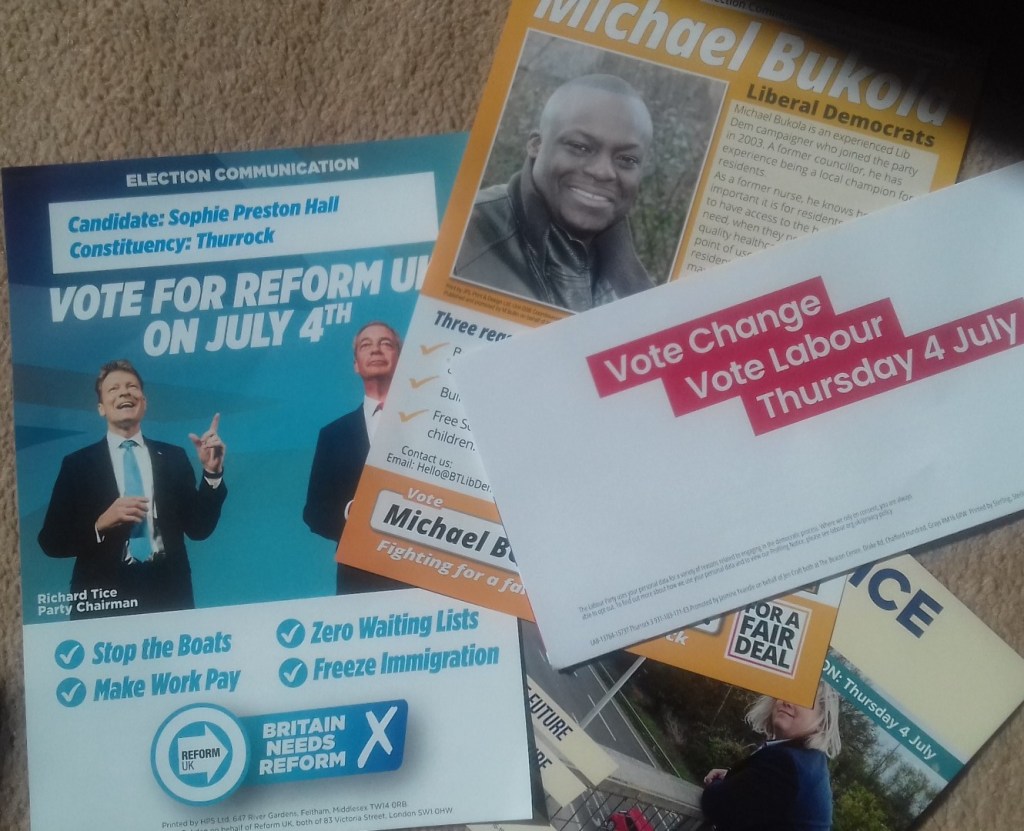


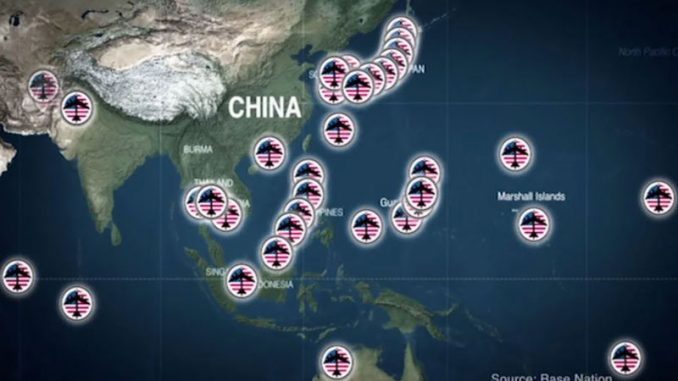

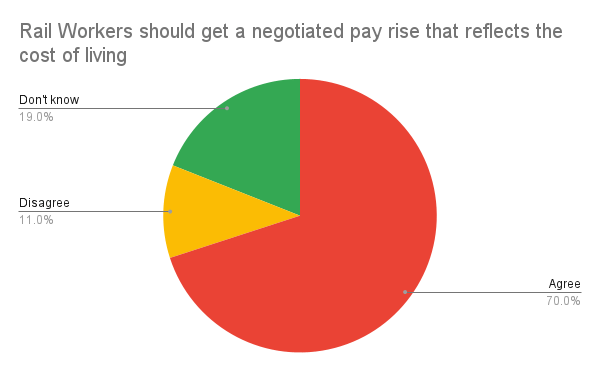
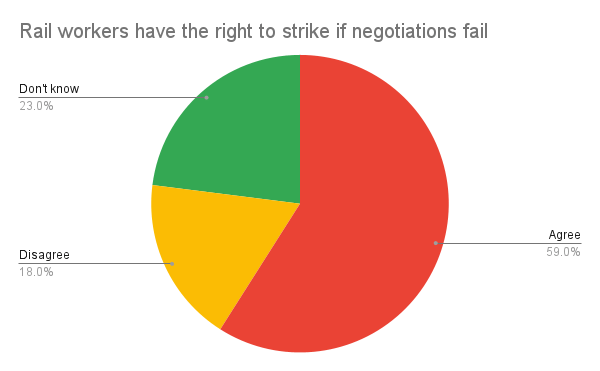

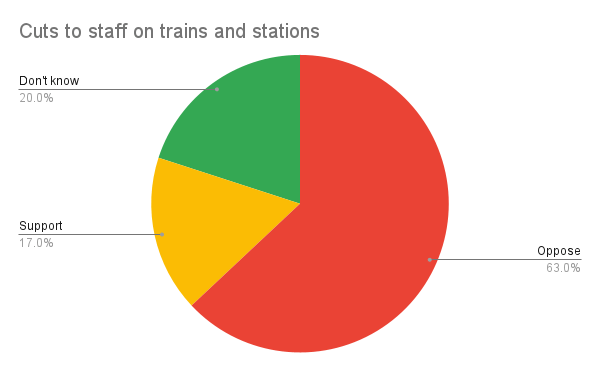

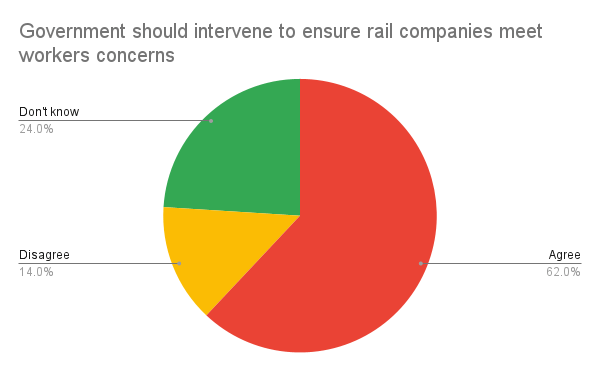
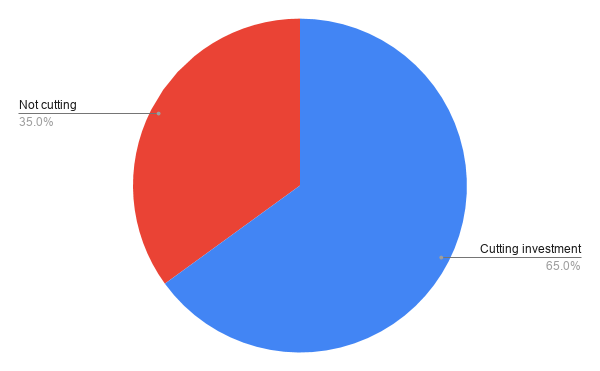


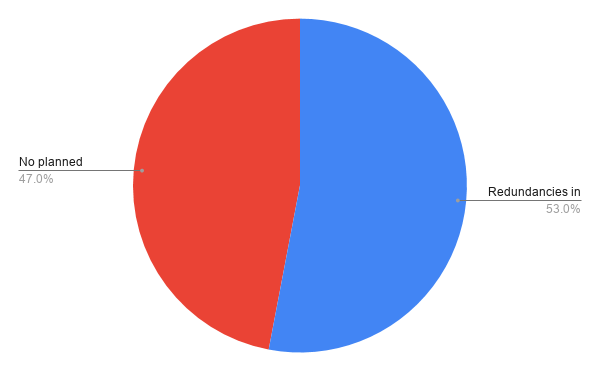
 Urban ramblings