George Monbiot’s comments about the war in Ukraine on BBC Question Time last week are completely disorientated, and disorientating for anyone who swallows them.
His columns in the Guardian are often a haven of well argued, deeply felt sanity in a time when the impasse of capitalism, the decline of US hegemony and the ever mounting climate crisis are driving most columnists in most papers well off the rails and up the wall, but the one entitled A Trump win would change my mind about rearmament (Guardian 5/7/24), was profoundly confused, and underpins the line he took on QT.
He argues that Trump’s Second Coming should “end… our abiding fantasies about a special relationship” without reflecting that, in abusive relationships, abiding fantasies are often clung to harder to avoid having to face facts. There is no doubt that the British ruling class will cling to it as hard as it needs to.
As it is, few, now, have any delusions that this relationship is one of equals. A deferential cringe is built into it, and everyone knows it. The relationship was abjectly summarised by Tony Blair when he told the British Ambassador to Washington to “get up the arse of the White House and stay there”. We have seen what this looks like on film. “Yo! Blair!”
What makes it “special” is being one of the closest US henchmen in their global dominance: one of the “five eyes” countries that share Intelligence gathering (the US and what used to be called the “White Commonwealth”) that is at the core of their system of alliances.
George spells out what this has been about, listing just a few of the brutal and deadly military interventions and coups “we” have been party to since the Second World War – Afghanistan, Iraq, Gaza – with the US as number one and the UK desperate to believe that its number 2.
Although he recognises that these alliances, with NATO as its core, defend a rules based order that “favours capital over the democratic state”, he doesn’t draw the structural conclusion that this also constitutes a Global North military bloc forged to keep the Global South in its place. So, the interventions he mentions were, and are, not random pieces of malevolence that just happened to happen, but systematic attempts to assert global power and dominance. This is posed in these countries as “defence”.
The military forces at their disposal are the tools do do this job, and the stronger and bigger they are, the more they can get away with doing it.
So if, as George argues, our principle is that we are opposed to “imperialism, fascism and wars of aggression”, we have to recognise that not only do we live in a core imperialist state ourselves; one that has committed many wars of aggression in our lifetimes, but that that state is integrated into the system of alliances that guarantees the existing unjust global order.
We therefore have to restrain its capacity to carry out these wars as an act of solidarity with its victims in the rest of the world; in the first instance those in Gaza.
Israeli Foreign Minister Israel Katz was a guest at the NATO summit in July and Israel has had representation at the alliance since Turkiye lifted its veto in 2016, and a cooperation agreement since 2017. The ongoing US, and UK, arms and intelligence supplies during the genocidal IDF operations in Gaza underline what this alliance is for.
George argues that the UK and EU have “leant on the US for security”. What this means is being part of the world’s most aggressive and high spending military alliance. NATO accounts, with its allies in the Pacific, for between 67 and 75% of global military spending (depending on how you measure it). The strongest powers within it – the US, Japan, Germany, France – are boosting their military spending rapidly (Germany and Japan doubling theirs); while simultaneously complaining that it is not “realistic” to expect them to stump up their promised $100 billion annual contribution to help the Global South develop sustainably. In fact, just the increase in NATO military spending since 2015 amounts to $543 billion a year (with a total spend in 2023 of $1341 Billion). So, building up military capacity gets five times as much commitment as the promise to alleviate climate breakdown in the Global South – a promise that has never been fulfilled.
That looks like this.
George, nevertheless, argues that a Trump restoration would be “a threat to our peace, security and wellbeing” not so much because the US would
go full rogue state on climate – with an estimated 4 billion tonnes of additional emissions from pro fossil fuel policies and attempts to break up the Paris process – “drill, drill, drill!”
give Israel carte blanche to double down on the Gaza genocide – “you’ve got to finish the problem”
but because he thinks he would break up NATO, supposedly in cahoots with President Putin; citing his remark that he would be quite happy for Russia to invade any NATO member not spending as much on its military as Trump wants it to and would “end US support for Ukraine” which would “allow Putin to complete his invasion” teeing up “an attack on a NATO country within five years”.
This is where George’s argument aligns with that of other Guardian/Observer columnists and editorials, including the increasingly frenzied Simon Tisdall; one of whose columns last year condemned German Chancellor Olaf Scholz as “overly fearful of nuclear escalation”. Perish the thought that anyone would be worried about that. Tisdall’s critique of last year’s NATO summit was, as ever, that it did too little to escalate the war in Ukraine. No fear of nuclear escalation for him; arguing for no fly zones in the West of the country and missile strikes into Russia, for an alliance that is not “afraid of a fight” in face of the threat that an incoming Trump Presidency would try to force a peace by accepting a partition of pre 2014 Ukrainian territory because he is, as the Observer editorial puts it on the same day, “a keen admirer of Vladimir Putin”.
This profoundly misreads whats going on. Trump is in no kind of bloc with Putin. He’d like to break Russia from its alignment with China, though that ship has long sailed. What Trump is trying to do now is to bully subordinate European allies into taking most of the military weight in Europe off the US. This is so it can concentrate on China; which he sees as the main challenge to the US world order. This will be costly for the countries that do it, but that is of no concern to Trump. Thats the price they have to pay to stay in the kind of “special relationship” with the US that allows them to be at the table and not on the menu, even if it means they will be increasingly relegated farther below the salt.
Trump is not a diplomat. He does not issue quiet threats on secure telephone lines to allow appearances to be kept up, as Joe Biden did for Obama. He is a corrupt wheeler dealer with mob boss characteristics. He doesn’t spare anyone’s feelings. He bullies openly, so everyone is clear who the boss is. Remember his official visit in 2018? That calvalcade of armoured limousines that was longer than the Mall? Those hideous Osprey aircraft repeatedly buzzing London’s airspace?
And it is already working. 23 of NATOs 31 non US members now hit the 2% target, “more than twice as many as two years ago” according to Jens Stoltenburg and the only way is up, with Germany already committed to 3.5%. Job almost done.
So, when George says the “UK and Europe will need to find the means of defending ourselves against a Trump regime and its allies” he misses the point that the UK and EU countries are the allies of the US and, as everyone in the new cabinet is keen to point out, the UK will accomodate to whoever is in the White House because it has to, so they will remain core allies of “the Trump regime” too. David Lammy is quite explicit about that, saying that Trump is “often misunderstood” over NATO, and pledging increased UK spending to stay in the club. Increases in military spending by European countries is exactly what Trump wants. It won’t be used “againsta Trump regime” but to facilitate it, and cover its back in Europe so it can go after China.
The key point for the climate and labour movements therefore is that the policy choice to sink or swim with the US alliance will clash with having to break from it to resist climate breakdown. A very concrete way that this is posed is, when it comes to priorities, will the Starmer government jump to Trump’s tune and increase military spending to 2.5 or 3% or even 5% of GDP, or does it put those resources into its mission for clean energy by 2030? They are unlikely to be able to do both.
Trump wants to pull some US military resources out of Europe to concentrate on China because the US can’t do both any more. Thats why commentators like Tisdall are spinning fantasies. NATO has been unable to supply Ukraine with enough material to “win”, because it can’t.
Some pro EU commentators like Timothy Garton Ash argue that this gives the EU the chance and need to step up and become a serious military power in its own right and George now argues “I now believe we have to enhance our conventional capacities, both to support other European nations against Russia and…perhaps to defend ourselves”.
This presumes that the Russians are at war because they are on some crazed mission of global conquest. In fact, their stance throughout has been to seek mutual security pacts so that they don’t feel under threat from NATO; which, at the moment, they do. This has been the case since Gorbachev proposed a “Common European Home” in 1991. The US and NATO have never accepted that and it has been a US mission to break up any mutually beneficial economic arrangements, partcularly between Russia and Germany, the better to maintain US dominance of the continent.
Seeking such a peaceful arrangement, following a ceasefire in Ukraine, using the war as a terrible example of what everyone in Europe should agree that we need to avoid, is the preferable, alternative course to rearmament and war preparation.
Because George should think about what he’s saying. If there is a war in Europe, even if it stays conventional through some miracle, it will look like Eastern Ukraine or Gaza on a gigantic scale. The attempt to “defend ourselves” militarily will be suicidal, even if nuclear weapons can be kept out of it. War won’t “defend” anyone. Mutually assured destruction can be done conventionally if alliances are not “afraid of a fight”. The danger in proposals to seriously retool the UK, and other, military industrial complexes to be able to fight just such a conventional war of attrition with Russia by the end of the decade, is that this carries its own momentum and will become a self fulfilling prophecy, displacing diplomatic alternatives. If the UK military gets into a position to “fight and win a war in Europe”, the UK ruling class will be tempted to try to do so.
An alternative approach that would avoid economic ruin and a step by step escalation towards war, would be to welcome the US departure and seek mutual security arrangements with Russia in a “common European home”, as Gorbachev put it. A localised version of that was, after all, what the Russians were asking for in the Winter of 2021, which NATO refused even to discuss.
The US uses NATO to maintain its own dominance over Europe – political, military, economic. Which is why Trump’s threats to reorder it, with the US pulling back its commitments to nuclear and air cover and the European powers expected to dramatically increase conventional forces on the ground could end up as an own goal.
A recent poll showed strong majorities in the UK in favour of both NATO and retaining the UK’s nuclear weapons. This is because these are framed as a way of keeping the population safe from overseas threats.
This begins to crack – and you get a mass anti war movement – when that mask slips. In 1980, the incoming Thatcher government, eager to turn the screw in the Cold War and gain compliance with stationing US medium range cruise missiles in the UK, scored a spectacular own goal by issuing a civil defence booklet to every household in the country called “Protect and Survive”, as a guide on how to survive a nuclear war (with no more equipment than you’d find in the average garden shed). After decades in which the “nuclear deterrent” had been motivated as a way to make nuclear war unthinkable, it suddenly became apparent to every household in the country that 1. the government was actively contemplating having one and 2 that the self protection measures outlined in the booklet – like making a do it yourself shelter (for one) by unscrewing your bathroom door and putting it over you as you took shelter in your bathtub – were absurd.
Millions of people realised that it was our government that was putting them at risk and the sense of vulnerability that had always generated a strong anti nuclear and anti war sentiment in Glasgow – as the nearest city to the Holy Loch base of Polaris, and then Trident, submarines – became more widespread – and linked up with the reaction against the monetarist crash that also came in with Thatcher. “A few more years of this government”, as one old campaigner in Bermondsey put it, “and we’ll all be living in tents surrounded by cruise missiles”.
My speech at the “Trump Climate Disaster” Rally outside the US Embassy (11/1/25).
The new US Ambassador that Trump is installing in that Vice Regal fortress behind us – and, I’ve got to say that that’s a very wide moat they’d got there, which makes you wonder what they are anticipating – is a guy called Warren Stephens.
Stephens is an investment banker from Arkansas, whose company holds huge oil concessions in the Gulf of Mexico (which Trump wants to rename the Gulf of America). He is also a climate smartarse – someone who likes to use pseudo scientific one liners to deflect from the seriousness of climate change, which are only convincing for those determined to be convinced and unwilling to ask any questions to puncture their own delusions.
He will have two jobs above all.
One will be to push the UK government off its agenda for green transition.
Trump wants “no windmills” in the USA and “no windmills” in the North Sea.
If renewables are abandoned, the limited reserves in the North Sea means that, even if they were maxed out, they would be unable to fill the gap in energy needs; which would have to be made up by very expensive imports of US Liquifid Natural Gas, which we now know has a carbon footprint 33% worse than that of coal.
If the government succumbs to that pressure -which is being pushed “patriotically” by the Conservativbes and Reform now as Trump’s Fifth Column, with the media in a screaming descant in support – it would be a spectacular act of self harm that will impoverish people on a grand scale and make climate damage a lot worse.
His other main priority will be to push the US militarisation drive.
Trump wants NATO allies spending 5% of their GDP on their militaries. Thats more than double the current average.
Neil Kinnock seems to think that 4% is “reasonable”.
This is NOT because they are under any threat militarily. Direct US allies account for 2/3 to 3/4 of global military spending already (depending on what estimates you use).
This collosal concentration of coercive power polices the transfer of $10 Trillion from the Global South to the Global North every year.
This is why countries want to join NATO. It makes them part of the imperial core. As Anthony Blinken put it, “if you are not at the table with us, you’re on the menu”. The problem now though is that being at the table with the US is a bit like having dinner with “the late, great Hannibal Lecter”, as Trump might put it. You can never be sure when the host is going to trun round and take a bite out of you. But you can be sure that he will do so at some point.
Doubling that level of expenditure cannot be seen as a defensive measure. It only makes sense if they are planning wars of aggression.
That is explicitly proclaimed by the UK Defence Review, which talks of being in a “pre war situation”, and there is overt talk of the British Army having to be ready to fight a major land war in Europe within the next ten years. This is completely mad and suicidal.
The impulse for this is partly that the US is losing ground to China very fast economically, but also because, in the context of the climate crisis, US society as it currently stands – and the wealth of the feral billionaires who are running its government – can only be sustained if they can put the Global South in general, and China in particular, back in its box.
They are fully aware that the climate crisis is real. All the denialist stuff is just prolefeed. An example of this is the US Army Report from 2019 that argued that,
left unchecked, the climate crisis would lead to a social collapse in the US itself at some point this century
the US Army had to be ready to intervene to make sure that the new oil and gas reserves revealed by melting polar ice caps would be under the control of the US – annexation of Greenland anyone?.
This would be extreme cognitive dissonance if they did not have a perspective where they could maintain a per capita carbon footprint the size of a Diplodocus, so long as most of the world barely has one at all.
So, the United States can no longer pretend to be anyone’s elses future, not even its own.
The problem they will have with this is that the costs of carrying through this massive shift of resources into militarisation will lead to massive economic and political crises.
To be specific. For the UK to spend 5% of its GDP on its military would cost an additional £60 -70 billion a year. Mark Rutte of NATO has very kindly suggested that this could come from Health and Pensions. Nice. We can be absolutely clear that it would also have to come from green infrastructure investment.
Flood defences? Why would we need those when we can trust to luck?
Ditto investing in fire prevention, because there’s no problem with wild fires is there?
Insulating homes? That would have to go. People can stay patriotically cold.
Electrified railways and affordable public transport? Who needs that when there’s weapons to buy?
So, if the government capitulates to this pressure we will face
extinction from climate breakdown in the long term, because they won’t have invetsed enough to stop it or limit the damage
extinction from nuclear war in the medium term, because they are investing in preparing for that and seem oblivious to the risks
misery and impoverishment in the immediate term to pay for it.
All to defend a “rules based international order” in which – as we’ve seen this week with the US sanctions on the International Criminal Court as punishment for the Gaza indictments – the US makes the rules, and the rest of us are expected to follow the orders. The US is not interested in global leadership, it is interested in global domination.
You can’t build a wall to keep this out.
Millions across the world will resist this – including in Europe and the US itself. Trump’s polices are likely to blow up in his face. His tariffs, if imposed, will be ruinous.
People do not want to be poor. They do not want to be killed in a war. They want more action to keep us safe from climate breakdown. Let’s mobilise that majority, with the trade union year of action from this September as a lever.
I’ll end with an advert. Just down the road from here, on Clapham Manor Street, is the only trade union owned pub in the World, called, perhaps inevitably, Bread and Roses. On 23 January at 7pm it is hosting a showing of the latest Reel News film about the inspirational GKN Firenze factory occupation, and another supporting Vauxhall workers resisting Stellantis closing their plant.
My speech at the Rally for a Just Transition outside the Treasury last week
When people say “We have to make the transition to sustainable energy BUT we need to save jobs” we need to change one word in that sentence. “We have to make the transition to sustainable energy AND we need to save jobs”.
At the 2017 COP in Katowice – held in the middle of the Silesian coalfield, where the delegates said that they could smell the sulphur on the air – sensing a threat to their jobs, the local mineworkers branch of the Solidarnosc mineworkers union voted that climate change is not happening.
While that’s an understandable defensive reaction, it actually disarms these workers two times over.
It makes it impossible for them to campaign to save their families and communities from the consequences of climate breakdown.
It makes it impossible for them to defend their jobs, because that defence would be based on a fantasy.
That underlines the point that, whether we are a trade union seeking a future for our members – or a government seeking a sustainable future for society – we have to base our policies on reality.
Which brings us to the North Sea.
Oil and gas production in the North Sea is caught in a pincer that has nothing to do with government policy.
The oil and gas fields are becoming exhausted – and even investment in new fields would make an insignificant difference to the speed of the decline in production, and therefore jobs.
Oil demand has either peaked already, or will soon. That sets up a scenario in which the major oil companies are fighting like rats in a sack over the remaining profitable years. As oil demand declines, the only viable companies will be those able to extract oil from the easiest, therefore cheapest, places. That means OPEC, essentially. The Western oil majors will start to go to the wall in order of size and the extent to which their reserves are difficult/expensive to extract. The writing is on the wall for all of them, but BP and Shell will go down long before Exxon Mobil.
But these companies aren’t going down without a fight. They are pushing back hard against the shrinking of their markets, against taxes on their profits.
Part of this is the abandonment of transition plans from fossil fuels to renewables on the part of these comapnies because, in the short term, the former are more profitable. This dooms them and everyone working for them.
The bottom line is that the transition to renewables in the North Sea is not a threat to jobs in the North Sea, its the only lifeline that workers there have.
Thisis a video of the rally outside the Treasury.
📣 Please like & share the video to amplify our demands ahead of the budget!
David Lammy’s recent article, The Case for Progressive Realism. Why Britain Must Chart a New Global Course in Foreign Affairs claims to base itself on a “politics based on respect for facts”, to look for “realist means to pursue progressive ends” and seek “the pursuit of ideals without delusions”. His problem is that the “facts” he uses are filtered by and seen through an ideological lens that distorts them, turns things upside down and inside out; and it rapidly becomes clear that the “new course” he proposes is a reprise of the old one; as the “chart” he is using is marked up with the same old, same old Foreign Policy Shibboleths that have defined UK policy since Suez. Primarily being most favoured auxiliary for the USA during the “American Century”, and a willing supporter of attempts to prolong it for another.
Lammy aims to square a lot of circles, because that course is now increasingly unviable, and the contradictions are starting to creak. In the attempt he skates at speed across a thin ice of delusions about the world that make the ideals he touches on in places unattainable. The “means” that he defines as “realistic” are incompatible with the ends he describes as “progressive”. It is therefore not entirely coherent. Andrew Fisher, possibly kindly, describes his article as a “word salad”.
Before going through this point by point, more or less in his order, I’d like to examine one extraordinarily strange phrase that crops up near the end but, in its way, summarises the fundamental contorted distortions of his world view.
He writes “at times in the Twentieth Century, Western powers undermined the sovreignty of weaker states, especially in the Global South”.
Where do you start with this?
“At times”. As if this were an occasional aberation. An uncharacteristic lapse from an otherwise egalitarian norm of sunny mutual respect. As in, the people of the Congo had their sovreignty “undermined” “at times” by Belgium and “at times” died in their millions. Or, “at times”, Britain presided over famines in India that it took independence to stop. I could go on.
Do I really have to point out that, for the first half of the Twentieth Century, most of the Global South had no sovreignty at all, as they were under the direct territorial control of “Western” Imperial powers.
Nor that this was not abandoned willingly by the “West” in the second half of the century either.
The UK, France and Portugal fought a series of viscious post colonial rearguard actions against independence movements right up to the 1970s; Vietnam, Malaya, Aden (Yemen), Algeria, Kenya, Angola, Mozambique, Guinnea-Bissau.
Settler colonial regimes in Rhodesia and South Africa kept this up to the 1980s and 90s, and Israel is still doing it today.
The United States picked up “the white man’s burden” from France in Vietnam with lethal effect (2 million killed) backed coups and military take overs in Indonesia (600,000 killed) and all over Latin America; Guatemala, Brazil, Bolivia, Argentina, Chile.
The “neo colonial” settlement that allowed formal independence for former colonies left them at the mercy of their former colonial overlords, sometimes embodied in formal structures ensuring financial control and military presence, as in France Afrique until recently; leaving most of the Global South for most of the rest of the twentieth century hog tied by debt and unequal exchange, and sometimes fought over for resources.
Within this, the US gained greater weight over its imperial rivals via economic domination (the US notion of “decolonisation” being the removal of barriers put in the way of their trade by the territorial control of imperial competitors).
This has led to a process of incorporation and subordination of European powers and Japan into a dominant US centred imperial bloc with a parasitic relationship to the rest of the world; which is where we are now.
Western powers “undermine the sovreignty of weaker powers, especially in the Global South”, not just “at times”, butdo so all the time as a structural norm. This is underpinned by an unparallelled capacity to unleash violence on anyone who steps out of line. Recognising this is “realism”. Failing to see it is “delusion”. Accepting or supporting it is siding with the oppressor against the oppressed, the exploiter against the exploited. Always.
Things ain’t what they used to be
Lammy, however, starts his essay by bemoaning how this has began to change; comparing the world at the time of the last Labour landslide in 1997 with the one that will greet the next in 2024.
In the 1990s, after the collapse of the Soviet Union, it was possible to believe in an eternal Pax Americana, in which the entire world would eventually turn into one gigantic American suburb, through US led globalisation and the wonders of the free market. This was a fantasy, even at the time.
What Lammy describes as “the liberal democratic model” – in which all countries would eventually become wealthy clones of the US (just later in the fullness of time, after a little bit of inevitable gradualism) – meant for most of the world to continue living under the crushing weight of the Washington consensus; which policed all development in US interests, guaranteeing that millions were trapped in extreme poverty, forced to live in teeming self built slums, or rural desperation, their resources extracted for little or no benefit by Western multinationals, essential services like water supply privatised; with the threat of military intervention standing permanently behind the IMF and the World Bank.
In 1997, with a slight whiff of “Good Old Days” nostalgia, he notes that the UK had an economy that was larger than those of China and India combined; and it still adminstered Hong Kong as a colony. Not any more. Never again.
Bull in a China shop
Now, as Lammy notes, “China is a superpower”. It has a larger economy than the US, in Purchase Power Partity terms. Lammy does not note, but we should, that it has been mostly in this period from 1997 that China lifted 850 million of its people out of poverty, and eliminated extreme poverty altogether in 2020. A feat described by a Labour Foreign Policy Group report in 2021 as “perhaps the single most significant contribution to human wellbeing in world history”. Something that you’d think someone with “ideals” and “moral purpose” might welcome, or even seek to learn from.
But not a bit of it. Lammy chooses to interpret this as a threat and a “systemic challenge to British interests” (a phrase that begs more than one question).
“Democracies” – a word he uses as a euphemism for the core Imperial powers which are tightly allied to, and coralled, by the United States – are “on the back foot” and losing the “hearts and minds” of the Global South “middle class”; such that “countries described … by CIA Director William Burns as the “hedging middle” are striking bargains and setting their own agendas in Africa, Asia, and Latin America” and, even worse, “they ignore the European Union, the United Kingdom, and the United States ever more frequently”.
They are just not doing what they are told anymore, dammit!
It is the rise of China, and the failure of the US to contain it, that has sent US politics into such a delirious tailspin. Because, if the US truly is the one indispensible nation, with a political and economic system that is the best in the world, then this should not be happening. But, happening it is. And, if everything you believe about the world is being shown to be false, but you can’t bring yourself to break with your beliefs, it becomes possible, even necessary, to believe ten impossible things before breakfast to try to make sense of it. An impulse to seek truth from anything other than the facts is characteristic of the MAGA movement, but not confined to them. “Realism” is too unbearable to be acceptable. So, dangerous fantasies take its place.
We should note at this point that more people in China think that their country is a democracy – a country run in the interests of the people – than people in the US do. In a study published by the Alliance of Democracies Foundation and Latana data tracking firm, when asked whether they believe their country is democratic, those in China topped the list, with 83% saying it is, and 91% also saying that this is important to them. In the US, only 49% of those asked said their country was a democracy and 76%, said it was important.
That looks like this.
Percentage of people in each country that consider it to be a democracy
We should also note that Lammy’s concern with the “middle class” in the Global South is an odd one if his major concern is with development. A striking feature of most of the Global South is the class polarisation, with very extreme Gini coefficients which show a wealthy layer with living standards comparable to those in the “West” sitting on top of a much larger number of impoverished people living in varying degrees of desperate precarity. Rajiv Ghandi’s formula of “France in India” is quite a good way to envisage this; that India contained a nation with roughly the same population and wealth as France – about 65 million – atop over a billion living in desperate straits. This polarity explains the extremity of Rightist Global South politics, producing figures like Bolsonaro or Milei. Wealthy people living in close proximity to teeming masses that they feel threatened by often feel the need to keep in their place with extreme violence. I suspect that when Lammy talks of the “middle class”, he is refering to the wealthier sort, who are in no way middling, economically or politically, but he never clarifies.
Lammy comes back down to Earth to note, appropriately, that “Climate breakdown is no longer a future worry. It is here”. He also notes that China, the US and EU all have green transition plans that require large amounts of state led investment, to a degree that the UK does not, but without digging into the figures that show that only China is doing this on the necessary scale. This is from Adam Tooze. “Measured against the $ 4 trillion per annum benchmark, the only country(my emphasis) that over the last decade has come anywhere close to spending, lending and investing on the required scale is CCP-led China“.
Bloomberg’s tabulation of the $1.1 Trillion investment in energy transition in 2022 shows the following.
China’s investment in energy transition in 2022 was almost double that of the US and EU put together. And this gap is accelerating.
It might be fair to conclude from this that it is just as well that China did not follow the Western economic model, and that its state directed economy is better able to deal with this challenge. Without their investment in renewables, having made them cheaper than fossil fuels, we would already be sunk.
Lammy however regrets that China’s entry into the World Trade Organisation did not lead to the adoption of “liberal democratic values”, putting the private sector in the driving seat of the economy and polity. Had they done so, China could be just as succesful as we are with our neo liberal model that crashed in 2008, is now leading to ever greater concentration of wealth in the hands of a tiny minority; while infrastructure crumbles and standards of living for the majority stagnate or decline. In fact, China is the only large economy in the world in which wage rates have risen consistently for workers in the last decade, such that these are now higher than they are in Portugal and Greece and comparable with Poland.
I think Lammy is being a bit previous in stating that “the rise of China has ended the era of US hegemony”, but it certainly challenges it in trade, technology and scientific innovation – all of which flows from China’s refusal to accept permanent status as a low grade mass manufacturer, most favoured sweat shop providing cheap imports for Western consumers, while stuck in a middle level development trap for its own citizens.
Most countries around the world now trade more with China than the US, and this is a trajectory that is increasing, making attempts to “decouple” an act of self harm. This is true even when defined as “derisking” (a phrase based on the paranoia that its so much worse if a Chinese smart fridge company knows when you need to buy more milk than when Google does). Cutting Chinese tech out of 5G broadband – the most advanced in the world – is an example of voluntarily adopting additional costs for a slower service, which has the additional negative consequence of increasing unnecessary tensions. Partly because of US high technology sanctions, China has increasingly innovated and is now considered to have a lead in 37 out of 44 key technological indicators. This is particularly crucial in green transition, so “derisking” in this area carries with it a lot of serious risks that we can’t afford.
The key area in which the US maintains a crushing dominance is precisely the one that Lammy tries to present as the most threatening; the military. Lammy warns that the Chinese Navy has more ships than any other, but, as World Population Review points out, counting a small patrol vessel as having the same significance as an aircraft carrier “is akin to saying a squirrel is the same as a rhino, or a scooter is the same as an 18-wheel semi-truck”, so, “to better estimate the overall power of a given navy, some analysts turn to tonnage, which is a measure of the amount of water a ship displaces or the amount of cargo it can carry”. By this measure, the US Navy, at 3,415,893 tonnes, is just under five times bigger than the Chinese Navy, at 708,886 tonnes. As Shadow Foreign Secretary, you’d expect Lammy to know that. Perhaps he does, and is just chancing his arm in the hope that no one will check.
We can also look at this in terms of the scale of overall military spending. This year, the US is spending $831,781,000,000 on its front line military. Monthly Review has argued for some years that US military spending figures underestimate the true quantity by about half, but, even if we go with the declared amount, China’s spend of $227,000,000,000 is less than a third of the US total.
This understimates the balance, however, as direct US allies in the region, like Australia (which has a collosal military budget for a country its size), Japan and South Korea add an additional $150 billion; and some proportion of the UK’s $62 billion has to be allocated through its commitments to the AUKUS Treaty. And we should note that all these allies are under intense US pressure to increase and coordinate this spending, and other NATO allies like Italy are entering into joint projects with Japan, which is doubling its expenditure at the present time.
You can look at it in terms of overseas bases too. The US has 750 bases in 80 countries. China has 1 (in 1). The US bases near China encircle it, as we can see here. There are no Chinese bases anywhere near the United States.
The same applies to deployment. US aircraft carrier task forces, sometimes with the Royal Navy’s new carriers (probably the ugliest boats in the world, not an essential point, but they really are hideous looking) as auxiliaries regularly steam up and down the South China Sea. No Chinese Navy forces at all deploy to the Gulf of Mexico or English Channel. Imagine the headlines in the Daily Mail or USA Today if they did. In that light, it is quite amazing how calmly China takes this.
You can also look at it in terms of balance of nuclear power. The United States has 5,244 nuclear weapons. China has 500, a tenth as many. China also has a defensive, no first strike policy – the only nuclear power to have one. A First Strike policy has been US military doctrine since the 1960s, and remains so, even though it has been known since the 1980s that this would be suicidal even if it worked. The explosion of smoke and debris above the cloud layer from the first overwhelming salvo of missiles would blot out sunlight for several years; causing a nuclear winter that would obliterate the “victorious” powers through temperature collapse and starvation, just as surely as the defeated would be incinerated and blasted to death. For a sobering and essential examination of this see John Bellamy Foster’s Notes on Exterminism.
Characteristically, Lammy does not note that no one in China is arguing for a war with the United States. In fact they argue for “win, win cooperation” and “a common home for humanity” as we move towards an “ecological civilisation”; all of which seem both reasonable and essential positions that it would be helpful for humanity if the West were to respond to positively. Nor does he point out that arguing for such a war within the next decade as the only way to stop a peaceful rise by China is now a live debate in mainstream US Foriegn Policy circles; and that maybe this is more than somewhat unhinged.
Arising from all this, the question that has to be realistically asked is, who is threatening whom? Who is posing the “real security threat” and how dangerous is this, realistically? And shouldn’t Labour be seeking to restrain this rather than hype it up and cheer it on? Instead Lammy argues for AUKUS to be “a floor not a ceiling”. This is, realistically, a path to war; the consequence of which cannot be considered to have any “moral purpose” whatsoever.
It is slightly mind boggling that, while he pushes this antagonistic and confrontational military alliance, he thinks positive engagement with China on economic development, climate breakdown and AI (particularly as China is leading on this) can pootle along happily in a sort of paralell universe, not distracted at all by the war drums he is so busily beating, nor thrown off course by the diversion of necessary investment into the suicidal dead end of an arms race. You can make up your own mind about whether this is remotely “realistic” or contains a scintilla of “moral purpose”.
Little Britain blues
More parochially, in an attempt to have “tough minded honesty about the UK”, Lammy goes on to note what he sees as its three key problems.
Its economy is stuck in a low growth, low productivity, low investment slump. Which, given his concern with green transition and positive remarks about state led investment in China, the EU and US, should make him question why Labour has shrunk its green investment plan to little more than is already on the stocks from the Conservatives. He notes that the UK has the lowest level of investment in the G7, but seems to think that Keir Starmer’s “mission” to get the highest growth is possible without this investment, if only the country would have enough self belief. As delusions go, this is a big one.
Its armed forces are too small; which is only the case if you want to prepare for a war that could easily kill us all instead of taking active steps to avert it.
Public Services are crumbling. He could have noted that this also goes for infrastructure, which brings us back to the need for investment which the “realism” of the Shadow Treasury team rules out. So, do not pass Go…
Realism is for him embodied by Ernest Bevin’s actions as Foreign Secretary in the post war Labour government. The flip side of the progressive measures taken by that government, founding the welfare state and NHS, nationalising key industries, was its resolute continuity in Imperial Foriegn Policy; which led it to resist decolonisation, form NATO, aquire atomic bombs, join in the Korean war: and maintain military spending at such a high level that it had to sustain austerity to a degree that got it voted out of office in 1951.
Recognising that “realism alone will not be enough to save the planet” – which essentially means that “realism” defined in this way is anything but realistic – and that the “West” has “to cooperate with its rivals on climate change and AI” leads him to disinter the ghost of Robin Cook as the Push Me to Ernest Bevin’s Pull You. Cook is lauded for his promotion of “human rights” and “soft power”, embodied in the 0.7% of GDP allocated to development aid (a figure that Lammy notes, but does not commit to restoring) and his “realism” in making “hard choices” about “arms exports”, ie letting them go ahead. Lammy’s subsequent assertion that “governments don’t have to choose between values and interests” is belied by this.
Damned if you do, and damned if you don’t
So far so confusing; but Lammy’s attempt to have his bomb and drop it continues. The “West” made mistakes. Its interventions in Iraq, Afghanistan, Libya, the whole war on terror, became “seen as” a “recipe for disorder” because, despite initial military wins, it was unable to stabilise a viable pro Western regime anywhere. Its power lasted just as long as it could sustain boots on the ground, which is not indefinitely. The resulting chaos and impoverishment has not gone unnoticed across the world. The “moral purpose” that Lammy argues for, loses out to “self interest” every time. And because, of the decadent, parasitic stage they are now in, the US and its allies are sucking capital in, not spreading it out, and are therefore incapable of “nation building”.
Four and a half million people were killed in these wars, which I think should be categorised as the first phase of the Wars for the New American Century. Ukraine and Gaza are the start of an even more dangerous second phase, as a more desperate US takes greater risks.
The Rules are for the Little People
Lammy takes the Rules Based International Order as the embodiment of a viable global civilisation, but it is widely understood in the world that the rule that defines the rules is that Washington makes all them, none of them apply to the USA (and select few of its closest allies) and they will be changed on a whim.
A small example of this was the 1984 case at the International Court of Justice in 1984, when Nicaragua won compensation of £17 billion from the US for the damage done by the US-funded Contra war and the mining of its ports. Not a cent was paid. Who was going to make them?
A more recent example is the reaction to the ICJ ruling that Israel has a case to answer that it is commiting genocide in Gaza. The instant reaction from the US and its allies was to defund UNWRA on the back of unsubstantiated accusations from Israel that some of its workers took part in Oct 7th. That is a direct act of collusion in the attempt to starve Palestinians, and two fingers up to the formal structures of international law.
So, the failure of these interventions were a blow to Western hegemony. As Tom Tugendhat put it after the Afghan withdrawal “This feels like defeat”. But, in a quick pivot, Lammy asserts that Western standing was also damaged by the failure to intervene in Syria, or take a harder line in Ukraine in 2014.
What Lammy is describing here, without thinking it through, is that whatever the “West” does, deepens its crisis. It loses ground when it doesn’t intervene, causes chaos when it does.
Pursuing War not Peace in Ukraine
This is demonstrably the case in Ukraine. The West is supporting Ukraine like a rope supports a hanging man. The country is being destroyed. More than 100,000 Ukrainian soldiers have died so far. A great investment according to David Cameron, as “not a single American life has been lost”.
If their concern were genuinely with peace and security in Europe, NATO would at least have been prepared to negotiate with Russia about mutual security arrangements in the Winter of 2021. Instead, we had a hubristic refusal to engage to ease off tensions, which has led to the war which NATO is now visibly losing, amidst appalling casualties and damage.
The sanctions against Russia have failed. Most of the world does not support them, because, as Lammy notes, they see the conflict as between “the West vs the rest”; and have long experience of not being “at the table” with the US, and therefore being “on the menu”, as Antony Blinken put it recently. And they are no longer so securely under the West’s thumb.
Lammy’s support for military “burden sharing” for “as long as it takes to secure victory” is hard to square with any notion of “realism” if “victory” means Ukraine reconquering parts of its pre 2014 territory which actually see themselves as Russian. Even people who consider that to be desirable, have a hard job arguing that its possible. Phrases like “once Ukraine has prevailed” are evidently hollow.
Instead of looking to a peace agreement, as outlined here, that would allow all people in all parts of Ukraine to live in the state they wish to, secure neutrailty and reduce military tensions across the continent, Lammy argues for a “long term generational response” to the “Russian threat”. Again, this is playing on fantasies, as NATO at present already spends more than eleven times as much as the Russians do on its military. That looks like this.
Total military spending 2024
The NATO bloc on this is approprately reminiscent of Pacman, and should probably have teeth drawn on it
What Lammy is proposing is a long term “generational” increase in the military industrial complex and militarisation of society, with some military sources floating the reintroduction of conscription, at a time in which the “realism” of the Treasury team will impose freezes and austerity on everything else.
The (Republican) Elephant in the room
Lammy’s argument for closer links with EU powers, and bilateral pacts to supplement NATO, are the only hint of the nervousness that all the Labour front bench feel that they could be coming into power at the same point that Donald Trump takes back possession of the White House.
Its not surprising that Lammy – with stopping climate change one of his progressive aims – does not explore this possibility; as the US under Trump would go full rogue state on climate change, pull out of the Paris Agreement like they did before and “drill, drill drill” – with an overall impact of an additional 4 billion tonnes of CO2 released by the US the end of his second term. This would make a 1.5C limit completely unachievable, and the damage globally would be horrific.
Lammy, as potential Foreign Secretary would therefore either have to straddle an impossible contradiction in which the main perceived “threat”, China, was investing in the necessary transition, while the “foundation of UK security”, the US, was sabotaging it. As he says, “no country can go green without cooperation”. So, who would he seek to cooperate with? He could only resolve this contradiction by dropping concern with climate change and playing down its significance so as not to upset the “special relationship”, or break with US policy in pursuit of the only realistic understanding of its consequences. It might be argued that Labour’s downgrade of its $28 billion green investment pledge is a pre emptive move to anticipate a Trump Presidency, not just pusillanimity in the face of Neanderthal Tory attacks. This is a concrete choice that has neither “moral purpose” nor “realism”.
A recent article on Labour Hub tries to link the struggle in Gaza and the war in Ukraine as parallel “struggles for self-determination”; not noticing that one struggle (Gaza) is in resistance to the US centred global imperial system, the other (Ukraine) is a struggle to join it as an auxiliary ally.
People in the Palestine Solidarity movement have strongly felt and taken note of the difference in the response from Western governments to these “struggles for self determination”.
The flags of Ukraine and Israel have both been flown on public buildings, head teachers and college principals have been told by the DFE to “stand with Israel”.
Palestinian flags – and Keffiyas – have been denounced as “threatening”, or “symbols of terrorism” or “hate” and children drawing flags on their hands or wearing badges in schools have been referred to Prevent. This has become increasingly shrill as the movement has grown and public sympathy for the Palestinians has grown with it.
Like many similar articles, this one has two glaring pieces of disavowell at the heart of it – a selective approach who who is entitled to self determination and a failure to take account of the very active role of the United States and NATO – and a logic that leads those sections of the labour movement who support their line to end up campaigning for the rearmament and militarisation drive that our ruling class is determined to push, even as our societies crumble for want of invetsment and fail to rise to the challenge of climate bteakdown.
All peoples are entitled to self determination, but some are more entited than others.
If a struggle for “self determination” is based on denying that right to another people, it has no leg to stand on. The Palestinian struggle, including the way it is defined in the revised Hamas Charter (2017) is against Israel as a racist state, not against the Jewish population, in the same way that the struggle against Apartheid in South Africa was a struggle against the state, not white people as such.
The dominant, far right, form of Ukrainian nationalism, however, denies the national rights of Russian citizens and heroises historic figures like Stepan Bandera, a recruiting seargent for Nazi concentration camp guards. The US and NATO are quite comfortable with this, but no one on the Left should be.
In this Labour Hub article, like so many others, the Russian population in Eastern Ukraine is ignored. Its as if they don’t exist, didn’t rebel in 2014 against the overthrow of a government they’d voted for, and weren’t bombed and shelled indiscrimately by the Ukrainian armed forces from then onwards. At most they are posed as “Russian proxies” with “no interests of their own”; just as Ansar Allah in Yemen is belittled as “Iranian proxies”. This writes them out of history just as surely as the Israelis would like to do to the Palestinians, who are still described in some quarters there as “not a people”.
As this statement from No Cold War – The War in Ukraine must end – points out; A 2001 census found that nearly 30% of Ukraine’s population considered Russian to be their native language. States with large linguistic and ethnic minority populations can only maintain their unity if the rights of such minorities are respected. The policies of the Ukrainian government after 2014, which included suppressing the official use of the Russian language in numerous spheres, were therefore bound to lead to an explosive crisis within the Ukrainian state. As the Council of Europe’s Venice Commission, which certainly cannot be accused of being pro-Russian, stated: ‘the current Law on National Minorities is far from providing adequate guarantees for the protection of minorities… many other provisions which restrict the use of minority languages have already been in force since 16 July 2019’. There are only two ways to resolve this situation: restoration of the full linguistic and other rights of the Russian-speaking minority within the borders of the old Ukrainian state or the secession of these regions from Ukraine. Which outcome is realised will be a key subject of the negotiations. Nonetheless, it is clear that any attempt to maintain the Russian-speaking minority within the Ukrainian state while continuing to deprive them of their rights will not succeed, nor will any attempt by Russia to impose another state on the Ukrainian-speaking population of western and northern Ukraine.
All efforts to resolve these issues by military means will continue to be futile and will only result in further intense suffering, above all for the Ukrainian people. These realities will become increasingly obvious if the war continues – which is why it must be brought to a halt as rapidly as possible and negotiations must commence.
A “self determination” that denies the national rights of a large minority and denies it equality before the law within the area controlled by an ethnically defined state sounds a lot like Israel – a living expression of Marx’s dictum that “a nation that oppresses another cannot itself be free”. Not something any Socialist should be defending.
The limits of geopolitical Flat Earthism
Its important also to grasp the broader geo political context of these wars in a way that makes sense of both of them. This is because articles like this one reflect a widespread view on the left in the Global North that the world is geopolitically flat. That every country is capitalist. That there is no structure to global imperialism.
This is profoundly disorienting and can lead to the same people challenging the dominant narrative coming from our own ruling class on Gaza, while actively repeating it over Ukraine.
This is inherently distorting for any accurate understanding of whats going on; especially if you fall for, or worse, promote the sort of manichean propaganda that the Russians (or Hamas) are all evil, murdering rapists, while butter wouldn’t melt in the mouths of the Azov battalion or the IDF.
The bottom line on this is…
Who is threatening whom?
In the case of the occupied Palestinian territories and Israel, from 2008 to 2023 there were 319 Israeli deaths and 6,779 Palestinian deaths; thats a ratio of 21 Palestinians to 1 Israeli before Oct 7th and the ensuing IDF offensive.
That looks like this.
With 1,200 Israelis killed on that day and 235 since, and over 29,500 Palestinians killed in the Gaza strip and another 399 in the West Bank thats a ratio of more than 24 to 1.
That looks like this.
The balance of threat and the balance of death in this conflict is obvious and evident; and needs smoke screens of indignation to try to obscure it.
As there are millions of people in this country who feel a connection with the Palestinians, and have sources of information outside the establishment media, it has been impossible to control this narrative, to allow Israel to get on with what its doing with no scrutiny, and this is rebounding on the government and opposition, both now forced to oppose an IDF attack on Rafah and in some disarray. As there is no such community here with any links in the Donbass, even the existence of Russian speakers in eastern Ukriane is barely known about, let alone understood, and the narrative has been much more tightly controlled.
And, as the war in Ukraine is now being visibly lost by NATO, we are back to the sort of over heated rhetoric that was common two years ago – that NATO is an essentially defensive alliance needed to stop the Russians steamrollering over Europe.
This argument is politically absurd. Taking control of a continent would require a political project that could hold the allegiance of enough of the people who live there for it to be viable. It is not simply a technical military exercise. Russia does not have such a project. It has the military capacity and the political pull to absorb Russian speaking parts of Ukraine into the Russian Federation, and thats it. Even taking over the Western parts of Ukraine has been described as like “swallowing a porcupine”; let alone anywhere else.
Even if it could be reduced to the level of technical military capacity, the threat is actually in the opposite direction.
This uses NATOs own figures for its spending. Monthly Review has assessed that US spending is actually about double the amount claimed.
That imbalance looks like the graph above and shows the absurdity of NATOs claim to be both defensive and worried about the potential of being attacked by a power with less than a tenth of its strength. The Russians however, clearly have every reason to be worried about what NATO wants all that expenditure for; especially as it conducts annual “war games” in Eastern Europe practicing for a war with them.
It was fear of that threat, and the failure of NATO to even negotiate about it, which led to the current phase of the war in Ukraine.
Two phases of the wars for the New American Century.
The global context for this is that, for the first time since 1871, we are living in a world in which the United States is no longer the largest economy. China already is in Purchase Power Parity terms; and at current growth rates is likely to overhaul the US in Current Exchange Rate terms before 2030.
The “unipolar moment” and “end of history” is long gone. This analysis of the structure of global imperialism by the Tricontinental Institute goes into this in immense detail and is essential reading. Its core point is that the US has integrated the Global North into a subordinate imperial economic bloc and set of military alliances, but its decline is leading to increasing challenges from a far more diverse set of regimes in the Global South, with China as the core; and China’s highly succesful Socialist economic model at the heart of it. Those who disagree with this definition of China nevertheless have to acknowledge its success, and perhaps concede that that’s how the Chinese themselves define their society. “Socialism with Chinese characteristics”.
In its resistance to its slipping domination, the USA threatens the end of humanity because, with its primacy in capital formation, production and trade gone, financial control and technological lead slipping, the US is trying to push the challenges it faces increasingly onto the military field; which it still believes that it can dominate. That is what makes our current decade the most dangerous in the whole of human history.
The first stage of the wars for the New American Century, the War on Terror after 9/11 2001, was directed at weak powers that the US could overwhelm, killing 4.5 million people according to Browns University, but nevertheless ending in defeat in Iraq, Afghanistan and Syria; and chaos in Libya. This was when they thought they could incorporate China into their world order.
The second phase, now they know that they can’t, threatens to be worse, and could kill all of us, with a nuclear first strike an active part of US war planning.
This is where the tension in the world is coming from. This is who is driving it.
There is an argument within the US ruling class between those who think that it has to take Russia on first before it can get on to the confrontation it wants with China – the position of the Biden administration and more traditional Republicans – and those, like Trump, who think they might be able to get Russia onside against China. Putin’s response of ridiculing questions on these lines from Tucker Carlson in his recent interview, shows that this is wishful thinking on Trump’s part.
The second phase
The US and its allies have now crossed the security red lines of a nuclear armed power (Russia) in Ukraine, and have fuelled the attempted genocide in Gaza; because they have to be seen to be able to impose their will.
The US has repeatedly vetoed ceasefire motions for Gaza in the UN Security Council.
Russia and China have voted for a ceasefire in Gaza, along with the world majority, in both the Security Council and the General Assembly.
In General Assembly votes, Ukraine has been among the tiny minority who have voted with the US against a ceasefire.
Israel and Ukraine are both using weapons supplied by the US. Neither could pursue their war without them.
The US signed up to provide $38 billion in military aid to Israel between 2016 and 2026, and additional aid has gone in since October 7th.
It has gave Ukraine £113 billion between 2022 and September 2023, with more on the way.
The US is intervening in and arming both in its own interests. The Israelis are already an established US attack dog and the Ukrainian regime aspires to be; and has been playing that role since 2014.
A “Big Israel”in Eastern Europe
The forces the US is supporting – or using – in each war are the same sort of ethno nationalists with far right backing.
Netanyahu has Itamar Ben Gvir and Bezalal Smotrich. Zelensky has the Right Sector and the Azov battalion.
Just to dispell any doubt, speaking in April 2022, President Zelensky was very clear that he wanted Ukraine to be “a big Israel” in Eastern Europe. A country where there were “soldiers in cinemas and supermarkets” and “people with weapons”, not a “liberal European” state at all.
This vision was eagerly and approvingly embraced by US commentators (its possible that they wrote it) because being like Israel is being a military frontier state for the US.
Israel has been the lynch pin of US domination of the Middle East. President Zelensky has volunteered his country to do the same in Eastern Europe.
The Left in NATO countries, marinading as we are in the ideological stomach juices of the belly of the beast, should never forget who our ruling class is.
NATO and other direct US allies – the world’s wealthiest countries – account for 75% of global military spending, are the core of global imperialism, organised as a coordinated bloc, with the US dominating its subordinate rivals.
Russia is not part of this bloc. It is a target for it.
Not recognising that NATO expansion in Eastern Europe has predatory intent takes self delusion a little far. See the map displayed by Kyrillo Budanov, Head of Ukrainian Military Intelligence for the partition of Russia that this aims at if you have any doubts.
Climate Breakdown helps drive US brinkmanship
The accelerating breakdown of the climactic conditions for human civilisation adds urgency to the increasing US brinkmanship that we have seen in Ukraine and Gaza. To try to survive it with the current imbalance of global wealth and power intact requires catastrophic defeats to be imposed on the Global South, and any power not included in the US dominant bloc; in short order.
This can’t be kicked down the road anymore; hence the emergence of apocalyptic maniacs as mainstream political options for the ruling class – from Trump to Bolsonaro to Millais – and the increasingly unhinged quality of mainstream political debate.
Into the vortex of barbarism
We are spiralling into a vortex of barbarism in which light minded fools like Grant Shapps can float the possibility of nuclear war with “Russia, China, Iran, North Korea” and argue that we should arm even more to prepare for it; and this is repeated in a blase way by media talking heads as though this wasn’t suicidal insanity. A mainstream consensus urging us on to Armageddon stretches from the military itself – with former Generals calling for the UK to be put on “a war footing” and floating the idea of conscription – to Boris Johnson arguing in the Dail Mail that a Trump Presidency might be “just what the world needs” because of his “willingness to use force and sheer unpredictability” – to Timothy Garton Ash, arguing in the Guardian that Trump’s America First volatility gives Europe the opportunity to become a more serious military imperialism in its own right – to the Labour front bench, with Rachel Reeves’ fiscal rules mysteriously not applying to the large increases in military spending pencilled in by the Tories (in a country which already has one of the highest military spending burdens in the world).
Supporters of Ukraine Solidarity Campaign like Paul Mason are following the logic of their support for NATOs war aims by arguing, in his case, that the investment needed to combat climate change cannot be afforded because “the cost of borrowing has increased”, but at the same time saying that the UK should follow the US and EU in using debt to finance arms spending. Suicidal logic.
The whole labour movement should be pushing in the opposite direction.
These are the notes for a recent speech at my local Constituency Labour Party. The title and the quote at the beginning is from Jason Hickel, who is the Energy editor at the Financial Times; so has something of a horses mouth quality to it.
“There’s too much to do and, given the urgency and the need to get the solutions right, this isn’t a task for your favourite ESG focussed portfolio manager, or the tech bros. The sheer scale of the physical infrastructure that must be revamped, demolished or replaced is almost beyond comprehension. Governments, not Blackrock, will have to lead this new Marshall Plan. And keep doing it. The Western nations that did so much of the damage will have to finance the transition in the developing world – it is astonishing that this is still debated. Massive deficit funding will be necessary.(my emphasis)
For all the clean tech advances and renewable deployment in recent decades, fossil fuels share of global energy use was 86% in 2000, and 82% last year.”
The scale of the challenge
According to Adam Tooze we need to be investing $4 Trillion per year in energy transition.
Others have argued as much as $6.5 Trillion per year
As the world economy is roughly $100 Trillion a year, between 4 and 6% of it needs to be invested in the transition.
A large sum, but to put it in context, last year (2022) subsidies for fossil fuels amounted to $7 Trillion and Fossil fuel profits were $4Trillion.
This is an opportunity – because there’s your magic money tree…but also a problem, because fossil fuels are so entrenched in everyday life and political power.
Fossil fuel companies have known about the effect of greenhouse gases for 60 years, and have reacted in the same way as the tobacco and asbestos companies did over the links between their products and cancer.
Even now, Shell is arguing that – to be compatible with their interests – Net Zero will only be achievable some time in the 22nd century (so between 50 and 100 years too late).
This entrenchment in political power is seen in Sunak’s latest announcements and more structurally in the high level of climate denial in the US Congress – where Senators and Congresspeople are bought up by FF companies. Showing once again that the USA is the best democracy money can buy.
This leads to a mind boggling level of cognitive dissonance. In 2019 the US military produced a report which stated that the impact of climate breakdown would lead not only to states collapsing around the world, but also that extreme weather events in the US itself would lead to infrastructure and civil society collapsing to a degree that they would expect to be called in to fulfil para state roles, before collapsing themselves from the overstretch that would impose. At the same time, they projected a need to be ready to intervene as the Arctic ice melts, to make sure that the US gets its customary lion’s share of the fossil fuel resources revealed under the ice; thereby helping fuel the collapse that they predict.
Which brings us to a related problem. The ratio of military to green transition spending. In the US, for every $1 allocated to green transition via the Inflation Reduction Act, they are currently spending $18 on their military. And this will get worse as the US and its allies, already responsible for two thirds of global military spending, are sharply increasing it.
The figures on this for China might surprise you. For every $1 they spend on their military, they spend $2 on green transition.
This means two things
A shift from military to green transition spending is an urgent task for the climate and labour movement globally – and therefore the Atlanticist foreign policy framework of the current Labour leadership is as wrong as it can be – and will be thrown into complete crisis should Donald Trump be re-elected next year (which is highly possible).
Countries that see themselves as Socialist are more part of the solution than they are given credit for. The one relatively developed country that the UN considers operates on sustainable lines is… Cuba.
Going back to Tooze to underline this point.
$4Trillion per year needed for energy transition.
Last year, $1.7 Trillion invested in renewable energy, but $1 Trillion was invested in fossil fuels. So, the net gain of 700 billion amounts to about 20% of what we need to be doing. Another way of looking at this is that we need to be doing five times as much as we are at the moment.
According to Tooze, China is the only country investing at anything like the scale and pace we need.
This is underlined by the International Energy Agency that reports that last year China invested 70% more in the transition than the USA and EU put together. And next year the projections are that their investment will be double that of the US and EU combined.
Specifically, in 2024, China is projected to account for
50% of global solar installations
60% of new onshore wind
70% of new offshore wind.
Labour’s projected £28 billion a year would get us up to US or EU levels; so about half of where we need to be.
This week the IEA put out an updated road map to Net Zero and keeping under a 1.%C increase.
Their essential point is that this is still possible, but only if advance (rich) countries in particular up their targets and ambitions – the opposite of what Sunak has done this week – with an enhanced target of 2045 for Net Zero. No new oil and gas is a bottom line.
To have any chance of getting to that £28 billion, what we need is Just transition bodies with union and community involvement at every level in every sector – so plans for investment – and community mobilisation around them – can be made. This transition can’t happen as a “trickle down” process. It has to be forced up, and the unions in particular will need to take the lead on this, not react defensively.
William I Robinson’s conclusion to his essay The Unbearable Manicheanism of the “anti imperialist” Left implicitly contradicts the rest of his argument.
He writes The U.S. may be the top dog and the most dangerous criminal among competing cartels of criminal states. We must condemn Washington for instigating a New Cold War and for prodding Russia through aggressive NATO expansion into invading Ukraine.
Quite so. This point makes it an odd post to be recommended by the editor of Labour Hub, which in lockstep with the hegemonic ruling class narrative in the UK, has spent the last 18 months arguing doggedly that NATO expansion had nothing to do with causing the war. No prods or provocations acknowledged.
But the wider point, that the US “may be the top dog and the most dangerous criminal among competing cartels of criminal states” means that the Tricontinental Institute, Code Pink, The International Manifesto Group and No Cold War among others critiqued in his article, have got it right; that the US is the core of the imperial systemthat needs to be opposed in the global struggle for socialism; because that “may be” is a way of saying “is” without quite saying “is”.
The way Robinson poses it in the rest of his article however is that we are almost in a multipolar world already, and the USA is just first among equals. This is far from the case. Its capacity to subordinate the rest of the developed world to its economic, political and military needs makes it the lynch pin of the global imperial system. The EU, Japan, UK, and even smaller wealthy countries like Australia and New Zealand, are tied to it as auxiliaries prepared to sacrifice their own economies for its needs, and integrate their militaries into US global leadership. This integration of all the major developed imperial powers, subordinates the weaker to the US, but allows them together to dominate the rest of the world. Between them, direct US allies account for 67% of global military spending; and the US alone accounts for more than half of that. “Top dog” indeed.
And the US has almost 800 overseas military bases in over 80 countries, as we can see here. China, by contrast, has one (8 fewer than Turkey).
What a Global Empire looks like
This is not a matter of show. The war on terror, from 2001 to the debacle of the flight from Afghanistan, killed 4.5 million people; and did so without establishing a single viable, functioning, let alone democratic, state anywhere they intervened. It has been argued that the creation of chaos in countries like Syria and Libya has been seen in Washington as preferable to allowing regimes they disapprove of to function effectively.
This is underpinned by the Death Star level planet destroying weight of the US nuclear arsenal, the biggest of big sticks, which has hitherto allowed them to speak as softly or loudly as they like. And this is not simply for “deterrence”, or to threaten non nuclear states. The US nuclear “first strike” doctrine envisages an exterminist attack on China or Russia. This would be suicidal, as the scale of such an attack would generate a nuclear winter, but the top brass are as deeply into denial about this as they are about their equally fatal failure to rise to the level of the challenge of climate breakdown, and their planning is regularly updated.
Direct military intervention, by their own forces or using proxies, as they are trying to do with ECOWAS in the current crisis of Mali, Burkina Faso and Niger trying to get out from under France Afrique in the Sahel, are only the sharpest form of intervention. Sanctions are also devastating and are imposed “against countries that violate the interests of the United States” as Wikipedia puts it with disarming frankness. At any one point, this is a significant slice of, primarily, the Global South, as we can see here.
These sanctions are designed to cripple economies but also kill people in large numbers. Half a million children in Iraq in the 1990s, over 40,000 in Venezuela in the last decade, to pick just two examples.
This is sustains the (“rules based”) world economic order, which keeps the Global South underdeveloped through the normal functioning of the international trade system, US dominance of finance, low prices for Global South commodities and high prices for loan capital, including from international institutions like the IMF and World Bank, that have imposed the “Washington consensus” privatising development agenda that is anything but developmental. The utter failure of the US allied countries in the Global North to provide the – completely token – $100 billion a year contribution to the Global South to enable fossil fuel free development, at the same time as the US alone has stumped up more than $120 billion to fuel the Ukraine war, is emblematic of how this rotten system works. As Vijay Prasad has pointed out“one in three lightbulbs in France are powered by uranium from Niger, at the same time as 42 percent of the African country’s population lived below the poverty line” and fewer than 20% have access to electricity.
At the outset of World War 1, Karl Leibknecht argued rather bravely in the Reichstag that “the main enemy is at home”. In the light of the above assessment of the structure of global imperialism, we have to recognise that the main enemy, while the Pax Americana exists and the struggle for full spectrum dominance and a “New American Century” is driven onwards, is always in Washington.
Footnotes. Short points on the rest of Robinson’s article
“Manicheanism” is a Persian theology from 300 BC that poses the world as the site of a cosmic struggle between good and evil; which are posed as moral absolutes.
Cold War thinking is Manichean. “Win, win” global cooperation is not. Demonisation of rivals, or just people who think differently, as “evil” is a characteristic of Manichean thinking.
It makes a rational assessment of the motives of opposing forces very difficult, because all analysis is shrouded in a red mist of moral repugnance; which is itself all too often a form of projection. This is evident in most establishment media coverage of the Ukraine war, in which all atrocities are attributed to the Russians, while butter wouldn’t melt in the mouths of the Azov battalion.
This is often given added vehemence by sections of the Left who back this line, partly because they they need to stoke a lot of moral outrage to drown out the awareness in the backs of their minds that doing so is becoming an auxiliary of “the top dog”.
Its the same the whole world over?
The core of Robinson’s argument is that, while “the 2022 Russian invasion of Ukraine and the West’s radical political, military and economic response to it may signal the coup de grace of a decadent post-WWII inter-state order” and “the emerging global capitalist pluralism may offer greater maneuvering room for popular struggles around the world “ nevertheless, “the crisis of hegemony in the international order takes place within this single, integrated global economy.” Essentially all states are capitalist and much of a muchness. No state is any different from any other. All are converging on nationalist revivalism and this is the primary context for the “escalating economic turbulence and political chaos” we are heading for.
The paradox of this argument is that the Manichean zero sum calculations made by the US Foreign Policy establishment, that confrontation, decoupling and, in extremis, war with China is necessary to stop its rise, is not reflected in a Manichean mirror image in China’s stance. Their approach is to maintain globalisation, for global cooperation to find “win win” solutions and “a common home for humanity”. The former is leading us towards Armageddon and sections of the Left are being swept up with it. The latter is the basis of a way out.
Because China, and other states that see themselves as Socialist, dance to a different drum. Robinson acknowledges China’s “rapid industrialization, technological progress, and advanced infrastructure” and that “China has not followed the neo-liberal route to transnational capitalist integration. The state plays a key role in the financial system, in regulating private capital, in massive public expenditure, especially in infrastructure, and in planning“. And that’s the point. “The state plays a key role” The key role in fact. And it is a state run by a Communist Party with 90 million members. It is not run by the private sector. It hasn’t been since China “stood up” in 1949. That’s the difference.
Four ways this shows.
Poverty Reduction Robinson acknowledges that China “has lifted millions out of extreme poverty” then moves swiftly on. Let’s be more precise about this. 850 million people lifted out of poverty in the last 40 years. To make that relatable, because statistics don’t have an emotional impact, think of one friend and what it would mean for their life to be lifted out of extreme poverty. Then imagine a city the size of London full of friends like that. Then imagine 100 of those cities full of friends like that. That’s the scale of China’s achievement. Another way of looking at it is to imagine the whole population of Europe (740 million people) living in extreme poverty in 1993, and being lifted out of it by now. Plus an additional 100 million people. This is not normal for developing countries subject to imperialist domination. It has been a state driven mission.
Wages As you can see from this graph, wages in China have consistently grown faster than in the rest of the world. This is one reason that the rule of the CPC is popular and most people in China see their country as a democracy, in the sense of it being run in the interests of the mass of the population. Fewer than half of respondents in the United States thought the same about their country, because they know full well it isn’t.
3. Belt and Road Initiative The overall impact of this is genuinely developmental and far more “greening” than Robinson makes out. As argued here, “Research indicates that the BRI has significantly promoted the carbon intensity reduction of countries along the route”, and, though this is uneven, a recent study by CGS analysing “17 environmental, economic, and social indicators” in Africa found “consistent improvements across 12 indicators through 2050 across 1.5°C scenarios” thanks to to BRI impacts. Even the World Bank projects that “BRI transport projects could reduce travel times along economic corridors by 12%, increase trade between 2.7% and 9.7%, increase income by up to 3.4% and lift 7.6 million people from extreme poverty.“
4. Climate Breakdown The investment that China is putting into the energy transition is projected by the IEA to be double that of the US and EU put together next year, as you can see here.
They are also spending twice as much on energy transition as they are on their military. The US is spending 18 times as much on its military as on the energy transition. Which sums up their relative priorities.
The Left in the Global North – which has never overthrown its own ruling class and lives in a relatively comfortable niche of permanent opposition made bearable by the higher standards of living made possible by global exploitation- tends to be dismissive of the struggles of people in developing countries who have. This niche has been tolerated hitherto here, but, with US dominance increasingly under challenge, both economic concessions and democratic spaces are being inexorably squeezed, and dissent increasingly categorised at treasonous.
Currents on the Left who, to prove their independence of mind, find themselves habitually parroting the same attack lines on the same targets as the State Department (and at the same time) should reflect that perhaps their opposition to “campism” has led them to pitch their tents in the wrong camp.
Writing about the Greenpeace activists who scaled Rishi Sunak’s mansion in North Yorkshire to drape it with black cloth, the Daily Mail headline was:
HOW ON EARTH COULD THIS BE ALLOWED TO HAPPEN?
‘As eco protestors scale the roof of the Prime Minister’s family home, which is a humiliating symbol of our supine toleranceof a tiny self obsessed bunch of zealots who disrupt everyday life with impunity.’
So I wrote them the following:
With fires, floods and famines already devastating our planet, the real “tiny, self obsessed bunch of zealots” who will make “everyday life” not just disrupted but unsustainable within the lifetimes of children currently in our schools, are the owners of fossil fuel companies; and the think tanks, politicians and newspapers that they buy to defend their profits. People who went on holiday to Rhodes this year will have had their “everyday life” disrupted violently by the impact of climate breakdown. Its time to end the impunity of the tiny minority who are causing it.
And the Daily Express, with characteristic understatement, HEADS MUST ROLL! JUST HOW DID THIS HAPPEN?
So I wrote them this.
Given the increasingly frenzied tone of your articles and headlines on anything related to climate breakdown, and people trying to alert us to the severity of it, I must confess to wondering if your “Heads must roll!” headline was intended to be solely metaphoric.
May I suggest that a suitable set of people who’s head should roll is anyone in government, business or media who downplays the seriousness of the crisis – just ask anyone who went on holiday to Rhodes this year – or slows down the pace of the measures needed to tackle it, putting our children’s futures at risk for short term financial or political gain?
The Express article went on to quote an unnamed Tory MP as saying “I’d say shoot them!” which indicates a state of mind that is a long way from sweet reason.
This poster is displayed on the side of the Dutch Embassy in Moscow and shows the number of people killed in the Donbass between 2014 and 2022.If you walk down the Arbat in the same city you will see hundreds of poster sized billboards memorialising the children killed by Ukrainian shelling into the Donbass in that time. If you go to Donetsk City, you will see a memorial garden for these children. That shelling continues dailyeven now.
Framing an argument to bury the truth
There is a manipulative form of polemic that starts with a particular image, or emotive incident, that is guaranteed to mobilise an empathetic emotional response from a viewer or reader. If you watch BBC News reports on Ukraine, and think about what they are doing as well as what they are saying (and not saying) you will see this in an almost perfect form. Everything is geared to eliciting an emotional, sympathetic response on the calculation that – because emotion always trumps reason – this will then blot out questions about why these events are taking place; because it will be taken for granted who is to blame.
You might argue that that’s what I’ve done here, but images like that above will never appear on the BBC, or in the Guardian, because its the wrong sort of emotional response. The wrong dead children. The wrong sympathy. None of these kids will have Fergal Keane deployed, with sad backing music and beautifully filmed mordant images of grieving parents, your heart strings will not be expertly plucked to resonate with theirs. But they are just as dead. And the imposition of an ideological no fly zone, through the current banning of RT and policing of social media, means that you are very unlikely to see them anywhere else either. But they are just as real. So, this is just a small challenging counter image to stick onto the gigantic montage of images that have created the one sided picture that you’ve been exposed to already.
And if the deaths of those poor people in the pizza restaurant in Kramatorsk this week is to be taken as justification and fuel for sacrificing even more people to pursue this war with an enhanced sense of moral indignation; is that not equally true for the people in Donetsk?
Because in narrative framing, anything that is out of sight is out of mind. In the case of wars, some people’s deaths are framed as their just deserts because they have the misfortune to belong to a people or state targeted by ours. As the infamous Sun headline crowing over Croatia’s ethnic cleansing of the Krajina in the Yugoslav wars put it, “Serbs you right”.
The Climate Movement and truth
There is now a move to align the climate movement in the Global North/West with the war aims of NATO. A press conference in Kyiv at the end of June, with President Zelensky, Mary Robinson and Greta Thunberg, announced a European body to evaluate “the environmental damage resulting from the war, formulating mechanisms to hold Russia accountable and undertaking efforts to restore Ukraine’s ecology”.
A Commission to examine the ecological damage done by the war as such is, however, not what this Commission is. Such a Commission would have to recognise that the way to stop the ecological damage is to end the war. NATO does not, yet, want to do that, so this Commission is structured to attribute all the blame to one side. Participants in this Commission from the climate movement, whatever their intentions, will find themselves providing a moral fuel to continue the war with single minded righteousness: thereby providing a thin green fig leaf for the most destructive militaries in the world. These are now rapidly expanding and increasing their carbon boot print to an unprecedented degree; and intend to use it. This Commission’s effect will be to prolong the war; thereby generating ever greater ecological damage and human loss.
A frame that aims to “hold Russia”… and only Russia…“accountable” means that ecological damage committed by Ukraine or NATO are either outside their purview, or considered not to exist.
Shells and missiles fired by the Ukrainian armed forces are no more ecologically benign than those fired by the Russians. In the case of the depleted uranium shells supplied for British Conqueror tanks, they can be worse. Ignoring this requires a level of cognitive dissonance that can only be sustained by an act of intense will; or generated by a red mist of moral indignation – generated by the the narrative framing above – sufficient to enable people to look straight at it, and not see it.
Anyone arguing that any ecological damage is ultimately the Russians’ fault “because they invaded” should not forget that this war started in 2014; when the Ukrainian Air Force bombed Donetsk city, opting for a military solution to a political crisis. Does anyone doubt that this would have led the Kyiv government being universally denounced in the West as a regime that “bombs its own people” had they been US opponents?
If you think that the road to peace runs through a Ukrainian victory, have another look at the picture of that girl in the ruins in Donetsk, and the picture of the Crimean Theatre students below, and reflect on the fact that the full realisation of Ukrainian/NATO war aims will involve the ethnic cleansing of their whole region; and that Kyiv has been completely explicit about that.
Theatre students in Simferopol Crimea wearing orange and black ribbons and singing songs on Victory Day May 6th 2023. Photo Dan Kovalic. For a view of how Crimea broke from Ukraine in 2014 and what it is like now see Dan’s article with Rick Sterling here.
President Zelensky was quite blunt that this Commission will be “support for Ukraine”, in the context in of him rejecting any prospect of a ceasefire and frozen conflict and promising to continue the war regardless of the cost. That cost will be measured in escalating environmental damage and human lives and the devastation of his country. The remark of the US officer in Vietnam who remarked that “in order to save the village, it was necessary to destroy it” haunts his speeches.
Collusion in confusion
Participation in a Commission on partisan lines will by definition require collusion with an a priori propagandist interpretation of any event. Four extreme examples of this that pass for conventional wisdom in the West so far.
The oft repeated narrative that the Russians were shelling the Zaporozhe nuclear power plant, when it was occupied by their own troops. Even after the Ukrainians admitted they were doing it, the media here still tried to muddy the waters. Ukraine being not only willing to shell a nuclear power station but having actually done it is not something they want us to dwell on. Especially now. The statement from President Zelensky at that press conference with Thunberg and Robinson alleging a Russian plan to blow up the Zaporozhe power station in the coming weeks is particularly alarming in this context; because it might be a cover to resume the shelling – with the blame preemptively allocated -as a pivot for global outrage and mobilisation, as argued by Dmitriy Kovalevich here.*
The bizarre accusation that the Russians blew up their own Nordstream gas pipelines releasing up to 350,000 tonnes of methane, doing an enormous amount of environmental damage. It has been a US aim to cut Europe off from Russian gas supplies for over a decade; well before the war. Blocking the certification of Nordstream 2 in February 2022 was a big victory for them. But only a provisional one, because the Russians remained in control of the pipelines and any peace settlement would see them turned back on. Blowing them up rules that out and stops the Russians having that option. It takes peculiar mental gymnastics to imagine that the Russians would destroy their own infrastructure to hand a geopolitical advantage to the United States. Articles by Seymour Hersch detailing US involvement have been largely suppressed in the media here.
The case of the ammonia pipeline blown up in Kharkiv is similar, in that the flow of ammonia from Russia to the West had been shut down by the Russians weeks previously as a tit for tat for the West not fulfilling its obligations under the Russia- Ukraine grain/fertilizer deal; so blowing it up would only make sense for a force trying to cut all potential trade between Russia and the West.
Claims from the UK Ministry of Defence that the depleted uranium shells they have supplied with their Conqueror tanks are really nothing to worry about, repeated in the media with a straight face. The use of these munitions in Iraq has had horrific impacts. For example The Falluja Hospital’s birth defects Facebook page, where medical staff catalogue cases, reveals the striking diversity and quantity of congenital anomalies. Babies in Falluja are born with hydrocephaly, cleft palates, tumors, elongated heads, overgrown limbs, short limbs and malformed ears, noses and spines. The use of these shells will poison wherever they are used in Ukraine for years after the guns fall silent, while the British politicians who supplied them have roads named after them in Kyiv.
A further example and exemplar of the approach that we are likely to see more of in the framework of this Commission is a recent article on Open Democracy Khakhovska dam destruction is part of the climate emergency. This makes the valid point that the dam’s collapse is environmentally disastrous, but then rests the gigantic accusation of “ecocide” on a conditional presumption, that the destruction of the dam is “likely to have been the work of Russian forces”. “Likely”. Not definitely. Not even probably.
“Likely”. So, how likely? If your brief is that all ecocide is carried out by the Russians, it becomes necessary not even to ask this question; allowing carte blanche to the Ukrainian/NATO side to do their worst and just attribute the consequences to the other side. “Likely” is a small word, easily passed on from when reading at speed, but it is an admission that everything that follows by way of emotional mobilisation could very well be applied against the cause the author supports if readers allow themselves to think and question a bit.
Because its a matter of public record that the Ukrainian armed forces have been shelling and firing HIMARS missiles at this dam for months.
Their military and political leaders hastened to delete posts bragging about doing so as soon as it was breached, but many of them have been recorded and are in the public domain.
Taking a step back, there are three possibilities for how this dam was destroyed. Longer analyses of this can be read here and here, but in a brief summary these are the theories.
The Russians blew up the dam to enable them to withdraw troops from the riverside to redeploy them against the main expected thrust of the Ukrainian army offensive further east; even though this would deplete water supplies to the Crimea. Resecuring this supply after Ukraine cut it off has been one of their main military objectives, and remains one. So, it would be an oddly self destructive to imperil it. It has also been reported, from Ukrainian sources, that Russian troops dug in on the east bank of the Dnieper were taken by surprise by the inundation; which would not be likely if their command were responsible for blowing the dam. More to the point, the Russians were in control of the dam. All they had to do to create a flood would be to open the sluice gates. No need to blow it up, so, why do so?
The Ukrainians blew it up to wash away Russian minefields and defensive positions on the lower lying eastern bank of the river. Their earlier attempts to do so, to cut off the Russian forces on the West Bank before their withdrawal last Autumn, are well publicised. So, whatever the case in this instance, it was something they were prepared to do, it was well within their moral compass, with all the consequences that flow from that. They also appear to have been releasing water from dams higher up the Dnieper in order to keep the flood going; which is odd behaviour by anyone trying to minimise damage.
The dam had been so weakened by the long term effects of the shelling and missile attacks on it that a build up of pressure from a greater volume of water building up behind it in the run up to the breach was too much for it; and both the Russians and Ukrainians have had to improvise a response.
Its hard to see the first option as anything other than the least “likely”, but judge it for yourself.
The media narrative in the UK, however, is not characterised by rational analysis or balanced judgement. The sort of spluttering rage you get from Simon Tisdall in the Observer is more characteristic;. “Of course the Russians did it…Only this malevolent Kremlin regime would wilfully inflict human and environmental havoc on so vast a scale…That’s what they do, these mobsters.” The sound of a man shouting down his own doubts because, as he admits “It’s impossible to prove at this point.” Obviously also a man with no memory of the 4.5 million people killed by the “War on Terror”, nor the far greater environmental destruction in Iraq inflicted by us and our US allies nor, more recently Yemen, thanks partly to the expert training provided by the RAF and RN to their Saudi counterparts; not to mention the after sales service provided by BAE systems making sure that their missiles were accurately targeted.
That’s why the argument on Open Democracy that “it is not enough to just lobby against fossil fuel extraction; we must recognise that the end of Russian imperialism is key to the struggle for climate justice” is so disoriented. It lets the the US and its allies, the world’s dominant imperialism, with the biggest military carbon boot print, completely off the hook to such a degree that it lines up behind its war aims. Anyone who thinks that the route away from the environmental damage caused by this war is via a Ukrainian/NATO victory has lost touch with reality; both in the concrete practical terms of the enormous human and environmental damage that would be required to secure one, and the horrendous consequences for the world of a triumphant retooled US alliance seeking to partition the Russian Federation, take charge of its fossil fuel reserves, really get stuck into oil and gas extraction in the Arctic, and get ready for the war in the South China Sea they’ve been pushing for; with Taiwan as the same sort of sacrificial victim that Ukraine has been.
Taking this stance would also sever links with movements and governments in the Global South; where people who have been on the receiving end of the US imperial system for decades see through its pretensions and fear its ambitions. It would be a disastrous course for the climate movement in the Global North to take. This is particularly in the context of governments like the UK cutting its commitment to global climate finance citing, among other things, “the costs of including help for Ukraine being included in the aid budget.”
Instead of becoming partisans of either side in this war, or any other, whatever our individual views, the climate movement here should stand for an end to the war, oppose militarisation, and campaign to get the global military boot print fully included in the Paris process, with a target to measure, monitor and cut it as fast as possible.
Irrespective of what stance you take on the war in Ukraine, or anywhere else, in March last year, US author Meehan Crist wrote the following in the London Review of Books, “One of the worst outcomes of the war in Ukraine would be an increasingly militarised response to climate breakdown, in which Western armies, their budgets ballooning in the name of “national security” seek to control not only the outcome of conflicts but the flow of energy, water, food, key minerals and other natural resources. One does not have to work particularly hard to imagine how barbarous that future would be”.
Crist’s point is simply to describe the world we already have, but a bit more so; and her prediction is exactly what is happening.
The US has raised military spending to $858 billion this year; up from $778 billion in 2020.
France has announced an increase from a projected E295 billion to E413 billion in the next seven years (an average of E59 billion a year).
German spending is rising sharply, from E53 billion in 2021 to E100 billion in 2022 and is set to go further.
Japan aims to double its military spending by 2028 and is also debating whether to start deploying nuclear weapons.
In the UK, the government’s aim to increase military spending from 2.1% of GDP to 2.5% by 2030 comes on the back of what is already among the highest per capita military spends in the world.
NATO, the core alliance of the Global North, already accounted for 55.8% of global military spending in 2021 before any of these increases.
Other direct US allies – with a mutual defence pact – accounted for another 6.3%.
So, the direct US centred military alliances account for three fifths of global military spending and yet they are now raising it further at unprecedented rates. These are the world’s dominant imperial powers, acting in concert to sustain a “rules based international order” in which the rules are written in, and to suit, the Global North in general and Washington in particular.
The carbon boot print of these militaries is not measured under the Paris Agreement. It is, nevertheless, huge and growing; and we can’t pretend it isn’t. At the moment, the carbon boot print of the US military alone is the same as that of the entire nation of France. This is incompatible with stopping climate breakdown; both in the direct impact of production and deployment, the diversion of funds which are urgently needed to invest in the transition, and the potential impact of their use – which could kill us all very quickly; particularly if nuclear weapons are used. John Bellamy Foster’s Notes on Exterminism for the Twenty First Century Ecology and Peace Movements should be required reading for both movements.
Because this military is not sitting idle. The first phase of the Wars for the New American Century – in the form of the War on Terror since 2001 – have been calculated by Browns University at 4.5 million people; three quarters of them civilians killed by indirect impacts of US and allied military interventions. The scale of this is because doctrines like “shock and awe” are not simply an impressive displays of explosive power, but specifically designed to smash energy and water systems, both clean water supply and sewage treatment, within the first twenty four hours of an intervention to reduce surviving civilian populations to a state of numbed misery and demoralisation. “Why do they hate us?” I wonder. 4.5 million people is about half the population of Greater London, or three quarters of the population of Denmark and twenty two times as many as have died in the Ukraine war so far (assuming total casualties of 200,000, most of them military on both sides). It’s a lot of people. *
Their deployment and use more widely against opponents that are more resilient than Iraq, Afghanistan or Libya- which this escalation of expenditure and increased integration of alliances makes possible – would, even if it did not go nuclear, be catastrophic both in its direct loss of lives but also in the disruption of global supply chains leading to widespread economic unravelling. According to the Australian Strategic Policy Institute, a war in the South China Sea that closed down shipping lanes would have a rapid impact regionally – “Taiwan’s economy would contract by a third, while Singapore’s economy would fall by 22%, according to the baseline estimate. Hong Kong, Vietnam, the Philippines and Malaysia would suffer falls of between 10% and 15%” – but would have a knock on effect everywhere else affecting 92% of global trade. The attempt in the Global North to set up “secure supply chains” – defining economic policy increasingly around military imperatives (“securonomics”) is not to avert such a conflict, but to make it economically manageable, and therefore more likely.
This scale of military expenditure also dwarfs their domestic investment in combatting climate change, urgently needed because the wealthiest countries put the heaviest weight of emissions on the rest of the world, both historically and through their per capita footprints now: let alone helping Global South countries develop without reliance on fossil fuels. This has a wider implication, with the UN Sustainable Development Solutions Network reporting that progress towards the UN Sustainable Development goals has been static for three years.
Pledged to commit $100 billion a year to help the transition in the Global South, more than ten years ago, they have never been able to eke out this money, have never hit the target, have tried to use loans (debt trap) instead of transfers, sought to apply conditions and control. The US contribution to that is now aiming for just over $11 billion by 2024. This is now reckoned to be a tenth of what’s needed. This is despite 66% of their populations agreeing that this support should go in, and only 11% against. The contrast with the $77 billion they have stumped up to fight the Ukraine war with no trouble at all in the last year is quite startling. News that Finland is planning to cut development aid to countries in Africa that don’t line up behind the Western line on Ukraine is an ominous sign of how far backwards this could begin to go; with any attempt at global governance through structures like the UN abandoned and notions of international obligation and mutual humanity giving way to even more overtly colonial attitudes and practices than we already have. Although the notion that the Global North can “build a wall” and keep the human consequences of climate breakdown out is a fantasy – as the climate is breaking down behind the wall too – it probably won’t stop them trying.
The USA and its allies pose themselves as “Global Leaders”. They could and should be, as they are the countries with the greatest concentrations of wealth, power and technical know how, communications and education, but they are falling horribly short; because they see leadership as the same thing as dominance – and subordinate everything else to that.
In fact, in 2022, China – usually presented in our media as a negative force on climate – invested 70% more in renewable energy generation than the USA and EU combined, just under half the global total on its own. Next year, according to the International Energy Agency, China will account for 70% of new offshore wind, 60% of new onshore wind, and 50% on new solar PV installations. So, the “international leaders” have a lot of catching up to do.
The US and EU are some way behind, and nowhere near where they need to be. Instead of investing on the scale needed to hold the global temperature increase below 1.5C, they are tooling themselves up militarily to try to deal with the consequences of failing to do so; in an effort to sustain their global dominance. If they are leading us anywhere, its to Armageddon.
A report from the US military in 2019 sums up the paradox. Reflecting that, if climate breakdown continues at its present rate, countries that are already water stressed will be getting beyond crisis point within two decades and that this will lead to “disorder”. Their conclusion was that this means that
1. they will be intervening in these crises, and
2. will therefore need to build themselves in a secure supply chain of water so that the troops who are dealing with people in crisis because their environment has run out of it, will have enough to keep them going in the field!
Reflecting further, that on our current trajectory, climate impacts within the United States itself would lead to infrastructure breaking down, followed by the social order breaking down, followed by the military itself breaking down; as it faced overstretch trying to maintain order as civil society failed. Nevertheless, they also note that the rapidly increasing melt of the Arctic ice shelves and permafrost means that new sources of the fossil fuels that are causing the crisis in the first place to be available for exploitation and that a key task for them would be to make sure that the US gets the lion’s share of them. As a study in self defeating thinking, it can’t be beat.
To repeat the point at the beginning, regardless of anyone’s stance on any given war taking place now, and who should “win” it, its this drive and acceleration of military spending that the climate and peace movements should be combining to hold back – both to avert the growing risk of conflict, because arms races tend to end in wars on the momentum of their own dynamic (which requires a lot of demonisation and conflictual stances to fuel and justify it) and to allow saved funds to be used to avert the climate crisis itself. A bottom line demand is that the military carbon boot print must be accounted for in the Paris Process and a mechanism agreed for reductions to a common per capita level, combined with common measures and investments for increased global cooperation in lock step with it.
*Casualty figures in Ukraine are easy to come by but hard to trust. 200,000 assumes a parity between the Ukrainian and Russian militaries; whereas figures from Mossad, among others, indicate significantly lower Russian losses (at perhaps a fifth to a third of the Ukrainian level) so 200,000 may be a high estimate. One notable feature of this war is that civilian casualties have been a fraction of the military losses – the opposite of the trend from the mid twentieth century onwards; during which “there has been an increase in civilian fatalities from 5% at the turn of the 19th century to 15% during World War I (WW I), 65% by the end of World War II (WW II), and to more than 90% in the wars during 1990’s, affecting more children than soldiers”. From https://www.frontiersin.org/articles/10.3389/fpubh.2021.765261/full#B12

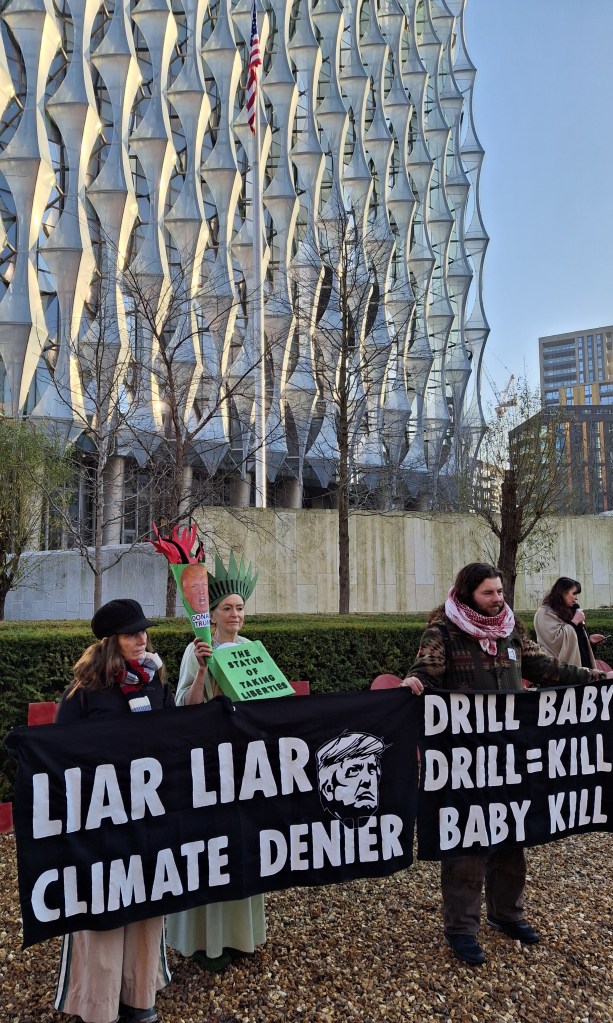


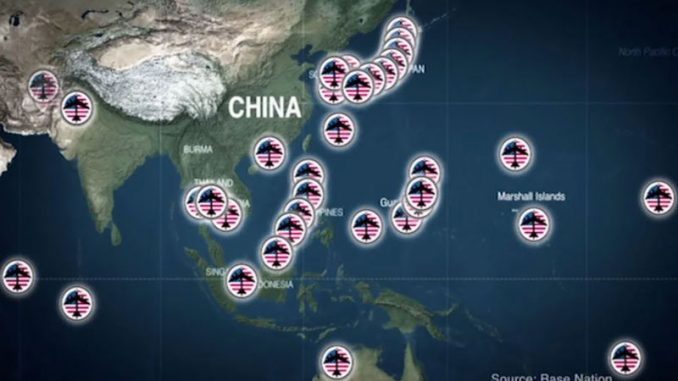


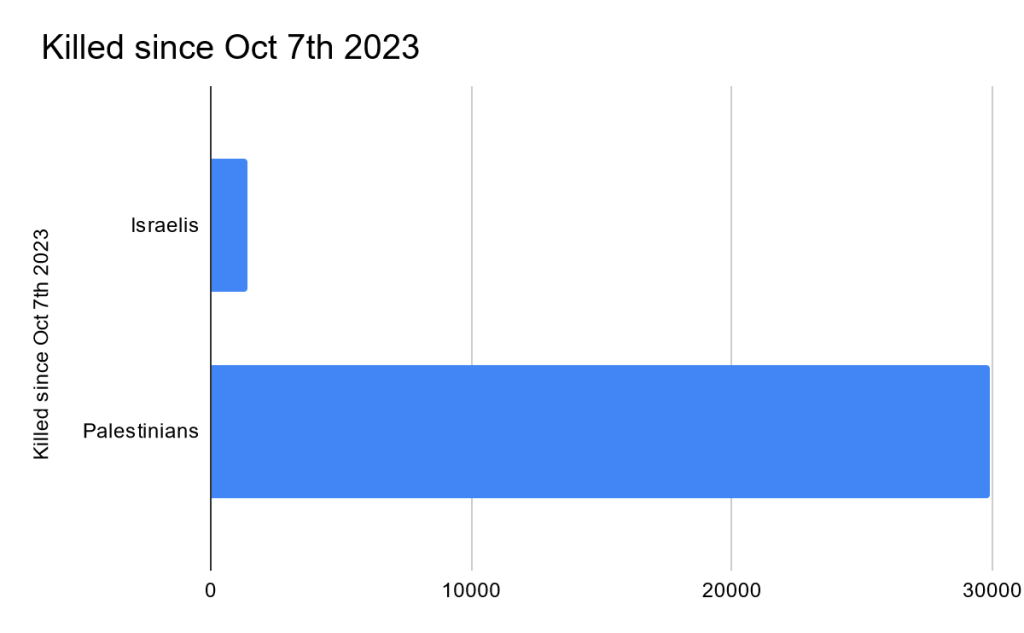
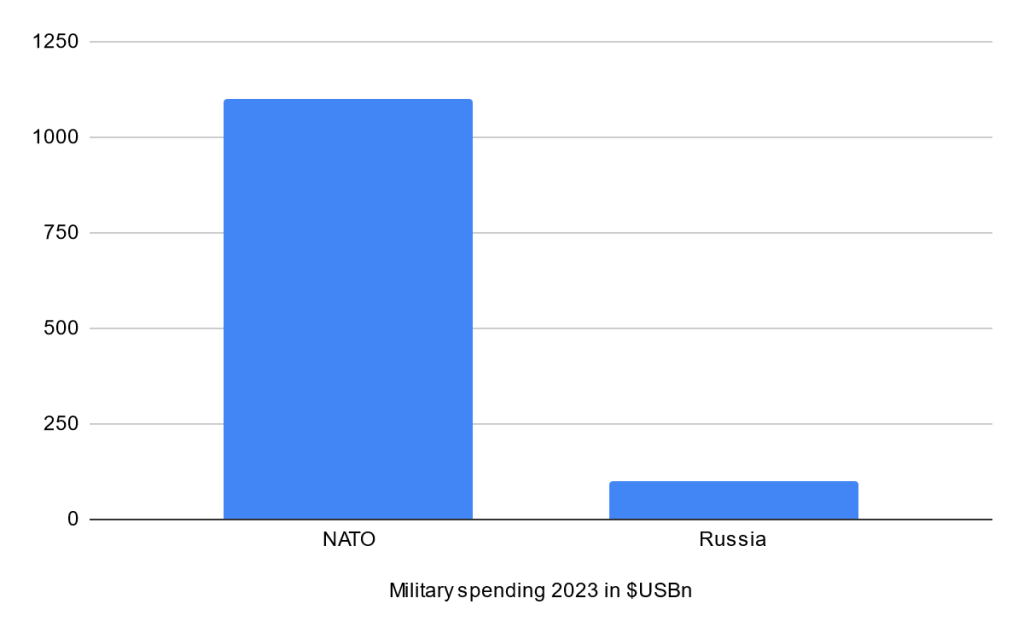


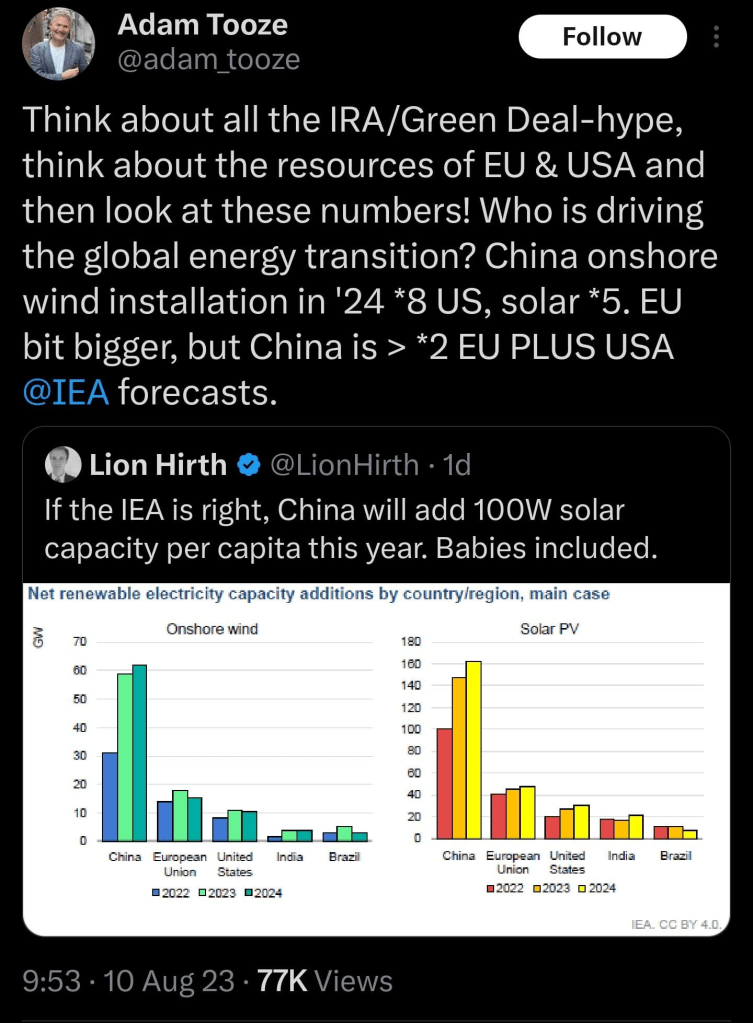
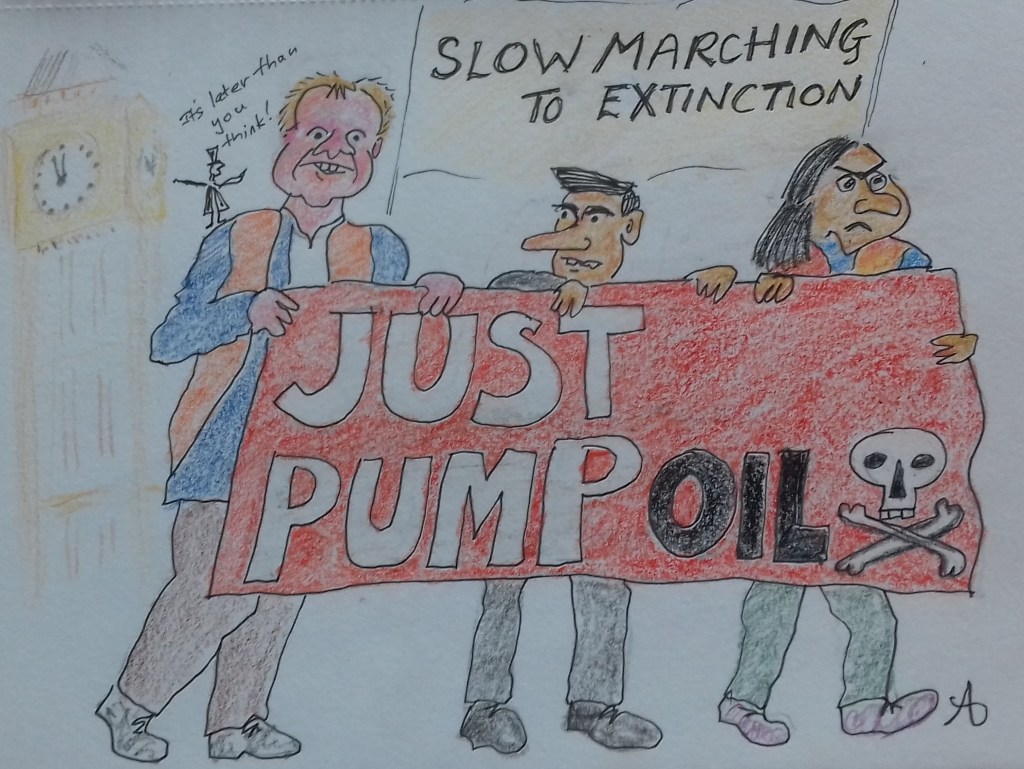
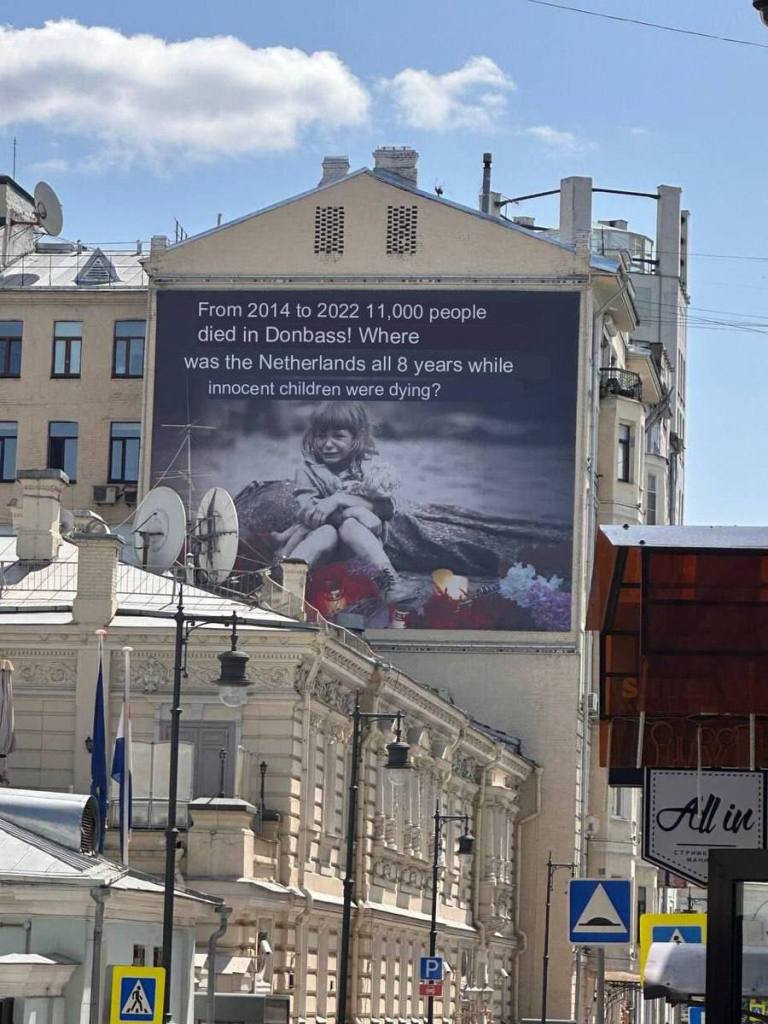

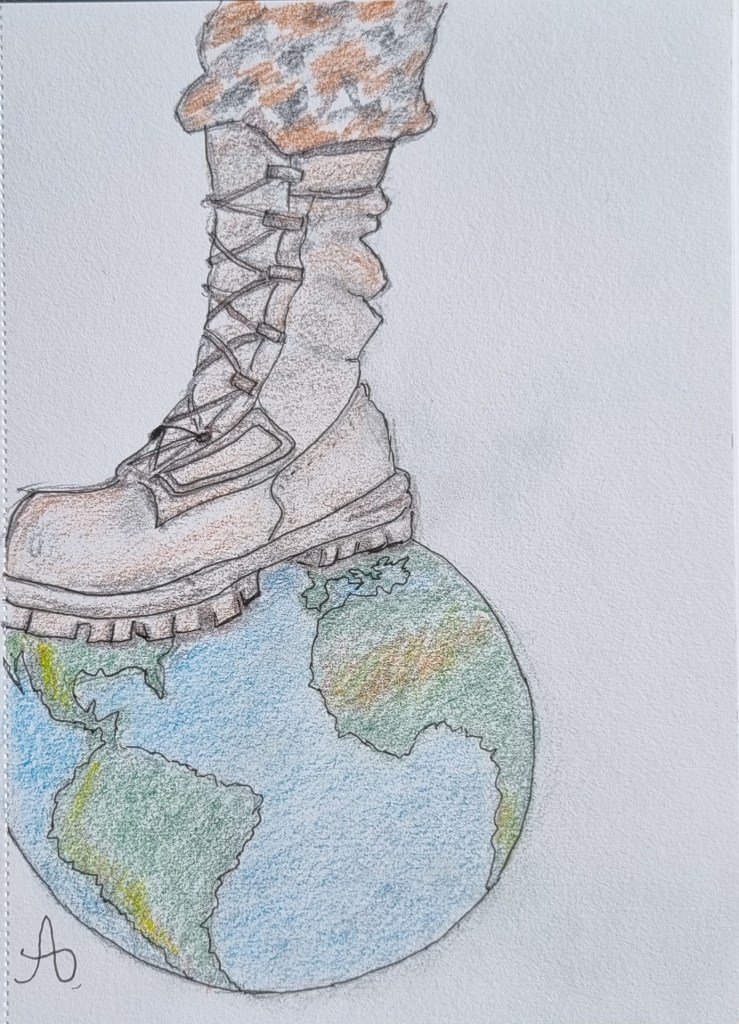


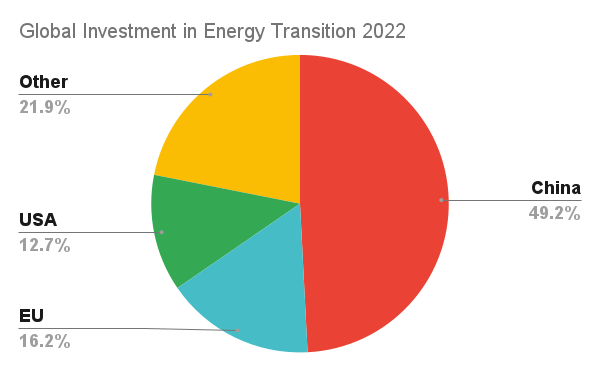
 Urban ramblings