The news that MI5 has told Universities to restrict cooperation with Chinese Universities on “national security” grounds looks like self harm when you consider that China leads the “West” in 37 out of 44 key and emerging technologies.
According to a report from the Australian Strategic Policy Institute funded by the US State Department, Over the past five years, China
hosts seven of the world’s top 10 research institutions.
generated 48.49% of the world’s high-impact research papers into advanced aircraft engines, including hypersonics
is likely to emerge with a monopoly in 10 fields including synthetic biology, where it produces one-third of all research, as well as electric batteries, 5G, and nano manufacturing
is strong enough in the fields of photonic sensors and quantum communication, to “go dark” to the surveillance of western intelligence.
Overall, the Chinese Academy of Sciences ranked first or second in most of the 44 technologies tracked, which included defence, space, robotics, energy, the environment, biotechnology, artificial intelligence (AI), advanced materials and quantum technology.
The Report attributes this to government support and funding but, instead of supporting greater collaboration and sharing, or emulating the model of state led investment in technological development – which clearly works – or recognising that science and technology in the “West” can benefit from learning from the cutting edge work being done in China, we have proposals based on Cold War paranoia that are as much an act of self harm as cutting Huewai out of the 5G Network to use slower, more expensive Western alternatives.
David Lammy’s recent article, The Case for Progressive Realism. Why Britain Must Chart a New Global Course in Foreign Affairs claims to base itself on a “politics based on respect for facts”, to look for “realist means to pursue progressive ends” and seek “the pursuit of ideals without delusions”. His problem is that the “facts” he uses are filtered by and seen through an ideological lens that distorts them, turns things upside down and inside out; and it rapidly becomes clear that the “new course” he proposes is a reprise of the old one; as the “chart” he is using is marked up with the same old, same old Foreign Policy Shibboleths that have defined UK policy since Suez. Primarily being most favoured auxiliary for the USA during the “American Century”, and a willing supporter of attempts to prolong it for another.
Lammy aims to square a lot of circles, because that course is now increasingly unviable, and the contradictions are starting to creak. In the attempt he skates at speed across a thin ice of delusions about the world that make the ideals he touches on in places unattainable. The “means” that he defines as “realistic” are incompatible with the ends he describes as “progressive”. It is therefore not entirely coherent. Andrew Fisher, possibly kindly, describes his article as a “word salad”.
Before going through this point by point, more or less in his order, I’d like to examine one extraordinarily strange phrase that crops up near the end but, in its way, summarises the fundamental contorted distortions of his world view.
He writes “at times in the Twentieth Century, Western powers undermined the sovreignty of weaker states, especially in the Global South”.
Where do you start with this?
“At times”. As if this were an occasional aberation. An uncharacteristic lapse from an otherwise egalitarian norm of sunny mutual respect. As in, the people of the Congo had their sovreignty “undermined” “at times” by Belgium and “at times” died in their millions. Or, “at times”, Britain presided over famines in India that it took independence to stop. I could go on.
Do I really have to point out that, for the first half of the Twentieth Century, most of the Global South had no sovreignty at all, as they were under the direct territorial control of “Western” Imperial powers.
Nor that this was not abandoned willingly by the “West” in the second half of the century either.
The UK, France and Portugal fought a series of viscious post colonial rearguard actions against independence movements right up to the 1970s; Vietnam, Malaya, Aden (Yemen), Algeria, Kenya, Angola, Mozambique, Guinnea-Bissau.
Settler colonial regimes in Rhodesia and South Africa kept this up to the 1980s and 90s, and Israel is still doing it today.
The United States picked up “the white man’s burden” from France in Vietnam with lethal effect (2 million killed) backed coups and military take overs in Indonesia (600,000 killed) and all over Latin America; Guatemala, Brazil, Bolivia, Argentina, Chile.
The “neo colonial” settlement that allowed formal independence for former colonies left them at the mercy of their former colonial overlords, sometimes embodied in formal structures ensuring financial control and military presence, as in France Afrique until recently; leaving most of the Global South for most of the rest of the twentieth century hog tied by debt and unequal exchange, and sometimes fought over for resources.
Within this, the US gained greater weight over its imperial rivals via economic domination (the US notion of “decolonisation” being the removal of barriers put in the way of their trade by the territorial control of imperial competitors).
This has led to a process of incorporation and subordination of European powers and Japan into a dominant US centred imperial bloc with a parasitic relationship to the rest of the world; which is where we are now.
Western powers “undermine the sovreignty of weaker powers, especially in the Global South”, not just “at times”, butdo so all the time as a structural norm. This is underpinned by an unparallelled capacity to unleash violence on anyone who steps out of line. Recognising this is “realism”. Failing to see it is “delusion”. Accepting or supporting it is siding with the oppressor against the oppressed, the exploiter against the exploited. Always.
Things ain’t what they used to be
Lammy, however, starts his essay by bemoaning how this has began to change; comparing the world at the time of the last Labour landslide in 1997 with the one that will greet the next in 2024.
In the 1990s, after the collapse of the Soviet Union, it was possible to believe in an eternal Pax Americana, in which the entire world would eventually turn into one gigantic American suburb, through US led globalisation and the wonders of the free market. This was a fantasy, even at the time.
What Lammy describes as “the liberal democratic model” – in which all countries would eventually become wealthy clones of the US (just later in the fullness of time, after a little bit of inevitable gradualism) – meant for most of the world to continue living under the crushing weight of the Washington consensus; which policed all development in US interests, guaranteeing that millions were trapped in extreme poverty, forced to live in teeming self built slums, or rural desperation, their resources extracted for little or no benefit by Western multinationals, essential services like water supply privatised; with the threat of military intervention standing permanently behind the IMF and the World Bank.
In 1997, with a slight whiff of “Good Old Days” nostalgia, he notes that the UK had an economy that was larger than those of China and India combined; and it still adminstered Hong Kong as a colony. Not any more. Never again.
Bull in a China shop
Now, as Lammy notes, “China is a superpower”. It has a larger economy than the US, in Purchase Power Partity terms. Lammy does not note, but we should, that it has been mostly in this period from 1997 that China lifted 850 million of its people out of poverty, and eliminated extreme poverty altogether in 2020. A feat described by a Labour Foreign Policy Group report in 2021 as “perhaps the single most significant contribution to human wellbeing in world history”. Something that you’d think someone with “ideals” and “moral purpose” might welcome, or even seek to learn from.
But not a bit of it. Lammy chooses to interpret this as a threat and a “systemic challenge to British interests” (a phrase that begs more than one question).
“Democracies” – a word he uses as a euphemism for the core Imperial powers which are tightly allied to, and coralled, by the United States – are “on the back foot” and losing the “hearts and minds” of the Global South “middle class”; such that “countries described … by CIA Director William Burns as the “hedging middle” are striking bargains and setting their own agendas in Africa, Asia, and Latin America” and, even worse, “they ignore the European Union, the United Kingdom, and the United States ever more frequently”.
They are just not doing what they are told anymore, dammit!
It is the rise of China, and the failure of the US to contain it, that has sent US politics into such a delirious tailspin. Because, if the US truly is the one indispensible nation, with a political and economic system that is the best in the world, then this should not be happening. But, happening it is. And, if everything you believe about the world is being shown to be false, but you can’t bring yourself to break with your beliefs, it becomes possible, even necessary, to believe ten impossible things before breakfast to try to make sense of it. An impulse to seek truth from anything other than the facts is characteristic of the MAGA movement, but not confined to them. “Realism” is too unbearable to be acceptable. So, dangerous fantasies take its place.
We should note at this point that more people in China think that their country is a democracy – a country run in the interests of the people – than people in the US do. In a study published by the Alliance of Democracies Foundation and Latana data tracking firm, when asked whether they believe their country is democratic, those in China topped the list, with 83% saying it is, and 91% also saying that this is important to them. In the US, only 49% of those asked said their country was a democracy and 76%, said it was important.
That looks like this.
Percentage of people in each country that consider it to be a democracy
We should also note that Lammy’s concern with the “middle class” in the Global South is an odd one if his major concern is with development. A striking feature of most of the Global South is the class polarisation, with very extreme Gini coefficients which show a wealthy layer with living standards comparable to those in the “West” sitting on top of a much larger number of impoverished people living in varying degrees of desperate precarity. Rajiv Ghandi’s formula of “France in India” is quite a good way to envisage this; that India contained a nation with roughly the same population and wealth as France – about 65 million – atop over a billion living in desperate straits. This polarity explains the extremity of Rightist Global South politics, producing figures like Bolsonaro or Milei. Wealthy people living in close proximity to teeming masses that they feel threatened by often feel the need to keep in their place with extreme violence. I suspect that when Lammy talks of the “middle class”, he is refering to the wealthier sort, who are in no way middling, economically or politically, but he never clarifies.
Lammy comes back down to Earth to note, appropriately, that “Climate breakdown is no longer a future worry. It is here”. He also notes that China, the US and EU all have green transition plans that require large amounts of state led investment, to a degree that the UK does not, but without digging into the figures that show that only China is doing this on the necessary scale. This is from Adam Tooze. “Measured against the $ 4 trillion per annum benchmark, the only country(my emphasis) that over the last decade has come anywhere close to spending, lending and investing on the required scale is CCP-led China“.
Bloomberg’s tabulation of the $1.1 Trillion investment in energy transition in 2022 shows the following.
China’s investment in energy transition in 2022 was almost double that of the US and EU put together. And this gap is accelerating.
It might be fair to conclude from this that it is just as well that China did not follow the Western economic model, and that its state directed economy is better able to deal with this challenge. Without their investment in renewables, having made them cheaper than fossil fuels, we would already be sunk.
Lammy however regrets that China’s entry into the World Trade Organisation did not lead to the adoption of “liberal democratic values”, putting the private sector in the driving seat of the economy and polity. Had they done so, China could be just as succesful as we are with our neo liberal model that crashed in 2008, is now leading to ever greater concentration of wealth in the hands of a tiny minority; while infrastructure crumbles and standards of living for the majority stagnate or decline. In fact, China is the only large economy in the world in which wage rates have risen consistently for workers in the last decade, such that these are now higher than they are in Portugal and Greece and comparable with Poland.
I think Lammy is being a bit previous in stating that “the rise of China has ended the era of US hegemony”, but it certainly challenges it in trade, technology and scientific innovation – all of which flows from China’s refusal to accept permanent status as a low grade mass manufacturer, most favoured sweat shop providing cheap imports for Western consumers, while stuck in a middle level development trap for its own citizens.
Most countries around the world now trade more with China than the US, and this is a trajectory that is increasing, making attempts to “decouple” an act of self harm. This is true even when defined as “derisking” (a phrase based on the paranoia that its so much worse if a Chinese smart fridge company knows when you need to buy more milk than when Google does). Cutting Chinese tech out of 5G broadband – the most advanced in the world – is an example of voluntarily adopting additional costs for a slower service, which has the additional negative consequence of increasing unnecessary tensions. Partly because of US high technology sanctions, China has increasingly innovated and is now considered to have a lead in 37 out of 44 key technological indicators. This is particularly crucial in green transition, so “derisking” in this area carries with it a lot of serious risks that we can’t afford.
The key area in which the US maintains a crushing dominance is precisely the one that Lammy tries to present as the most threatening; the military. Lammy warns that the Chinese Navy has more ships than any other, but, as World Population Review points out, counting a small patrol vessel as having the same significance as an aircraft carrier “is akin to saying a squirrel is the same as a rhino, or a scooter is the same as an 18-wheel semi-truck”, so, “to better estimate the overall power of a given navy, some analysts turn to tonnage, which is a measure of the amount of water a ship displaces or the amount of cargo it can carry”. By this measure, the US Navy, at 3,415,893 tonnes, is just under five times bigger than the Chinese Navy, at 708,886 tonnes. As Shadow Foreign Secretary, you’d expect Lammy to know that. Perhaps he does, and is just chancing his arm in the hope that no one will check.
We can also look at this in terms of the scale of overall military spending. This year, the US is spending $831,781,000,000 on its front line military. Monthly Review has argued for some years that US military spending figures underestimate the true quantity by about half, but, even if we go with the declared amount, China’s spend of $227,000,000,000 is less than a third of the US total.
This understimates the balance, however, as direct US allies in the region, like Australia (which has a collosal military budget for a country its size), Japan and South Korea add an additional $150 billion; and some proportion of the UK’s $62 billion has to be allocated through its commitments to the AUKUS Treaty. And we should note that all these allies are under intense US pressure to increase and coordinate this spending, and other NATO allies like Italy are entering into joint projects with Japan, which is doubling its expenditure at the present time.
You can look at it in terms of overseas bases too. The US has 750 bases in 80 countries. China has 1 (in 1). The US bases near China encircle it, as we can see here. There are no Chinese bases anywhere near the United States.
The same applies to deployment. US aircraft carrier task forces, sometimes with the Royal Navy’s new carriers (probably the ugliest boats in the world, not an essential point, but they really are hideous looking) as auxiliaries regularly steam up and down the South China Sea. No Chinese Navy forces at all deploy to the Gulf of Mexico or English Channel. Imagine the headlines in the Daily Mail or USA Today if they did. In that light, it is quite amazing how calmly China takes this.
You can also look at it in terms of balance of nuclear power. The United States has 5,244 nuclear weapons. China has 500, a tenth as many. China also has a defensive, no first strike policy – the only nuclear power to have one. A First Strike policy has been US military doctrine since the 1960s, and remains so, even though it has been known since the 1980s that this would be suicidal even if it worked. The explosion of smoke and debris above the cloud layer from the first overwhelming salvo of missiles would blot out sunlight for several years; causing a nuclear winter that would obliterate the “victorious” powers through temperature collapse and starvation, just as surely as the defeated would be incinerated and blasted to death. For a sobering and essential examination of this see John Bellamy Foster’s Notes on Exterminism.
Characteristically, Lammy does not note that no one in China is arguing for a war with the United States. In fact they argue for “win, win cooperation” and “a common home for humanity” as we move towards an “ecological civilisation”; all of which seem both reasonable and essential positions that it would be helpful for humanity if the West were to respond to positively. Nor does he point out that arguing for such a war within the next decade as the only way to stop a peaceful rise by China is now a live debate in mainstream US Foriegn Policy circles; and that maybe this is more than somewhat unhinged.
Arising from all this, the question that has to be realistically asked is, who is threatening whom? Who is posing the “real security threat” and how dangerous is this, realistically? And shouldn’t Labour be seeking to restrain this rather than hype it up and cheer it on? Instead Lammy argues for AUKUS to be “a floor not a ceiling”. This is, realistically, a path to war; the consequence of which cannot be considered to have any “moral purpose” whatsoever.
It is slightly mind boggling that, while he pushes this antagonistic and confrontational military alliance, he thinks positive engagement with China on economic development, climate breakdown and AI (particularly as China is leading on this) can pootle along happily in a sort of paralell universe, not distracted at all by the war drums he is so busily beating, nor thrown off course by the diversion of necessary investment into the suicidal dead end of an arms race. You can make up your own mind about whether this is remotely “realistic” or contains a scintilla of “moral purpose”.
Little Britain blues
More parochially, in an attempt to have “tough minded honesty about the UK”, Lammy goes on to note what he sees as its three key problems.
Its economy is stuck in a low growth, low productivity, low investment slump. Which, given his concern with green transition and positive remarks about state led investment in China, the EU and US, should make him question why Labour has shrunk its green investment plan to little more than is already on the stocks from the Conservatives. He notes that the UK has the lowest level of investment in the G7, but seems to think that Keir Starmer’s “mission” to get the highest growth is possible without this investment, if only the country would have enough self belief. As delusions go, this is a big one.
Its armed forces are too small; which is only the case if you want to prepare for a war that could easily kill us all instead of taking active steps to avert it.
Public Services are crumbling. He could have noted that this also goes for infrastructure, which brings us back to the need for investment which the “realism” of the Shadow Treasury team rules out. So, do not pass Go…
Realism is for him embodied by Ernest Bevin’s actions as Foreign Secretary in the post war Labour government. The flip side of the progressive measures taken by that government, founding the welfare state and NHS, nationalising key industries, was its resolute continuity in Imperial Foriegn Policy; which led it to resist decolonisation, form NATO, aquire atomic bombs, join in the Korean war: and maintain military spending at such a high level that it had to sustain austerity to a degree that got it voted out of office in 1951.
Recognising that “realism alone will not be enough to save the planet” – which essentially means that “realism” defined in this way is anything but realistic – and that the “West” has “to cooperate with its rivals on climate change and AI” leads him to disinter the ghost of Robin Cook as the Push Me to Ernest Bevin’s Pull You. Cook is lauded for his promotion of “human rights” and “soft power”, embodied in the 0.7% of GDP allocated to development aid (a figure that Lammy notes, but does not commit to restoring) and his “realism” in making “hard choices” about “arms exports”, ie letting them go ahead. Lammy’s subsequent assertion that “governments don’t have to choose between values and interests” is belied by this.
Damned if you do, and damned if you don’t
So far so confusing; but Lammy’s attempt to have his bomb and drop it continues. The “West” made mistakes. Its interventions in Iraq, Afghanistan, Libya, the whole war on terror, became “seen as” a “recipe for disorder” because, despite initial military wins, it was unable to stabilise a viable pro Western regime anywhere. Its power lasted just as long as it could sustain boots on the ground, which is not indefinitely. The resulting chaos and impoverishment has not gone unnoticed across the world. The “moral purpose” that Lammy argues for, loses out to “self interest” every time. And because, of the decadent, parasitic stage they are now in, the US and its allies are sucking capital in, not spreading it out, and are therefore incapable of “nation building”.
Four and a half million people were killed in these wars, which I think should be categorised as the first phase of the Wars for the New American Century. Ukraine and Gaza are the start of an even more dangerous second phase, as a more desperate US takes greater risks.
The Rules are for the Little People
Lammy takes the Rules Based International Order as the embodiment of a viable global civilisation, but it is widely understood in the world that the rule that defines the rules is that Washington makes all them, none of them apply to the USA (and select few of its closest allies) and they will be changed on a whim.
A small example of this was the 1984 case at the International Court of Justice in 1984, when Nicaragua won compensation of £17 billion from the US for the damage done by the US-funded Contra war and the mining of its ports. Not a cent was paid. Who was going to make them?
A more recent example is the reaction to the ICJ ruling that Israel has a case to answer that it is commiting genocide in Gaza. The instant reaction from the US and its allies was to defund UNWRA on the back of unsubstantiated accusations from Israel that some of its workers took part in Oct 7th. That is a direct act of collusion in the attempt to starve Palestinians, and two fingers up to the formal structures of international law.
So, the failure of these interventions were a blow to Western hegemony. As Tom Tugendhat put it after the Afghan withdrawal “This feels like defeat”. But, in a quick pivot, Lammy asserts that Western standing was also damaged by the failure to intervene in Syria, or take a harder line in Ukraine in 2014.
What Lammy is describing here, without thinking it through, is that whatever the “West” does, deepens its crisis. It loses ground when it doesn’t intervene, causes chaos when it does.
Pursuing War not Peace in Ukraine
This is demonstrably the case in Ukraine. The West is supporting Ukraine like a rope supports a hanging man. The country is being destroyed. More than 100,000 Ukrainian soldiers have died so far. A great investment according to David Cameron, as “not a single American life has been lost”.
If their concern were genuinely with peace and security in Europe, NATO would at least have been prepared to negotiate with Russia about mutual security arrangements in the Winter of 2021. Instead, we had a hubristic refusal to engage to ease off tensions, which has led to the war which NATO is now visibly losing, amidst appalling casualties and damage.
The sanctions against Russia have failed. Most of the world does not support them, because, as Lammy notes, they see the conflict as between “the West vs the rest”; and have long experience of not being “at the table” with the US, and therefore being “on the menu”, as Antony Blinken put it recently. And they are no longer so securely under the West’s thumb.
Lammy’s support for military “burden sharing” for “as long as it takes to secure victory” is hard to square with any notion of “realism” if “victory” means Ukraine reconquering parts of its pre 2014 territory which actually see themselves as Russian. Even people who consider that to be desirable, have a hard job arguing that its possible. Phrases like “once Ukraine has prevailed” are evidently hollow.
Instead of looking to a peace agreement, as outlined here, that would allow all people in all parts of Ukraine to live in the state they wish to, secure neutrailty and reduce military tensions across the continent, Lammy argues for a “long term generational response” to the “Russian threat”. Again, this is playing on fantasies, as NATO at present already spends more than eleven times as much as the Russians do on its military. That looks like this.
Total military spending 2024
The NATO bloc on this is approprately reminiscent of Pacman, and should probably have teeth drawn on it
What Lammy is proposing is a long term “generational” increase in the military industrial complex and militarisation of society, with some military sources floating the reintroduction of conscription, at a time in which the “realism” of the Treasury team will impose freezes and austerity on everything else.
The (Republican) Elephant in the room
Lammy’s argument for closer links with EU powers, and bilateral pacts to supplement NATO, are the only hint of the nervousness that all the Labour front bench feel that they could be coming into power at the same point that Donald Trump takes back possession of the White House.
Its not surprising that Lammy – with stopping climate change one of his progressive aims – does not explore this possibility; as the US under Trump would go full rogue state on climate change, pull out of the Paris Agreement like they did before and “drill, drill drill” – with an overall impact of an additional 4 billion tonnes of CO2 released by the US the end of his second term. This would make a 1.5C limit completely unachievable, and the damage globally would be horrific.
Lammy, as potential Foreign Secretary would therefore either have to straddle an impossible contradiction in which the main perceived “threat”, China, was investing in the necessary transition, while the “foundation of UK security”, the US, was sabotaging it. As he says, “no country can go green without cooperation”. So, who would he seek to cooperate with? He could only resolve this contradiction by dropping concern with climate change and playing down its significance so as not to upset the “special relationship”, or break with US policy in pursuit of the only realistic understanding of its consequences. It might be argued that Labour’s downgrade of its $28 billion green investment pledge is a pre emptive move to anticipate a Trump Presidency, not just pusillanimity in the face of Neanderthal Tory attacks. This is a concrete choice that has neither “moral purpose” nor “realism”.
“I think it is absolutely in the interest of US security. It is extremely good value for money for the United States and others, for perhaps about 5 or 10% of your (US) defence budget, almost half of Russia’s pre war military equipment has been destroyed without the loss of a single American life.” Lord Cameron speaking in Washington this week.
An admission that this is a proxy war, in which the “West” supplies the munitions and the Ukrainians do the dying, if ever there was one.
The review on Labour Hub of Volodymyr Ishchenko’s Towards the Abyss – Ukraine from Maidan to War is a bit sniffy at how “even handed” he is; but in examining who he is being “even handed” between allows a chink of reality into a discourse on that site that has refused to acknowledge any fissures in Ukrainian identity at all up to now.
All the previous articles self referentially quoted in this review were consistent in dismissing the people in Crimea and Donbass who rebelled against the consequences of the Maidan movement and the incorporation of Ukraine into the Western Bloc either as non existent or, at most, a minority of Russian proxies.
But in this review we do have a recognition that Ukraine did indeed “polarise” towards, in and beyond the Maidan movement; in a way self servingly summarised by pro “western” commentators as between ‘new’ Ukraine – “young, metropolitan, cosmopolitan, fluent in English, stylish, mobile, liberal, well-educated, successful” to the old ‘Soviet’ or ‘Russian’ outlook – “old, conservative, provincial, rigid, clinging to dying industries, poorly or inadequately educated, in bad taste, losers.” “Sovoks” as the dismissive term goes in Kyiv.
This is worth noting as the first time that this reality has been acknowledged in a Labour Hub article. Its possible that this is simply for purposes of this review, and normal service will be resumed shortly, but taking it on board is essential for any serious search for a peaceful solution that does not go by way of a massive Western escalation, with a possible nuclear component, and a (now implausible) march on Rostov on Don.
However, though the summary of the polarity in this review does not minimise the scale of it, unlike previous articles on Hub, it continues to ignore a different, more disturbing, dimension. That the largely Russian speaking, and oriented, East, was, and is, for the most part industrial working class. The Donbass, in which the war is being fought, is heavily built up, with densely packed strings of urban settlements built around mines, or strung out like heavy, gritty beads along the main roads.
The EU – and now US – oriented Ukrainian speaking West, is more agricultural; with wide open spaces with sparse villages. Look at an aeriel view. The Ukrainian nationalism nurtured there draws from deep wells of peasant suspicion of urban elites, with poisonous roots reaching back through Banderist collaboration with the Nazis (all those concentration camp guards) and beyond, to Pyet Lyura’s short lived nationalist regime at the end of World War 1; notorious for pogroms even more severe than those carried out by the White Guards during the Russian Civil War.
This has its modern day expression in influential organisations now incorporated into the Ukrianian armed forces, like the Azov battalion or the Right Sector – whose leader has been filmed saying “certain people have too much influence in Ukraine… you know, like Russians…and Jews” . Not so “metropolitan”, “cosmopolitan” or “liberal” then.
A nationalism generated in service to a greater Empire runs in the tradition of this sort of Ukrainian nationalism. First for the Habsburgs, then the Nazis, now the USA. A self image as a frontier people, “a large Israel in eastern Europe”, as President Zelensky put it. In its full fat far right form, full of suicidal self romanticism: seeing themselves as the 300 Spartans against the Asiatic hordes. A view also actively promoted within the Left by the John Bull like Ukraine Solidarity Campaign weekly bulletins that paint a picture of Russian soldiers as the sort of sub human orcs that Georgia Melloni imagines them to be. Which is why the transatlantic far right has sent so many volunteers to fight in the Donbass since 2014, a practice now getting a nod and a wink from NATO governments, with “off duty” French Foreign Legionnaires beginning to appear in casualty lists.
But perhaps not quite so self sacrificial. Units of the Ukrainian Armed Forces that are effectively insourced far right militias, like the 67th Mechanised Brigade for the Right Sector and the 3rd Assault Brigade for Azov, tend to be used behind the lines to deter retreats and deserters. When put in the front lines they are developing a reputation for self preservation; with the 3rd refusing to take up what they considered to be suicidal positions in Avdiivka last month and, just this week, Chassiv Yar, while the 67th abandoned their positions there to avoid encirclement rather than seek the heroic martyrdom they advocate for others.
These are nevertheless the shock troops and guarantors of “the Ukrainian government’s decision to stick to neoliberal dogmas of privatization, lowering taxes and extreme labour deregulation, despite the objective imperatives of the war economy” as Ishchenko puts it.
But still, a polarisation. Two sides, in Ukraine. In which the tradition described by Ishchenko which celebrates the hostory that “Ukraine was crucial to the greatest social revolution and modernization breakthrough in human history. Ukraine was where some of the most significant battles of World War II took place” and in which “Millions of Ukrainian civilians and soldiers in the Red Army contributed huge sacrifices to defeat Nazi Germany” is actively celebrated in Donbass and Crimea; while people are arrested for expressing it in Western Ukraine. “Western” here being a term that is both geographical and political.
So, a civil war, in which the Russians are engaged with what they see as their people, and NATO is engaged with what have become their proxies. It is, indeed, innappropriate for anyone on the left to be “even handed” in a polarisation like this.
It takes a heroic act of disavowell on Labour Hub’s part to consider the economic polices outlined above to be a sovereign act by Kyiv, with the US and EU having no influence whatsoever; even though the “reconstruction plan” due to be administered by Blackrock after “victory” will take this to frenzied levels; initially conceived as a way for Western capital to carve up Ukrainian resources, with the oligarchy getting a cut, but, in the context of defeat, so the “West” can salvage what it can from the wreck of its military ambitions.
There is similar disavowell in the breezy assertion – contrary to everything the Russians said about their motivation since at least 2008 – that “Russia’s war on Ukraine had very little to do with a supposed ‘NATO threat’”. “Supposed‘NATO threat'”? Its amazing how dismissive you can be just by using an adjective and a pair of inverted commas. Perish the thought that NATO outspending the Russians on arms by more than eleven to one, expanding right up to their border and carrying out annual war games practicing to fight them could be considered a threat in Moscow.
A way to picture that is this infographic, which has the NATO tank 11 times the size of the Russian tank and therefore has the respective threats in proportion. Not something that is ever evident in the media here, nor, sadly, on Labour Hub.
The US alone spends seven and a half times as much as the Russians do. Add together all the direct US allies and they account for 67% of global military spending. They are the core of Global imperialism. The military expenditure is to secure their ongoing exploitative relationship to the rest of the world. We know that they are willing to use this, and have done. Four and a half million people have died in the “war on terror” since 2001. And President Biden is busily pushing Congress to authroise an additional $18 billion in militray aid to Israel, even as it commits its genocide in Gaza, while at the same time as cutting off aid to UNWRA to further facilitate it. so, they are not intervening in Ukraine now, and did not intervene in Ukraine during the Orange Revolution or in the Maidan movement, out of any romantic belief in the self determination of nations; quite the reverse. As Anthony Blinken put it recently, “if you’re not at the table, you’ll probably be on the menu”.
This was a war of choice by NATO. A deal guaranteeing Ukrainian neutrality, autonomy for the Donbass within Ukraine, and open ended, possibly eternal, negotiations about the status of Crimea and mutual security guarantees for the whole of Europe were on the table in the Winter of 2021. That would have been a good result for everyone in Ukraine and eased tensions across Europe. NATO wouldn’t even discuss it. It is still the best outcome for the working class in Ukraine, and in the rest of Europe, and the world.
Without an even more catastrophic escalation, possibly through the Samson option foreshadowed by the UAFs recent drone attacks on the Zaporizhye nuclear power station, NATO is now heading, slowly, inexorably, towards defeat.
Continuing cheerleading for pursuit of this war pulls us all towards the “abyss” of Ishchenko’s title, but the people of Ukraine most of all.
An extraordinarily well camouflaged butterfly in a rewilding garden somewhere in Essex. Look closely and you can see its eyes and antennae.
The slogan of the Essex and Suffold water company is “living water”. In current circumstances they might want to chnage that.
One of the people I argue with on the Next Door site goes under the moniker “Brick Oboe”. I find it hard to believe that that is his actual name. It sounds like the most obscure of the seventies rock bands who named themselves after the slang for an erect dick: Led Zeppelin, Steely Dan, Brick Oboe.
In the distance in the playing field opposite my parents house a strange figure dressed in a pink and white hazmat suit and medical mask looks as though he is prospecting for metal, or perhaps mines; sweeping his device from one side to the other, slowly, cautiously, systematically. As he gets closer, it turns out he is mowing the grass. The PPE seems a bit extreme for that. Perhaps he has a serious grass allergy.
A week later, the whole field gets done by a tractor; which makes you wonder what the point of the bloke in the Hazmat suit was. Perahps he was just doing the irradiated grass…I take a deep sniff as I walk past for that fresh cut grass smell. A job with aromatherapy built in.
The ambulance worker in the non emergency hospital transport taking my Dad to Basildon goes to get a hospital wheelchair when we get there. This is a clunky, heavy device that looks like it was designed to carry industrial goods by a Soviet tank designer. An altogether more robust vehicle than the onboard wheelchair, which has a comfortable seat and at least the impression of suspension. He explains that the industrial design, and weight, of the hospital wheelchair is deliberate; to stop people stealing them. The long poles at the back of some of them are “to stop people getting them into cars. You’d be amazed.”
His colleague on the way back is so annoyed by the bossy recorded posh voice from the in vehicle safety monitor telling him to drive safely and do his seatbelt up that he does it up behind him and sits on it.
Listening to one of the carers chatting to my Dad about his life this morning, it struck me that carers – taken together- have a massive store of oral history about the area they work in.
Chatting to one of them, she said that she felt she had to get the job to stave off permanent boredom after moving to Purfleet from Central London. “Its so QUIET in Purfleet”.
As the stair lift is Dutch, perhaps the music to accompany an ascent should be the Flying Dutchman Overture. The chair goes slowly enough to get quite a way into it.
On the way back from the pharmacy back in NW9, a battered looking yellow football bounces down the path from the estate on Stagg Lane heading swiftly towards the road. I swing my gammy leg towards it and, in a miracle of luck, my dyspraxic slice at the ball conjures up a magnificent banana shot that takes it safely back into the estate and behind the hedge.
Its hard to listen to the slippery emollience of Michael Gove without Lewis Carroll coming to mind. Twas Brilig, and the slithely Gove did gyre and gimble in the wabe (Jabberwocky, slightly tweaked).
What follows is a number of points that Angela Rayner could have used to attack Michael Gove’s sinister redefinition of “extremism”, had she not followed the strategy of the current Labour front bench in deciding to attack it from slightly to its right.
Its hard to work out sometimes if the low calibre of the current government is because they are just second rate in themselves – Grant Schapp’s recent speech arguing for preparation for World War 3, for instance, came across, despite the gravity of its subject matter and perhaps because whatever AI algorithm wrote the speech for him had selected phrases designed to sound Churchillian, as the Gettysburg Address revoiced by a used car salesman – or because the diminished weight and power of the British state renders its representatives smaller, somehow hollow and sotto voce. In the case of Gove’s “Extremism” redefinition, perhaps the two go together with the the fact that his argument is taking place within the bubble of a mutually agreed false narrative; which can’t help but make them feel unreal and fake; however serious the consequences will be.
This reflects a ruling class out of its depth, with the challenges they face beyond their personal capacity; because time honoured systems of control are breaking down. The old songs don’t have quite the same potency. A poll of those willing to fight for their country at the time of Shapp’s speech showed just 27% willing to do so in the UK (and most of those were in age groups too elderly to actually be called upon to do so). The old knee jerk reactions once so easy to tap don’t spasm with the old reliability. CND marchers in the 1980s sang “We won’t die for Thatcher”. Very few people, it seems, are now happy to die for Rishi Sunak, or, indeed, Keir Starmer, bedeck themsleves with Union Jacks as much as they like.
In this context, the new working definition of “extremism”, unveiled with much fanfare by Michael Gove this week, is both tighter and more vague than the version that sucked Fundamental British Values out of the air ten years ago. Those were an anodyne and easily forgettable list of “democracy”, “respect”, “tolerance” (for those for whom respect is a bit too much to ask) “liberty” and “rule of law” – none of which were actually fundamental to the foundation of the British state in 1707 – quite the reverse for most of them – most of which had to be fought for against bitter resistance from the Tory Party, and few of which were applied with any consistency since; especially not in the Empire.
The impetus for this redefinition is the panic in Downing Street at the mass mobilisations against Israel’s brutal and illegal assault on Gaza, and its expression in the result of the Rochdale by election. Democracy must be at risk, because people voted the wrong way. And they keep marching in huge numbers. And Lobbying MPs. And not being brushed off with bromides because they can see a massacre taking place before their eyes. And have done for 140 days. Day, after day, after day. So, opinion is turning against a key UK and US ally and sympathy being expressed for people being occupied and oppressed by it. And that will never do.
Whatever the formalities of the definition, the framing of this movement as “hateful extremism”, or “extremism motivated by hate” is now such a trope that, with a nod and a wink, everyone knows what they mean. Are we thinking what they are thinking? Most of us aren’t, but it won’t stop them trying it on.
So, we now have “Extremism” defined as “the promotion or advancement of an ideology based on violence, hatred or intolerance, that aims to: 1 negate or destroy the fundamental rights and freedoms of others; or 2 undermine, overturn or replace the UK’s system of liberal parliamentary democracy and democratic rights; or 3 intentionally create a permissive environment for others to achieve the results in (1) or (2)”.
This is very odd. Because dividing and ruling by use of hatred and intolerance, restricting the freedoms and fundamental rights of minorities and the working class majority, including such choice devices as restricting the franchise, has been a very succesful modus operandi for the Conservative Party since its foundation in 1688; and they are still doing it right now. Just in this Parliament. Windrush. Scapegoating refugees. Photo ID for elections to restrict voting rights. Wars on “woke”. Restrictions on the rights of juries. The Minimum Service Levels and strike vote thresholds and protest restriction laws. Need I go on?
In fact, this definition is another attempt to do just that, because of who it is aimed at (and who it isn’t). Just a day or so before announcing this definition, the same Mr Gove commented on the direct incitement for Diane Abbott to be shot, made by Tory donor and beneficiary of government contracts Frank Hester – which undeniably expressed a lot of hatred, intolerance and violence – saying that he should be entitled to “Christian forgiveness.“
Diane, of course, was not recognised to speak about this at PMQs even though she stood up during the debate forty six times, by a Speaker who claimed to be so concerned about the safety of members that he bent procedure during the Gaza ceasefire debate two weeks ago. Not so concerned in this case it seems. So, all of this is relative. If the target of hatred, intolerance and violence is a Left wing Black woman, nothing to see here, lets move on; especially if the intolerant, violent hater has given fifteen million quid to the Conservative Party.
The Speaker’s concern during that debate was part of the softening up process for this defintion. Presenting the 5,000 or so people lobbying their MPs on that day calling for a ceasefire as though they were a threat to their life and limb. On Radio 4 this was expressed as MPs having “the right to vote with their conscience” without being “put under pressure”. Another way to put this is MPs having the right to vote against a ceasefire – for the continuation of a massacre – without having their equanimity about it disturbed by constituents arguing with them about why they shouldn’t. Some of these MPs, mostly but not solely Conservative, voted with their bottoms on this, being seen from the Public Gallery to be recieving slips informing them of constituents in the lobby wanting to see them, folding them up, putting them in their pockets, and staying put.
Gove says that this is aimed at “extreme rightwing and Islamist extremists who are seeking to separate Muslims from the rest of society and create division within Muslim communities”. This is an oddly contradictory sentence with a strange focus; because the division they claim to be concerned about is within the whole of society, not just “Muslim communities”.
More to the point, the “extreme right wing” is trying to demonise such communities, without much subtelty about it. But that is also true of the right wing of the Conservative Party and its Frankenstein child the Reform Party.
It caps consistent attempts by the government to pose this mass expression of a majority humanitarian concern as an expression of communalist hate. The comments Suella Braverman got sacked for – and which helped generate the biggest of the marches so far as people came out in outrage at her mischaracterisation, is now expressed in policy.
This is because it is instrumentally useful for them to do so. Not because it is true.
As if the demonstrations were not diverse, representative of all ages and communities, with large vibrant Jewish contingents, with whole families of all age groups, peacefully bearing witness to and protest against one of the great crimes of our time and an expression of majority opinion in the countryand theworld. The most recent poll shows that two thirds of the public think there should be a ceasefire. The votes in the UN have been overwhelmingly in favour of a ceasefire. So, the marchers, organised by PSC, Stop the War, CND, Muslim Association of Britain and Friends of Al Aqsa represent the majority opinion in the country and the world. It is the government that is out of step. It is the government that is being divisive. Could this be because – when it comes to the crunch – they defend the “violence, hatred and intolerance” currently being dealt out to the Palestinians by the IDF and illegal West Bank settlers? With their votes at the UN, their overt supply of military assiatnce and covert supply of intelligence, they are certainly providing a “permissive environment” for it.
It is in the nature of a wedge to start with a thin end. And this is it. Rumours that climate organisations like Just Stop Oil would be included have not come to fruition, yet. But setting up and open ended Counter-Extremism Centre of Excellence to investigate (produce) organsiations that can be targetted in this way shows the direction of travel. “Centre of exellence” is an odd label. House Un-British Activities Committee might be a more appropriate title. There will now be a body whose job is to find organisations which can be defined as “extremist”.
A foreshadowing of this is the review of Prevent designed to play down referrals for far right sympathies because, as Suella Braverman put it, these are “mainstream Conservative Values” – and play up the focus on Muslims (even as ISIS was crushed and its appeal was long gone) and slipping in “ideologies” such as “socialism” and “anti-fascism” as potential indicators of “radicalisation” that could lead to “terrorism”. There has been no far left terrorism in the UK since the Angry Brigade planted 25 bombs betteen 1970 and 1972, injuring one person, so you’d have to be over 50 to have experienced it. Not exactly a clear and present danger. And “anti- fascism”? Fascism isn’t exactly a movement you can be a bit “meh” about. Its not something you can “disagree agreeably” about, as Obama put it. The only people who are not anti fascists, are fascists. This is such a wide sweep, and so transparently from a nakedly factional basis, that no one subject to the “Prevent Duty” in public service would refer people on these bases unless they are dyed in the wool right wing zealots.
And this is more fundamentally what is driving this. “We”, as a nation, are divided. Most of us have no “common interest” with a ruling class pushing austerity, towards war, and failing to deal with the climate crisis until it is too catastrophic to ignore.
Given the scale of the crises we already face, with the climate breaking down at an ever faster pace, and Gaza showing the level of military barbarism in rehearsal in the wars for the New American Century, there is no doubt that in a future in which American policy takes a turn towards far right mania with Donald Trump back in the White House, the Conservatives in opposition taking their lead from him, and Labour in government trying to appease him, they will find no shortage of targets.
One of my Dad’s carers, who used to do ballet, having finished dispensing pills and tea, suddenly breaks into a spritied performance of Knees up Mother Brown in the living room.
Knees up Muvva Brown, knees up Muvva Brown
Under the table you must go, E,I,E,I,E,I,O
If I catch you bendin’, I’ll saw your legs right off!
Knees up! Knees up! Gotta get a breeze up!
Knees up Muvva Brown!
Oi!
Makes you wonder about the lyrics. Under the tabke you must go! Definitely some coercive control going on there, but to what end? And, If I catch you bendin’, I’ll saw your legs right off! Seems a bit extreme. What’s that all about?
Crooning in the Chemists
At the top of Grays High Street, just before you get to the station, there is a slightly eccentric chemists. The pharmacy is at the back, looks swish and modern, is well staffed and stocked and has done a steady trade every time I’ve been in there. But you have to approach it through an empty front area that at one time was a cafe, now closed but still with its counter intact, scattered with a few random leaflets from the health side of things. This gives it a slightly random and precarious feel, with what could have been a lively addition to its operation left derelict as a reminder of its failure. A battered looking bloke in the queue behind me grins and starts singing, tunefully, at one of the pharmacists… “Hello…Is it me you’re looking for?” …and she joins in.
Maybe they’ve done this before…
Poetry on the tube
On the Northern Line on the way back home, one of the wonderful poems on the underground – pasted up where the adverts for all sorts of forgettable things usually are – makes me visibly well up. A few people look momentarily concerned, so I compose myself to maintain the social solidarity of mutual indifference.
This one by Marjorie Lotfi.
Packing for America— my father in Tabriz, 1960
He can’t take his mother in the suitcase, the smell of khoresht in the air, her spice box too tall to fit. Nor will it close when he folds her sajadah into its corners. He can’t bring the way she rose and blew out the candles at supper’s end, rolled the oilcloth up, marked the laying out of beds, the beginning of night. He knows the slap of her sandals across the tiles will fade. He tosses photographs into the case, though not one shows her eyes; instead, she covers her mouth with her hand as taught, looks away. He considers strapping the samovar to his back like a child’s bag; a lifetime measured in tea from its belly. Finally, he takes her tulip glass, winds a chador around its body, leaves the gold rim peeking out like a mouth that might tell him where to go, what is coming next.
The world’s weirdest Gooner dancing by the subway
Outside Hendon Central Station, at about tea time, an eccentric Arsenal supporter has erected a structure framing a couple of AFC banners, topped off by a Charles III Coronation flag; all flapping in a brisk breeze. He stands to one side of it with a serious face, leaning over the fence to the subway below and dancing jerkily to an eruption of rhythm from a busker playing the sax. The busker looks like Bob Mortimer on a slightly rough day, but is enjoying himself enormously, bopping about from side to side. The tune is a hurtling series of distinctly East European staccatto sounds, flowing with an incredible velocity. Up tempo to the point of mania. As little squads of tired and dusty workers, who have just knocked off for the day, walk into the tunnel at the far end, their weary trance like expressions turn into surprised smiles as they are ambushed by the music; and the workaday functional passageway from one side of the A41 to the other is turned into an unlikely venue for a moment of joyful reprieve that creates a complicity in everyone there as people turn to each other seeking eye contact.
Stair chair fanfare
Having a stair lift put in is like having the world’s slowest Thorpe Park ride on tap. The chair is made in Holland, and I’m told by the engineer – who comes to uplift the bannisters so they don’t knock knees or pinch hands as the chair progresses onwards and upwards with its air of inevitable gradualism – that the speed is set by EU regulations. At some point, no doubt, the Daily Telegraph will cotton on to this and campaign for speedier chairs, to express the exhilarating freedom of the Brexit experience that we have all, no doubt, shared. And to cut the Nanny State red tape that stops it moving without the seatbelt done up first and dispose of that health and safety gone mad emergency stop button. As it is, this is a chair that pauses and thinks before it does anything. And clunks very deliberately when it does. Operating it is a school of patience. But thats cool. It is slow, steady and inexorable. It should have a musical accompaniment.
The tall, relaxed Dutch bloke who delivered it first thing on a misty morning – with the kids drifting slowly past, up the road towards the Hathaway Academy – had driven it from the factory in Holland. As he lifts off the huge box that contains all the smaller boxes with components in, I feel there should be a fanfare. On a two day UK tour, delivering bespoke stair lift systems to houses up and down the country – then back across the North Sea on the Harwich ferry with the empty van, he delivers all over Europe; Italy, Spain, Germany. I chat a bit about visiting Amsterdam last year and he says “EVERYBODY visits Amsterdam”. I think I manage to persuade him to visit Keukenhoff in the end, with the line that the effect of all those flowers is almost hallucinogenic, even though he starts of by saying “Visiting there is almost TOO Dutch!” and “no one who actually lives in Holland ever goes there”.
Odd scenes in North West London and South East Essex
Walking past the Thameside Theatre and a woman is furtively picking what looks like lettuce leaves from the flower beds at the front. I assume that she is wild scavenging, and now that I look like a harmless old geezer, complete with arthritic limp and shopping trolley, I feel emboldened to talk to strangers, so I ask. “Are those edible?” Waving them to underline her point, she says, “They are for my tortoises”. In Todmorden this is what everyone does. For over ten years they have encouraged people to plant food on any vacant and unused land, and for anyone who needs it to pick it. This brightens and greens up the streetscape, creates community – as loads of people plant things in all sorts of places – and provides extra fresh food, in season, for anyone who needs it. This has been picked up in lots of other small towns, but Hull is about to try it out on a city wide scale. We should all do it. Why can’t our High Streets be orchards too?
Three shops in Rainham. Vape shop. Fried Chicken shop, Undertakers. In that order.
As the C2C train arrives at Dagenham Dock, the small girl wearing a blue jacket with white angel wings designed onto the back – who has hitherto been exploring the physical space around her Mum, who sits a bit careworn in her mac and hijab, and elder sister, who is glued to her phone – lifts her head and listens. Perhaps its because the recorded announcement is done in posh. Emphasising all three syllables – “Dag-en-ham”, not the local version that makes the middle one redundant – “Dag – nem”; thereby bringing out its full rhythm and range of sounds. The drum beat of the syllables too; Dagenham Dock, boo, ba, bum – BOM! The percusive consonants at the start of Dagenham, the extended hum at the end Dagenhmmmm– the sharp crack of “Dock!” She seems enchanted by it and, all the way to West Ham, she keeps repeating it in various forms – stretching it out, making it jerky and jumpy- making it an impromptu nursery rhyme with no meaning but a definite music.
Of course, the part of my brain that still thinks in Lesson Plans started working out how to canal this spontaneous exploration into a rhythm game: sit in a circle and clap and chant the the names of stations; always ending at Mornington Crescent obviously…
Outside the Magistrates Court on the Edgware Road, a couple of pararazzi snipers with huge photolens cameras lurk in ambush, presumably waiting for a celebrity wrong ‘un to emerge at the top of the steps; the name of the Court photogenically framing them in more ways than one. One scopes out a shot from behind a tree, perhaps nervous of being seen by his mark.
A recent article on Labour Hub tries to link the struggle in Gaza and the war in Ukraine as parallel “struggles for self-determination”; not noticing that one struggle (Gaza) is in resistance to the US centred global imperial system, the other (Ukraine) is a struggle to join it as an auxiliary ally.
People in the Palestine Solidarity movement have strongly felt and taken note of the difference in the response from Western governments to these “struggles for self determination”.
The flags of Ukraine and Israel have both been flown on public buildings, head teachers and college principals have been told by the DFE to “stand with Israel”.
Palestinian flags – and Keffiyas – have been denounced as “threatening”, or “symbols of terrorism” or “hate” and children drawing flags on their hands or wearing badges in schools have been referred to Prevent. This has become increasingly shrill as the movement has grown and public sympathy for the Palestinians has grown with it.
Like many similar articles, this one has two glaring pieces of disavowell at the heart of it – a selective approach who who is entitled to self determination and a failure to take account of the very active role of the United States and NATO – and a logic that leads those sections of the labour movement who support their line to end up campaigning for the rearmament and militarisation drive that our ruling class is determined to push, even as our societies crumble for want of invetsment and fail to rise to the challenge of climate bteakdown.
All peoples are entitled to self determination, but some are more entited than others.
If a struggle for “self determination” is based on denying that right to another people, it has no leg to stand on. The Palestinian struggle, including the way it is defined in the revised Hamas Charter (2017) is against Israel as a racist state, not against the Jewish population, in the same way that the struggle against Apartheid in South Africa was a struggle against the state, not white people as such.
The dominant, far right, form of Ukrainian nationalism, however, denies the national rights of Russian citizens and heroises historic figures like Stepan Bandera, a recruiting seargent for Nazi concentration camp guards. The US and NATO are quite comfortable with this, but no one on the Left should be.
In this Labour Hub article, like so many others, the Russian population in Eastern Ukraine is ignored. Its as if they don’t exist, didn’t rebel in 2014 against the overthrow of a government they’d voted for, and weren’t bombed and shelled indiscrimately by the Ukrainian armed forces from then onwards. At most they are posed as “Russian proxies” with “no interests of their own”; just as Ansar Allah in Yemen is belittled as “Iranian proxies”. This writes them out of history just as surely as the Israelis would like to do to the Palestinians, who are still described in some quarters there as “not a people”.
As this statement from No Cold War – The War in Ukraine must end – points out; A 2001 census found that nearly 30% of Ukraine’s population considered Russian to be their native language. States with large linguistic and ethnic minority populations can only maintain their unity if the rights of such minorities are respected. The policies of the Ukrainian government after 2014, which included suppressing the official use of the Russian language in numerous spheres, were therefore bound to lead to an explosive crisis within the Ukrainian state. As the Council of Europe’s Venice Commission, which certainly cannot be accused of being pro-Russian, stated: ‘the current Law on National Minorities is far from providing adequate guarantees for the protection of minorities… many other provisions which restrict the use of minority languages have already been in force since 16 July 2019’. There are only two ways to resolve this situation: restoration of the full linguistic and other rights of the Russian-speaking minority within the borders of the old Ukrainian state or the secession of these regions from Ukraine. Which outcome is realised will be a key subject of the negotiations. Nonetheless, it is clear that any attempt to maintain the Russian-speaking minority within the Ukrainian state while continuing to deprive them of their rights will not succeed, nor will any attempt by Russia to impose another state on the Ukrainian-speaking population of western and northern Ukraine.
All efforts to resolve these issues by military means will continue to be futile and will only result in further intense suffering, above all for the Ukrainian people. These realities will become increasingly obvious if the war continues – which is why it must be brought to a halt as rapidly as possible and negotiations must commence.
A “self determination” that denies the national rights of a large minority and denies it equality before the law within the area controlled by an ethnically defined state sounds a lot like Israel – a living expression of Marx’s dictum that “a nation that oppresses another cannot itself be free”. Not something any Socialist should be defending.
The limits of geopolitical Flat Earthism
Its important also to grasp the broader geo political context of these wars in a way that makes sense of both of them. This is because articles like this one reflect a widespread view on the left in the Global North that the world is geopolitically flat. That every country is capitalist. That there is no structure to global imperialism.
This is profoundly disorienting and can lead to the same people challenging the dominant narrative coming from our own ruling class on Gaza, while actively repeating it over Ukraine.
This is inherently distorting for any accurate understanding of whats going on; especially if you fall for, or worse, promote the sort of manichean propaganda that the Russians (or Hamas) are all evil, murdering rapists, while butter wouldn’t melt in the mouths of the Azov battalion or the IDF.
The bottom line on this is…
Who is threatening whom?
In the case of the occupied Palestinian territories and Israel, from 2008 to 2023 there were 319 Israeli deaths and 6,779 Palestinian deaths; thats a ratio of 21 Palestinians to 1 Israeli before Oct 7th and the ensuing IDF offensive.
That looks like this.
With 1,200 Israelis killed on that day and 235 since, and over 29,500 Palestinians killed in the Gaza strip and another 399 in the West Bank thats a ratio of more than 24 to 1.
That looks like this.
The balance of threat and the balance of death in this conflict is obvious and evident; and needs smoke screens of indignation to try to obscure it.
As there are millions of people in this country who feel a connection with the Palestinians, and have sources of information outside the establishment media, it has been impossible to control this narrative, to allow Israel to get on with what its doing with no scrutiny, and this is rebounding on the government and opposition, both now forced to oppose an IDF attack on Rafah and in some disarray. As there is no such community here with any links in the Donbass, even the existence of Russian speakers in eastern Ukriane is barely known about, let alone understood, and the narrative has been much more tightly controlled.
And, as the war in Ukraine is now being visibly lost by NATO, we are back to the sort of over heated rhetoric that was common two years ago – that NATO is an essentially defensive alliance needed to stop the Russians steamrollering over Europe.
This argument is politically absurd. Taking control of a continent would require a political project that could hold the allegiance of enough of the people who live there for it to be viable. It is not simply a technical military exercise. Russia does not have such a project. It has the military capacity and the political pull to absorb Russian speaking parts of Ukraine into the Russian Federation, and thats it. Even taking over the Western parts of Ukraine has been described as like “swallowing a porcupine”; let alone anywhere else.
Even if it could be reduced to the level of technical military capacity, the threat is actually in the opposite direction.
This uses NATOs own figures for its spending. Monthly Review has assessed that US spending is actually about double the amount claimed.
That imbalance looks like the graph above and shows the absurdity of NATOs claim to be both defensive and worried about the potential of being attacked by a power with less than a tenth of its strength. The Russians however, clearly have every reason to be worried about what NATO wants all that expenditure for; especially as it conducts annual “war games” in Eastern Europe practicing for a war with them.
It was fear of that threat, and the failure of NATO to even negotiate about it, which led to the current phase of the war in Ukraine.
Two phases of the wars for the New American Century.
The global context for this is that, for the first time since 1871, we are living in a world in which the United States is no longer the largest economy. China already is in Purchase Power Parity terms; and at current growth rates is likely to overhaul the US in Current Exchange Rate terms before 2030.
The “unipolar moment” and “end of history” is long gone. This analysis of the structure of global imperialism by the Tricontinental Institute goes into this in immense detail and is essential reading. Its core point is that the US has integrated the Global North into a subordinate imperial economic bloc and set of military alliances, but its decline is leading to increasing challenges from a far more diverse set of regimes in the Global South, with China as the core; and China’s highly succesful Socialist economic model at the heart of it. Those who disagree with this definition of China nevertheless have to acknowledge its success, and perhaps concede that that’s how the Chinese themselves define their society. “Socialism with Chinese characteristics”.
In its resistance to its slipping domination, the USA threatens the end of humanity because, with its primacy in capital formation, production and trade gone, financial control and technological lead slipping, the US is trying to push the challenges it faces increasingly onto the military field; which it still believes that it can dominate. That is what makes our current decade the most dangerous in the whole of human history.
The first stage of the wars for the New American Century, the War on Terror after 9/11 2001, was directed at weak powers that the US could overwhelm, killing 4.5 million people according to Browns University, but nevertheless ending in defeat in Iraq, Afghanistan and Syria; and chaos in Libya. This was when they thought they could incorporate China into their world order.
The second phase, now they know that they can’t, threatens to be worse, and could kill all of us, with a nuclear first strike an active part of US war planning.
This is where the tension in the world is coming from. This is who is driving it.
There is an argument within the US ruling class between those who think that it has to take Russia on first before it can get on to the confrontation it wants with China – the position of the Biden administration and more traditional Republicans – and those, like Trump, who think they might be able to get Russia onside against China. Putin’s response of ridiculing questions on these lines from Tucker Carlson in his recent interview, shows that this is wishful thinking on Trump’s part.
The second phase
The US and its allies have now crossed the security red lines of a nuclear armed power (Russia) in Ukraine, and have fuelled the attempted genocide in Gaza; because they have to be seen to be able to impose their will.
The US has repeatedly vetoed ceasefire motions for Gaza in the UN Security Council.
Russia and China have voted for a ceasefire in Gaza, along with the world majority, in both the Security Council and the General Assembly.
In General Assembly votes, Ukraine has been among the tiny minority who have voted with the US against a ceasefire.
Israel and Ukraine are both using weapons supplied by the US. Neither could pursue their war without them.
The US signed up to provide $38 billion in military aid to Israel between 2016 and 2026, and additional aid has gone in since October 7th.
It has gave Ukraine £113 billion between 2022 and September 2023, with more on the way.
The US is intervening in and arming both in its own interests. The Israelis are already an established US attack dog and the Ukrainian regime aspires to be; and has been playing that role since 2014.
A “Big Israel”in Eastern Europe
The forces the US is supporting – or using – in each war are the same sort of ethno nationalists with far right backing.
Netanyahu has Itamar Ben Gvir and Bezalal Smotrich. Zelensky has the Right Sector and the Azov battalion.
Just to dispell any doubt, speaking in April 2022, President Zelensky was very clear that he wanted Ukraine to be “a big Israel” in Eastern Europe. A country where there were “soldiers in cinemas and supermarkets” and “people with weapons”, not a “liberal European” state at all.
This vision was eagerly and approvingly embraced by US commentators (its possible that they wrote it) because being like Israel is being a military frontier state for the US.
Israel has been the lynch pin of US domination of the Middle East. President Zelensky has volunteered his country to do the same in Eastern Europe.
The Left in NATO countries, marinading as we are in the ideological stomach juices of the belly of the beast, should never forget who our ruling class is.
NATO and other direct US allies – the world’s wealthiest countries – account for 75% of global military spending, are the core of global imperialism, organised as a coordinated bloc, with the US dominating its subordinate rivals.
Russia is not part of this bloc. It is a target for it.
Not recognising that NATO expansion in Eastern Europe has predatory intent takes self delusion a little far. See the map displayed by Kyrillo Budanov, Head of Ukrainian Military Intelligence for the partition of Russia that this aims at if you have any doubts.
Climate Breakdown helps drive US brinkmanship
The accelerating breakdown of the climactic conditions for human civilisation adds urgency to the increasing US brinkmanship that we have seen in Ukraine and Gaza. To try to survive it with the current imbalance of global wealth and power intact requires catastrophic defeats to be imposed on the Global South, and any power not included in the US dominant bloc; in short order.
This can’t be kicked down the road anymore; hence the emergence of apocalyptic maniacs as mainstream political options for the ruling class – from Trump to Bolsonaro to Millais – and the increasingly unhinged quality of mainstream political debate.
Into the vortex of barbarism
We are spiralling into a vortex of barbarism in which light minded fools like Grant Shapps can float the possibility of nuclear war with “Russia, China, Iran, North Korea” and argue that we should arm even more to prepare for it; and this is repeated in a blase way by media talking heads as though this wasn’t suicidal insanity. A mainstream consensus urging us on to Armageddon stretches from the military itself – with former Generals calling for the UK to be put on “a war footing” and floating the idea of conscription – to Boris Johnson arguing in the Dail Mail that a Trump Presidency might be “just what the world needs” because of his “willingness to use force and sheer unpredictability” – to Timothy Garton Ash, arguing in the Guardian that Trump’s America First volatility gives Europe the opportunity to become a more serious military imperialism in its own right – to the Labour front bench, with Rachel Reeves’ fiscal rules mysteriously not applying to the large increases in military spending pencilled in by the Tories (in a country which already has one of the highest military spending burdens in the world).
Supporters of Ukraine Solidarity Campaign like Paul Mason are following the logic of their support for NATOs war aims by arguing, in his case, that the investment needed to combat climate change cannot be afforded because “the cost of borrowing has increased”, but at the same time saying that the UK should follow the US and EU in using debt to finance arms spending. Suicidal logic.
The whole labour movement should be pushing in the opposite direction.
A recent reevaluation of Trotsky and Trotskyism in the Morning Star from the Marx Memorial Library contained one key misconception, based on a misunderstanding of a phrase. The notion of “Permanent Revolution” gains a lot in translation. A clearer synonym would be “uninterrupted”.
What it applies to specifically is not as the article argues the relationship between revolutions across the globe and the consolidation or otherwise of socialist states (of which more later) but the specific argument among Bolsheviks and Mensheviks as the Russian Revolution was fought out as to what was possible and necessary; essentially what kind of revolution did it have to be?
The dominant view in both currents before it broke out had been that, because Russia was an politically primitive absolutist monarchy with an underdeveloped capitalism and a primarily peasant population, it had to go through a “bourgeois democratic” revolution, like England in the 1640s or France in the 1790s to sweep away feudalism, allow broader capitalist development and set the stage for a longer term struggle for socialism, which would require a further revolution at a later date, when conditions were “ripe”. The position of the working class and its parties in such a revolution was to support it but, ultimately, to know its place and not try to lead it. This has been described as stageism.
Trotsky’s argument was that this did not take account of economic and political development being not only uneven but combined. The conditions for less developed countries were (and are) significantly affected, and often determined, by the power of the more developed. This is true on all sorts of levels, including cultural. It means that less developed countries are not destined to simply follow in the footsteps of the more developed and become comfortable, well off bourgeois democracies, just a bit later. Bodies like the Tony Blair Institute that still maintain this point of view are at pains not to notice that already developed Imperial powers act consciously to maintain an exploitative relationship that keeps the majority of humanity indebted, overpowered and poor. The phrase “developing world” is a delusionary euphemism that disguises the imbalance of wealth and power with the Fabian notion of the inevitability of gradual incremental positive change. But capitalism outside the metropolitan centres is a sour fruit that rarely ripens.
Aspects of unevenness in the case of Imperial Russia is that where industry had developed, it was often relatively advanced, often owned by overseas capital and concentrated in some of the biggest factories in the world in the core cities, creating a large new industrial working class in the centres of political power, including a highly skilled layer who formed the backbone of the Worker’s Parties in Russia, just as their counterparts did of the Shop Stewards Movement in Britain but, because the contradictions were so much more severe in Russia, they were politically far more sophisticated and a lot tougher.
Revolutions are necessarily chaotic, shattering events. They can be conceived as an attempt to find a new stable order when a social and political order is collapsing. On some levels they are liberatory – “the festival of the oppressed” – as people previously denied a voice or power at any level find it and express it – at another it is a violent struggle for power in its most naked form – “the most authoritarian thing there is” (both quotes from Lenin). Who and what do people look to and organise around as a source of possible stability when the old gods have visibly failed? In Russia, the working class looked to its own organisations.
What became quite evident in Russia in 1917 is that there was no way that any sort of bourgeois democracy was on the agenda. The Provisional Government that tried to make the transition from Tsarism, had an insufficiently strong class base inside the country and, through its reliance on support from the Entente powers, was locked into continuing Russian participation in the First World War, even as that drove on the disintegration of its armed forces and hardship on the home front, fueling radicalisation in the factories, barracks and villages.
Even though the Provisional Government was led by a self-described Socialist, Kerensky, and leaned for its support on the Menshevik leaders of the Petrograd Soviet, they were balanced between two forms of class power, that of the Soviets – or Worker’s Councils – and that of the army High Command, itching to intervene at home and “restore order”. One or other of these fundamental forces had to win out. This would also determine the result in the countryside, where the collapse of Tsarist order left the landlords at the mercy of a restive peasantry becoming emboldened to take their land and shrug off their overlordship.
Lenin’s view was that the most determined leaders of the working class either had to seize state power or be destroyed. The revolution had to become a Socialist revolution, as the class that it represented determined the order it attempted to construct. The “Bourgeois democratic phase” was leapfrogged, or collapsed into the socialist phase, or was carried forward in an uninterrupted way. It had to be so because the Russian capitalist class was not strong enough to consolidate a new social order on its own terms as leaders of the people against the old regime, instead they were aligning with the military war lords, from Kornilov to Kolchak and Deniken, to crush the terrifying underclasses that had erupted out of their place. Fascism with Russian characteristics. The revolution had to push beyond those limits and establish a socialist state as the only possible way to avoid that. The revolution had to become “permanent” in the sense that Trotsky had meant it.
This was extremely difficult, took place in very grim circumstances and was rapidly isolated. The collapse of social order and centuries long habits of deference to suddenly collapsed dynasties in central Europe, Hohenzollerns and Habsburgs, did not lead on to successful socialist revolutions that could have broken the Russians out of their isolation, but instead to the reassertion of capitalist power in potentially revolutionary circumstances through Fascist movements, as in Italy and Germany, or the consolidation of the state around military strongmen, like Pilsudski in Poland or Mannerheim in Finland, or a mix of the two as in Spain. A broad movement across the continent described locally by Rumanian playwright Ionescu as “rhinocerisation”.
Crushing worker’s movements at home had the inevitable implication that the Soviet Union would also have to be a target internationally. The defeat of isolated revolutions in Hungary and Bavaria, and the failure of mass occupation of factories by workers in northern Italy underlines the point that sustaining a socialist revolutionary state at that point was only possible in a large country with immense resources that was simultaneously somewhat removed from the centres of imperial power.
This poses a key question. Given that revolutions take place in the weakest imperialist link, what is the relationship between consolidating power in one state and class struggles internationally?
All successful revolutions from 1917 onwards have taken place in the imperial periphery. Think China, Vietnam, Cuba. There have been no successful revolutions in the imperial heartlands. The closest to this was probably Portugal in the mid 1970s; the dynamics of which would repay a closer look.
To express this as a paradox. Socialism cannot be fully realised “in one country”, but it has to start in one; and that means state power in a state. Socialism, properly understood, is a state of struggle in which the Working Class or a Party embodying it, has state power – which includes control of the armed forces, police and so on, but a capitalist class still exists, can even prosper, but does not dominate the state, and in which that state exists in a world still dominated by imperialism and imperialist states. This is necessarily a process of political struggle that takes place over decades, both internally and externally and there is a dialectical link between the two. It is not a fully developed state of being in which all contradictions are, or could be, resolved in one fell swoop in the revolutionary moment. A revolution starts the process, it does not resolve it.
There is no blueprint for this. There is a tendency for currents on the Left in the wealthiest countries to have an essentially theological view of what socialism is. That a quick and painless big strike will lead to a quick consolidation of a complete worker’s democracy. This sometimes goes along with treating the thoughts of our illustrious forebears not so much as guides and prompts but as Holy Writ, historical experiences not so much as unique combinations of common elements that should be understood in their specificity, but as models to follow in abstraction from actual circumstances; and sometimes taking the form of self aggrandising analogies (I once heard a small poll tax demonstration in Chelmsford that was met with police horses as being “just like 1905”).This often goes along with a dismissive and hostile attitude towards the revolutions that have actually taken place, essentially because they are in places that are much poorer than the imperial centres. As one member of the AWL put it to me once, “nothing less than a complete workers’ democracy will do.”
International waves of turmoil, from the 1848 revolutions through to ’68 in Europe or the Arab Spring in 2011, hold out a promise of a simultaneous great leap forward but have always, so far, fallen short and see the restoration of the old order in an adjusted and often fiercer form afterwards. Nevertheless, the spread of socialist states is an essential defence for those that already exist, and the existence of those that exist is a condition for others to make a breakthrough. This is not counterposed to domestic consolidation and in fact are an essential aid to ensuring that the pressures on it are not simply coming from Imperialism. “Create two, three, many Vietnams”, as Che Guevara put it. There is no “national road” in isolation. All struggles affect each other.
The question for established socialist states is whether they make a virtue of necessity or not. Having carried out a revolution in conditions of siege and relative underdevelopment and under constant imperial pressure means that mistakes, sometimes serious ones, will be made. Sometimes these are from excessive voluntarism, like the Soviet “Third Period” or China’s Great Leap Forward and Cultural Revolution. Sometimes from the sort of stodgy complacency and demoralisation characteristic of the late Soviet period, leading at the end to the counter revolutionary embrace of capitalism among the nomenkaltura. The question for the leading political forces in these revolutions is whether they learn from these, adapt and move on in the unrelenting struggle with the immensely powerful and resourceful opposition of world imperialism, centred in the United States, or succumb to it.
On Friday the International Court of Justice threw out Israel’s objection to proceeding with South Africa’s case that it is committing genocide in Gaza, on the grounds that it is plausible that it is, gave it specific instructions on what it had to do, and ordered it to report back to the court by February 26th on what it has done to comply.
Simply put, it has to cease attacking civilians and allow in aid. There was a brief moment of hope that this might provide some pressure towards a change of course. But, hope, above all else, must be crushed.
Over the weekend there was no let up in the Israeli assault. This is from the latest UN daily report:
“Intense Israeli bombardment from air, land, and sea continued across much of the Gaza Strip on 27 and 28 January, resulting in further civilian casualties, displacement, and destruction.”
Between the afternoonsof 26 and 28 January, according to the Ministry of Health (MoH) in Gaza, 339 Palestinians were reportedly killed (165 people on 28 January, 174 people on 27 January), and 600 Palestinians were injured (290 on 28 January and 310 on 27 January).
Incoming truckloads of aid, averaging 156 a day in the preceding week, are now being held up at Kerem Shalom by Israeli demonstrators.
On Saturday Israel’s leaders responded to the ICJ ruling by demanding that countries cease to fund UNWRA – the backbone of what aid structure there is in Gaza – on the grounds of “allegations” that 12 of its employess “participated” in some undefined way in the attacks on Oct 7th. These allegations have not been published. UNWRA has sacked the named individuals while an investigation takes place.
The UN Reports that UNRWA is the main humanitarian agency in Gaza, with over two million people now dependent on its services and some 3,000 out of its 13,000 staff in Gaza continuing to report to work, despite the ongoing hostilities.
So, far from seeking to comply with the Court, and recognise what a deep hole they are digging themselves into with their armoured bulldozers, Israeli leaders have sought to bluster, calling the South African case “outrageous”, carried on as though no ruling had been issued, and to hit back by undermining what limited aid has been getting in.
This is in a situation in which the UN reports that
2.2 million people are at imminent risk of famine.
378,000 of these are at “catastrophic” level (extreme lack of food, starvation, exhaustion of coping capacities)
939,000 are at emergency level.
The ICJ will take a long time to come up with a definitive judgement. Without a ceasefire, the scale of this famine could well have made the case de facto for them by the time they decide de jure.
The response of “the West” has been instructive. A rush further down the rabbit hole towards confrontation with the rest of the world.
Faced with “plausible” accusations of genocide from the ICJ – the World Court on these questions – they issued diplomatic versions of Itamar Ben Gvir’s dismissive tweet “The Hague schmague. The UK with characteristic patronising condecension snarked that the South African case was “not helpful”. Its “plausibility” in the eyes of the court was not acknowledged. Instead we had the worn out mantra that Israel is “entitled to defend itself”; while the Palestinians, presumably, must suffer what they must with no right to resist. The same mind set that led the Observer to write that Israeli violnece is “understandable” while Palestinian violence “defies comprehension” (Editorial Oct 15th).
Faced with unpublished allegations of a tiny number of UNWRA employees being involved in Oct 7th, the US and nine of its core subordinates have leapt to broadcast Israel’s case from their bully pulpits and to cut UNWRA’s funds.
The ICJ ordered Israel “to take immediate and effective measures to enable the provision of urgently needed basic services and humanitarian assistance”. UNWRA is the body that organises that. In striking at UNWRA, Israel is signalling that, in doing the exact opposite of what it has been ordered to do, far from respecting international law, it is doubling down on defying it.
This was an opportunity for “the West” to de escalate, if that were their intention. Perfect legal cover. In backing Israel up, and actively imposing its own collective punishment on the people of Gaza, “the West” is tearing off its moral mask.
So, even after the ICJ ruling, the UK and US continue to supply Israel with weapons and argue that the condition for a viable ceasefire is for Israel to have achieved its military objectives before one happens. Given the way that Israel is doing that, that makes them overtly complicit in the ongoing slaughter.
They are, perhaps, hoping that by doubling down they can make what the ICJ says to Israel in a month’s time irrelevant, drowned in a brute display of unaccountable force.
This is what the West’s “rules based international order” looks like with the pretences stripped away. Not naked in the conference chamber, or courtroom, but strutting across the world with their big swinging dicks horribly on display.
Even if we avoid the wider war that is now looming, and which this stance has made more likely, this will neither be forgotten nor forgiven. Now we see you.


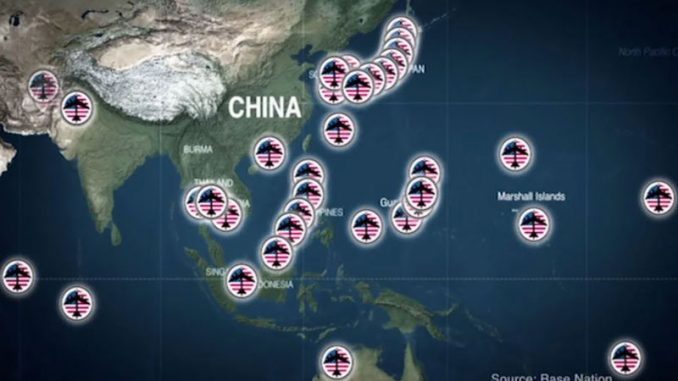

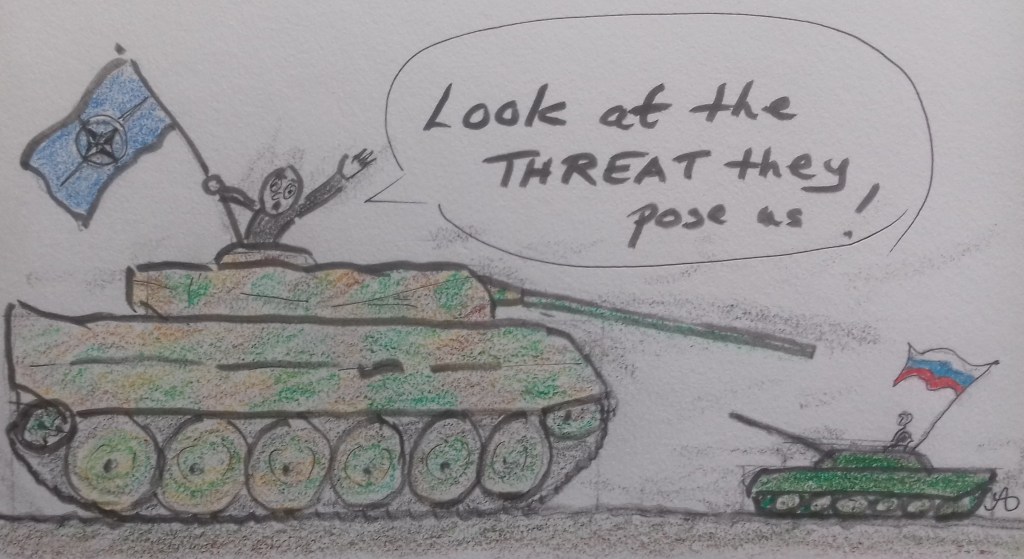


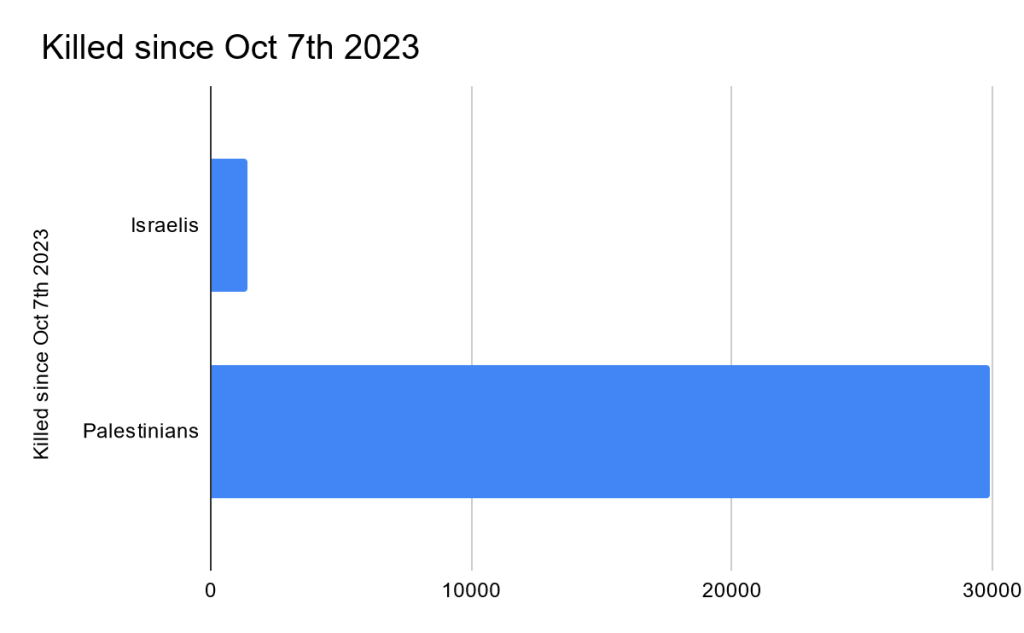
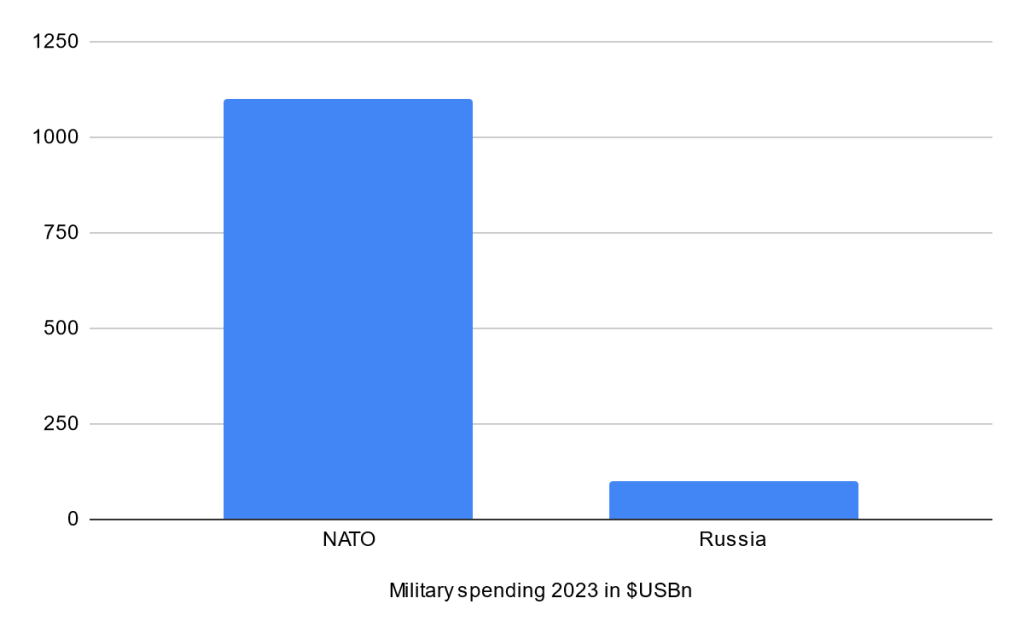
 Urban ramblings