Stats for Socialists: Why the Tories will cost the Earth – in both ways.

Both candidates for Conservative leader, and therefore Prime Minister, oppose onshore wind and favour new oil and gas exploration in the North Sea. This is motivated by the current increase in costs for oil and gas – which makes them expensive for consumers and profitable for producers.

The TUC released figures showing excess profits for UK based fossil fuel producers of £170 billion in the next two years. We could do an awful lot with a windfall tax on that. A rate of 56%, as currently used in Norway, would raise £90 billion. The projected prospective Norwegian rate of 78% more like £132 billion. And these are excess profits; so, taxing the lot wouldn’t be unreasonable, even for opponents of public ownership.

Even the lowest amount would pay for Labour’s proposed £26 billion investment to insulate our housing stock by 2035 three times over, with £12 billion left over to do the schools and hospitals too.

It is now 9 times more expensive to produce energy from gas than it is from renewables. But energy prices are set by the gas price. The EU is planning to cut that link so the cheaper energy from renewables can be reflected in prices. Keeping the link here in Brexit Britain would make energy here qualitatively more expensive than in the rest of Europe. The IMF reports that this is already the case.

Its hard to avoid the conclusion that the consensus resistance to insulation on the Right is because insulated homes reduce bills by reducing demand for an otherwise profitable product. And that would never do, would it?

It takes 28 years to bring new Oil and Gas fields on stream, compared to under two years for onshore wind and five for offshore.

Another way to put this is that we can have new onshore wind farms in operation by 2024.

Offshore wind projects starting now will come on stream in 2027.

New Oil and Gas fields given the go ahead now will take until 2050 – by which time we should have very little use for them if we want to survive.

Nuclear power plants take 7.5 years on average just to construct. Hinckley C is scheduled to take 9. The energy they produce is significantly more expensive than renewables. The government’s proposed Small Modular Reactors are even more expensive and not due to be rolled out until the 2030s.

Reports in the FT have indicated that new “agile” companies hoping to exploit North Seas fossil fuel reserves will bring them into production faster than has been the case hitherto. Which, presumably, is where the proposed scrapping of health, safety and environment regulations come in; so we can have a regime of deep sea oil drilling rigs as lightly regulated as the banks were before 2008.

What could possibly go wrong?
Stats for Socialists: CEO pay up by 39%.

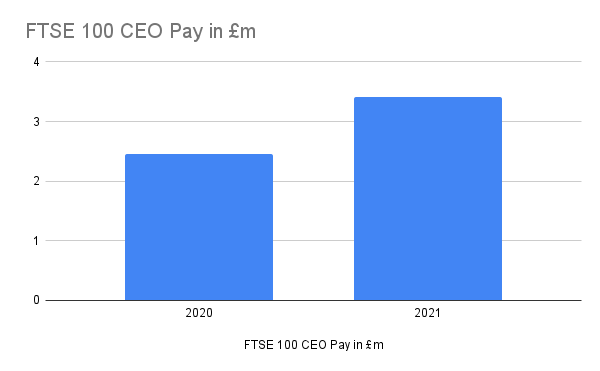
According to figures from the High Pay Centre total pay for FTSE CEO’s has went up sharply in 2021.

It is now back up to over 109 times median UK full time average pay.

We want parity? Something to bear in mind next time some hack from the media repeats the government line about workers taking strike action being “greedy” for not wanting to get poorer, as their pay is eaten up by inflation, or wanting to keep a decent work life balance in face of the demands for “modernisation”, or – so selfish – wanting to keep their jobs.

Stats for Socialists: Energy Price Rises – the Cost of War and Private Ownership.

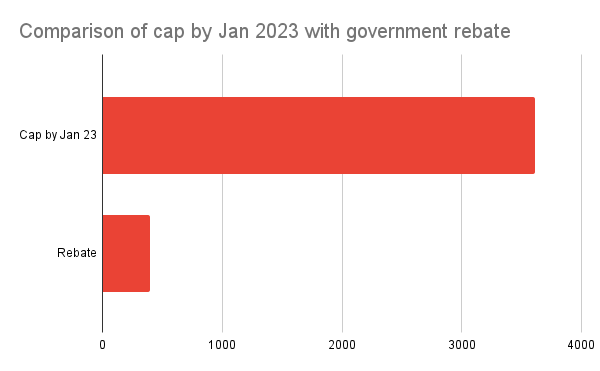
These are the new projections for energy price rises over the winter.

The projection for Oct 22 is more than double the price from Oct 21.

This could be an underestimate because the future projections are always being revised up, with some estimate already projecting £3850 by January.

The government’s one off £400 rebate will barely put a dent in that.

The scale of the increase imposed on households is extreme by comparison with the 4% capped increase on bills in France. France has a nationalised energy supply system and the recent experience of the Gilets Jaunes protests.

With supermarket chains in Austria issuing advice to staff over what to do if mass looting breaks out during winter blackouts, its hard to avoid the conclusion that we have a government here that is drifting to a scale of disaster it can barely comprehend.

The price of energy is being driven partly by rising global demand after COVID safeguards have been largely abandoned, but is given a vicious upward twist by the war in Ukraine.

The longer the war goes on, the higher the bills will be and the longer they will stay high.

The UK government is actively seeking to prolong the war. The Labour movement should be campaigning for the earliest possible negotiated peace – both to resolve the conflict and relieve the economic pressure here and across the world.

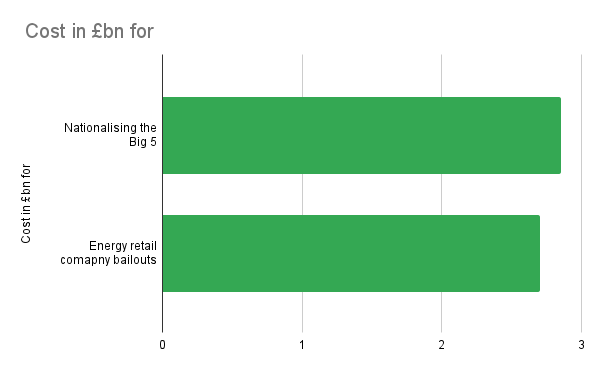
Meanwhile, the TUC has produced a very serious plan for affordable energy which everyone should read and spread about, noting that the projected cost of nationalising the big five energy suppliers is no more than this government has spent on bailing out the weaker private sector suppliers so far.

Stats for Socialists: No case for increased military spending.

Boris Johnson has just announced an aim to increase British military spending from 2% of GDP to 2.5% as part of “strengthening NATO defences”, while the new Chief of the armed forces, Sir Patrick Sanders, calls on us to be prepared to fight World War Three on land in Europe.

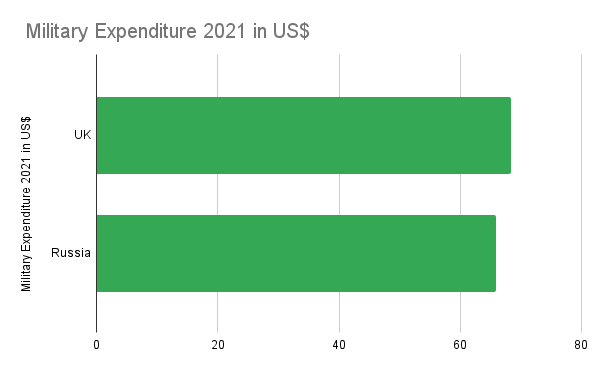
As this is supposed to counter a threat from Russia, it might make sense to examine what the military balance of forces is and who threatens whom.

British military spending on its own is already larger than Russia’s.

Figures from Stockholm International Peace Institute

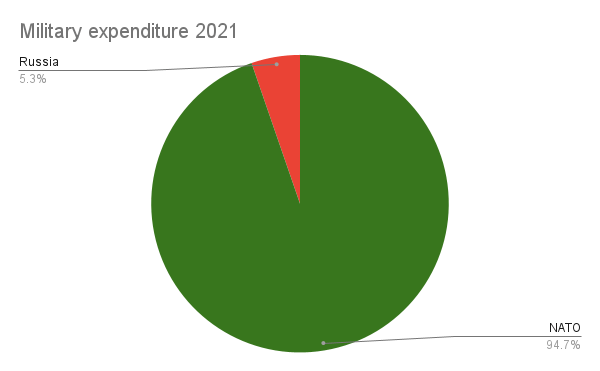
NATO military spending, taken together, is 19 times larger than Russia’s.

Figures from Stockholm International Peace Institute

The NATO summit this week has agreed to absorb more countries – at the price of extraditing Kurdish dissidents to Turkey, all in defence of “democracy” of course – increase expenditure still further, deploy more troops to “forward” positions, i.e. close to the Russian border and sustain a long war in Ukraine.

NATO Secretary General Jens Stoltenburg was quite open about what’s going on. “The reality is that we have been preparing for this since 2014…that is the reason we have increased our presence in the eastern part of the alliance, why NATO allies have started to invest more in defence, why we have increased our readiness”.

“Readiness” – with 300,000 troops geared up… for what?

Place yourself in either of these pie chart segments and ask yourself which one has more reason to feel threatened.

Stats for Socialists: US priorities on Ukraine

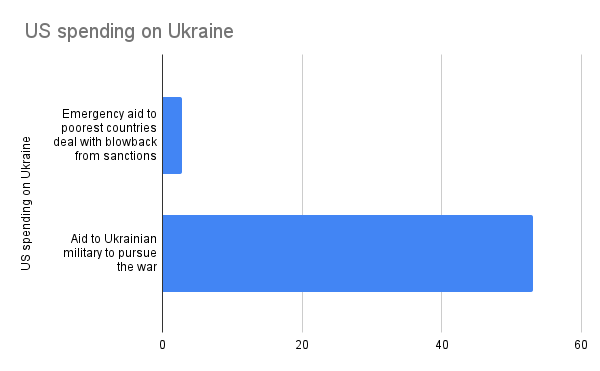
The $4billion in aid to the world’s poorest countries to help them cope with the blowback from US sanctions (with $2.7billion coming from the US) is a desperate attempt to manage a situation that risks running out of control so that the war can be prolonged without two, three, many Columbias.

The US commitment, so far, to nineteen times as much spending on munitions (most of which will make its way to US arms manufacturers) shows what their priorities are.

On the one hand, hunger, primarily produced by their own sanctions. On the other hand, a war they want to pursue into next year if they can keep their own polities and those of the Global South stable enough.