This Winter’s Reckoning.

A recent article in the Financial Times puts things very starkly, albeit in very restrained language.

“This coming winter will bring a reckoning. Western governments must either invite economic misery on a scale that would test the fabric of democratic politics in any country, or face the fact that energy supply constrains the means by which Ukraine can be defended.”

Put more bluntly, this means that the cost of energy is now so high – a recent email from Octopus Energy to its customers stated that wholesale natural gas is now eight times more expensive than it was before the war – that unless it is stopped soon, the economic and political consequences will be catastrophic.

We can have war, or social stability. We can’t have both.

This is already unfolding in parts of the Global South, which has nothing to do with fuelling this war either way, but as always suffers the blowback first and hardest. Sri Lanka is an example.

This means that “Western governments”, should they decide to keep fuelling the war with loans, munitions and rhetoric, will face the blowback of an economic crisis beyond their control; with unpredictable political consequences and an unprecedented level of turmoil.

A straw in the wind for this is advice given to their workers by the Austrian Supermarket chain SPAR, not to intervene to try to stop mass looting in the event of energy blackouts this Winter, on the grounds that the looters would then become enraged and smash the shops.

Governments, like Italy’s, or, in Boris Johnson’s case, Prime Ministers, are already beginning to topple. Olaf Scholtz is looking shaky. Ukraine is the Trojan Horse for the Latin Americanisation of Europe. Local instability the price for an increased US grip.

Recent moves, reported in the FT but not much more widely, that the US had pressured the EU to ease off on sanctioning insurance for Russian oil shipments, indicates that the impact of the price of gasoline at petrol stations on how people vote in the mid term elections is a material consideration for the Biden administration. So, they will soft pedal aspects of sanctions which are too much to bear; for them.

But, this is a tactical nudge within a framework of seeking a long war “to weaken Russia” on the lines of the Afghan war in the 1980s; so, there’s the tension.

The problem for the “West”/Global North/NATO is that anything less than a sudden Russian collapse this Autumn will see such a severe level of economic blowback that they may not be able to sustain it.

There is no sign that such a Russian collapse is on the cards. Quite the contrary. The most optimistic assessment from the Ukrainian Ministry of Defence this week is that the war is at a “strategic stalemate”. This is not the case, but, even if it were, Winter is coming, and a frozen conflict would freeze the economic crisis into place; with everything that flows from it. There needs to be a quick resolution.

Even when looking through the filtered reports in the media here, the military situation on the ground appears to be one of continuing incremental Russian advances in the Donbass, where they seem to be punching through both flanks of the fortified Ukrainian defences opposite Donetsk City, with the infantry trying to hold the line taking heavy casualties; as well as making advances around Kharkiv in the North. The massive Ukrainian counter offensive to retake Kherson in the South, that was widely broadcast as in the offing at the end of July, has not materialised, and is unlikely to; being replaced with small but spectacular sabotage operations, or possibly drone strikes, in Crimea. This could continue for a horribly long time.

Meanwhile, the Ukrainian economy is in a state of collapse (60% down even from the beginning of the year, when the Ministry of Finance was warning of its then unviability). The response has been to organise a massive fire sale of state assets to the private sector and cement in place legislation that removes the trade union and contract rights of the workers the government is conscripting to fight at the front. While the military conflict is going badly for Ukrainian oligarchs, the class war within Ukraine is all in their favour. But short term gains of this sort have no long term viability if the war continues to degrade the country.

More to the point, aiming to reconquer the Donbass and Crimea is beyond Ukraine’s current capacity. It implies a war without end, requiring permanent Western loans to keep the economy functioning on life support level. This would reduce Ukraine to even more of a client/frontiersman state than it already is – a source of raw materials and foot soldiers, and assets to be gobbled up, but not a genuinely independent sovereign nation on any part of its territory.

So, a continuation of the war is far more disastrous to Ukraine than it is to Russia; in the short, medium and long terms.

The G20 in Indonesia on 15/16th November, with the NATO powers, Putin, Xi Xinping and the Presidents of the BRIC countries and Turkiye attending could be a point at which the outlines of a cease fire and peace deal could be set up, global tensions reduced, food and energy supplies boosted, the suffering in the war stopped and the world’s attention turned back to cooperation to deal with climate breakdown and global poverty. Or not.

For that to happen, we need countries currently pushing and fueling the war to start pushing for a solution to it instead. This is difficult, because they have invested so much face in it – and bluff is nine tenths of power. The first instinct of government’s like the one we can expect from Liz Truss will be to brass it out – having already signalled that they will promote the war, expect workers to see their living standards fall “in the national interest”, face down any domestic unrest, pass laws to make lawful strikes or protest harder. And that’s just for starters.

The issue for the labour movement therefore, is whether it allows itself to be dragged behind such a policy. We can expect enormous pressure to be put on “enemies within”, dissent interpreted as treason, peace campaigns put on proscription lists.

We can also expect an even louder emphasis on atrocity stories, as, if you are going to mobilise a population behind a war, you need them to fear and loathe the other side. The argument is essentially that the suffering in the war has been, and is, so bad that we should keep it going until the Russians are punished for “starting” it. The continuing suffering of everyone involved as the fighting drags on is somehow collateral damage that can be disregarded. News of the last atrocity fuels the next one, and the one after that.

It is essential in stories like these to project the other side as the sole source of atrocities, or morally culpable for all of them. Hence the need to talk about “Russia’s unprovoked attack” – a constantly repeated phrase used by everyone from President Biden to the Ukraine Solidarity Campaign aimed to mesmerise anyone listening into ignoring everything that happened in Ukraine from 2014 onwards.

You don’t have to agree with Sergei Lavrov that all accusations of Russian atrocities are made up – because all armies commit atrocities in war, which is why the UK government recently passed legislation making British soldiers immune from prosecution for the war crimes the same government likes to pretend they wouldn’t dream of committing – to recognise that many of them have been exaggerated (in exactly the same sort of way that those committed by German soldiers in Belgium in 1914 were) to moralise the public response behind the war drive. But it is helpful to be oblivious that the scale of Russian attacks on civilian infrastructure in Ukraine has been limited compared to what the Americans do in “Shock and Awe” attacks – in which all power stations and water treatment plants are smashed on Day 1.

The need to moralise the public response also requires that people are guided away from any awareness of atrocities committed by the side that “we” support. In the interests of balance, here’s four.

In recent weeks the Ukrainian army has taken to firing thousands of petal mines into Dontesk City. This is an anti personal mine designed to maim; essentially to blow people’s legs off. Firing them into a city is targeting civilians in an indiscriminate way. Thousands of them. We can be sure that any victims of this won’t be given the full Feargal Keene treatment. No instrumentally useful sympathy due there.

In the last fortnight, Ukrainian artillery has been shelling the Zaporozhzhia nuclear power station. The potential consequences of this hardly need spelling out. This is unhinged. But, instead of a simple demand that this stops, we have had surreal reports in the press here echoing Ukrainian claims that the Russians themselves are actually shelling a power station that they control, before moving quickly on before anyone has a chance to reflect on how absurd this is; the same sort of ludicrous stretch in credulity that conspiracy thinking depends on. Everything bad must be done by the bad people so we can stay comfortable in our moral certainty.

In the case of the Bucha massacre, the public claim by the Press Officer of the Azov battalion that their troops were moving through Bucha after the Russian withdrawal to “cleanse” the town of “saboteurs and collaborators” would account for why so many of the victims were found with Russian ration packs or water bottles. This does not mean that no civilians were killed by the Russians, but it takes a real act of will not to conclude that many of them were killed by Azov. This is dismissed in Western media, but, as its a public statement by them on Twitter, I think we can take them at their word.

And there are over 1000 warrants out for treason, and dissidents have been “disappeared” or just shot (and their bodies posted on social media with tags like “one less traitor”).

The bottom line here is that war brings out the worst in everyone. Which underlines why we need to end it.

To conclude. The war is slowly going Russia’s way. Ukraine’s economy is collapsing. Continued NATO arms and financial support won’t change the dynamic of either. Without a resolution – or basis for it – at the latest by the G20, we face a scale of economic and political crisis – even in the wealthiest countries – that is off the map.

We need to campaign for opposition Parties to break with the government line of fuelling the war if we want to avoid economic misery on a scale that would test the fabric of democratic politics.

Historical Note

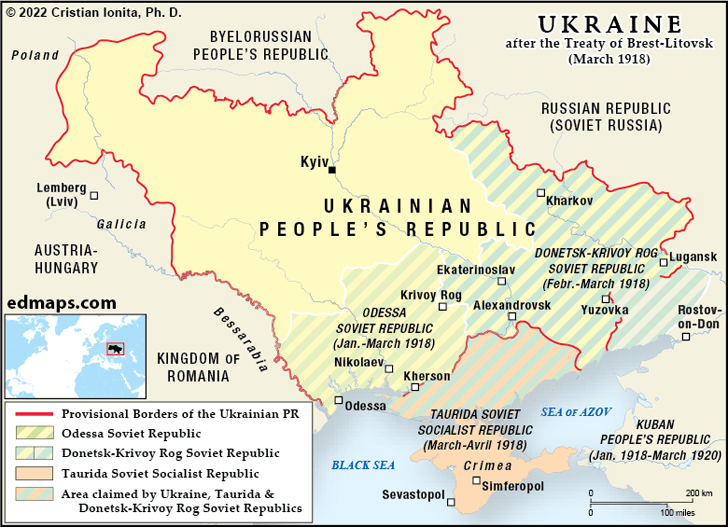
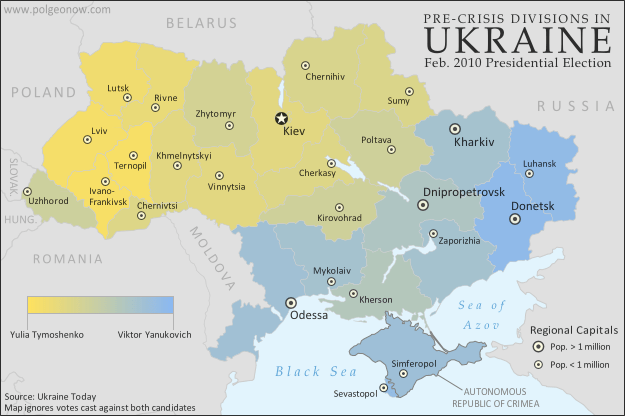
Sometimes in these discussions, people put the argument that Ukraine has been struggling for independence against Russia for over 100 years. This map from time of the Treaty of Brest Litovsk in 1918 is very interesting when you compare it with the map showing votes in the 2010 Presidential election. Leaving aside the parts of Western Ukraine that were still parts of the Austro Hungarian Empire in 1918, the division between the rest of Western Ukraine and the areas in the South and East that formed Soviet Republics foreshadows almost exactly the political/national fault line shown up by the way people voted in 2010. This shows that the Nationalist movements that are presented as the representation of the people of Ukraine as a whole are not representative of all of it, and never were.
https://www.edmaps.com/html/ukraine_march_1918.html
http://antifon.blogspot.com/2014_11_01_archive.html
https://www.edmaps.com/html/ukraine_claims_1919.html

This map from 2019 showing an aspirational Greater Ukraine, incorporating both Novaya Rossiya and the lands of the Don Cossacks as far as the Caspian Sea, shows that inside every thin nation struggling for self determination, yearning to breathe free, there can be a bloated expansionist version busting to get out and impose itself on others if given the chance.

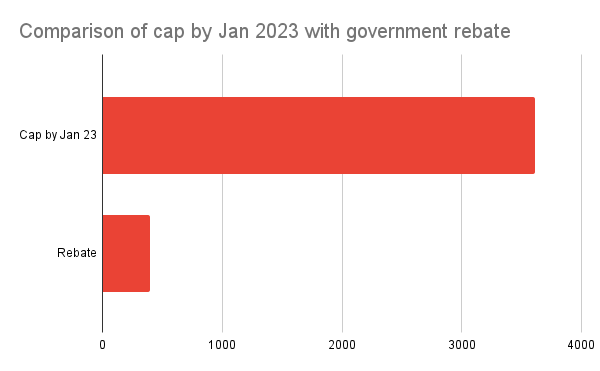
Stats for Socialists: Energy Price Rises – the Cost of War and Private Ownership.

These are the new projections for energy price rises over the winter.

The projection for Oct 22 is more than double the price from Oct 21.

This could be an underestimate because the future projections are always being revised up, with some estimate already projecting £3850 by January.

The government’s one off £400 rebate will barely put a dent in that.

The scale of the increase imposed on households is extreme by comparison with the 4% capped increase on bills in France. France has a nationalised energy supply system and the recent experience of the Gilets Jaunes protests.

With supermarket chains in Austria issuing advice to staff over what to do if mass looting breaks out during winter blackouts, its hard to avoid the conclusion that we have a government here that is drifting to a scale of disaster it can barely comprehend.

The price of energy is being driven partly by rising global demand after COVID safeguards have been largely abandoned, but is given a vicious upward twist by the war in Ukraine.

The longer the war goes on, the higher the bills will be and the longer they will stay high.

The UK government is actively seeking to prolong the war. The Labour movement should be campaigning for the earliest possible negotiated peace – both to resolve the conflict and relieve the economic pressure here and across the world.

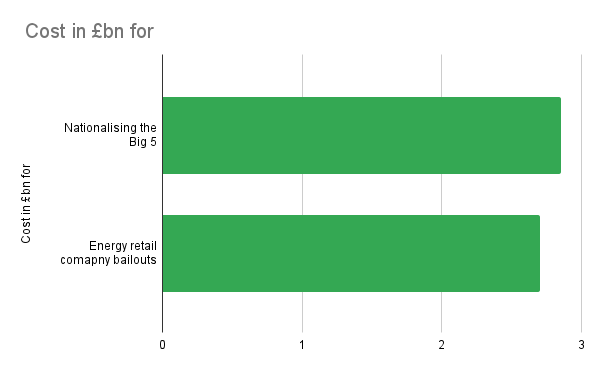
Meanwhile, the TUC has produced a very serious plan for affordable energy which everyone should read and spread about, noting that the projected cost of nationalising the big five energy suppliers is no more than this government has spent on bailing out the weaker private sector suppliers so far.

Don’t mention the North Atlantic Treaty Organisation.

In his latest piece for Labour Hub, Mike Phipps argues that it would be better to have an anti war movement that is not actually against the war aims of our own ruling class. His argument, and attempted intervention into the anti-war movement, rests on two dubious assertions.

  1. That NATO expansion and US militarism have nothing to do with the origins of this phase of the war in Ukraine and therefore the anti war movement should ignore it.
  2. That Ukrainian nationalism is a progressive “anti-colonial” current fighting for liberation from Russia as an imperial oppressor and therefore the anti war movement should support it.

Let’s look at each of these in turn.

1 NATO

The NATO summit that has just concluded has agreed to expand its membership, increase its arms expenditure, get 300,000 troops at a permanent state of “readiness” and forward deploy more of them to the frontier with Russia and to sustain a long war in Ukraine.

This is motivated as a way to “defend” members of the alliance from a Russian threat that they are very careful not to quantify. That is because Russian military expenditure is less than Britain’s and one twentieth that of NATO. The projected expansion of the alliance and large increases in expenditure will make NATO’s military dominance even more extreme. So, a reasonable question might be, who is threatening whom?

So, when the new chief of staff for the British armed forces, Sir Patrick Sanders, argues that we have to be ready to fight World War 3 in on land in Europe, its quite clear what that “readiness” is for, and who is on the offensive. His argument that if you want to preserve the peace you have to prepare for war, was exactly what all sides were arguing in 1914. It was an argument that worked very well. Until it didn’t.

Mike doesn’t engage at all with what NATO has been doing in Eastern Europe since 1991, or more particularly in Ukraine since 2014. Simply ignores it and tries to waft it away with an airy “I don’t see this as a central factor at all”. Jens Stoltenburg, NATO Secretary General, however, is very proud of what they have done and quite candid about it. “The reality is that we have been preparing for this since 2014…that is the reason we have increased our presence in the eastern part of the alliance, why NATO allies have started to invest more in defence, why we have increased our readiness”. My emphasis. I suspect that Stoltenburg has a better grasp of what he’s doing – and the significance of it – than Mike does, unless there is some conscious disavowal going on; seeing, understanding, but choosing not to acknowledge.

Stoltenburg’s comment is underlined by the remark of Sir Richard Shirreff, former NATO Deputy commander, on Radio 4 recently that “this war started in 2014”.

2014. Not on February 24th 2022. It has been noted widely that while Ukraine has not been in NATO, NATO has certainly been in Ukraine: training, re-equipping, getting the Ukrainian army ready to go beyond the shelling of the Donbass to try to retake it.

It takes a real act of will not to look at NATO, or the USA, and what it is trying to do, and how the war in Ukraine fits into it. Mike draws rage from the horrors of the war – in a determinedly one sided way that implies total barbarity on one side and saintliness on the other (because no lies have been told, butter wouldn’t melt in the Azov battalion’s mouth, issuing a decree to arm civilians en masse doesn’t erase the distinction between them and combatants, and no oppositionists have been “disappeared” or assassinated) – and is averse to looking up at the strategic picture because it is so obvious what’s happening when you do.

He reflects least of all on what NATO is.

NATO is a military alliance of the world’s major predatory imperial powers, under the aegis of the United States, pledged to defend a “rules based” imperial world order in which the rules are written in Washington. The European powers are part of it because they can’t take the US on, and do better being subordinate members of its global gang than trying to act as lone wolves. This maintains domination of the Global South, with $2 trillion flowing from it to the Global North in 2013 alone. NATO is the armed guarantee that that will keep happening. That’s why people like Paul Mason, who thinks that the working class in the rich countries should prosper at the expense of the peoples of the majority world, support it.

That means that taking active steps to join NATO – as US influenced Ukrainian governments have done -is not a neutral act. It is the repudiation of neutrality by definition. It is also a self limitation on national sovereignty. It is ganging up with the USA – essentially taking up a job as a henchman – and will be understood as a threatening act by any country in its sights, especially any nearby.

NATO’s expansion into Eastern Europe to pressure Russia serves two purposes – setting up the preconditions for a regime change colour revolution in Russia itself, so a more compliant Yeltsin like leadership can be brought in – and in the immediate term also to decouple Russia from the EU; the better to cement control of the rest of Europe, particularly Germany.

This explains the refusal of the US and NATO to even discuss Russia’s proposal for mutual security guarantees when the Ukraine crisis started brewing up from November last year onward. You’d think we’d all have an interest in that. But mutual security and reduction in tension – which would be good for all of us – would increase Russia’s weight in Europe with the EU, and make it harder for the US to dominate it. No chance to deploy those troops, sell those arms, export that fracked Liquid Natural Gas. So, we can’t have that, can we?

The demonstrative mobilisation of the Russian armed forces throughout the winter in response, was an attempt to show how seriously they took what they saw as an existential threat. It seems to me that what triggered the actual invasion was the NATO summit the week before in Munich, at which those European powers, principally Germany and France, that had been pushing for easing off on confrontation and continued negotiations within the Minsk framework, were very visibly brought to heel by the USA. A partial withdrawal of Russian forces in Belarus that week was taken not as a welcome gesture that could lead to a reciprocal step towards negotiation; but a sign of weakness to be exploited. Watching the news of that, I had a real sinking feeling. It sent a very clear message. Crowing on the news combined with Russian fears that the Ukrainian military build up in the Donbass heralded an imminent intervention to snuff out the Donbass republics with NATO backing. It seemed that war was inevitable. It was just a matter of when, and who struck first.

This war was generated in neither Kyiv nor Moscow, but Washington.

2 Ukrainian Nationalism

Mike’s attempt to ignore the entire geo-political context of the NATO build up and the self subordination to it by the Ukrainian government, means that he simply buys into the narrative of Ukrainian nationalism – effortlessly erasing from historical significance the large Russian population living in what is now part of Ukraine, but was Noviya Rossiya (New Russia) from the eighteenth century onwards – that the whole Ukrainian people have been engaged in a long term struggle to liberate themselves from Russian oppression. Small left currents in Ukraine put this in anti-colonial terms, and Mike quotes one of them. But the mainstream dominant tradition here is not anti colonial, but pro colonial; the far right. These were the hegemonic street forces in the Maidan movement. They have since become entrenched in the Ukrainian military; and wield an influence on the streets far greater than their formal electoral representation.

Again, it requires real disavowal to ignore this, to look and not see. But to give an indication of just how bad this is, here are some headlines from western media from before February 24th, when they weren’t trying to cover this up.

Ukraine celebrates Nazi collaborator; bans book critical of pogroms leader.

Ukraine’s got a real problem with far right violence (and, no, RT did not write this headline).

Hundreds march in Ukraine in annual tribute to Nazi collaborator.

Violent Anti-Semitism is gripping Ukraine – and the government is standing idly by.

Ukraine conflict: “White Power warrior” from Sweden.

Ukraine conflict: child soldiers join the fight.

Far- Right fighters from Europe fight for Ukraine.

Nazi symbols. salutes on display at Ukrainian nationalist march.

Yes. Its (still) OK to call Ukraine’s C14 neo Nazi.

A new Eurasian far right rising.

Far Right extremists in Ukrainian military bragged about Canadian training.

German TV shows Nazi symbols on helmets of Ukrainian soldiers.

Ukraine designates national holiday to commemorate Nazi collaborator.

Kiev’s far right groups refuse to disarm.

FBI: Militia trained by US military in Ukraine now training US White Supremacists

Ukrainian Neo Nazi C14 vigilantes drive out Roma families, burn their camp

Ukraine underplays role of far right in conflict

New “Glory to Ukraine” army chant invokes nationalist past

Britons join neo Nazi militia in Ukraine

Neo-Nazis and the far right are on the march in Ukraine

How the far right took top positions in power vacuum

Ukraine’s far right menace

With axes and hammers far right vigilantes destroy another Romany camp in Kyiv

“Defend the White Race” American extremists being targeted by Ukraine’s far right

Paints a picture that the BBC and others are now trying to consign to the memory hole.

A leader of the C14 far right militia group expressed a core belief of this movement when he said that the problem in Ukraine is that “certain people” had too much power and money. When pressed on who he meant, he said, “you know, Russians and Jews”.

Nationalism takes many forms. When fighting imperial domination, it can be progressive. When allying with a dominant imperialism against others, it is reactionary. Ukrainian nationalism – in its dominant tradition – lionises Stepan Bandera; who was a Nazi collaborator. Since 2014, he has, grotesquely, been celebrated as a hero across the country, had statues put up and the road leading to Babi Yar named after him. This is like, but even more offensive than, renaming the Finchley Road up to Golders Green Sir Oswald Mosley Way. Similarly, the renaming of the Molotov Cocktail as the Bandera Smoothie, is comparable to an Italian movement calling them Mussolini Milkshakes. Ukrainian nationalism, in its conscious subordination to greater imperial powers, Austria Hungary, Nazi Germany and now the USA, is not a progressive movement; and the small left wing currents that tried to take part in the Maidan were smashed out of it as surely as a Lexit contingent would have been on an EDL march.

It was when they took this south and burned down the trade union HQ in Odessa, killing 42 people, that the Donbass rebelled, Russia annexed Crimea with overwhelming local popular support; and the war in the East started.

The debacle of the “broad anti war movement”

In pursuit of the “broad anti war movement” that Mike proposed, a demonstration was called for 9 April with Paul Mason, recently exposed for having connections with the intelligence services, Peter Tatchell and others speaking, and supported by currents like the AWL. This was intended to eclipse Stop the War, so there could be an “anti war” movement at peace with the ruling class. One of the main chants was “Arm! Arm! Arm Ukraine!” – which is exactly what the British state is doing, what the Tory government and Labour front bench want to carry on doing. This is not “anti war”. It is pro war. A comparable position in 1991 would have been to support the 1991 war after the invasion of Kuwait by Iraq, and organise demonstrations with chants of “Arm! Arm! Arm Kuwait!” Despite having the formal support of a number of unions, it was very small. A couple of hundred. This is not a “broad anti war movement”. It is a fig leaf for the ruling class and has no independence from it.

As such, it is comfortably aligned with the Labour front bench which, instead of calling for a ceasefire, a negotiated settlement, and a redirection of “defence” spending to meet the cost of living and climate crises, never misses an opportunity to try to polish its patriotic credentials by calling for guns not butter. John Healey, Shadow Defence Secretary bemoaned a short term cut in army numbers like this.

“Now, this is embarrassing. It’s not responding to the growing threats we face, and it is putting into question Britain’s ability to fulfil our NATO obligations when I want Britain to continue to be the leading European nation within NATO” noting that the 1,000 additional soldiers committed to NATO’s new 300,000 strike force “might not even be based on the border with Russia, but back in Britain”. Forward, he cried, from the rear.

The Left – all of it, whatever its views on this war – should be opposing these increases in military expenditure and the deployments that go with them.

As the NATO war drive ups a gear, with no end in prospect, with the UK an enthusiastic participant, with “war austerity” already with us, and hitting the Global South very hard indeed, the anti war movement here will gain strength from opposing it, and clarity from analysing it. Hopefully we will build up enough strength to divert it from killing us all.

Post Script

I sent this Blog to Mike suggesting that it could go up on Labour Hub as a contribution to debate. This was turned down on the grounds that the views expressed were very much a minority on the Hub WhatsApp: which begs the question; who do you debate if not a minority? We had a thoughtful exchange of emails over whether I had misrepresented Mike’s view. I don’t believe I have. This Blog is open for any comments Mike, or anyone else, wishes to make.