The Emperor still has no clothes….

This is a write up of my notes for the Teach the Future Teach In on 27th August. It misses out some ad libs and includes other notes that were skipped over, so doesn’t act as a precise script for the recording due out shortly.

Organising on climate in the trade union movement means we need to grasp that its vital for working class organisations not just to react to the crisis but to lead on resolving it.

Last year’s OXFAM report noted that the rapidly increasing carbon footprints of the top 10% of the global population will take us above 1.5C on their own, regardless of what the rest of us do.

The poorest 50% have a negligible carbon footprint. What might be called the “upper middle” 40% – which includes most of us here, working class people in the Global North and better off people in the Global South – have a carbon footprint that is shrinking.

The struggle for a sustainable climate is therefore a class struggle against the unsustainable overconsumption of the wealthy.

If you look at the organising core of climate denialism it combines the corporate interests of fossil fuel companies and an activist cadre of extremely wealthy men, like Lord Lawson.

Global Crisis

The problem is that attempts to deal with climate breakdown have to go through the existing machinery of power, which maintain current economic relations.

This is very marked in the United States, which has been the world’s leading economic, political and military power since at least 1945. They are failing to lead.

This is not just because they are spending twenty times as much on their military as they are on climate investment, but because their whole model of society – all those sprawling gas hungry suburbs, short haul flights, lack of high speed rail or decent metro systems in most cities, the celebration of individualised alienated mass consumption to fill the holes in their souls – generates the third biggest per capita carbon footprint in the world. Only Saudi Arabia and Australia are worse. “The American Way of Life” is not a viable model of the future anymore – even for the US itself.

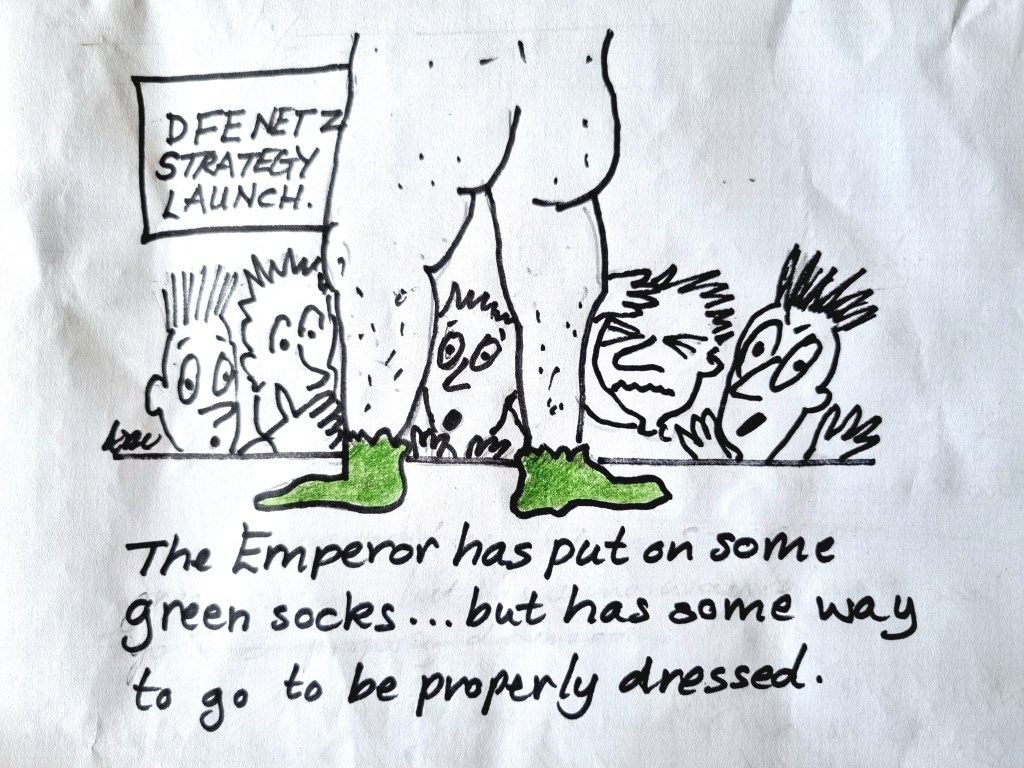
They are now also exporting record quantities of fracked LNG and Oil. The power of fossil fuel interests buying up votes in Congress means there is a see saw between outright Trumpish denialism and limited half measures like the Reduce Inflation Act – which combines both vital investment in green energy and lets further fossil fuel projects off the leash. The passage of this Act means that John Kerry will no longer be walking naked into the conference chamber at COP. He’ll be trying to maintain his dignity in his underpants.

There is a strongly held view in the Global South that climate breakdown is a problem for the Global North to fix, on the basis that the world’s richest countries – the USA, Canada, EU, UK, Japan, Australia etc – are responsible for 90% of historic carbon emissions. “You broke it. You fix it”. That is sometimes put vehemently in India and is a strongly held view in parts of China too.

But in China that is shifting.

A friend of mine who works for a Chinese University tells me that for the last few years there have been two to three conferences a week on aspects of climate change up and down the country. Xi Jinping talks a lot about the need to build an “Ecological Society”. They are currently investing one and a half times as much in green transition as they are in their military. It is currently expected that their 2030 target for renewables will be met by 2026 and coal – on which they are still heavily dependent – is being redefined as a support for a grid based on renewables not the other way round. The speed with which this can be achieved is vital for all of us (both in its direct effects but also in providing a developmental model for other Global South countries).

More negatively, the failure of the Global North countries to transfer the $100 billion needed as a bottom line for the Global South to cope with climate impacts and develop without recourse to fossil fuels has led to the African Union planning to demand at the COP that Africa’s reserves of oils and gas are developed to alleviate poverty. With Global North countries developing their own reserves, they don’t have a leg to stand on if they want to oppose this.

Britain

We are about to move from Boris Johnson’s inverted pyramids of patriotic piffle – pie in the sky “world leading” targets with no plans to meet them just to strike a pose – to Liz Truss – who will be worse.

While Truss formally supports the Net Zero 2050 target for the UK, she says she finds the sight of solar farms in the countryside “depressing” and her response to the energy price crunch is to use it to boost oil and gas production and exploration in the North Sea, while rejecting a windfall tax on energy producers, lift the ban on fracking while opposing onshore wind – none of which will reduce bills.

She is backed by Lord Frost – known to his friends as “Frosty the No Man” – who opined in the week of our 40C heatwave, during which the Fire Brigade had more call outs than at any time since the second World War, that he saw “no evidence” of a climate emergency in the UK and instead of the “medieval technology” of wind power, favours measures to “master our environment”, like fracking and nuclear. She is also backed by Steve Baker and the Net Zero Scrutiny Group (a really bad name for a band) and is anticipated to put go slowers like Jacob Rees Mogg in the cabinet.*

The paradox here is that you could have such a dynamic Tory narrative in favour of Onshore Wind. They could say – “let’s cut the red tape and let the market work its magic!” Or, in the name of “energy security” they could paint them red, white and blue and call them “Freedom Farms”, stand in front of them for a poster with the slogan “Its Britain’s Wind!” Why don’t they do that? Perhaps because fossil fuels are more profitable than renewables and they want to maintain market share regardless of the cost (in all respects).

The good news here is that they are already so unpopular that just about everything they do will be discredited just because its them doing it. Liz Truss – a hard person to warm to – will not get a honeymoon period.

Schools

Who said this?

“The challenge of climate change is formidable. For children and young people to meet it with determination and not with despair we must offer them not just truth, but also hope. Learners need to know the truth about climate change…they must also be given the hope that they can be agents of change.”

Nadhim Zahawi said that at the launch of the DFE Net Zero Strategy in April. Of course, his pitch for Conservative leader a couple of months later was to cut 20% from all government budgets, so…

Four questions for us to think about.

  1. In the context of increased economic pressure on schools, with energy costs up 93% on last year, leading to pressure for cuts down to bare bones provision (4 day weeks, cutting all staff not teaching core subjects have both been floated) will the positive initiatives from the Net Zero Strategy – like the National Nature Park, the requirement for all schools to appoint sustainability leads in 2023 – be dropped as “green crap” and the DFE Sustainability Unit with them?
  2. In the context of a wholesale retreat from Net Zero targets by the Conservatives at national level, what milage is left in lobbying Conservative MPs (though we should never cease pointing out to them that dropping the 2050 targets would lose them 1.3 million votes) compared with getting opposition parties likely to form the next government on a sound policy? The point here is that a government visibly on the skids is leaching power even while still in office and the statement “We will undo this” by Shadow Ministers cuts the ground out from new initiatives and sets the agenda even before the old government falls.
  3. In the context of denialists/go slowers “crisis, what crisis” types dominating the cabinet, how far is the current DFE “impartiality guidance” – which says that the science is set and denialism invalid, but the debate on what we do about it has to be done in a “non Partisan” way, that blocks support for particular campaigns or initiatives but allows debate to be had, so long as no one view is promoted, allows personal views to be stated, as long as they are identified as such and its made clear other views are available – be replaced with straight forward “war on woke” from the top? **
  4. What scope is there for a campaign for school insulation on the TUC Report, to directly cut energy costs and act as community hubs?

Lastly, watch out for the NEU Guide to Decarbonising the Curriculum – due out in November.

Thank you for having me.

* And so she has. At Business and Energy for goodness sake.

** The appointment of Jonathan Gullis, who refers to the NEU as the “No Education Union” and does not seem an open minded sort of chap, does not bode well.

Mourning in Late Britain

Living in the UK is a bit like living in a museum, in which popular culture is encouraged to steep in nostalgia for lost status. This can be quite bitter, rather like an over stewed pot of tea.

An aspect of early industrialisation and former global dominance here is the survival by inertia of archaic forms of governance mostly abandoned or overthrown elsewhere. Our Head of State has just changed, not by election and not on any political timetable, but because of biology. The former Queen was 96 and as healthy as anyone could be expected to be at that age; but died last week just two days after seeing Boris Johnson off, and Liz Truss in, as Prime Minister.

This is probably entirely coincidental. But we now have a new Head of State and new Prime Minister in the same week, in a bizarre two for one offer. From Elizabeth II and Boris Johnson to Charles III and Liz Truss. “Oh, brave new world that hath such people in it!”

As a result, we are now in a strange pause of “national mourning” in which almost everything is on hold. While they haven’t gone so far as to stop all the clocks, strikes by Rail and Postal workers have been suspended, the TUC postponed, no Party meetings or campaigning is taking place, Parliament has shut down, the media is wall to wall black suits mobilising a tsunami of deference for the old monarch and the new: even the football is cancelled for a week of Sundays, the last two Proms have been scrapped “out of respect” and the music on the Radio has a definite decaffeinated quality. Charles III declaring that this mourning period will extend to 7 days beyond the funeral is probably his first mistake. People will be grumbling.

More to the point, while everyone catches a breath, the underlying crises of what might be called “Late Britain” are building beyond a point that they can all be peacefully contained. In his first address to the nation, Charles III intoned gravely that “our values have remained, and must remain, constant.”

Fat chance of that.

The 2008 crash shattered the notion that things might go on relatively well or relatively badly, but it was all, ultimately, manageable. This went out the door with the boxes carried by the sacked employees of Lehman Brothers. Politics in the UK became more intense, and the unthinkable thought. Much of it fantasy.

This was writ large with Brexit – the notion that with one mighty bound, the UK could free itself from the shackles of EU restrictions holding back its natural market genius and long lost ubermench status, and go sailing off into the wider world, striking “easy” trade deals on favourable terms, especially with countries in the Global South; an approach openly referred to as “Empire 2” in some parts of Whitehall. Wishful thinking as policy.

This has not worked. Levels of private investment and private sector R&D – never high in the UK – have sunk to historic lows. So has growth. Poverty, particularly child poverty, has increased. Wage levels have stagnated or sunk. People in work are having to use food banks in ever increasing numbers. Life expectancy in poorer areas is dropping. People are having fewer children. The future no longer looks like a promise, more like a threat. And that’s leaving aside climate breakdown – which is exactly what they are now trying to do.

Since Brexit, the Tories are now on their third Prime Minister. Each replacement has been a move further right, with wider still and wider Brexit as goal and talisman. In the leadership election campaign over the summer, both candidates were agreed on the aims of deepening Brexit – decoupling the UK from the EU’s environmental and labour standards so the UK becomes more like the USA – but disagreed on the pace of it.

Liz Truss represents a minority of her Parliamentary Party – most of whom supported her rival, Rishi Sunak. Truss’s cabinet rests solely on her own faction – most of whom have essence of Ayn Rand on a drip feed into what passes for their souls – and promises war on all fronts. Stalling on climate action. War drive against Russia and China. Confrontation with the EU – and USA – over the Northern Ireland Protocol. Confrontation with the SNP. Redistribution of wealth up to those who don’t need it from those who do. Attacks on the right to strike and organise. Privatisation of the Health Service. Tearing up all remaining alignment with EU standards on labour and environment standards. War on woke (ie equalities). It’s hard to imagine that this will go well.

Her speech in Downing Street spelled out three priorities and challenges.

She did not mention climate breakdown, which makes everything else she said a form of displacement activity while we are waiting to die. Her list of infrastructure to invest in did not mention insulation but had roads in first place. Truss is backed by the Net Zero Scrutiny Group and Lord Frost, who opined during the week local temperatures exceeded 40C that he saw “no evidence” of a climate crisis, has appointed Jacob “2050 is a long way away” Rees Mogg to energy, plans to open up 130 new gas and oil fields in the North Sea and remove the ban on fracking, opposes onshore wind and rural solar farms. This is proclaimed as a way of increasing domestic energy supply in the face of rising prices, with the implication that this will ease the pressure on bills. It won’t. The quickest sources of low cost additional energy is onshore wind and solar, which she opposes. New North Sea gas and oil fields take 28 years to come into production on average. So, approval now will see them on stream in 2050 which, as Rees Mogg might remark “is a long way away”. It is also the point at which we need to have closed down fossil fuel production almost entirely if we want a planet we can live on. This is a kind of madness and a sign that these people are incapable of rising to the actual challenge of our time and, if left in power, will instead lead us to disaster.

Of the three, her first aim was to “get Britain working again”. This is curious, because employment levels are high, albeit often poorly paid, part time, insecure. Her “bold plan” is to make tax cuts and “reform”. Reform means greater insecurity for workers, greater “flexibility” for employers. Tax cuts benefit people with higher incomes most; which Truss formulates as a reward for “hard work”. In her book, people on low incomes don’t work hard and therefore deserve everything they get. Her presumption is that increased disposable incomes for the better off will lead to greater demand and therefore spark “business led” investment. But increased demand without investment, which is what we’ll get, will just fuel inflation, as it did in the US and beyond, with Joe Biden’s stimulus package. At best, this will be a clumsily inequitable way to try to partially counteract the recessionary impact of higher prices for necessities and increased interest rates leading to reduced demand across the board but seems guaranteed to entrench inflation into stagnation. It serves a political purpose of trying to keep the better off on board with the Conservatives, pulling the ladder up beneath them, consolidating a core vote and preventing total political meltdown. It may not be enough, even for that.

Her second is to “deal with the energy crisis”. The rise in fossil fuel prices started long before the Ukraine war and is now structured into the global economy, but the upward twist the war gave it could be resolved by a push for peace negotiations. As the Financial Times put it, “This coming winter will bring a reckoning. Western governments must either invite economic misery on a scale that would test the fabric of democratic politics in any country, or face the fact that energy supply constrains the means by which Ukraine can be defended.” As it is, Truss sabre rattles in faraway countries of which she knows little, and sometimes can’t pronounce, is pressing for a sharp increase in military spending to 3% of GDP, will try to ride out the economic misery, and will try to tear “the fabric of democratic politics” to do so.

She is standing on thin ice. But she will jump up and down on it all the same.

With UK based fossil fuel companies scheduled to make £170 billion in excess profits in the next two years, she has chosen not to impose a windfall tax on any of it. Shell, her former employer, paid £0 in UK tax in 2021, and she obviously thinks this is the way to go. Instead, the state will borrow up to £150 billion this year alone to subsidise energy costs at £2500 per household per year for the next two years (until the next General Election). Though the details of exactly how this scheme will work are still unclear, this heads off an immediate meltdown, as prices were projected to go up to over £5,000 by January, putting more than half of the population into fuel poverty. But this is still a rise of £600 on current levels, which are already pushing a lot of people into arrears (and this is during the Summer in which most people have their heating off and are just using their boilers to heat water, so this will still be a grim winter on this front and vulnerable elderly people are expected to die).

This is just one aspect of a general inflationary crisis, with prices rising at 13% a year (and projected to rise to 18% next year) while wages are falling well behind. Employers who are offering any rises at all are trying to lock workers into two or three year deals at below the current inflation rate while also proposing “modernisation” (a euphemism to cover cuts in holiday entitlement, pensions, safety measures, extra payments for unsocial hours etc). This is sparking a revival of trade union struggle, support and membership. Rail workers and Post Office workers and Barristers (!) are already engaged in a prolonged series of strikes and these, despite frantic efforts in the media to demonise and divide and rule, are very popular with the public, because everyone is under the cosh in the same way. Union leaders like RMT General Secretary Mick Lynch have become media stars and gained a lot of resonance putting straightforward common sense arguments that workers shouldn’t be expected to carry the can for the crisis when private companies are making massive profits, opening up a space in the mainstream for broadly socialist ideas for the first time since the defeat of Jeremy Corbyn in 2019.

Smaller scale and hard fought local or sectional disputes have often won substantial gains for the striking workers, so in the national disputes there has been a clear line from the government to the companies involved not to make any concessions at all, for fear that these struggles will become contagious. Truss aims to pass legislation to make strike action almost impossible to carry out legally, by imposing high ballot thresholds, while imposing “minimum service levels” if strikes do take place. If passed, in conditions of continued economic pressure, this will lead to what used to be called “wildcat” actions and, at the very least “quiet working” as the norm as resentful people struggle with an unfair day’s pay for a fair day’s work. The coordination of a prolonged series of one day stoppages in the existing disputes would provide a political focus both for the demands of the strikes and opposition to these measures that will spread far beyond them.

Her third priority is to “put our health service on a firm footing”. In her book, that means privatisation. US style labour and environment standards also imply US style health care. Needless to say, this is not popular, even among conservative supporters. When Boris Johnson put his big lie, that leaving the EU would save the UK £350 million a week” on the side of his campaign bus in 2016, the strap line was “let’s spend it on our NHS”. The “our” in that slogan is heartfelt across the country. Anyone who tries to break it up for private insurers to leach off will be well and truly loathed.

Truss could be an easy magnet for that. Trying very hard to be a two dimensional cardboard replica of Margaret Thatcher, she has the brass neck that comes as standard with Tory MPs, but also seems to have had a charisma and empathy bypass operation. It used to be said of Johnson that he was Teflon. Nothing stuck to him. It took a while, but it did in the end. That has never been said of Truss. Excruciating mash ups of her most embarrassing moments are doing the rounds on social media. Just google “Truss cheese speech” for an example. With Johnson’s calculated buffoonery it was possible to believe that, as the old Habsburg joke had it, “the condition of the realm might be terminal, but it’s not serious”. Truss doesn’t do humour, except unintentionally. And she has a gift for dropping unnecessarily antagonistic remarks which exacerbate crises that need emollience, like her comment that SNP leader and Scottish First Minister is an “attention seeker” who should be “ignored” or that workers in the UK are “the worst idlers in the world” who should “graft” more: which won’t exactly endear her to them.

As the polls turn south, the pound sinks slowly in the West, possibly dropping below parity with the dollar for the first time ever, and the nemesis of the 2024 General Election approaches for Tory MPs, expect trouble in Parliament as they fight like ferrets in a sack to keep their jobs. It has been reported that 12 of them have already written letters of no confidence, all ready to go. Some honeymoon period.

Nevertheless, I suspect that the calculation is that whatever they do, the Conservatives will probably be out at the next election in 2024, so they might as well go for broke in the meantime; in full confidence that an incoming Labour government led by Keir Starmer will reverse none of it. The task in the labour movement is to generate such a mobilisation against Truss’s measures that the momentum has to be carried over into government.

Stats for Socialists: Wages and Inflation

The government argues that wages should decline in value, because if they don’t, prices will go up.

There are six countries in the EU that have a system whereby wages are automatically increased to catch up with inflation every six months.

Their inflation rates in July were no worse than those in comparable countries.

Indexed countries in capitals

Looking at neighbouring countries, we can see here that Belgium, where the employers have a campaign to get rid of indexation as “unsupportable”, has a lower inflation rate than The Netherlands, which doesn’t have it, Slovenia, which has indexation, has a lower rate of inflation than Croatia, which does not.

And the UK has a higher rate of inflation than five out of six of the indexed countries, with only Slovenia being higher.

Workers are the victims of inflation, not the cause.

Kherson Quagmire bodes ill for NATO Narrative

“…military press releases tend to be loaded with so many euphemisms, elaborations and aggressive improvements on the truth that if placed in any body of water, they would sink immediately to the bottom” Malcolm Gladwell in The Bomber Mafia.

Information in wars is even more heavily controlled than it is in peacetime*. This is partly about what is reported and partly how. This is sometimes deliberate, sometimes an unconscious function of a set of ideas so taken for granted that contrary information becomes impossible to process. This can therefore be profoundly misleading. Reliance on solely Western/Global North/NATO sources for news on the Ukraine war produces a disorienting bubble in which it becomes necessary to believe that the Russians would shell a nuclear power station occupied by their own troops; because accepting that the Ukrainians are doing it disturbs an otherwise untroubled moral compass. As a trigger warning, this blog contains info from sources like the Military Summary channel and the Duran, which take info from both Russian and Ukrainian official statements as well as info sent in from people on the ground.

This is supplemented by analyses in specialised journals, like this one, which originally appeared in the Journal of the US Marine Corps, and is essential reading to understand both how the Russians have operated on all three fronts, and how this is viewed from within sections of the US military establishment – when they are not spinning a line for popular consumption as a TV talking head. This analysis is illuminating because it is not distorted by a need to emotionally manipulate its readers. A debate among serious military leaders has to be more objective than that, so they can be clear eyed about what they are dealing with; so the information given will be more objective than the prolefeed in the mass media.

However, Western media imperatives can lead to catastrophic developments on the ground if military actions are taken to provide raw material for politically necessary myths.

The current Kherson offensive is a case in point. At the time of writing (evening 5th September) it is unclear if the current stabilisation of the front line reflects the culmination of the attack, the point at which it runs out of steam, or whether it is an operational pause before another attempt to push forward.

In a Blog last week, I noted that this long heralded Ukrainian counter offensive to retake Kherson Region had not materialised and opined that it probably wouldn’t. I had quite a lot of company at the time. The day before it started, the Daily Telegraph – which has a huge retired military readership much in evidence in its letter columns actively taking a keen professional interest – published an article citing Ukrainian military sources saying that such an offensive was off the cards, because they didn’t have the air or artillery cover to make it viable.

While this may have been classic wartime misdirection – on the presumption that the Russian General Staff would read the Telegraph, relax and let their guard down – that assessment seems to be accurate and have borne out by events so far.

The Press Release from the British Ministry of Defence on Saturday that redefined this offensive as having “strictly limited tactical objectives” might be seen as a post facto rationalisation that, whatever the objectives at the outset, strictly limited tactical objectives appears to be all that it is achieving – at enormous cost to the soldiers sent into it; while seriously depleting Ukraine’s already limited stock of armoured vehicles at the same time. Gains of a few kilometers. Thousands of men dead to gain them. Like the Somme. Or Passchendaele. President Zelensky yesterday proudly proclaimed the reconquest of four small settlements – and a “marines at Iwo Jima” type photo of a soldier putting a flag up is doing the rounds – while the hospitals in every city behind the front line are full of wounded soldiers.

Sending thousands of infantrymen with limited and vulnerable armoured support across open fields without air cover or sufficient artillery backing, and expecting them to press on regardless potentially for 50 kilometres to reach the Dnieper River, is a forlorn hope. The terrain for the attack is doubly unfavourable because it is so open and flat. Very little in the way of woodland or built up areas. No cover. This is a contrast to the Donbass, which is heavily urbanised, with the main roads between major towns strung out with linear settlements almost all the way along.

Speculation that this offensive was ordered for political reasons against the advice of the General Staff appears vindicated by the way the Ukrainian military have published no bulletins at all about what’s going on – theirs not to reason why, but also theirs to reserve their right not to put a positive spin on it. A sort of silent protest.

The political reason for it being the need to give some backing to stories in the West/Global North that “the Ukrainians have the initiative”, as General Petraeus put it on one US News programme a day or two before the offensive went in. This is not because support from the ruling class in the West/Global North is in any question, as the Ukrainians are acting as proxy fighters for them, but support among their populations might. A couple of months in which the Russians have consolidated in Luhansk and made steady progress in Donetsk, and appear to be gearing up to push on to Mykolaiv, is not conducive to keeping NATO populations geared up for sustaining the cost of the war with their fuel bills over the Winter. The 70,000 strong demonstration in Prague on Sunday against energy prices and NATO being the first of many in prospect. If its all going tits up, the feeling that its time to cut losses becomes stronger; whatever anyone’s sympathies.

Nevertheless, an offensive which would require a minor miracle to be successful does not seem a very good way to try to go about this; and indicates a certain desperation.

Petraeus, in the same programme, used the revealing phrase IF Europe can survive this Winter”… (my emphasis) all will be well because the EU will have weaned itself off Russian gas and oil, which will hit Russia’s economy hard. He hasn’t noticed that the Russians are selling gas and oil east and south and will continue to do so, that their income from this has strengthened the rouble, and that some of this oil and gas is finding its way back to Europe; having been sold on at a mark up by countries like India and China. With the US itself now less willing to sell its own oil and gas overseas, to keep domestic prices down, whether Europe can survive this Winter without unpredictable upheavals that will bring down governments and put all sorts of issues up for question is doubtful. But it is also overshadowed by a deeper shift, that, having started out thinking they still held the whip hand that they are used to in weaponising energy, NATO countries find that they have accelerated a shift in global trade patterns and energy supply to their own disadvantage and the cost of their populations. Backing down would be a destabilising humiliating defeat, but not doing so risks upheavals that may be beyond their control in their own heartlands.

Back in Kherson, so far, these attacks have either gained a few kilometres, been held off, or driven back; or, in the case of one salient in the centre of the line south of the Ingulets river that defines the front line for quite some way, could have become a trap – with the three pontoon bridges that enabled the troops and their vehicles to get across, and provided their only escape route too, blown up – and the soldiers in it coming under ferocious bombardment; which has left the area littered with burnt out armour.

This offensive is beginning to look more like the last effort of the Iranian military in the Iran Iraq war – in which a comparable superiority in manpower enabled a push into an sparsely populated area of Southern Iraq, which then became a killing zone for superior Iraqi artillery – than the successful Croatian offensive into the Krajina in 1995 – in which better trained troops with superiority in artillery and tanks overwhelmed a strong but outclassed militia. The Ukrainians don’t have this.

A Russian push north of the same river on the edge of the pocket, has nevertheless been driven back by the Ukrainians, and they have captured the pontoon bridge the Russians constructed to get across. They will presumably now try to get resources across this bridge, either to reinforce or resupply the soldiers trapped in the pocket; or will have to try to use it to extricate them from an impossible position. Either way, this is a slender thread to be relying on, as anything moving across it in either direction will be a sitting duck for attack from the air or from artillery which will have it in their sights. And the bridge itself could be destroyed quite easily, unless the Russians calculate that it is to their advantage to keep it in being as a magnet for targets; as supplies, reinforcements or retreating troops are funnelled narrowly towards it.

So, it looks as though this attack will achieve neither its military nor its political objectives. If you listen solely to the news here, reporting of developments has been very limited, bigging up limited gains, within a framework of an upbeat view of the Ukrainian military’s potential for ultimate victory that fits rather well with Malcolm Gladwell’s comments at the top of this blog. The latest line from MiniDef is that the Russian army will mutiny this Winter; which reads very like wishful thinking.

How long they can keep this up with any credibility remains to be seen.

*Orwellian post script.

The description in Orwell’s 1984 of Winston Smith’s job falsifying propaganda – a real event eliminated here, a totally fictional one broadcast as truth there – drew directly on his experience of working for the British Ministry of Information during WW2.

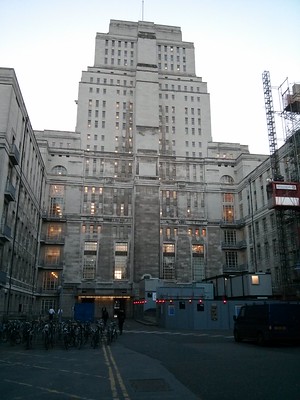
This was housed in the University of London’s Senate House – then the tallest building in London and a model for the Ministry of Truth – and, as the University history puts it,  was “responsible for subterfuge, censorship and propaganda” for the duration.

Plus ca change…so, pinches of salt all round I think.

Senate House – The Ministry of Truth Photo David Alves. https://www.flickr.com/photos/64097751@N00/33631514211

Stats for Socialists: Why the Tories will cost the Earth – in both ways.

Both candidates for Conservative leader, and therefore Prime Minister, oppose onshore wind and favour new oil and gas exploration in the North Sea. This is motivated by the current increase in costs for oil and gas – which makes them expensive for consumers and profitable for producers.

The TUC released figures showing excess profits for UK based fossil fuel producers of £170 billion in the next two years. We could do an awful lot with a windfall tax on that. A rate of 56%, as currently used in Norway, would raise £90 billion. The projected prospective Norwegian rate of 78% more like £132 billion. And these are excess profits; so, taxing the lot wouldn’t be unreasonable, even for opponents of public ownership.

Even the lowest amount would pay for Labour’s proposed £26 billion investment to insulate our housing stock by 2035 three times over, with £12 billion left over to do the schools and hospitals too.

It is now 9 times more expensive to produce energy from gas than it is from renewables. But energy prices are set by the gas price. The EU is planning to cut that link so the cheaper energy from renewables can be reflected in prices. Keeping the link here in Brexit Britain would make energy here qualitatively more expensive than in the rest of Europe. The IMF reports that this is already the case.

Its hard to avoid the conclusion that the consensus resistance to insulation on the Right is because insulated homes reduce bills by reducing demand for an otherwise profitable product. And that would never do, would it?

It takes 28 years to bring new Oil and Gas fields on stream, compared to under two years for onshore wind and five for offshore.

Another way to put this is that we can have new onshore wind farms in operation by 2024.

Offshore wind projects starting now will come on stream in 2027.

New Oil and Gas fields given the go ahead now will take until 2050 – by which time we should have very little use for them if we want to survive.

Nuclear power plants take 7.5 years on average just to construct. Hinckley C is scheduled to take 9. The energy they produce is significantly more expensive than renewables. The government’s proposed Small Modular Reactors are even more expensive and not due to be rolled out until the 2030s.

Reports in the FT have indicated that new “agile” companies hoping to exploit North Seas fossil fuel reserves will bring them into production faster than has been the case hitherto. Which, presumably, is where the proposed scrapping of health, safety and environment regulations come in; so we can have a regime of deep sea oil drilling rigs as lightly regulated as the banks were before 2008.

What could possibly go wrong?

Stats for Socialists: CEO pay up by 39%.

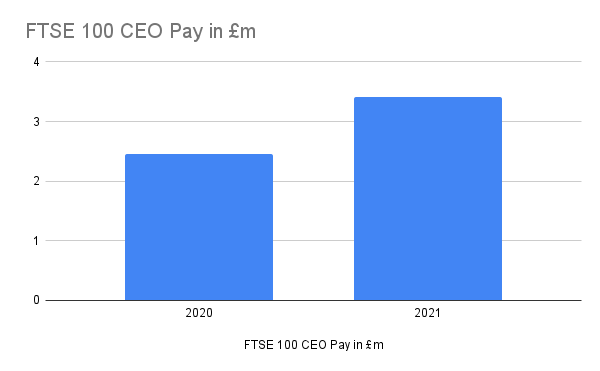
According to figures from the High Pay Centre total pay for FTSE CEO’s has went up sharply in 2021.

It is now back up to over 109 times median UK full time average pay.

We want parity? Something to bear in mind next time some hack from the media repeats the government line about workers taking strike action being “greedy” for not wanting to get poorer, as their pay is eaten up by inflation, or wanting to keep a decent work life balance in face of the demands for “modernisation”, or – so selfish – wanting to keep their jobs.

This Winter’s Reckoning.

A recent article in the Financial Times puts things very starkly, albeit in very restrained language.

“This coming winter will bring a reckoning. Western governments must either invite economic misery on a scale that would test the fabric of democratic politics in any country, or face the fact that energy supply constrains the means by which Ukraine can be defended.”

Put more bluntly, this means that the cost of energy is now so high – a recent email from Octopus Energy to its customers stated that wholesale natural gas is now eight times more expensive than it was before the war – that unless it is stopped soon, the economic and political consequences will be catastrophic.

We can have war, or social stability. We can’t have both.

This is already unfolding in parts of the Global South, which has nothing to do with fuelling this war either way, but as always suffers the blowback first and hardest. Sri Lanka is an example.

This means that “Western governments”, should they decide to keep fuelling the war with loans, munitions and rhetoric, will face the blowback of an economic crisis beyond their control; with unpredictable political consequences and an unprecedented level of turmoil.

A straw in the wind for this is advice given to their workers by the Austrian Supermarket chain SPAR, not to intervene to try to stop mass looting in the event of energy blackouts this Winter, on the grounds that the looters would then become enraged and smash the shops.

Governments, like Italy’s, or, in Boris Johnson’s case, Prime Ministers, are already beginning to topple. Olaf Scholtz is looking shaky. Ukraine is the Trojan Horse for the Latin Americanisation of Europe. Local instability the price for an increased US grip.

Recent moves, reported in the FT but not much more widely, that the US had pressured the EU to ease off on sanctioning insurance for Russian oil shipments, indicates that the impact of the price of gasoline at petrol stations on how people vote in the mid term elections is a material consideration for the Biden administration. So, they will soft pedal aspects of sanctions which are too much to bear; for them.

But, this is a tactical nudge within a framework of seeking a long war “to weaken Russia” on the lines of the Afghan war in the 1980s; so, there’s the tension.

The problem for the “West”/Global North/NATO is that anything less than a sudden Russian collapse this Autumn will see such a severe level of economic blowback that they may not be able to sustain it.

There is no sign that such a Russian collapse is on the cards. Quite the contrary. The most optimistic assessment from the Ukrainian Ministry of Defence this week is that the war is at a “strategic stalemate”. This is not the case, but, even if it were, Winter is coming, and a frozen conflict would freeze the economic crisis into place; with everything that flows from it. There needs to be a quick resolution.

Even when looking through the filtered reports in the media here, the military situation on the ground appears to be one of continuing incremental Russian advances in the Donbass, where they seem to be punching through both flanks of the fortified Ukrainian defences opposite Donetsk City, with the infantry trying to hold the line taking heavy casualties; as well as making advances around Kharkiv in the North. The massive Ukrainian counter offensive to retake Kherson in the South, that was widely broadcast as in the offing at the end of July, has not materialised, and is unlikely to; being replaced with small but spectacular sabotage operations, or possibly drone strikes, in Crimea. This could continue for a horribly long time.

Meanwhile, the Ukrainian economy is in a state of collapse (60% down even from the beginning of the year, when the Ministry of Finance was warning of its then unviability). The response has been to organise a massive fire sale of state assets to the private sector and cement in place legislation that removes the trade union and contract rights of the workers the government is conscripting to fight at the front. While the military conflict is going badly for Ukrainian oligarchs, the class war within Ukraine is all in their favour. But short term gains of this sort have no long term viability if the war continues to degrade the country.

More to the point, aiming to reconquer the Donbass and Crimea is beyond Ukraine’s current capacity. It implies a war without end, requiring permanent Western loans to keep the economy functioning on life support level. This would reduce Ukraine to even more of a client/frontiersman state than it already is – a source of raw materials and foot soldiers, and assets to be gobbled up, but not a genuinely independent sovereign nation on any part of its territory.

So, a continuation of the war is far more disastrous to Ukraine than it is to Russia; in the short, medium and long terms.

The G20 in Indonesia on 15/16th November, with the NATO powers, Putin, Xi Xinping and the Presidents of the BRIC countries and Turkiye attending could be a point at which the outlines of a cease fire and peace deal could be set up, global tensions reduced, food and energy supplies boosted, the suffering in the war stopped and the world’s attention turned back to cooperation to deal with climate breakdown and global poverty. Or not.

For that to happen, we need countries currently pushing and fueling the war to start pushing for a solution to it instead. This is difficult, because they have invested so much face in it – and bluff is nine tenths of power. The first instinct of government’s like the one we can expect from Liz Truss will be to brass it out – having already signalled that they will promote the war, expect workers to see their living standards fall “in the national interest”, face down any domestic unrest, pass laws to make lawful strikes or protest harder. And that’s just for starters.

The issue for the labour movement therefore, is whether it allows itself to be dragged behind such a policy. We can expect enormous pressure to be put on “enemies within”, dissent interpreted as treason, peace campaigns put on proscription lists.

We can also expect an even louder emphasis on atrocity stories, as, if you are going to mobilise a population behind a war, you need them to fear and loathe the other side. The argument is essentially that the suffering in the war has been, and is, so bad that we should keep it going until the Russians are punished for “starting” it. The continuing suffering of everyone involved as the fighting drags on is somehow collateral damage that can be disregarded. News of the last atrocity fuels the next one, and the one after that.

It is essential in stories like these to project the other side as the sole source of atrocities, or morally culpable for all of them. Hence the need to talk about “Russia’s unprovoked attack” – a constantly repeated phrase used by everyone from President Biden to the Ukraine Solidarity Campaign aimed to mesmerise anyone listening into ignoring everything that happened in Ukraine from 2014 onwards.

You don’t have to agree with Sergei Lavrov that all accusations of Russian atrocities are made up – because all armies commit atrocities in war, which is why the UK government recently passed legislation making British soldiers immune from prosecution for the war crimes the same government likes to pretend they wouldn’t dream of committing – to recognise that many of them have been exaggerated (in exactly the same sort of way that those committed by German soldiers in Belgium in 1914 were) to moralise the public response behind the war drive. But it is helpful to be oblivious that the scale of Russian attacks on civilian infrastructure in Ukraine has been limited compared to what the Americans do in “Shock and Awe” attacks – in which all power stations and water treatment plants are smashed on Day 1.

The need to moralise the public response also requires that people are guided away from any awareness of atrocities committed by the side that “we” support. In the interests of balance, here’s four.

In recent weeks the Ukrainian army has taken to firing thousands of petal mines into Dontesk City. This is an anti personal mine designed to maim; essentially to blow people’s legs off. Firing them into a city is targeting civilians in an indiscriminate way. Thousands of them. We can be sure that any victims of this won’t be given the full Feargal Keene treatment. No instrumentally useful sympathy due there.

In the last fortnight, Ukrainian artillery has been shelling the Zaporozhzhia nuclear power station. The potential consequences of this hardly need spelling out. This is unhinged. But, instead of a simple demand that this stops, we have had surreal reports in the press here echoing Ukrainian claims that the Russians themselves are actually shelling a power station that they control, before moving quickly on before anyone has a chance to reflect on how absurd this is; the same sort of ludicrous stretch in credulity that conspiracy thinking depends on. Everything bad must be done by the bad people so we can stay comfortable in our moral certainty.

In the case of the Bucha massacre, the public claim by the Press Officer of the Azov battalion that their troops were moving through Bucha after the Russian withdrawal to “cleanse” the town of “saboteurs and collaborators” would account for why so many of the victims were found with Russian ration packs or water bottles. This does not mean that no civilians were killed by the Russians, but it takes a real act of will not to conclude that many of them were killed by Azov. This is dismissed in Western media, but, as its a public statement by them on Twitter, I think we can take them at their word.

And there are over 1000 warrants out for treason, and dissidents have been “disappeared” or just shot (and their bodies posted on social media with tags like “one less traitor”).

The bottom line here is that war brings out the worst in everyone. Which underlines why we need to end it.

To conclude. The war is slowly going Russia’s way. Ukraine’s economy is collapsing. Continued NATO arms and financial support won’t change the dynamic of either. Without a resolution – or basis for it – at the latest by the G20, we face a scale of economic and political crisis – even in the wealthiest countries – that is off the map.

We need to campaign for opposition Parties to break with the government line of fuelling the war if we want to avoid economic misery on a scale that would test the fabric of democratic politics.

Historical Note

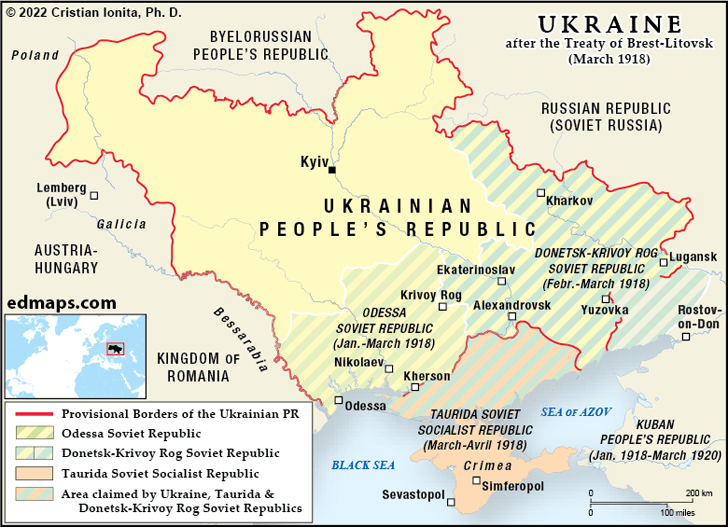
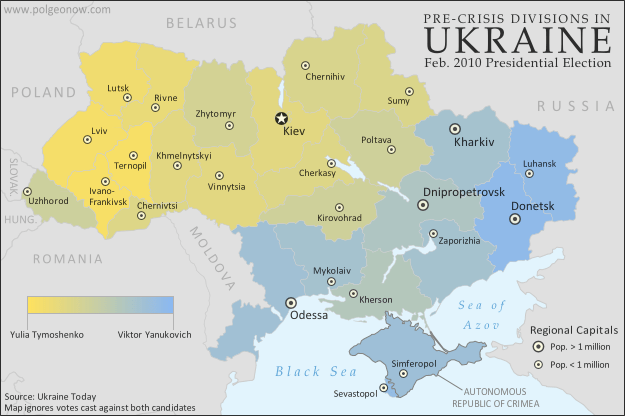
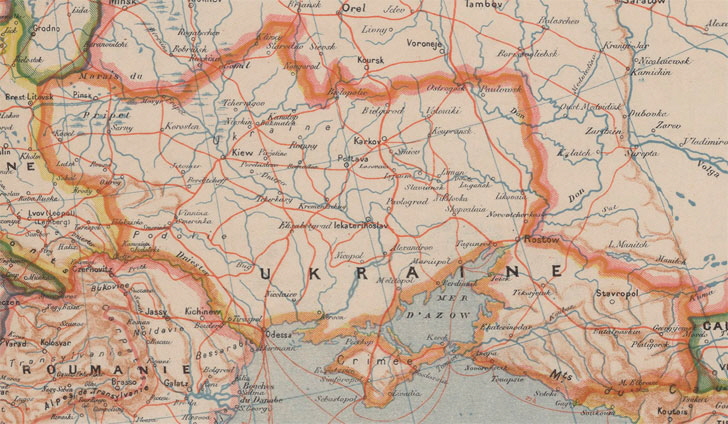
Sometimes in these discussions, people put the argument that Ukraine has been struggling for independence against Russia for over 100 years. This map from time of the Treaty of Brest Litovsk in 1918 is very interesting when you compare it with the map showing votes in the 2010 Presidential election. Leaving aside the parts of Western Ukraine that were still parts of the Austro Hungarian Empire in 1918, the division between the rest of Western Ukraine and the areas in the South and East that formed Soviet Republics foreshadows almost exactly the political/national fault line shown up by the way people voted in 2010. This shows that the Nationalist movements that are presented as the representation of the people of Ukraine as a whole are not representative of all of it, and never were.

https://www.edmaps.com/html/ukraine_march_1918.html
http://antifon.blogspot.com/2014_11_01_archive.html
https://www.edmaps.com/html/ukraine_claims_1919.html

This map from 2019 showing an aspirational Greater Ukraine, incorporating both Novaya Rossiya and the lands of the Don Cossacks as far as the Caspian Sea, shows that inside every thin nation struggling for self determination, yearning to breathe free, there can be a bloated expansionist version busting to get out and impose itself on others if given the chance.

Where’s Mr Flint when you need him?

We live in a distinctive but tutti putti flat; designed and built by a locally famous architect and builder called Ernest Trobridge in the late 1920s. Trobridge believed in using natural, local materials and had a real thing about compressed wood. His houses and flats are scattered around NW9, the earliest ones heavily thatched, and include the Castle Flats on the corner of our road; which appeared with Sir John Betjeman standing on top of them in his Metroland documentary in 1973 (and the Madness “Our House” video nine years later… from what feels like a very different time). His designs are part Tudor, part medieval, with imaginative twists – particularly tall, spirally chimneys – that make me wonder how many spoons of magic mushrooms he took in his tea. All the fireplaces in our row of flats are variations on a theme of decorative brick that look hefty and solid. But, the structure of interior walls (and some exterior walls) was described in our pre sale survey as “exceptionally flimsy”. So, though they don’t look just the same, they are, in parts, definitely made out of ticky tacky.

A while back, one of us knocked into one of the bedroom walls and a hole appeared. Pulling away a layer of wallpaper revealed a 6″ x 9″ rectangular cavity with an air brick at the end, that the previous owners had just papered over. Brushing out the dust and cobwebs revealed several rusted nails left over from 1927 and an air brick at a visibly wonky angle; implying that 1920s craftsmanship wasn’t all that it has been cracked up to be. Definite sense of “that’ll do” combined with an undue haste to get done. With the impending energy price rise putting a premium on closing off sources of drafts, I bought an air brick grille. This, like all good Christmas toys that arrive without batteries, arrived without screws; but with the instruction to use “Grade 6 round headed screws of appropriate length”. I needed four of them. The only packs they had in Wickes contained 50. So, having screwed them in, I am left with 46 spare. In the absence of another 11 and a half grilles to put in, I’ve just put them in the tin box that contains all the other packs of screws and nails; where they will stay unused, possibly forever.

When I was growing up in Grays, there was a tiny shop on the corner of Orsett Road and Derby Road that was run by Mr Flint. Flints was a bit like the shop in the 2 Ronnies “For…k…andles” sketch, but much smaller and qualitatively neater. In fact, it might be best described as a shrine to the most anally retentive possible kind of man cave. Presided over by Mr Flint: a small, bald, bird faced man in one of those brown coats that proclaimed that he was a tradesman and proud of it. He sold all sorts of DIY related bits and bobs, and a nice little side line in Airfix plastic models and armies in a box, and the dinky little tins of Humbrol paints needed to paint them. One line that seemed to sell quite well was models of the ships involved in the Battle of the River Plate – probably recalled in plastic because it was a moral boosting early victory for the Royal Navy at a time when everything else was bleak; or, given that it was on Dec 13th 1939, hadn’t properly kicked off yet. The German pocket battleship Graf Spee and the British and New Zealand light cruisers Ajax, Achilles and (rather more prosaically) Exeter; of the sort that were strikingly described as “eggshells armed with hammers”. I’ve known people like that. Me, sometimes. These were on display above the counter, as a sort of decorative flourish. But the main trade of the shop was tools, screws, nails, nuts and bolts and such. You could buy these in exactly the quantity you needed. If you wanted 4 Grade 6 Round headed screws, Mr Flint would sell you 4 Grade 6 round headed screws. And charge you a ha’penny for it. So, you got what you needed, no more, no less; no waste, no overconsumption, no pointless storage.

Mr Flint from memory circa 1964

In the middle of the parade of shops in Kingsbury, there is a large store to let. That is the sort of space that we need for a Library of Things, one of the Repair Workshops the Council is planning and possibly a free book exchange. The main shopping drag is part of the Roe Green Green Zone, along with the Park, the Primary and Secondary Schools and the streets to the North, which will be the prototype for local transformation. Early days and the Council has limited resources, but we should be thinking big.

50 Shades of Frost.

Lord Frost must have choked over his freshly ironed copy of the Daily Telegraph this morning. Spread across the wide open spaces of its front page – because, as long as there is an England, the Telegraph will forever be a broadsheet – was a map with the whole of Southern England coloured red.

This is to show the areas in which – in the current drought – wildfires are just a flicked match, barbecue ember, or suns rays concentrated through a thrown away bottle away. As the wildfire in Wennington showed at the end of last month, if vegetation and buildings are dry enough, and the winds are strong enough, a small fire can spread out of control and burn down whole streets. We should note that Wennington is on the edge of Rainham marshes, not an area we would normally expect to catch fire. In fact, we got lucky that time, because the winds were quite low. So, anyone who owns a property in that red zone, which stretches right across the Tory heartlands of the soft South, has real reason to be worried.; which would be why the Telegraph published it.

But, this is where ideological dissonance slips in. The Telegraph puts a lot of effort into bigging up all the forces on the Tory right, from Lords Lawson and Frost, to Steve Baker and the Net Zero Scrutiny Group, who like to argue that Climate Breakdown is all a woke plot; that because dealing with it requires a fairer society that would be uncomfortable for people like them, not dealing with it, while hoping with Mr Micawber that “something will turn up”, is the better option.

Indeed, this is just two days after Frost opined in an essay on Public Exchange, that “there is no evidence” that the UK faces a climate emergency.

One can only conclude that he goes through life with his eyes. and ears firmly shut, and has not bothered to read very much. He could just look around him. Perhaps, like so many “non elite” Brexit supporting members of the House of Lords, he hasn’t been around to notice what’s going on here because he’s off on holiday somewhere continental. But, he can’t really miss it there either. If he is in Italy, perhaps he has noticed coverage of the drought that has cause the Po river to dry up on parts of its course. If he has passed through Germany, he might have noticed that the Rhine is now so low that shipping is being restricted. If he has gone to the United States, he can’t have missed the epic drought and wildfires there this Summer which have produced fire tornadoes in California; or the floods in Kentucky that washed whole houses down streets turned into torrents. Had he popped up to the Arctic for a bit of whale spotting, he might have been made aware that it is heating up four times faster than the rest of the planet and the permafrost is melting 43 times as fast as it was.

If he wants some written evidence, maybe he should just read the latest IPCC Report. Current policies, which he thinks are too fast, have us heading for a 2.7C average temperature rise by the end of the century. Crisis? What crisis?

But, of course, he is from a political current that dislikes “experts” and prefers its own prejudices whenever that’s more convenient.

Frost’s proposals are designed to make other people, in poorer parts of the world, pay the price for the over consumption of people like him.

He blathers complacently on – with that blithe self confidence that so many upper class people have, that if you state total bollocks with enough conviction you can disregard any evidence to the contrary – “the prevailing mood is one in which individuals are asked to restrict their use of energy and in which unsatisfactory renewables technology is touted as the best solution to our problems. Instead of focusing on technological solutions that enable us to master our environment and get more energy in a more carbon-efficient way — nuclear, CCS, fracking, one day fusion – we have focused on managing demand so we can use medieval technology like wind power.”

This is such flabby thinking that it beggars belief that he can be taken seriously by anyone with a fragment of critical intelligence. But, let’s look at them one at a time anyway.

  1. “Individuals are asked to restrict their use of energy”. At the moment, the biggest pressure forcing people to reduce their use of energy is the rapid increase in fossil fuel prices (and the profits of the energy producing companies that flow from them). Frost does not favour taxing those profits to give people a break. He stands for the free market (in this context). Nor does he favour an insulation programme that would allow people to keep warm and cook food, using less energy and getting lower bills as a result. Using less energy means less demand for fossil fuels, therefore fewer profits for the producers. Can’t have that, can we? This is of a piece with his complaint in the Brexit campaign that the EU was introducing standards to force vacuum cleaners to become more efficient – on the grounds that a proper clean needs to burn lots of joules. Vacuum cleaning for petrolheads.
  2. That “unsatisfactory renewables technology”, overtook fossil fuels in UK electricity generation in 2020. “Medieval” wind power produced 24% of UK energy demand in 2020, increased 715% from 2009 to 2020 and is now much cheaper per Kilowatt hour than fossil fuels or nuclear; and steadily getting even cheaper. That reduces bills. Once the turbines are up or the solar panels installed, the wind and the sunshine is free. “Unsatisfactory” for fossil fuel producers, no doubt. Very helpful for the rest of us. Oddly, Lord Frost does not seem so keen on “the market” here. He wants to restrict renewables as such. Perhaps not as suicidally keen as France’s Marine Le Pen, who wants to “tear down” turbines that are already up; but in the way that the Conservatives have restricted onshore wind with all sorts of planning “red tape”. You’d think, with onshore wind being among the cheapest energy sources, he’d want to cut the restrictions and “let the market work its magic”; but not a bit of it. You’d think, as a patriotic Brexiteer wedded to notions of “energy security”, he’d want to make the most of an energy source that doesn’t have to be imported. He could make a bit of a campaign of it, painting them red, white and blue and calling them “Freedom Farms”; with banner headlines in the Tory Press screaming “It’s Britain’s Wind!” But, no. If its low prices for energy users with fewer carbon emissions on the one hand, and sustained fossil fuel profits generating billowing clouds of carbon dioxide on the other, its no contest.
  3. In full macho mode, Lord Frost prefers “technological solutions that enable us to master our environment” (my emphasis). So butch. 50 shades of Frost. Let’s see what he has in his special room. “Nuclear, CCS, fracking, one day fusion“. While its in the nature of denial for people to clutch at straws, this is a peculiarly old fashioned vision of modernity. Taking them backwards, which seems an oddly appropriate thing to do… “Fusion” has been the holy grail for nuclear power that has been full of promise for at least 50 years; but has never actually arrived. This year, next year, sometime, never. He might as well argue that “one day” we will power ourselves with Unicorn farts. “Fracking” for oil and gas. No one wants a fracking site in their backyard. Presumably Frost wants to enforce them on unwilling communities “in the national interest” of the profits made by the fracking companies. Perhaps he hasn’t noticed that oil and gas are fossil fuels. So, not a solution to a problem created by burning too many fossil fuels. And not a “carbon efficient” way to generated energy. “Carbon Capture and Storage.” The IPCC Report made it very clear that this is not a technology capable of economic deployment at the scale needed. Indeed, given that this would be such a “get out of jail free” card for carbon intensive industries, you’d think that it would have been developed by now. Instead, rather like fusion, it is the solution that’s just around the corner; and has been for decades. “Nuclear”. There is an argument about how “low carbon” nuclear energy generation is. What is in no doubt is that it is immensely costly. Costlier than fossil fuels. Costlier than renewables. And slow. By So, Frost’s “solutions” are a mix of unproven wishful thinking combined with a cavalier disregard for costs; both environmental and financial. And, that’s it.

With the whole of Southern England a tinder box, perhaps the threat of wildfires in the backyards of prosperous Tory speissburgers might make a few of them pay attention – especially if house price values start being affected. But, with Frost highly influential with Liz Truss, and medieval thinkers like John Redwood slated for cabinet posts in our new and unimproved Conservative government, we can expect a lurch even further to the right. Their problem is that its only possible to safely deny reality so long as that reality isn’t imposing itself on people’s lives, as climate breakdown is. It has been argued that climate is “above politics”. It isn’t, as Lord Frost and his ilk demonstrate. But the reality of it is foundational to any politics that is relevant from here on. We’re not in the Holocene any more Toto.

Clockwork Orangemen.

A weird coda to the TUC cost of Living demo in June was that the Orange Order marched down Whitehall behind us at about 3pm, just as I was drifting away in the opposite direction in search of the free loo at the National Gallery.

They made a very strange sight. Loads of them. Big flute band at the front playing a tune I know as “Come out you Black and Tans”, but I guess they have different lyrics. Stopping outside Downing Street and going no further, they started playing “There’ll always be an England”, which struck me as a bit abject. 

At the front there was a squad of rather short and overweight blokes all dressed up in original UVF uniforms, all Khaki and Puttees, doing an impersonation of marching. It was all very weird. A throwback in so many ways. Rehearsing for when they become completely a museum exhibit (hopefully).

From all over the country, with those odd little icon style banners in orange and purple; a few with bowler hats, most without, all white, mostly men, from places you might expect (Toxteth) and places you wouldn’t (Salisbury).

What struck me about them was that they looked like people who could have walked in off the set of a film with Will Hay in it; what the working class looked like in 1937. And prominent on the sashes their fathers wore, the acronym for Loyal Orange Lodge – LOL.

I wonder if any of them had noticed…